
Author
No results available
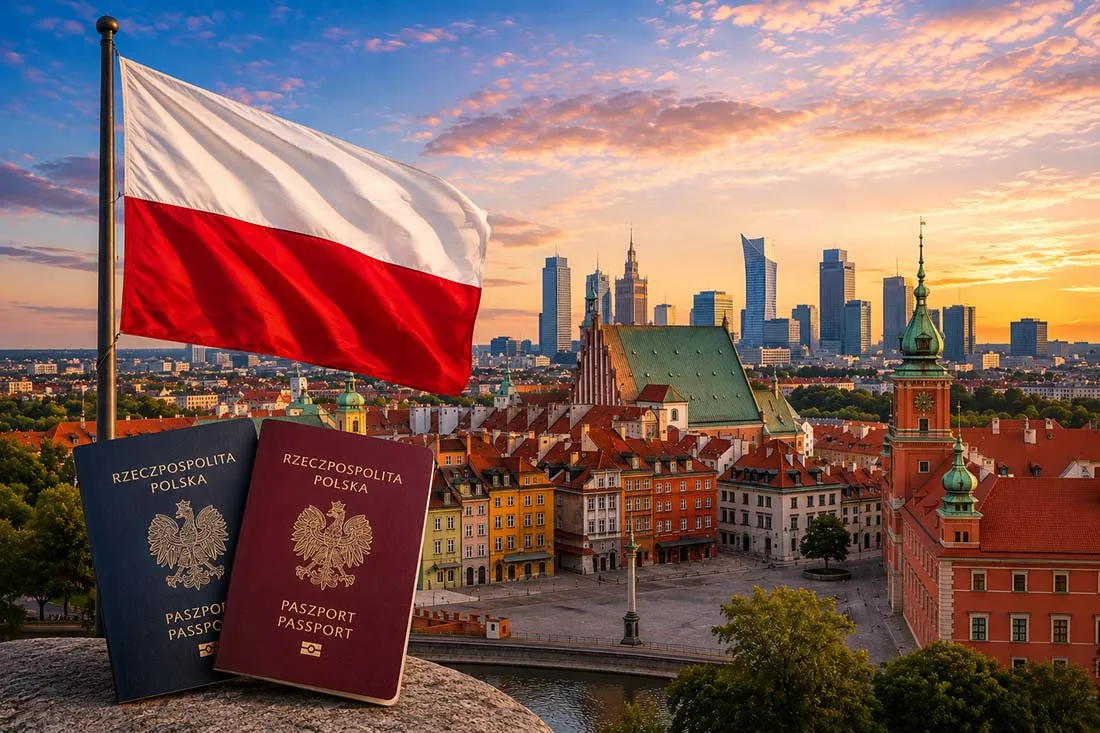
Poland already carries one of the world’s genuinely strong passports: visa-free movement across the EU and Schengen, the right to live and work in any member state, and access to some of Europe’s best healthcare and education systems. So when a Polish client asks us about a second, Caribbean passport, the honest first answer is that it won’t get them anything Europe already gives them. The real answer is more interesting than that, and it’s worth setting out plainly rather than repeating the generic sales pitch most CBI firms lead with.
Poland places no limit on how many citizenships a person holds, and the Polish Citizenship Act of 2009 requires no renunciation of anything to keep it. The only practical rule is that Polish authorities will only ever deal with you as a Polish citizen, and you must enter and exit Poland on your Polish passport. There is no penalty, declaration requirement, or loss of rights for holding a second nationality alongside it. For a Polish client, the legal barrier to acquiring a Caribbean citizenship simply doesn’t exist.
Most Caribbean citizenship-by-investment marketing leads with visa-free Schengen access, and for a Polish citizen that benefit is worth nothing, since it’s already yours. It’s also worth being candid that the benefit is currently under real pressure even for those who do need it: in October 2025 the European Parliament voted to let Brussels suspend a country’s visa waiver on the grounds that it operates a citizenship-by-investment programme at all, no further justification required, and at least one Caribbean government has publicly acknowledged it could lose Schengen access before the end of 2026. None of that touches a Polish citizen’s own EU rights, but it’s a useful reminder that the headline “140-plus visa-free countries” figure is softer than it looks, and shouldn’t be the reason to buy.
Access to markets an EU passport handles poorly. Grenada, Dominica and Antigua and Barbuda passports currently allow visa-free entry to China, something Polish citizens don’t otherwise have, and Caribbean passports more broadly offer smoother access to Africa than an EU document does. For clients whose business or family ties run through these markets, that’s a concrete, everyday advantage.
Genuine geopolitical diversification. For a Pole, the case for a second citizenship usually isn’t escaping Poland, it’s not holding every part of one’s identity within a single bloc. Poland sits on NATO’s eastern flank, and a second citizenship in a small, neutral Caribbean state provides an identity and travel document entirely outside that geography, a sensible piece of contingency planning rather than a reaction to any specific threat.
An unconditional right of abode. Unlike a residency-by-investment programme, citizenship doesn’t need renewing, and there’s no ongoing investment or presence test to maintain it. That gives a family real optionality: the right to relocate at any point in the future without reapplying for anything.
Tax planning, with the caveat stated plainly. Caribbean CBI countries impose no tax on worldwide income, capital gains, wealth, or inheritance. Citizenship alone changes nothing here, since Poland taxes on the basis of residency, not nationality. The tax advantage only materialises if a client genuinely relocates their tax residency, which is a considerably larger step than acquiring the passport, and one we’d want to plan carefully before anyone assumed the benefit applied automatically.
Family inclusion in a single process. Most Caribbean programmes allow a spouse, dependent children, and in some cases parents to be included in one application, extending the same benefits across the family rather than requiring separate applications.
Banking, privacy and speed. A second passport can also make it more straightforward to open accounts in certain jurisdictions and adds a layer of diversification to how a client’s identity is presented internationally. Processing for the five current programmes runs roughly five to eight months, requires no residency test, and starts at a standardised $200,000 investment across all five as of 2026.
One genuine, and often overlooked, benefit is regional. All five Caribbean CBI countries, Antigua and Barbuda, Dominica, Grenada, St Kitts and Nevis, and St Lucia, are full members of the Caribbean Community (CARICOM), and citizens acquired through these programmes hold the same treaty rights as those born there.
In practice, that means automatic visa-free entry and a stay of up to six months in any of CARICOM’s fifteen member states, useful for business scouting, family visits, or simply keeping options open across the wider region.
It’s worth being precise, though, about how far this goes. The right to live and work indefinitely without a permit has traditionally been limited to a defined list of skilled professional categories, requiring a separate Skills Certificate, rather than applying automatically to every citizen. There is one meaningful exception: since October 2025, Barbados, Belize, Dominica, and St Vincent and the Grenadines have launched “Enhanced Cooperation in Free Movement,” under which citizens of any of the four can live and work indefinitely in any of the other three, for any legitimate reason, with no permit required, and can bring a spouse, children, and dependent parents with them.
Because Dominica is both a CARICOM member and one of the five CBI countries, a Dominica passport currently gives investors the strongest version of this regional benefit: genuine, unrestricted settlement rights in three additional countries beyond Dominica itself, a tier of access the other four CBI passports don’t currently share.
For a Polish client, a Caribbean second passport isn’t a travel upgrade, it’s a diversification tool: of identity, of jurisdiction, and of long-term optionality, obtained relatively quickly and without disturbing an existing EU life. Which of the five programmes makes sense depends on what matters most to the client, whether that’s China access, the strongest CARICOM mobility, family structure, or simple cost and speed, and that is exactly the kind of comparison worth doing properly before choosing one.
If you are considering a second citizenship alongside your Polish passport, we would be glad to talk through which of the current Caribbean programmes best fits your objectives.
This update reflects information available as of early July 2026 and is provided for informational purposes only. It does not constitute legal, tax or immigration advice. Prospective clients should seek independent professional advice specific to their circumstances before proceeding with any citizenship application.

posted 12 minutes ago

posted 30 minutes ago

posted 1 hour ago

posted 2 hours ago

posted 2 hours ago

posted 2 hours ago

posted 2 hours ago

posted 3 hours ago

posted 4 hours ago

posted 4 hours ago

posted 4 hours ago

posted 5 hours ago
No results available
Find the right Legal Expert for your business

Send welcome message