
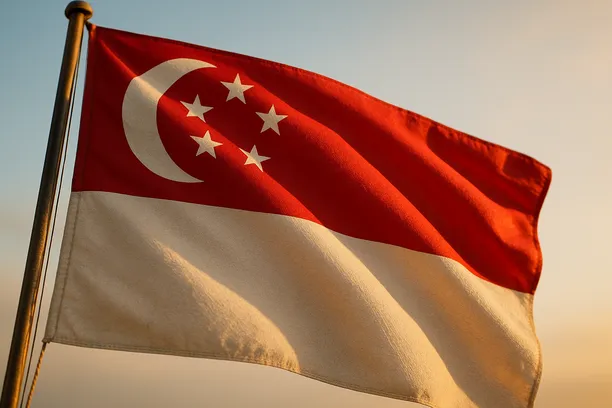
Our Expert in Singapore
No results available
Every foreign principal entering Singapore faces the same foundational question: should you appoint an agent who sells on your behalf, or a distributor who buys your goods and resells them independently? The answer determines who imports, who bears customs and GST obligations, who is liable to end customers, and whose assets are at risk if something goes wrong. With Singapore Customs tightening strategic-goods enforcement through updated control lists under the Strategic Goods (Control) Act (SGCA) and revised Declaring Agent governance in 2025–2026, the stakes of choosing the wrong structure have never been higher.
This guide compares the agent vs distributor Singapore decision across every dimension that matters, liability, tax, enforceability, regulatory burden and cost, and delivers a concrete recommendation for each scenario.
An agent acts for and on behalf of the principal. The agent does not purchase the goods; instead, it solicits orders, negotiates terms and, depending on the scope of authority granted, may conclude contracts in the principal’s name. The distinction between a disclosed agent (where the end customer knows the principal exists) and an undisclosed agent (where the agent contracts in its own name but on the principal’s account) is critical. A disclosed agency lets the principal maintain direct contractual privity with Singapore buyers. An undisclosed agency can expose the agent to personal liability on those contracts while still binding the principal once the agency is revealed.
The agent earns a commission on each sale rather than a buy-sell margin. Title to the goods typically never passes to the agent, it moves directly from the principal to the end customer.
The agency model works best when a principal wants to retain tight control over pricing, branding and the contractual relationship with end customers. It is the preferred route when the principal is willing and able to act as importer of record, or to supervise customs compliance through an authorised Declaring Agent, and when regulatory permits for strategic or controlled goods must remain under the principal’s direct management.
A distributor is an independent reseller. It purchases goods from the principal under a supply or distribution agreement, takes title to the stock, and resells to its own customers on whatever terms it negotiates. The principal’s contractual relationship is with the distributor, not with end buyers. The distributor assumes credit risk on downstream sales, manages local inventory, and, crucially, typically acts as the importer of record for customs and GST purposes.
Because the distributor buys and resells, its profit comes from the margin between the purchase price from the principal and the resale price to end customers, rather than from a commission.
The distributor model is the right choice when the principal needs a local partner to manage warehousing, logistics, after-sales service and downstream credit risk. It is ideal for full market rollouts where physical availability of product matters, and where the principal prefers to avoid acting as importer of record or managing customs declarations directly. Distributors with established import licences, GST registration and customs competence can absorb compliance burdens that a foreign principal would otherwise need to build from scratch.
| Dimension | Agent (Option A) | Distributor (Option B) |
|---|---|---|
| Legal relationship | Agency contract; agent acts for principal and may contract in principal’s name (disclosed) or its own name (undisclosed). | Independent buy-sell; distributor contracts in its own name under a supply agreement. |
| Who imports (importer of record) | Usually the principal, unless Incoterms or contract terms shift importation to the agent. A Declaring Agent may handle TradeNet filings on the principal’s behalf. | Distributor typically imports as importer of record, bears GST/duty at point of entry and handles customs compliance. |
| GST / tax exposure | Principal liable for import GST if it is the importer; agent may be GST-registered to handle filings but principal must verify IRAS rules. | Distributor accounts for import GST (9% from 2024); can claim input tax if GST-registered. Distributor’s failure to account exposes it to IRAS enforcement. |
| Strategic-goods / export controls | SGCA applies to principals and brokers arranging transfers of strategic goods; principal in scope for permits, brokering registration and intangible technology transfers. | Distributor importing strategic goods must hold permits; failure results in seizure, fines and criminal exposure. Principal may still face reputational and enforcement risk for brokering or technology transfer. |
| Commercial control & pricing | High, principal sets prices, promotions and contract terms. | Low, distributor sets resale prices independently; principal can influence only through recommended retail pricing or margin incentives. |
| Liability to consumers / product safety | Principal is typically liable; agent rarely assumes product-defect liability unless it acts beyond its authority. | Distributor as first seller may owe a duty of care to consumers. Singapore courts have held distributors liable in product-safety cases. |
| Enforceability & remedies | Agency agreements enforceable; injunctions available. Disputes often turn on exclusivity and commission clauses. | Distribution agreements enforceable; termination triggers stock, IP and customer-list disputes. Freezing orders and injunctive relief available. |
| Dispute forum | Arbitration (Singapore seat) recommended; interim relief from Singapore courts available in support of arbitration. | Same options, but enforcement against a local distributor’s Singapore-based assets is generally more straightforward. |
| Speed to market | Fast where agent has established customer contacts; no need for local warehousing. | Fast for physical product availability; distributor can stock and deliver from local inventory. |
| Typical use case | Market testing, premium/niche products requiring pricing discipline, principal retaining ownership and oversight. | Full market rollout, mass-market distribution, local service and logistics infrastructure required. |
The core trade-off is straightforward: the agent model preserves control and keeps the principal closer to the customer, but the principal absorbs more import, regulatory and liability exposure. The distributor model shifts import, cashflow and downstream risk to the local partner, but the principal surrenders pricing control and direct customer relationships. Where goods are strategic or controlled under the SGCA, the allocation of permit and compliance obligations between principal and local partner is the single most important consideration, and one that the 2025–2026 regulatory tightening has made more consequential.
Not every principal has the infrastructure to act as importer of record in Singapore, and not every local partner has the capital or compliance apparatus to function as a distributor. Assess the following before choosing a structure:
The importer of record bears primary responsibility for customs declarations (filed through TradeNet), duty payment and GST at the point of import. Under Singapore Customs’ Declaring Agent framework, a Declaring Agent may submit permits on behalf of the importer, but the importer remains legally responsible for the accuracy of the declaration.
| Item | Agent | Distributor |
|---|---|---|
| Who pays import GST | Principal (as importer of record) or Declaring Agent acting for the principal. Principal holds the import permit. | Distributor as importer of record pays import GST at the prevailing rate. Distributor may claim input tax if GST-registered. |
| Tariff / duty exposure | Depends on HS code; Singapore maintains zero duty on most goods. Principal bears cashflow. | Same tariff schedule, but distributor bears the cashflow of duties and GST on import. |
| Administrative burden | Principal must maintain TradeNet and TradeFIRST accounts; Declaring Agent governance applies. | Distributor handles TradeNet filings and associated costs; may qualify for import-relief schemes such as the Import GST Deferment Scheme (IGDS). |
For principals that lack a Singapore customs account, the distributor route eliminates the need to navigate TradeNet registration and Declaring Agent authorisation. For principals already operating in Singapore or trading controlled goods, retaining importer-of-record status through the agent model preserves direct oversight of customs declarations.
Under Singapore law, a distributor that places goods on the market as the first seller may owe a duty of care to end consumers. Singapore courts have examined the liability of distributors in product-safety disputes, and the position broadly is that distributors can be held liable where they fail to take reasonable steps to ensure the safety of goods they supply. Agents, by contrast, do not normally assume product-defect liability unless they exceed the scope of their authority or make independent representations.
Both agency and distribution agreements are enforceable under Singapore law, provided they satisfy the ordinary requirements for a valid contract. Key enforceability considerations include:
The Strategic Goods (Control) Act (SGCA) governs the export, transhipment, transit, brokering and intangible transfer of goods and technology listed on the Strategic Goods Control List. The 2025 updates to the Strategic Goods (Control) Order (SGCO) revised and expanded the control list, and Singapore Customs Circular No. 08/2025 introduced changes to strategic-goods control legislation that tightened brokering registration and permit requirements.
The cost profiles of the two models differ along predictable lines:
Three regulatory developments in 2025–2026 materially affect the agent vs distributor Singapore calculus:
1. Strategic Goods (Control) Order updates. The revised SGCO, with changes detailed in Singapore Customs Circular No. 08/2025, expanded the Strategic Goods Control List and tightened brokering registration requirements. Principals and their local partners moving strategic or dual-use items now face stricter permit checks and higher enforcement risk. The likely practical effect is that principals trading in technology, defence-adjacent components or advanced manufacturing equipment will need to reassess whether their current agent or distributor can satisfy the upgraded compliance requirements.
2. Declaring Agent governance. Singapore Customs has strengthened the governance framework for Declaring Agents under the TradeFIRST self-assessment programme. Principals using agents who also act as Declaring Agents must verify that the agent’s DA authorisation is current, that adequate internal controls are in place, and that compliance with the Declaring Agent conditions is documented and auditable.
3. GST practicalities. Import GST accounting, including eligibility for the Import GST Deferment Scheme (IGDS) and input-tax claim conditions, remains a material consideration. Principals and distributors must confirm GST registration status and verify whether import GST will be borne by the local party or recovered through input-tax credits. IRAS guidance on GST for imported goods should be reviewed each time a new agency or distribution arrangement is structured or renewed.
The practical takeaway: if your goods are strategic or controlled, lean toward a distributor only if the local party can satisfy SGCA permit and registration obligations and demonstrate robust internal compliance. Otherwise, structuring the relationship as an agency, with the principal managing permits and acting as importer of record, preserves direct regulatory oversight and reduces the risk of enforcement gaps.
The guiding principle is straightforward: use the structure that aligns legal risk with the party best able to manage it. The decision turns on control appetite, import-compliance capacity, product classification and go-to-market speed.
Choose an agent when:
Choose a distributor when:
| If your priority is… | Choose |
|---|---|
| Tight price and brand control; principal retains commercial relationships | Agent |
| Shift import/GST/cashflow burdens to local partner; local inventory | Distributor |
| Manage strategic-goods licensing centrally | Agent (with principal managing permits) |
| Rapid local warehousing and distribution of physical product | Distributor |
| Market testing with minimal capital outlay | Agent |
| Local after-sales service and warranty handling | Distributor |
Retain Singapore-qualified counsel when any of the following situations apply:
This article was produced by Global Law Experts. For specialist advice on this topic, contact Goh Kok Leong at ANG & PARTNERS, a member of the Global Law Experts network.

posted 31 minutes ago

posted 49 minutes ago

posted 1 hour ago

posted 1 hour ago

posted 1 hour ago

posted 1 hour ago
posted 1 hour ago

posted 1 hour ago

posted 1 hour ago

posted 2 hours ago

posted 2 hours ago

posted 2 hours ago
No results available
Find the right Legal Expert for your business

Send welcome message