
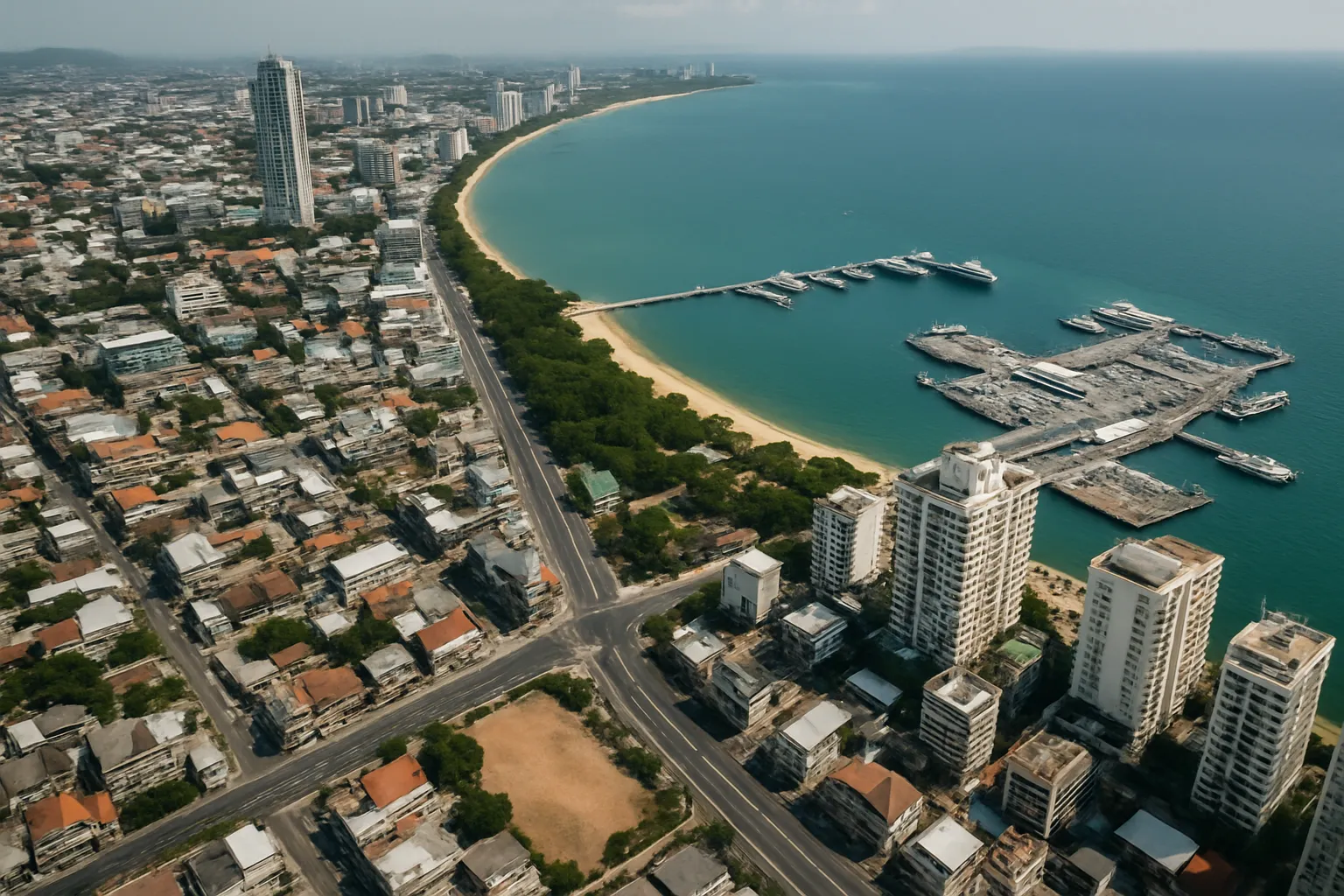

The thailand privilege visa is a paid, government-backed long-stay membership programme that grants qualifying foreign nationals a renewable long-term visa together with a suite of lifestyle and immigration privileges. Formerly marketed as the “Thailand Elite Visa,” the scheme has evolved into a tiered membership offering stays of between five and twenty years, expedited immigration handling, airport services and dedicated concierge support. For high-net-worth individuals, retirees and frequent travellers who want the legal certainty of a multi-year stay without the complexities of an employment or investment visa, the thailand privilege visa remains one of Southeast Asia’s most recognisable long stay membership programmes.
This lawyer-reviewed guide explains the tiers, the refreshed pricing, eligibility, the application process and how the programme differs from the Long-Term Resident (LTR) visa.
Effective 15 June 2026, the programme operates as the “Thailand Privilege Visa” administered under the GSSA framework. The rebrand refreshed the tier structure and introduced updated membership fees, making it essential to verify current pricing directly with the official Thailand Privilege website before applying.
This guide is written for readers evaluating a long-term move or extended residence in Thailand. It is most useful to:
Duration: membership tiers run from five years up to twenty years. Price range: approximately THB 650,000 to THB 5,000,000 depending on tier. Headline benefits: a Privilege Card, expedited immigration and fast-track lanes, airport meet-and-greet and transfer services, and government concierge assistance. Work rights are not automatically included. Always confirm tier-specific validity and benefits on the official programme site.
The thailand privilege card unlocks a package of services designed to smooth long-stay life and travel. While exact inclusions scale by tier, the core benefits are broadly consistent across the programme:
Important exclusion: the elite visa benefits thailand members enjoy are lifestyle- and immigration-focused. Membership does not automatically confer the right to work in Thailand. Employment requires a separate work permit issued under the rules of the Ministry of Labour.
The thailand privilege visa tiers are structured so applicants can match duration and service level to budget and lifestyle. Lower tiers deliver the essential long-stay visa plus expedited immigration; premium tiers add family capacity, complimentary services and enhanced concierge allocations. Because tier names and pricing were refreshed with the 15 June 2026 rebrand, the figures below are indicative and must be verified against the official programme site before you commit.
| Tier (indicative) | Duration | Approx. cost (THB) | Key benefits |
|---|---|---|---|
| Bronze / Entry | 5 years | 650,000 | Privilege Card, expedited immigration, core airport services |
| Silver | 10 years | 1,000,000–1,200,000 | Family add-ons available, complimentary hotel nights, airport transfers |
| Gold | 10–15 years | 1,500,000–2,000,000 | Enhanced concierge points, medical and wellness perks, more transfers |
| Platinum | 15 years | 2,500,000–3,000,000 | Full concierge suite, additional guest capacity, premium airport service |
| Diamond / Reserve | 20 years | Up to 5,000,000 | Longest validity, extra family members, full-suite premium services |
Figures are indicative only. Confirm exact tier names, validity and current membership fees on the official Thailand Privilege website before applying.
The differences between tiers are more than cosmetic. As you move up the ladder, several variables change:
Selection usually reflects the applicant’s intended length of stay and household size. Retirees planning a permanent relocation often gravitate to the longer 15- or 20-year tiers to lock in a stable base and avoid repeated renewals. Frequent travellers who split time between countries frequently find the five- or ten-year tiers sufficient, valuing the expedited immigration and airport services above complimentary lifestyle perks. Families almost always look at mid-to-upper tiers so that a spouse and children can be included efficiently. Investors and high-net-worth individuals commonly opt for the premium tiers, where the full concierge suite and longest validity align with a long-term commitment to a thailand long stay membership.
Understanding the true thailand elite visa cost requires looking beyond the headline membership fee. The programme’s pricing structure separates the one-time membership payment from potential government charges and any professional service fees, and prospective members should budget for each element.
The dominant cost is the one-time membership fee, ranging from approximately THB 650,000 for an entry tier to THB 5,000,000 for the longest premium membership. This fee secures the visa validity and the tier’s benefit package. Separately, standard government charges connected to visa issuance and immigration processing may apply under the rules of the Royal Thai Immigration Bureau. Where applicants instruct counsel or an authorised representative to manage the application, professional service fees are additional and should be agreed in advance.
Several supplementary costs commonly arise:
Payment terms, accepted methods and any refund or cancellation policy are set out in the official membership terms and should be reviewed carefully before payment. Refund entitlements after approval are typically limited, and cancellation penalties may apply. Because these commercial terms can change with the programme’s periodic updates, confirm the current policy on the official Thailand Privilege site at the point of application.
The following illustrative scenarios show how the thailand elite visa cost scales in practice:
These are indicative planning figures only; obtain a current, tier-specific quotation from the official programme before budgeting.
Many applicants can apply for the thailand privilege visa directly through an authorised office, but instructing counsel is prudent where background-check complexity, family inclusion, or coordination with future work-permit or tax planning is involved. The process below reflects the typical sequence from initial screening to arrival benefits.
Confirm baseline eligibility: a valid passport with adequate remaining validity, identity documentation and a clean background suitable for the programme’s checks. This stage identifies any issues (such as prior immigration problems) before payment is made.
Choose the tier that matches your intended duration and household. Once selected, arrange the required deposit or payment in line with the programme’s payment terms. Retain confirmation of payment for your records.
Lodge the completed application with the Thailand Privilege authorised office or an approved GSSA representative. Ensure the application form is accurate and consistent with your supporting documents to avoid delays.
Gather supporting documents and arrange any required notarisation or certified translations. Documents issued abroad may need legalisation depending on your nationality and the programme’s requirements.
The programme conducts security and background verification. Approval is contingent on passing these checks; false statements or undisclosed history can result in refusal. This stage often drives the overall timeline.
On approval, the programme issues the thailand privilege card and arranges the corresponding visa sticker or electronic record with immigration. You will receive documentation confirming your membership tier and validity.
Activate arrival services (airport meet-and-greet and transfers) and register for concierge support. Ongoing administration, including immigration reporting and any extensions, can then be handled with programme assistance.
Screening and payment can be completed quickly, often within days. The determining factor is usually the background-check and approval phase, which can take several weeks. See the Timeline section below for consolidated processing expectations and renewal windows.
When researching a long stay visa thailand option, the two routes most often compared are the thailand privilege visa and the Long-Term Resident (LTR) visa. They serve different purposes. The Privilege programme is a paid membership emphasising convenience, concierge services and multi-year residence. The LTR visa is a government policy instrument designed to attract targeted categories of foreign nationals, such as wealthy global citizens, skilled professionals and investors, and it can carry different work and pathway characteristics depending on the category. For authoritative LTR category details and eligibility, consult the Ministry of Foreign Affairs and the Immigration Bureau.
The Privilege route is fee-driven and open to a broad pool of applicants who meet identity and background criteria; it does not itself grant work rights or a direct pathway to permanent residency. The LTR route is category-driven, may enable employment through associated work provisions in certain categories, and is structured around targeted eligibility. Cost profiles also differ: the Privilege membership fee is a substantial one-time payment, whereas LTR administrative costs are lower but come with category-specific requirements such as investment thresholds or professional qualifications.
| Feature | Thailand Privilege Visa | Long-Term Resident (LTR) Visa |
|---|---|---|
| Purpose | Paid membership long-stay with concierge benefits | Government policy to attract targeted foreign nationals (work/skills/wealth) |
| Duration | 5–20 years (tier-dependent) | Up to 10 years (varies by LTR category) |
| Work rights | Not automatic, work permit usually required | May allow work or a faster pathway depending on LTR category |
| Path to PR/citizenship | No direct route; PR requires a separate application | May facilitate certain pathways; effects vary |
| Cost | THB 650,000–5,000,000 (membership fee) | Lower administrative cost but other requirements (investment / employment) |
| Eligibility | Open to high-net-worth individuals, retirees, frequent travellers | Targeted categories (investors, STEM professionals, wealthy individuals, skilled professionals) |
Because LTR conditions and Privilege terms both change over time, verify specifics against official immigration and consular guidance before choosing between them.
Meeting the thailand elite visa requirements is largely a matter of identity verification and passing background checks, rather than the investment or employment tests seen in other visa categories. Nonetheless, the details matter, and the programme reserves discretion over approval.
Spouses and children can generally be included, subject to per-person supplements and documentary proof of relationship (such as marriage and birth certificates, notarised and translated where required). The number of family members permitted and the applicable supplement depend on the tier selected, so families should confirm capacity before purchase.
Applications may be refused, and existing memberships may be cancelled, on grounds including a disqualifying criminal record, submission of false or forged documents, and material non-disclosure. Membership is a privilege granted subject to compliance, and serious breaches can lead to revocation. For statutory context and official notices, applicants can refer to the Royal Thai Government Gazette and the Immigration Bureau.
A frequent misconception is that a thailand privilege visa permits employment. It does not. Membership provides residence and lifestyle benefits, but the right to work in Thailand remains separately regulated. Foreign nationals wishing to work must obtain a valid work permit under the framework administered by the Ministry of Labour, which involves its own eligibility criteria and, typically, an employer relationship.
Equally, Privilege membership is a long-stay mechanism rather than a route to settlement. It does not directly confer permanent residency (PR) or citizenship. PR and naturalisation are governed by distinct legal processes with their own qualifying periods, documentation and discretionary approval. An applicant who ultimately seeks PR or citizenship must pursue those separate procedures on their own merits, and time spent as a Privilege member does not automatically satisfy those criteria.
Practical guidance: engage qualified counsel early if your objectives include working in Thailand, employing others, or building toward PR. Coordinated planning avoids missteps, for example, entering on a membership visa and only later discovering that the intended work arrangement requires a different visa category or a work permit that must be secured through an employer.
Processing time for the thailand privilege visa depends chiefly on background verification. In straightforward cases, the period from application submission to card issuance is commonly measured in weeks rather than months, though applicants should plan for variability. Renewal, extension and membership-transfer requests each carry their own administrative windows and should be initiated with adequate lead time to avoid gaps. Expedited handling may be available for certain requests, but it cannot shorten mandatory security checks. The most common causes of delay are incomplete documentation, translation or notarisation issues, and additional queries arising during background review. Submitting a complete, accurate application at the outset is the single most effective way to keep the timeline on track.
Prospective members should weigh several risks. Membership can be revoked for fraud, misrepresentation or serious breach of terms, and the regulator may amend programme features, pricing or benefits over time, as the 15 June 2026 rebrand demonstrates. Long-stay members should also consider tax residency: an individual who spends 180 days or more in Thailand within a tax year may become a Thai tax resident, with consequent domestic obligations that are entirely separate from the membership fee. Cross-border income and remittance rules can be complex, so bespoke local tax counsel is strongly recommended before establishing extended residence. Finally, applicants provide personal data during the process; review the programme’s official privacy policy to understand how membership data is handled and retained.
Following the 15 June 2026 rebrand, up-to-date verification is essential: tier names, benefits and the thailand privilege visa fee structure were refreshed under the GSSA framework, and reliance on older figures can lead to costly errors. The programme remains a compelling long stay membership for retirees, frequent travellers, families and high-net-worth individuals who value multi-year certainty and concierge convenience, provided they understand its limits on work rights, PR and citizenship. Because the thailand privilege visa intersects with immigration, employment and tax rules that change over time, a bespoke, lawyer-reviewed assessment is the safest route to choosing the right tier and structuring your stay correctly.

posted 8 minutes ago

posted 20 minutes ago

posted 24 minutes ago

posted 53 minutes ago

posted 57 minutes ago

posted 1 hour ago

posted 1 hour ago

posted 2 hours ago

posted 2 hours ago
posted 2 hours ago

posted 2 hours ago

posted 3 hours ago
No results available
Find the right Legal Expert for your business

Send welcome message