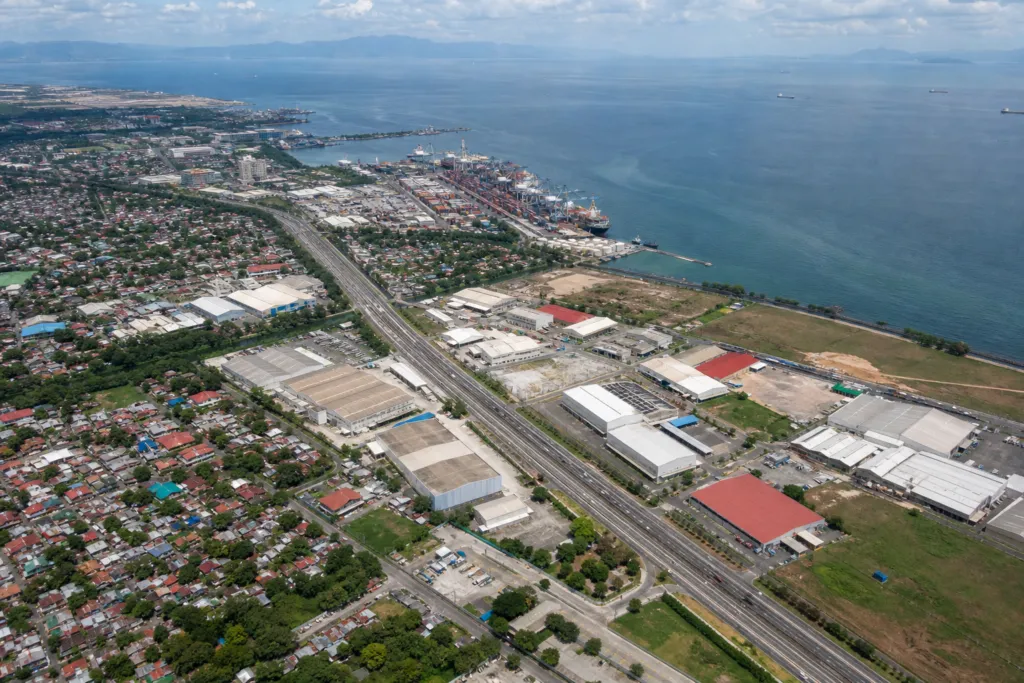
Shipping contracts Denmark negotiations have become materially higher-stakes for German exporters and forwarders heading into 2026, as cross-border trade volumes rebound and dispute-resolution channels grow more congested. For logistics managers and in-house counsel structuring carriage or forwarding arrangements with Danish counterparties, the difference between a well-drafted contract and a boilerplate one now shows up directly in claims exposure, freight recovery, and enforcement speed. This guide is a practical, clause-by-clause resource: it explains which terms to negotiate, gives short sample wording, sets out redlines to avoid, and offers a decision framework for choosing between Danish courts and arbitration. Everything below is grounded in primary Danish and EU sources so you can verify the position before you sign.
Standard terms rarely survive contact with a live cross-border dispute. When goods move between Germany and Denmark, execution risk sits across two legal cultures, multiple subcontractors, and tight commercial timelines. A bespoke contract lets a German shipper allocate delay, damage and non-delivery risk deliberately rather than leaving it to statutory defaults or a counterparty’s own trading conditions. Shipping contracts Denmark practice in 2026 is shaped by heavier claims traffic and slower full-hearing timetables, which raises the value of preventative drafting, clear notice windows, agreed liability caps, and defined claims procedures that resolve most disputes before they ever reach a forum.
The core risk landscape for German shippers covers several recurring themes: cross-border execution failures where responsibility is ambiguous; layered subcontracting that dilutes accountability; delay, detention and demurrage exposure that accumulates quickly; and claims handling that founders on missed notice deadlines or thin evidence. Each of these can be managed contractually, but only if the drafting anticipates them.
Danish carriers and forwarders frequently operate through established local subcontracting networks, which can be efficient but obscures who actually performs the carriage and who bears liability when cargo is lost or damaged. Many Danish forwarders trade on standardised industry conditions, such as the Nordic freight forwarders’ general conditions (NSAB), which can impose relatively short notice periods and defined liability limits, meaning a German shipper who applies its own commercial instincts to notice timing may find a claim time-barred before it is properly investigated. Understanding these behaviours early lets you draft flow-down obligations and notice clauses that match how the counterparty actually works.
This section is the centrepiece. For each clause it sets out the purpose, negotiation tips and short sample wording. Statutory backstops under Danish law should always be checked against the consolidated acts published on Retsinformation, and international carriage conventions such as the Hague-Visby Rules referenced through the International Maritime Organization legal instruments overview where sea carriage is involved.
Begin by distinguishing whether the counterparty acts as a carrier (assuming responsibility for the goods during transport) or a forwarder (arranging carriage as intermediary). The distinction drives the liability regime, so define it expressly. Identify the correct legal entities, not trading names, and state the full scope of services. A German shipper should also address notice timing here: there is no single nationwide statutory “48-hour rule” for shipping claims in Denmark, so notice timing must be fixed contractually or determined by the applicable carriage regime rather than assumed.
Sample: “The Contractor acts as [carrier / forwarding agent]. Where acting as forwarder, the Contractor arranges carriage in its own name for the account of the Customer and remains responsible for the selection and instruction of performing parties.”
Incoterms determine when risk and cost pass between buyer and seller, but they do not displace the carriage contract or Danish mandatory rules. For German exporters, the recommended approach is to align the Incoterm with control: choose a term where the party best placed to insure and manage the goods bears the risk during the relevant leg. Always cite the Incoterms edition expressly and confirm the named place. Misalignment between the Incoterm and the carriage contract’s delivery point is a frequent source of dispute.
Sample: “Delivery is [FCA / CIP] [named place], Incoterms 2020. Risk passes to the Customer upon [delivery to the first carrier], notwithstanding any separate provision of the carriage contract.”
Specify the place and time of delivery precisely, define what constitutes delivery, and require documentary proof, a signed delivery note, timestamped POD, or equivalent electronic record. For time-sensitive cargo, state whether time is of the essence and what remedies flow from delay. Ambiguous delivery terms make delay and demurrage claims harder to quantify and defend.
Fix the price, currency, invoicing triggers and payment window. For higher-value shipments, negotiate security: letters of credit, bank guarantees or advance payment. A retention or set-off clause can protect a German shipper against defective performance. Where freight recovery risk is significant, front-load security rather than relying on post-dispute enforcement, which is slower and more expensive.
Ancillary charges are a common flashpoint. Define freight inclusions and exclusions, and set clear rates and free-time periods for detention, demurrage and storage. State who bears these charges when delay is caused by customs, the counterparty, or third parties. Uncapped or undefined ancillary charges can dwarf the base freight, so negotiate caps and clear allocation of fault.
Given Danish counterparties’ reliance on local subcontracting networks, control this expressly. Require prior written consent for subcontracting, impose flow-down obligations so subcontractors are bound to equivalent standards, and secure warranties that the counterparty remains fully liable for subcontractor performance. Prohibit novation without consent to prevent the counterparty substituting a weaker entity.
Sample: “The Contractor may subcontract only with the Customer’s prior written consent and shall procure that each subcontractor is bound by obligations no less onerous than these terms. The Contractor remains liable for all acts and omissions of any subcontractor as if they were its own.”
State who must insure, the types of cover required (cargo, liability, transit), minimum sums insured, and the obligation to provide certificates before shipment. Require the insurer to be reputable and the policy to name or note the German shipper’s interest where appropriate. Confirm the interplay with the chosen Incoterm so there is no gap in cover during any leg of transit.
Limitation of liability clauses are generally enforceable in Denmark where they are clear and not contrary to mandatory statutory protections. Carriers benefit from statutory liability limits under the applicable carriage regime, and any contractual cap must be read against those limits, you cannot contract below protections that are mandatory for the cargo interest. Draft the cap clearly, carve out gross negligence, wilful misconduct and personal injury where relevant, and cross-check the position against the relevant consolidated act on Retsinformation. Where sea carriage engages the Hague-Visby framework, confirm the package and weight limitations apply as intended.
Sample: “Save for liability that cannot be excluded or limited by mandatory law, and save in cases of gross negligence or wilful misconduct, the Contractor’s total liability shall not exceed [amount / SDR per package or kilogram as applicable].”
This clause protects the German shipper’s ability to recover. Because Danish trading conditions often impose short notice windows, set a workable but defined notice period, specify the form of notice, and list the evidence required (survey report, photographs, delivery documents). Fix a contractual time bar for commencing proceedings, bearing in mind that mandatory carriage regimes may set their own limitation periods. Draft the notice regime deliberately and diarise the deadlines internally. Court practice from the Sø- og Handelsretten (Maritime and Commercial High Court) illustrates how strictly notice and evidence requirements are applied.
Sample: “The Customer shall notify the Contractor in writing of any claim within [X] days of delivery or the date delivery should have occurred, providing supporting documentation. Any claim not so notified, and any proceedings not commenced within the applicable limitation period, shall be time-barred.”
Define force majeure events precisely, state notification obligations, and set out the consequences, suspension, extension, or termination beyond a defined period. Address operational interruptions common to carriage: port congestion, industrial action, and route closures. Avoid open-ended relief that lets a counterparty walk away from an inconvenient bargain.
Allocate responsibility for customs declarations, export controls and sanctions screening, and specify liability for delay or penalties caused by defective documentation. Include data-protection compliance where personal data is exchanged. For German shippers, clear customs allocation prevents the counterparty shifting penalty exposure back onto cargo interests.
Include mutual confidentiality covering commercial terms and cargo data. Where subcontracting or high-value cargo is involved, negotiate audit and inspection rights so the German shipper can verify compliance, security standards and insurance status during the contract term.
Set out termination for breach with a cure period, termination for convenience if commercially agreed, and immediate termination triggers such as insolvency or repeated material breach. Include a remediation mechanism for defective performance and protective steps on counterparty insolvency, rights to recover cargo, redirect shipments, and set off outstanding sums, subject to the limits of Danish insolvency law.
Where the contract exists in Danish and German, or in English, specify the governing language version. For a German shipper, agreeing that one version prevails avoids interpretive disputes if translations diverge. State that notices may be given in the governing language and specify any translation obligations for court or arbitration proceedings.
Choosing where and how disputes are resolved is a strategic decision, not a boilerplate afterthought. For German shippers, the realistic choice sits between the Danish Maritime and Commercial High Court and arbitration with a chosen seat. The table below compares the two across the dimensions that matter most to shipping claims. This is a recommendation-led comparison: pick deliberately based on your enforcement priorities and risk profile.
| Dimension | Danish courts (Sø- og Handelsretten) | Arbitration (seat Denmark / Germany / neutral) |
|---|---|---|
| Cost (general) | Court fees payable per rules of court; public hearings; generally lower cost for simpler cases | Arbitrator and administrative fees, plus party costs, can be significant |
| Timing / speed | Can take many months to well over a year to a full hearing, depending on complexity and docket load | Potentially faster with expedited rules, though complex cases can be lengthy |
| Limitation of liability outcomes | Enforces reasonable caps but applies mandatory statutory carrier protections | Caps upheld if validly agreed; award enforceable under the New York Convention |
| Interim measures | Can grant injunctive relief, attachment and freezing orders domestically | Emergency arbitrators possible; domestic interim relief typically needs court assistance |
| Enforceability | High domestically; cross-border within the EU under the Brussels I Recast regime (subject to Denmark’s parallel agreement) | High internationally under the New York Convention |
| Specialist expertise | Specialist maritime and commercial benches | Selectable shipping-specialist arbitrators |
| Confidentiality | Public hearings and records | Private and confidential by default |
In cross-border EU contracts, the parties’ choice of law is generally respected under the EU Rome I Regulation. Note that, owing to Denmark’s position on EU justice and home affairs, Denmark applies conflict-of-law rules through parallel arrangements rather than being bound directly by Rome I in the same way as most EU member states; the practical outcome for choice of law in commercial contracts is broadly similar. That freedom is not unlimited: overriding mandatory rules of the forum and mandatory statutory protections still apply, so a chosen governing law cannot override Danish provisions that are mandatory for carriage performed in or from Denmark.
Enforceability of arbitral awards across borders rests on the New York Convention, to which Denmark and Germany are party, a central reason arbitration attracts internationally trading German shippers.
Negotiation leverage is greatest before signature. The following redlines address the terms most likely to hurt cargo interests, and each has a fallback position for when a Danish counterparty resists.
Raise the material redlines at tender stage, not at final signature. Once commercial terms are agreed and timelines are tight, the counterparty has little incentive to move on liability caps, subcontracting or notice periods. Flagging these early signals sophistication and sets the negotiating baseline in the German shipper’s favour.
Before signing, assess cargo exposure against the proposed liability cap, review the counterparty’s claims history and financial standing, verify current insurance certificates, and confirm the signatory’s authority to bind the entity. Where subcontracting is expected, request the identity and standing of likely performing parties. Instruction of specialist Danish counsel at this stage, consistent with professional-conduct guidance from the Danish Bar and Law Society (Advokatsamfundet), is where preventative value is highest.
The following short clauses are drafting starting points and must be adapted to the specific transaction and reviewed against current Danish law.
Well-drafted shipping contracts Denmark arrangements are the single most effective tool a German shipper or forwarder has for controlling cross-border risk in 2026. Fix the liability regime, control subcontracting, set workable notice periods and time bars, align the Incoterm with the carriage contract, and choose your forum deliberately using the decision framework above. Verify each legal position against the primary sources cited below, and have a specialist review the final draft before signature, the cost of prevention is a fraction of the cost of a congested dispute. To arrange a contract review or discuss a specific Denmark–Germany carriage or forwarding arrangement, contact a qualified Danish commercial and transport law specialist.
This article is for general guidance only and does not constitute legal advice. Obtain specific advice on your own facts before contracting.
This article was produced by Global Law Experts. For specialist advice on this topic, contact Anders Vestergaard at Advokaterne St Knud Torv P / S, a member of the Global Law Experts network.