[codicts-css-switcher id=”346″]

Global Law Experts Logo

Arbitration & Unidroit Principles Lawyers Worldwide.

Global Law Experts

Meet Our Arbitration & Unidroit Principles Lawyers

Discover award-winning Arbitration & Unidroit Principles lawyers worldwide on Global Law Experts. Connect with independent legal experts for your legal needs.

Legal
Country
Arbitration & Unidroit Principles
Legal
Country
Arbitration & Unidroit Principles
One result

Arbitration & Unidroit Principles News

Find Expert Arbitration & Unidroit Principles Lawyers Through Global Law Experts

Resolve Disputes Efficiently with Expert Arbitration & UNIDROIT Principles Counsel

International and domestic disputes demand effective conflict resolution grounded in recognized legal frameworks. Whether navigating commercial arbitration, interpreting UNIDROIT Principles, or enforcing awards across borders, having the right legal guidance is critical.

Global Law Experts connects you with experienced arbitration lawyers who specialize in applying the UNIDROIT Principles of International Commercial Contracts and other leading dispute resolution standards. Our vetted specialists provide strategic counsel for businesses and individuals, ensuring strong representation in arbitration proceedings and optimized enforcement strategies.

Professional Arbitration & Unidroit Principles Help You Can Trust

We will help match you with a qualified Arbitration & Unidroit Principles law specialist who can offer reliable advice, clarify your options, and guide you through the next steps in the legal process.
Main Lead Capture Form - Home

Every GLE member is independently vetted by practice area and jurisdiction.

Client Success Stories

Testimonial-by-Jonathan-Gilmour.png
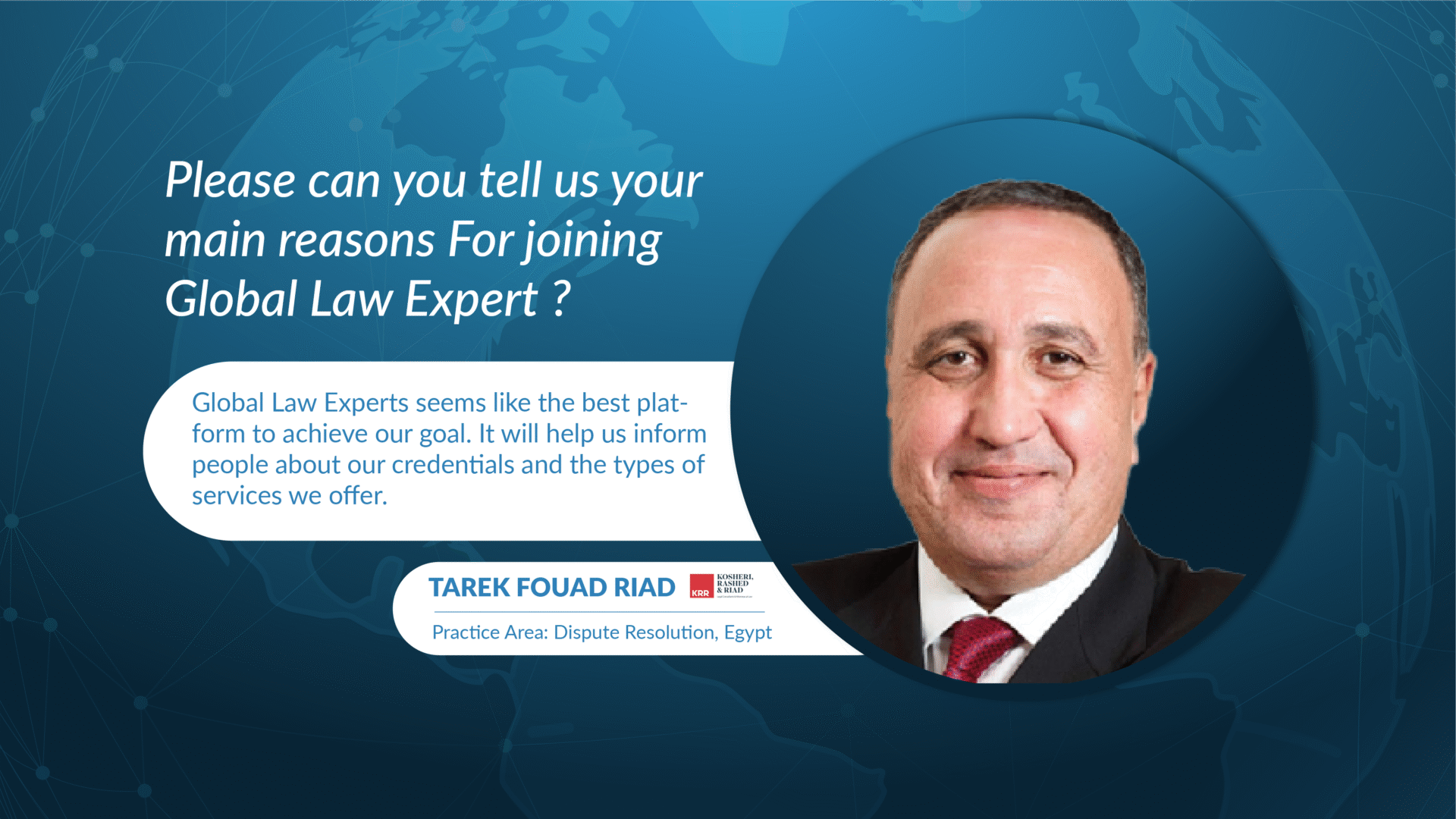
Testimonial-by-Tarek-Fouad-Riad.png
Testimonial-by-Zia-J.-Mody.png
Testimonial-by-Virginie-Tassin-Campanella.png
Testimonial-by-Marta-Dunphy-Moriel.png
Testimonial-by-Mario-Alberto-Arias-V.png
Testimonial-by-Lewis-Man.png
Testimonial-by-Kerwin-K.-Tan.png
Testimonial-by-Elena-Sadovskaya.png
Testimonial-by-Charalambos-Papasavvas.png

Arbitration & Unidroit Principles FAQ's

The UNIDROIT Principles are a set of “soft law” rules designed to be a neutral, balanced playbook for international business contracts. Created by a group of global legal experts (not politicians), they provide a comprehensive set of rules covering everything from contract formation to termination. They represent a “best practice” compilation of contract law that avoids the bias of any single country’s legal system, acting as a modern Lex Mercatoria (Law Merchant) for cross-border trade.

A lawyer uses them as a gap-filler or a neutral interpretation tool when the contract’s governing law is unclear or outdated. If a dispute arises and the chosen national law (e.g., the law of a small developing nation) doesn’t have a specific rule for a complex issue like “hardship,” the lawyer can argue that the arbitrator should apply the UNIDROIT Principles to resolve the issue fairly. They are frequently cited in arbitral awards to confirm that a specific interpretation aligns with internationally accepted standards.

Yes, because while the principles are clear, they are legally sophisticated and interact with mandatory national laws in complex ways. You cannot simply write “UNIDROIT applies” and ignore the rest; a lawyer must ensure that mandatory rules of the country where the work is performed (like labor laws or safety regulations) do not override your choice. They also need to specifically modify the default UNIDROIT rules—such as the rules on interest rates or surprise terms—to fit your specific commercial deal.

The primary advantage is neutrality. In a cross-border deal, neither side wants to play by the other’s home rules (e.g., a French company doesn’t want to use Chinese law, and vice versa). Choosing UNIDROIT provides a neutral middle ground that favors neither party and is written in plain business language rather than archaic legal jargon. It prevents the “home court advantage” and ensures that the contract is interpreted in a way that makes commercial sense globally.

Yes, arbitrators often apply them when a contract refers to general vague terms like “general principles of law” or “usages of international trade.” Even if the contract is silent, if a specific issue isn’t covered by the chosen national law, an arbitrator may look to the UNIDROIT Principles as evidence of international consensus to fill that gap. However, relying on this is risky; it is always safer for a lawyer to explicitly write them into the choice-of-law clause.

Under UNIDROIT Article 1.7, “good faith and fair dealing” is a mandatory rule that parties cannot contract out of. Arbitrators interpret this strictly to prevent “abuse of rights”—for example, if you technically have the right to terminate a contract for a minor 1-day delay but doing so would destroy the other party’s business, an arbitrator might rule that termination is an act of bad faith and block it. This creates a duty to cooperate that is often stronger than what is found in English or American common law.

The CISG (Vienna Convention) is a binding international treaty that automatically applies to the sale of goods between countries that have signed it; it has the force of hard law. The UNIDROIT Principles are broader (covering services, licensing, and investment contracts, not just goods) but they are “soft law,” meaning they only apply if the parties choose them. Lawyers often use the UNIDROIT Principles to interpret or supplement the CISG when the treaty is silent on a specific issue.

Absolutely. The UNIDROIT Principles contain a modern and detailed definition of “Force Majeure” (Article 7.1.7) and, crucially, a concept called “Hardship” (Article 6.2.2). While Force Majeure excuses you when performance is impossible (e.g., a war destroys the factory), Hardship allows a lawyer to request a renegotiation of the price if performance becomes economically ruinous (e.g., raw material costs spike by 500%). This “Hardship” rule is a powerful tool that many national laws (like English law) do not offer.

Arbitration & Unidroit Principles FAQ's

The UNIDROIT Principles are a set of "soft law" rules designed to be a neutral, balanced playbook for international business contracts. Created by a group of global legal experts (not politicians), they provide a comprehensive set of rules covering everything from contract formation to termination. They represent a "best practice" compilation of contract law that avoids the bias of any single country's legal system, acting as a modern Lex Mercatoria (Law Merchant) for cross-border trade.

A lawyer uses them as a gap-filler or a neutral interpretation tool when the contract's governing law is unclear or outdated. If a dispute arises and the chosen national law (e.g., the law of a small developing nation) doesn't have a specific rule for a complex issue like "hardship," the lawyer can argue that the arbitrator should apply the UNIDROIT Principles to resolve the issue fairly. They are frequently cited in arbitral awards to confirm that a specific interpretation aligns with internationally accepted standards.

Yes, because while the principles are clear, they are legally sophisticated and interact with mandatory national laws in complex ways. You cannot simply write "UNIDROIT applies" and ignore the rest; a lawyer must ensure that mandatory rules of the country where the work is performed (like labor laws or safety regulations) do not override your choice. They also need to specifically modify the default UNIDROIT rules—such as the rules on interest rates or surprise terms—to fit your specific commercial deal.

The primary advantage is neutrality. In a cross-border deal, neither side wants to play by the other's home rules (e.g., a French company doesn't want to use Chinese law, and vice versa). Choosing UNIDROIT provides a neutral middle ground that favors neither party and is written in plain business language rather than archaic legal jargon. It prevents the "home court advantage" and ensures that the contract is interpreted in a way that makes commercial sense globally.

Yes, arbitrators often apply them when a contract refers to general vague terms like "general principles of law" or "usages of international trade." Even if the contract is silent, if a specific issue isn't covered by the chosen national law, an arbitrator may look to the UNIDROIT Principles as evidence of international consensus to fill that gap. However, relying on this is risky; it is always safer for a lawyer to explicitly write them into the choice-of-law clause.

Under UNIDROIT Article 1.7, "good faith and fair dealing" is a mandatory rule that parties cannot contract out of. Arbitrators interpret this strictly to prevent "abuse of rights"—for example, if you technically have the right to terminate a contract for a minor 1-day delay but doing so would destroy the other party's business, an arbitrator might rule that termination is an act of bad faith and block it. This creates a duty to cooperate that is often stronger than what is found in English or American common law.

The CISG (Vienna Convention) is a binding international treaty that automatically applies to the sale of goods between countries that have signed it; it has the force of hard law. The UNIDROIT Principles are broader (covering services, licensing, and investment contracts, not just goods) but they are "soft law," meaning they only apply if the parties choose them. Lawyers often use the UNIDROIT Principles to interpret or supplement the CISG when the treaty is silent on a specific issue.

Absolutely. The UNIDROIT Principles contain a modern and detailed definition of "Force Majeure" (Article 7.1.7) and, crucially, a concept called "Hardship" (Article 6.2.2). While Force Majeure excuses you when performance is impossible (e.g., a war destroys the factory), Hardship allows a lawyer to request a renegotiation of the price if performance becomes economically ruinous (e.g., raw material costs spike by 500%). This "Hardship" rule is a powerful tool that many national laws (like English law) do not offer.

Join
who are already getting the benefits
0
Sign up for the latest legal briefings and news within Global Law Experts’ community, as well as a whole host of features, editorial and conference updates direct to your email inbox. Naturally you can unsubscribe at any time.
Newsletter Sign Up
About Us

Global Law Experts is dedicated to providing exceptional legal services to clients around the world. With a vast network of highly skilled and experienced lawyers, we are committed to delivering innovative and tailored solutions to meet the diverse needs of our clients in various jurisdictions.

Global Law Experts App

Now Available on the App & Google Play Stores.

Social Posts
[wp_social_ninja id="50714" platform="instagram"]

See More:

Contact Us

Stay Informed

Join Mailing List
About Us

Global Law Experts is dedicated to providing exceptional legal services to clients around the world. With a vast network of highly skilled and experienced lawyers, we are committed to delivering innovative and tailored solutions to meet the diverse needs of our clients in various jurisdictions.

Social Posts
[wp_social_ninja id="50714" platform="instagram"]

See More:

Global Law Experts App

Now Available on the App & Google Play Stores.

Contact Us

Stay Informed

Join Mailing List

GLE

Lawyer Profile Page - Lead Capture
GLE-Logo-White
Lawyer Profile Page - Lead Capture
Lawyer smiling confidently in a pinstripe suit against a blurred background with abstract lights.

Eckart Brödermann

Send welcome message

Custom Message