
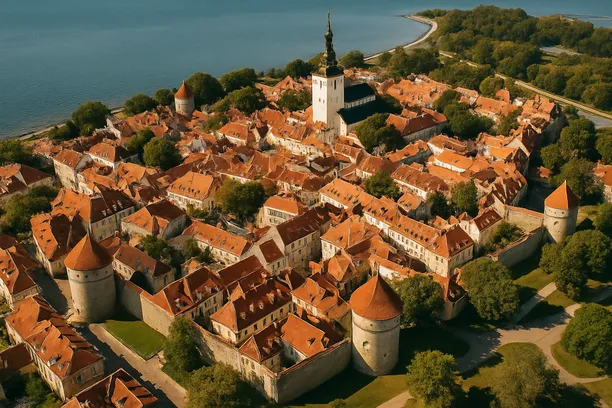
Our Expert in Estonia
No results available
The choice of Estonia vs Malta for crypto companies 2026 is the single most consequential jurisdictional decision facing exchange founders, custody providers and token-issuance teams planning to incorporate and licence within the EU this year. Estonia offers fast company formation and a distinctive zero-tax-on-retained-profits regime, while Malta brings a mature regulatory track record and a shareholder-refund tax system that can dramatically lower effective rates. Mid-2026 rule changes in Estonia, tightened CASP and AML requirements aligned with the EU’s Markets in Crypto-Assets Regulation (MiCA), have shifted the calculus, making timing, cost and banking access more important differentiators than ever.
This article provides a dimension-by-dimension comparison, a costed decision framework, and clear “choose when” guidance so you can commit to a jurisdiction before engaging counsel for the licensing process itself.
Estonia pioneered digital-first governance. Its e-Residency programme lets non-resident founders register an Estonian private limited company (OÜ) entirely online, with formation typically completing within one to three business days. The country was an early mover in crypto licensing, issuing thousands of virtual-asset service provider (VASP) authorisations from 2017 onwards under its Money Laundering and Terrorist Financing Prevention Act (RahaPTS). That early openness attracted a wave of crypto startups and cemented Estonia’s reputation as a lean, tech-forward jurisdiction.
Estonia’s national regulator, the Finantsinspektsioon (Estonian Financial Supervision Authority), now supervises CASP licence applications under MiCA-aligned national rules. The mid-2026 amendments to Estonia’s AML framework raised the bar: applicants face stricter fit-and-proper assessments for beneficial owners, mandatory local substance requirements (a physical office and at least one Estonia-based compliance officer), and enhanced ongoing reporting obligations. The regulator has also significantly reduced the total number of active licences by revoking authorisations from non-compliant or dormant holders, a deliberate quality-over-quantity shift.
Malta positioned itself as a global crypto hub from 2018, enacting dedicated legislation, the Virtual Financial Assets Act (VFAA), the Malta Digital Innovation Authority Act, and the Innovative Technology Arrangements and Services Act. The Malta Financial Services Authority (MFSA) has since built one of the EU’s deepest regulatory track records for virtual-asset businesses, processing hundreds of licence applications and developing granular rulebooks for exchanges, custodians and portfolio managers. That institutional knowledge translates into a more predictable, if slower and more expensive, licensing journey.
Malta’s existing VFAA framework already covered most activities that MiCA now defines as CASP services. The MFSA has mapped its national categories onto MiCA’s Article 3 definitions (exchange of crypto-assets, custody and administration, portfolio management, placing and transfer services), meaning existing VFAA licence holders can transition to MiCA authorisation under the regulation’s grandfathering provisions. New applicants deal with a single, well-documented process. Capital requirements and substance expectations are higher than Estonia’s, but the ecosystem of local compliance officers, auditors and legal advisors is deep.
| Dimension | Estonia | Malta |
|---|---|---|
| Licensing authority & legal basis | Finantsinspektsioon; national AML law (RahaPTS) + EU MiCA overlay | MFSA; VFAA framework + EU MiCA overlay |
| Activities covered (CASP scope) | MiCA-defined CASP activities: exchange, custody, transfer, portfolio management, placing, token issuance advisory | Same MiCA scope; MFSA additionally categorises Class 1–4 VFA licences by risk level |
| Typical approval time | 3–6 months (company formation: 1–3 days; licence review lengthening post-2026 amendments) | 6–12 months (company formation: 1–2 weeks; licence review is thorough but predictable) |
| Headline corporate tax | 0% on undistributed profits; 20/80 on gross distributions (effective 20% on net distributed amount) | 35% headline; 6/7ths shareholder refund can reduce effective rate to ~5% |
| Application & supervisory fees | Lower formal fees; rising administrative and compliance costs post-2026 | Higher application fees and annual supervisory levies; significant professional advisory costs |
| Capital & local presence | OÜ minimum share capital €2,500; licence capital depends on activity; local compliance officer and office now required | Higher minimum capital for certain CASP categories; established local ecosystem of compliance providers |
| AML / KYC expectations | Tightened mid-2026; enhanced onboarding scrutiny, mandatory MLRO in Estonia, ongoing transaction monitoring | Robust long-standing AML regime; MFSA enforcement track record; proactive supervisory engagement |
| Banking access (bankability) | Bankability score: 3/5, achievable for well-structured startups with strong AML controls; reliance on EMI/PSP partnerships common | Bankability score: 4/5, stronger for MFSA-licenced entities; local banks more accustomed to crypto-regulated clients |
| Liability & enforcement | Estonian courts + EU Brussels I regime; cross-border enforceability depends on choice-of-law clause | Malta courts and established financial-services dispute frameworks; arbitration-friendly environment |
| Dispute resolution | EU cross-border enforcement rules; local arbitration options available but less developed for fintech disputes | Mature arbitration infrastructure; Malta Arbitration Centre; financial disputes case law is deeper |
The three largest decision levers visible in this table are tax structure, banking access and licensing timeline. Estonia wins on speed and on tax-free profit retention, ideal for growth-stage companies reinvesting aggressively. Malta wins on bankability and on effective tax for companies that distribute profits to shareholders, because the refund mechanism can cut the headline 35% rate to roughly 5%.
For founders who need a functioning bank account and SEPA payment rails on day one of operations, Malta’s stronger banking relationships often outweigh Estonia’s faster incorporation timeline. Conversely, a token-issuance project that will not distribute profits for several years gets a material cash-flow advantage from Estonia’s retained-earnings exemption.
Tax is usually the first question founders ask when weighing Estonia vs Malta crypto jurisdiction choices. The two systems are structurally different, and the “better” answer depends entirely on your distribution strategy and shareholder residency.
| Tax dimension | Estonia | Malta |
|---|---|---|
| Headline corporate tax rate | 0% on retained profits; 20/80 on gross distributions (effective 20% on net distributed amount) | 35% headline rate |
| Effective rate on distributed profits | 20% (no further reduction available) | ~5% after 6/7ths shareholder refund (subject to shareholder residency and structuring) |
| VAT on crypto-asset services | Exchange/custody services generally VAT-exempt under EU CJEU case law (Hedqvist); token sales require case-by-case analysis | Same EU VAT treatment; MFSA guidance available on specific token classifications |
| Withholding tax on distributions | Generally 0% outbound (subject to double-taxation treaties) | 0% on refunded portion; treaty network extensive |
| 2026 clarifications | Estonian Tax and Customs Board (EMTA) has confirmed that crypto-asset income (trading gains, staking rewards, service fees) falls within the standard corporate income tax base, no special crypto carve-outs | Malta Commissioner for Revenue guidelines treat crypto-asset gains within the imputation system; no separate crypto-specific tax has been introduced |
Practical takeaway: choose Estonia if you plan to reinvest profits for at least two to three years. Choose Malta if you will distribute profits regularly and your shareholders can access the refund mechanism, the effective ~5% rate is one of the lowest in the EU. Both jurisdictions exempt most exchange and custody services from VAT under prevailing EU case law, so VAT treatment is not a differentiator.
Under MiCA (Regulation (EU) 2023/1114), any firm providing crypto-asset services in the EU must hold a CASP authorisation. Both Estonia and Malta require the same core application package:
The practical difference is processing time and regulatory style. Estonia’s Finantsinspektsioon has moved to a more stringent, quality-gate model since mid-2026, early indications suggest approval timelines of three to six months for well-prepared applications. The MFSA’s process is longer (six to twelve months) but offers more structured pre-application dialogue and feedback loops, which reduces rejection risk for complex applications.
Banking access for crypto companies remains the single biggest operational bottleneck in both jurisdictions. Industry observers note that Malta-licenced entities have a measurably easier path to opening accounts with local and regional banks because the MFSA’s supervisory reputation gives commercial banks greater comfort.
| Banking dimension | Estonia (score: 3/5) | Malta (score: 4/5) |
|---|---|---|
| Traditional bank account | Achievable but slow; most startups supplement with EMI accounts (e.g., licensed e-money institutions) | Faster for MFSA-licenced entities; local banks have established crypto-client onboarding processes |
| SEPA access | Available via PSP/EMI partnerships; direct SEPA membership rare for crypto firms | Available directly through local banks for licenced operators; PSP partnerships also common |
| Practical mitigations | Prepare comprehensive AML documentation upfront; obtain compliance audit letter; consider partnering with a licensed PSP for launch-phase payments | Use MFSA licence as credibility anchor; engage bank-introduction services early; segregate client funds in custodial structure |
If reliable, day-one banking access for crypto operations is non-negotiable for your business model, Malta is the stronger choice. Estonia-based companies can, and routinely do, operate with EMI and PSP accounts, but founders should budget additional time and costs for banking onboarding.
| Milestone | Estonia (typical range) | Malta (typical range) |
|---|---|---|
| Company formation | 1–3 days | 1–2 weeks |
| CASP licence preparation | 4–8 weeks | 6–12 weeks |
| Regulator review and approval | 3–6 months | 6–12 months |
| Bank account opening | 4–12 weeks post-licence | 2–8 weeks post-licence |
| Estimated total to go-live | 5–9 months | 9–16 months |
Estonia’s critical-path advantage is clear: a well-prepared team can realistically go live four to six months faster than in Malta. The trade-off is that Malta’s longer runway produces a more bankable, institutionally credible launch position.
Both jurisdictions operate within the EU’s Brussels I framework for cross-border judgment enforcement, meaning customer and investor claims are enforceable across member states regardless of where the company is incorporated. Directors in both countries owe fiduciary duties to the company and face personal liability for AML failures. Malta has deeper financial-services dispute case law and an established arbitration centre, making it the stronger choice for companies whose user agreements contemplate arbitration. Estonia’s courts are efficient but less tested on complex fintech disputes.
Annual compliance costs vary significantly by company size and CASP activity scope. Both jurisdictions require ongoing AML audits, regulatory reporting, and maintenance of a local compliance function. Industry observers estimate that a lean crypto startup can expect annual compliance and regulatory costs (external audit, MLRO salary or outsourcing, legal counsel retainer, regulator reporting) in the range of €40,000–€80,000 in Estonia and €70,000–€150,000 in Malta. The gap reflects Malta’s higher professional-services pricing and more granular supervisory expectations rather than any fundamental regulatory difference.
Three developments in 2026 materially alter the Estonia vs Malta for crypto companies 2026 decision:
The net effect: Estonia remains faster and cheaper for formation and licensing, but the regulatory quality bar has risen to approach Malta’s. For founders who previously chose Estonia primarily for speed and light-touch regulation, the 2026 changes mean they should re-evaluate whether the remaining speed advantage justifies the weaker banking access.
| If your priority is… | Choose |
|---|---|
| Fast incorporation and go-live (under 6 months) | Estonia |
| Zero tax on retained profits during growth phase | Estonia |
| Lowest effective tax on distributed profits (~5%) | Malta |
| Strongest bank and SEPA access from day one | Malta |
| Institutional credibility for B2B/institutional counterparties | Malta |
| Lean team, digital-first operations, e-Residency convenience | Estonia |
| Complex multi-product platform (exchange + custody + staking) | Malta |
| Token issuance with delayed distribution plans | Estonia |
Choose Estonia when:
Choose Malta when:
Hybrid approach: some companies incorporate a holding entity in Estonia (for tax-efficient profit retention) and obtain the CASP licence through a Malta operating subsidiary (for banking and regulatory credibility). This multi-jurisdiction structure adds cost and complexity, legal setup, transfer-pricing documentation and dual compliance obligations, but can deliver the tax advantages of both systems. It is typically justified only for companies with projected annual revenue above €1 million.
Jurisdiction selection for a crypto company involves tax, regulatory and banking dimensions that interact in ways that generic online comparisons, including this one, cannot fully resolve for your specific facts. Engage specialist blockchain and CASP counsel before committing to either jurisdiction if any of the following apply:
The optimal time to engage counsel is before incorporation, not after. Choosing the wrong jurisdiction and then re-domiciling costs significantly more than getting the initial analysis right.
This article was produced by Global Law Experts. For specialist advice on this topic, contact Yuliya Barabash at SBSB Fintech Lawyers, a member of the Global Law Experts network.

posted 7 minutes ago

posted 33 minutes ago

posted 1 hour ago

posted 2 hours ago

posted 2 hours ago

posted 3 hours ago

posted 3 hours ago

posted 4 hours ago

posted 4 hours ago

posted 4 hours ago

posted 4 hours ago
posted 4 hours ago
No results available
Find the right Legal Expert for your business

Send welcome message