
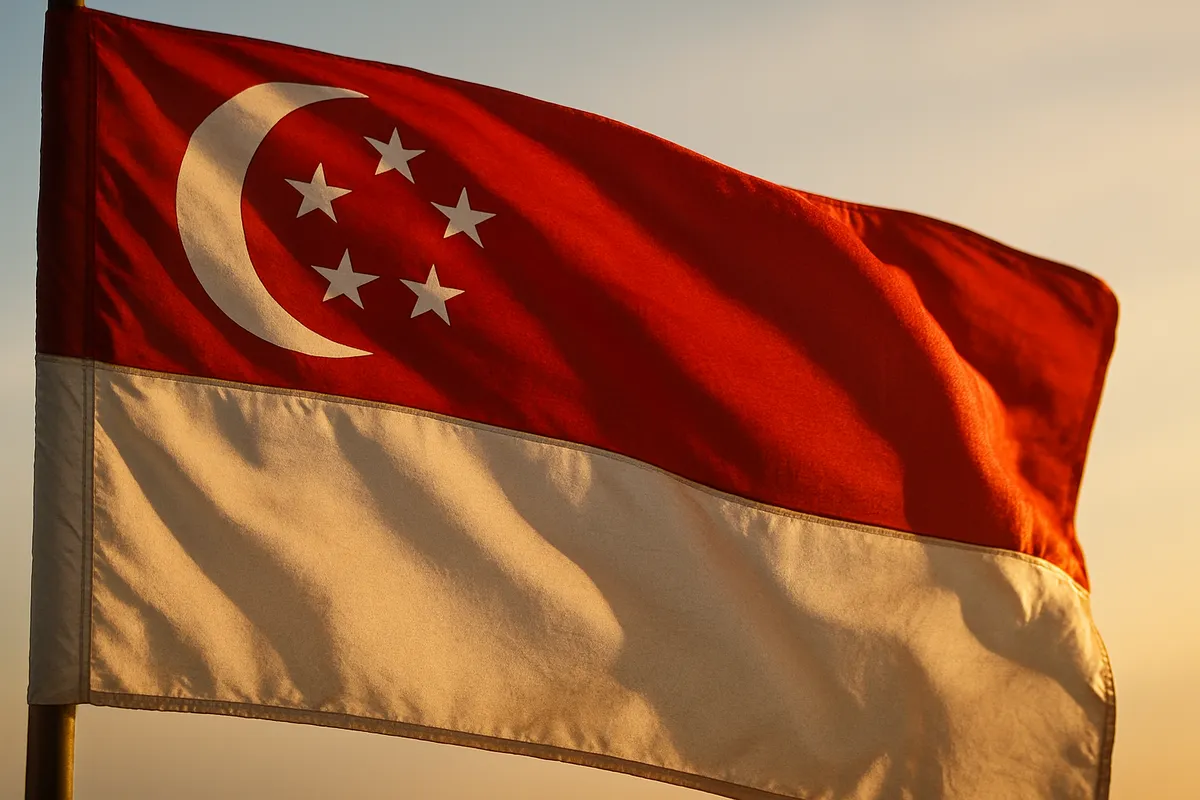

Singapore and Hong Kong remain the two most frequently considered Asian headquarters for startups, scale-ups and regional holding companies. This guide sharpens the question most founders actually face: not only “Where is the tax rate lower?” but “Where can my company credibly operate, hire, bank and scale without unexpected compliance or onboarding barriers?” For founders specifically researching company formation in Singapore, we compare taxes, resident director and secretary rules, substance expectations, banking and visa/mobility realities and give practical recommendations for common founder profiles.
Verdict: Singapore typically wins for founders who prioritise structured incentives, reliable regulatory clarity and straightforward visa pathways for entrepreneurs; Hong Kong often wins for trading, capital markets connectivity and simpler withholding/capital gains positions for certain holding structures. Read on for a worked tax comparison across three founder use-cases, a corporate compliance checklist, realistic banking expectations in 2026, and a founder-profile decision matrix to help you choose and engage local counsel.
Before diving into the detail, the table below summarises the core variables that drive most jurisdiction decisions. Use it as a fast reference, then read the sections that follow for the legal reasoning behind each entry.
| Feature | Singapore | Hong Kong |
|---|---|---|
| Headline corporate tax rate | 17 % (flat) | 16.5 % on assessable profits (standard IRD rate) |
| Taxing basis | Worldwide with exemptions; foreign-sourced gains may be tax-free if economic substance conditions are met | Territorial: only profits sourced in HK generally taxed; offshore profits may be exempt under IRD guidance |
| Resident director | At least one ordinarily resident director + resident company secretary required (Companies Act) | No statutory resident director requirement; company secretary and registered office required (Companies Registry) |
| Shareholding | No residency requirement; shareholder records public at ACRA | Shareholders may be non-residents; beneficial-ownership obligations evolving |
| Substance expectations | Formal IRAS substance guidance; BEPS / Pillar Two considerations | Substance needed to support offshore claims and meet international tax standards |
| Banking (corporate account) | High KYC under MAS Notice 626 and ECDD; fintech alternatives available | Banks apply HKMA AML/CFT guidance; account opening can be robust and subject to EDD |
| IP / R&D regime | Robust patent/IP tax incentives and R&D credits | Attractive for certain holding/IP models; incentives differ |
| Reputation & enforcement | Strong rule of law; active AML/CRS/BEPS enforcement | Strong international finance centre with active AML/CRS enforcement |
| Typical incorporation costs | S $315 government fee (ACRA) + secretary, nominee and address costs | Government fees + company secretary + registered address; ranges vary |
| Typical timeline | 1–3 business days | 1–3 business days (e-Registry) |
| Visa / mobility | EntrePass and Employment Pass pathways (MOM) | Quality Migrant Admission Scheme, employment visas, dependent pathways |
Key takeaway: The headline tax gap is narrow (0.5 percentage points). The real differentiators are substance rules, director residency, banking onboarding and founder mobility all explored in detail below.
Singapore levies a flat corporate income tax rate of 17 % on chargeable income. New companies can benefit from a partial tax exemption scheme that reduces the effective rate significantly on the first S $200,000 of chargeable income a meaningful advantage for early-stage ventures. Hong Kong’s standard profits tax rate is 16.5 % on assessable profits, with a two-tier regime offering 8.25 % on the first HK $2 million of profits for qualifying entities.
Crucially, the taxing basis differs. Singapore taxes income on a worldwide basis but grants exemptions for qualifying foreign-sourced income (dividends, branch profits, service income) when specific conditions including economic substance are satisfied. Hong Kong employs a territorial system: only profits arising in or derived from Hong Kong are generally taxed. Profits sourced outside Hong Kong may be exempt under IRD guidance, though the Inland Revenue Department increasingly requires evidence that offshore-profits claims are genuine.
Since 2024, Singapore’s IRAS has tightened the link between foreign-sourced income exemptions and demonstrable economic substance in Singapore. Foreign-sourced disposal gains, for instance, now require companies to show that adequate people, premises and decision-making occur locally. For Hong Kong, the refined foreign-sourced income exemption (FSIE) regime aligned with international BEPS standards similarly requires qualifying economic substance for passive income such as interest, dividends, IP income and disposal gains.
Singapore imposes no withholding tax on dividends paid to shareholders (the one-tier system). There is no capital gains tax per se, though gains characterised as trading income may be taxed. Hong Kong likewise imposes no withholding tax on dividends and has no general capital gains tax, making both jurisdictions attractive for holding structures but the characterisation of gains requires careful planning, especially after the FSIE refinements.
Singapore offers generous R&D tax deductions (up to 250 % on qualifying expenditure under the Enterprise Innovation Scheme), IP development incentives and the Innovation Development Incentive for IP income. Hong Kong provides a concessionary tax regime for qualifying IP income but its incentive landscape is narrower. For deep-tech founders, the Singapore incentive stack is generally more predictable and better documented.
Example (a): SaaS Founder Operating Revenue in APAC, Global Customers
| Assumption | Singapore | Hong Kong |
|---|---|---|
| Annual chargeable / assessable profits | S $500,000 | HK $500,000 equivalent |
| Headline rate | 17 % | 16.5 % |
| Partial exemption (first S $200k) | ~S $12,750 saving | Two-tier relief: 8.25 % on first HK $2 m |
| Effective tax (approx.) | ~S $59,500 (≈ 11.9 %) | ~HK $41,250 (≈ 8.25 % if profits ≤ HK $2 m) |
| Key variable | Straightforward if operations and team in SG | Must evidence profits sourced in HK or genuinely offshore; risk of IRD challenge on SaaS revenues |
Example (b): Regional Holding Company Dividend Flows
| Assumption | Singapore | Hong Kong |
|---|---|---|
| Dividends received from subsidiary | S $1,000,000 | HK $1,000,000 equivalent |
| Withholding tax on inbound dividends | 0 % (subject to participation exemption conditions) | 0 % |
| Tax on dividends at holding level | Exempt if foreign-sourced + substance conditions met | Exempt if genuinely offshore; FSIE regime conditions apply |
| Outbound dividend withholding | 0 % | 0 % |
| Key variable | IRAS substance requirements must be documented | FSIE substance test; some treaty networks differ |
Example (c): Fund/Asset Manager APAC Base
A fund manager with S $5 million in management fee income faces licensing considerations (MAS for Singapore; SFC for Hong Kong) layered on top of tax. Singapore’s fund management incentive schemes (e.g., Section 13O/13U for qualifying funds) can reduce or eliminate tax on qualifying fund income. Hong Kong’s Unified Fund Exemption regime offers parallel benefits for qualifying funds. The choice often turns on regulatory preference, investor expectation and the manager’s existing compliance infrastructure rather than headline tax alone.
Micro-summary: The headline rate gap is small. Effective tax depends on exemptions, incentive schemes, the source of income and whether substance conditions are met. Always model both jurisdictions with live numbers before committing.
Most founders choose a Singapore Private Limited Company (Pte Ltd) or a Hong Kong Private Company Limited by Shares. Both are limited-liability vehicles with flexible share capital. Singapore incorporations are filed electronically via BizFile+ (ACRA); Hong Kong incorporations are filed via the Companies Registry e-Registry. In both cases, incorporation can complete within one to three business days when documents are in order.
This is one of the sharpest structural differences. Under the Singapore Companies Act, every company must have at least one director who is ordinarily resident in Singapore meaning a Singapore citizen, permanent resident or holder of a qualifying work pass. A locally resident company secretary must also be appointed. Non-resident founders who do not plan to relocate will need to appoint a nominee or professional resident director, adding cost and governance complexity.
Hong Kong’s Companies Registry does not mandate a resident director. A company secretary must be appointed (an individual ordinarily resident in Hong Kong or a Hong Kong-incorporated body corporate), and a registered office in Hong Kong is required. This lighter residency footprint makes Hong Kong prima facie simpler for founders who will not be physically present in the jurisdiction.
Singapore companies must file an annual return with ACRA within specified deadlines. Small companies meeting at least two of three criteria (revenue ≤ S $10 m, assets ≤ S $10 m, employees ≤ 50) qualify for audit exemption. Hong Kong companies must file annual returns with the Companies Registry and are generally required to have their accounts audited by a practising CPA there is no small-company audit exemption comparable to Singapore’s.
Singapore maintains a public register of officers and shareholders via ACRA, and companies must keep a register of registrable controllers (beneficial owners with significant control). Hong Kong requires companies to maintain a significant controllers register, accessible to law enforcement but not publicly searchable in the same way. Both jurisdictions are tightening beneficial-ownership transparency in line with Financial Action Task Force (FATF) recommendations.
The OECD’s Pillar Two global minimum tax (15 % effective rate for in-scope multinationals with consolidated revenue above EUR 750 million) has practical implications even for smaller groups: investor due diligence and banking KYC now routinely ask about BEPS compliance posture. Both Singapore and Hong Kong have committed to implementing Pillar Two. For company formation in Singapore, founders should build substance from day one local employees, real office presence, board meetings held locally and documented decision-making to support both IRAS positions and international credibility.
Singapore’s resident-director requirement adds a compliance layer but also reinforces local substance claims. Hong Kong’s lighter formation rules are attractive for shell or holding structures but require separate substance planning to support tax positions.
Opening a corporate bank account in either jurisdiction has become materially harder since 2023. Banks in both Singapore and Hong Kong routinely decline applications from companies with no local operational presence, unclear business rationale or insufficient documentation. Non-resident founders should expect the process to take four to eight weeks, not the “same week” timelines some service providers advertise.
Singapore banks operate under MAS Notice 626 and associated guidelines on prevention of money laundering and countering the financing of terrorism. Enhanced Customer Due Diligence (ECDD) applies where the customer is non-resident, the corporate structure is complex, or the business model involves high-risk jurisdictions. The Collaborative Sharing of Money Laundering/Terrorism Financing Information and Cases (COSMIC) platform enables Singapore banks to share risk information meaning a failed application at one bank may affect attempts at others.
In Hong Kong, banks follow HKMA AML/CFT guidance. Expectations are broadly comparable: proof of business activity, identification of beneficial owners, source-of-funds documentation and a clear description of the intended use of the account.
Regulated fintech platforms (e.g., multi-currency wallets licensed under MAS or HKMA frameworks) can serve as interim solutions for receiving payments and managing FX. However, they may not satisfy all counterparty, investor or regulatory requirements particularly for fund managers, regulated entities or companies that need trade-finance facilities. Treat fintech accounts as a bridge, not a substitute, for a full banking relationship.
Banking is the single biggest friction point for non-resident founders in both jurisdictions. Prepare comprehensive documentation, engage local counsel for introductions, and allow two months for the process.
Both Singapore and Hong Kong now require demonstrable economic substance to sustain favourable tax positions. For Singapore, IRAS economic substance guidance identifies core income-generating activities (CIGA) that must be performed locally: strategic decision-making by qualified personnel, management and assumption of key risks, and material operational activities. In practice, this means local employees (not just a nominee director), lease or serviced-office arrangements, locally held board meetings and local accounting and compliance functions.
Singapore offers two primary visa routes for founders. The EntrePass is designed for foreign entrepreneurs starting an innovative, venture-backed or IP-owning business. The Employment Pass (EP) suits founders who will be employed as executives of their Singapore company. Both passes contribute to proving substance. Processing typically takes four to eight weeks; the EP now incorporates a points-based COMPASS framework, raising the bar for applicants who do not meet specific salary or qualification benchmarks.
Hong Kong offers the Quality Migrant Admission Scheme (QMAS), general employment visas and the Top Talent Pass Scheme. These pathways are generally accessible but do not provide the same structured entrepreneur-specific route as Singapore’s EntrePass. Founders who plan to relocate to Hong Kong typically apply under the investment-as-an-entrepreneur category of the general employment policy, which requires demonstration of a viable business plan and sufficient financial resources.
Substance checklist for audits and advance rulings:
Substance is no longer optional it is a prerequisite for both tax efficiency and banking access. Singapore offers more structured visa pathways for founders who want to relocate and build genuine local presence.
Both Singapore and Hong Kong participate in the OECD Common Reporting Standard (CRS) and have extensive exchange-of-information treaty networks. Companies that fail to maintain proper records, file accurate CRS returns or respond to information requests risk regulatory penalties, bank account closures and reputational damage. Industry observers expect enforcement intensity to continue increasing through 2026–2027, particularly for structures that lack visible substance.
Singapore’s Personal Data Protection Act (PDPA) and Hong Kong’s Personal Data (Privacy) Ordinance (PDPO) govern the collection, use and disclosure of personal data. Both frameworks permit cross-border data transfers subject to safeguards. For companies handling customer data across Asia-Pacific, Singapore’s PDPA is generally regarded as more prescriptive in its transfer-mechanism requirements, while Hong Kong’s PDPO is currently less restrictive though reform is under active consideration.
Statutory directors’ duties in both jurisdictions carry personal liability for breaches of fiduciary obligations, failure to act honestly and failure to prevent insolvent trading. Singapore’s director disqualification regime and Hong Kong’s parallel provisions mean that governance is not a box-ticking exercise. Best-practice governance items include:
Both jurisdictions are credible, well-regulated finance centres. The risk differential lies in how well a company documents its compliance, not in the jurisdiction label itself.
| Cost item | Singapore (approx.) | Hong Kong (approx.) |
|---|---|---|
| Government incorporation fee | S $315 (ACRA) | HK $1,720 (Companies Registry) |
| Company secretary (annual) | S $600 – S $2,400 | HK $2,000 – HK $8,000 |
| Nominee resident director (if needed) | S $2,000 – S $5,000 / year | Not required |
| Registered address | S $300 – S $1,200 / year | HK $1,500 – HK $5,000 / year |
| Annual accounting and tax filing | S $1,000 – S $3,000 (unaudited small co.) | HK $5,000 – HK $15,000 (audit mandatory) |
| Business registration / annual filing | S $60 (ACRA annual return) | HK $2,250 (annual Business Registration fee) |
Note: these are indicative ranges based on market norms for simple private companies. Costs increase materially for multi-entity groups, regulated entities and structures requiring nominee services.
Singapore’s audit exemption for small companies can reduce first-year compliance costs significantly compared with Hong Kong’s mandatory audit requirement. Factor in nominee director costs if you will not have a resident director in Singapore.
Match your business model, operational priorities and personal circumstances to the profiles below. Each recommendation includes caveats jurisdiction selection is never one-size-fits-all. Where the answer is uncertain, a jurisdiction fit assessment with experienced local counsel is the prudent next step.
If your profile does not map neatly to the above, or you are weighing multiple factors, a structured jurisdiction fit assessment reviewed by qualified counsel in both Singapore and Hong Kong is the recommended approach.

posted 23 minutes ago

posted 1 hour ago

posted 1 hour ago

posted 2 hours ago

posted 2 hours ago

posted 3 hours ago

posted 3 hours ago

posted 3 hours ago

posted 3 hours ago

posted 4 hours ago

posted 4 hours ago

posted 4 hours ago
No results available
Find the right Legal Expert for your business

Send welcome message