
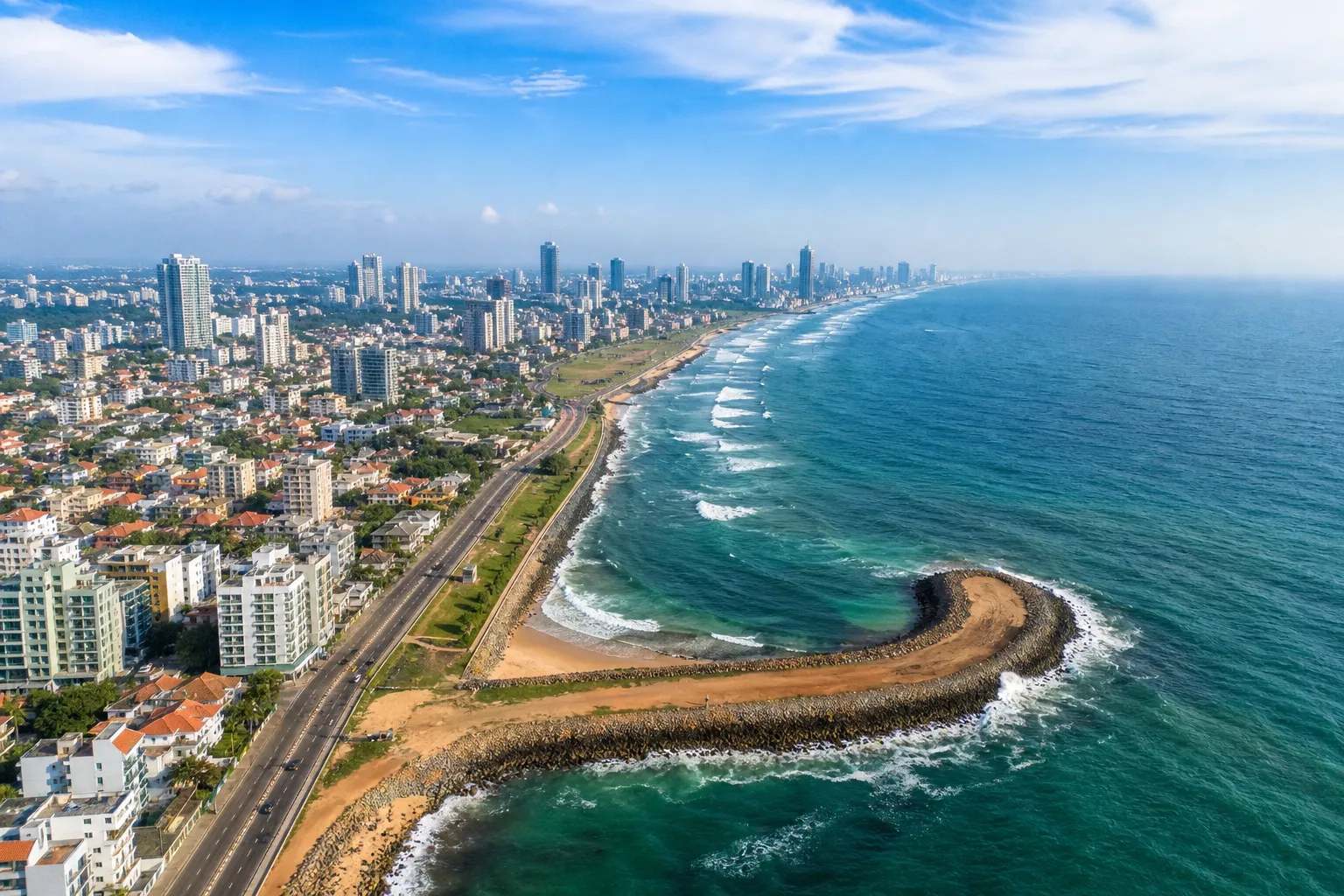
Trademark licensing Sri Lanka has moved firmly to the centre of commercial strategy for brand owners, franchisors and inbound investors as the country integrates more deeply with international registration systems. With Sri Lanka’s accession to the Madrid Protocol and a steady rise in inbound brand entry, licensors now need jurisdiction-specific, transactionally grounded guidance rather than high-level procedural notes. This guide explains, step by step, how licensing works in Sri Lanka, what obligations arise on registration and recordal, which contractual terms protect your rights, how royalties are taxed, and how licensed marks are enforced. Throughout, the aim is practical: to help you structure, draft and commercialise a brand deal that holds up commercially and legally.
Who this guide is for: brand owners, licensors, franchisors and in-house counsel considering licensing or franchising in Sri Lanka. It covers how licensing works in Sri Lanka, registration and recordal obligations, essential contract terms, commercial structuring, tax, and enforcement, with sample clauses and a due diligence checklist.
At its core, trademark licensing Sri Lanka is a contractual arrangement in which the owner of a registered or registrable mark (the licensor) permits another party (the licensee) to use the mark on defined terms, usually in exchange for royalties or other consideration. The licensor retains ownership of the mark; the licensee obtains a right to use it within agreed boundaries of goods, services, territory and time. A well-drafted licence preserves the distinctiveness and goodwill of the brand while generating revenue and extending market reach.
The practical sequence for a brand owner is straightforward in outline: confirm the mark is registered (or file for registration) with the National Intellectual Property Office of Sri Lanka (NIPO), negotiate commercial terms, draft a written licence agreement, and record the licence with NIPO so that it is effective against third parties and carries evidentiary weight. Each of these stages benefits from careful attention to local procedure and to the commercial objectives behind the deal.
Licences in Sri Lanka generally fall into three forms, each with different commercial and control implications:
A franchise is a specialised and more comprehensive form of brand licensing. A pure trademark licence grants rights to use a mark; a franchise grants the right to operate an entire business system under the brand, with prescribed standards, operating manuals, training and ongoing support. Franchising involves very high levels of licensor control to protect system integrity, and typically combines an initial fee with ongoing royalties. For brand owners seeking to export a complete business model, franchising is the appropriate vehicle; for those licensing a product line or a single brand element, a trademark licence will usually suffice. The choice shapes the entire drafting exercise, from quality control to termination.
Every licence should open with precise identification of the parties and carefully drafted definitions. Identify the licensor and licensee by full legal name and registered address, and confirm the licensor’s title to the mark. The definitions section should fix the “Licensed Marks” by reference to registration numbers at NIPO, define the “Territory” and the “Licensed Products” or “Licensed Services,” and set out the “Field of Use. ” Ambiguity in these foundational terms is the most common source of later disputes. In a cross-border trademark licence, definitions must also distinguish between domestic sales and export markets, because the commercial and enforcement consequences of each differ markedly.
Getting the definitions right at the outset is the single most cost-effective investment in a durable agreement.
Understanding the legal framework is essential before any trademark licensing Sri Lanka transaction is finalised. The regime rests on domestic intellectual property legislation administered by NIPO, supplemented by Sri Lanka’s international commitments through the Madrid System. Together these determine how marks are registered, how licences are recorded, and how rights can be asserted against third parties.
Sri Lanka’s trademark protection is governed by the Intellectual Property Act, No. 36 of 2003, which consolidated and modernised the country’s IP regime and remains the principal governing statute, together with its implementing regulations. The authoritative texts are published through official channels. Practitioners should consult the consolidated legislation available via WIPO Lex and the Parliament of Sri Lanka’s legislative portal when relying on specific statutory provisions, amendments or gazetted regulations. Because statutory references and section numbers must be cited precisely, the primary legislative text should always be checked against the official source rather than paraphrased from secondary commentary.
Academic analysis from the Faculty of Law at the University of Colombo provides useful scholarly context on how these provisions operate in practice and on the direction of ongoing reform.
NIPO administers the register of trademarks and the recordal of transactions affecting registered marks, including licences. The office publishes procedural guidance, prescribed forms and the official fee schedule. In practical terms, recording a licence involves submitting the relevant application form together with evidence of the licence (or an extract of its material terms), proof of the licensor’s registration, and payment of the applicable fee. Because forms, fees and processing timelines are periodically updated, applicants should verify the current requirements directly with NIPO before filing.
Sri Lanka’s accession to the Madrid Protocol has significant implications for cross-border licensing. The Madrid System allows a brand owner to obtain and maintain protection in multiple member territories through a single international application, administered by WIPO. For licensors, this can streamline the acquisition of protection in Sri Lanka and in export markets, but it also raises practical questions about how licences over internationally registered marks are recorded and given effect at the national level. A licence relating to a mark protected through the Madrid System must still be managed with attention to Sri Lankan recordal requirements, since national effect against third parties depends on compliance with local procedure.
Brand owners structuring a cross-border trademark licence should therefore coordinate their international portfolio strategy with local recordal from the outset, and should confirm the current status and operational practice of Madrid filings with NIPO and WIPO.
One of the most frequent questions in trademark licensing Sri Lanka is whether a licence must be registered. The short answer is that recordal with NIPO is strongly recommended. While parties are free to agree licence terms privately, recordal produces important legal effects that a private contract alone cannot deliver.
Recording a licence with NIPO gives public notice of the arrangement and provides evidentiary weight if the licence terms are later disputed. Recordal helps protect the position of the licensee against third parties, supports the enforceability of licensed rights, and creates a clear, official record of who is entitled to use the mark and on what basis. Failure to record can leave a licensee exposed to competing claims and can complicate enforcement, because a party seeking to assert licensed rights may need to prove the existence and scope of the licence from first principles. Where a licence is exclusive, recordal is particularly valuable in establishing the licensee’s standing to act against infringers.
The practical steps for recording a licence are as follows:
Record the licence promptly after signing rather than leaving it to a later stage, since the protective effects of recordal operate from the date the record is established. Confirm current fees and processing times with NIPO before filing, and retain certified copies of the recorded particulars for enforcement and audit purposes.
The contract is where commercial intention becomes enforceable right. A robust trademark licensing agreement Sri Lanka protects the brand’s value, allocates risk clearly, and provides remedies if the relationship breaks down. The sample language below is illustrative only and marked accordingly; each clause should be adapted to the specific deal and reviewed by qualified counsel.
The grant clause defines exactly what the licensee may do. It should specify whether the licence is exclusive, sole or non-exclusive; identify the Licensed Marks, Licensed Products or Services, Field of Use and Territory; and state whether sublicensing is permitted.
Sample, adapt and seek legal advice: “The Licensor grants to the Licensee a non-exclusive, non-transferable licence to use the Licensed Marks solely in connection with the Licensed Products within the Territory during the Term, subject to the terms of this Agreement.”
Set out the duration of the licence, any renewal mechanism, and the grounds and consequences of termination. Include termination for material breach (with a cure period), insolvency, and failure to maintain quality standards, and address the licensee’s obligations on termination, such as ceasing use of the mark and disposing of or returning branded materials.
Sample, adapt and seek legal advice: “Either party may terminate this Agreement by written notice if the other commits a material breach that remains unremedied thirty (30) days after written notice specifying the breach. On termination, the Licensee shall immediately cease all use of the Licensed Marks.”
Quality control is the heart of any brand licence. Because the value of a mark depends on consistent quality, the licensor must retain the right to set standards, inspect products or premises, approve marketing materials, and require corrective action. Without effective quality control, the mark’s distinctiveness and the goodwill attaching to it can be eroded, undermining both the licensor’s rights and the commercial value of the licence. The clause should make clear that all goodwill generated by the licensee’s use accrues to the licensor.
Sample, adapt and seek legal advice: “The Licensee shall ensure that all Licensed Products meet the quality standards specified by the Licensor from time to time. The Licensor may inspect samples and the Licensee’s facilities on reasonable notice. All goodwill arising from use of the Licensed Marks shall accrue solely to the Licensor.”
Define the royalty rate or fee structure, the basis of calculation (for example, a percentage of net sales), payment frequency, currency, and the licensee’s record-keeping and reporting obligations. Include audit rights so the licensor can verify royalty statements, and specify the consequences of an underpayment discovered on audit.
Sample, adapt and seek legal advice: “The Licensee shall pay royalties of [X]% of Net Sales, payable quarterly, and shall maintain accurate records. The Licensor may audit such records once per year on reasonable notice; any underpayment exceeding [Y]% shall be borne together with the reasonable costs of the audit.”
Confirm that the licensor retains ownership of the Licensed Marks and all associated goodwill, and address what happens to any improvements, variations or new marks developed during the relationship. Typically the agreement will provide that modifications to the brand, and rights in co-branded or derivative marks, vest in or are assigned to the licensor.
Where the arrangement involves proprietary standards, customer data or commercially sensitive information, include confidentiality undertakings and, where relevant, data protection obligations. Sri Lanka’s Personal Data Protection Act, No. 9 of 2022 establishes a statutory framework for the processing of personal data; parties handling personal data under a licence should ensure their arrangements are consistent with the obligations under that Act as they come into operation.
Specify the governing law and the forum for disputes. In cross-border deals, parties frequently prefer arbitration for neutrality and enforceability, but should ensure that interim relief, such as injunctions to stop unauthorised use, remains available from the courts. Align the dispute resolution clause with the enforcement strategy discussed later in this guide.
Commercial structuring determines whether a licence is profitable after tax and compliant across borders. In any trademark licensing Sri Lanka transaction involving a foreign licensor or licensee, tax treatment, sublicensing arrangements and transfer pricing must be considered alongside the IP terms.
Royalty income has specific tax consequences in Sri Lanka. Royalties paid into or out of Sri Lanka can attract withholding tax under the Inland Revenue Act, No. 24 of 2017 (as amended), and the applicable rate and treatment depend on the structure of the arrangement and the residence of the parties. Brand owners should confirm the current withholding tax rules and rates with the Inland Revenue Department (IRD) and obtain tax advice before fixing royalty rates, since the net return to the licensor depends materially on the tax outcome. Where a double taxation treaty applies, the treaty position should be factored into the structure.
Document the agreed allocation of any tax liability clearly in the royalty clause to avoid later disputes about who bears withholding.
If the licensee is permitted to sublicense, the agreement should set the conditions carefully: the licensor should retain approval rights over sublicensees, require sublicences to incorporate the same quality control and reporting obligations, and preserve the ability to enforce directly against sublicensees. For export-oriented arrangements, a foreign licensor can grant exclusive rights to a Sri Lankan licensee for defined export markets, but the licence must address quality control across those markets, local registration where necessary, and the enforcement mechanism in each territory.
Where licensor and licensee are related parties, transfer pricing rules require that royalty rates reflect arm’s length pricing, supported by appropriate documentation. Cross-border arrangements may also raise permanent establishment questions depending on the activities carried out in Sri Lanka. Both issues should be reviewed with tax counsel and against current IRD guidance.
Thorough due diligence protects both sides and surfaces problems before they become liabilities. Before signing, each party should work through a structured checklist:
A documented due diligence process strengthens the licensee’s confidence and protects the licensor’s reputation and the brand’s integrity.
A licence is only as valuable as the licensor’s ability to enforce it. Enforcement in trademark licensing Sri Lanka operates on two fronts: contractual remedies against the licensee, and intellectual property remedies against third parties and, where relevant, a licensee who exceeds the licence.
If a licensee breaches quality control or other obligations, the first line of response is contractual: notice to remedy within the agreed cure period, suspension of rights, and ultimately termination. Where unauthorised or non-compliant use threatens the brand, the licensor can seek injunctive relief from the courts to stop the use pending resolution. Interim injunctions are particularly important where continued use would cause irreparable harm to the mark’s goodwill. The dispute resolution clause should be drafted so that arbitration does not preclude urgent court-ordered injunctions.
Against infringers and counterfeiters, licensors can pursue civil remedies through the Commercial High Court, which has jurisdiction over intellectual property matters, and in appropriate cases criminal and border measures against counterfeit goods. Recordal of the licence strengthens the licensee’s standing to participate in enforcement, and in some circumstances the cancellation or rectification of a recorded licence may form part of the response to a serious breach. Coordinate enforcement strategy with NIPO procedures and verify the available routes against the Intellectual Property Act.
Build enforcement into the licence from day one: require the licensee to report suspected infringements, cooperate in enforcement actions, and maintain evidence of use and quality. Prompt, consistent enforcement preserves both the mark and the deterrent value of the brand.
| Feature / Licence type | Exclusive | Sole | Non-exclusive | Franchise |
|---|---|---|---|---|
| Number of licensees permitted | 1 | Licensor may use; others not permitted | Multiple | Multiple under franchise model |
| Licensor control over use | High (contractually) | High | Moderate | Very high (system, standards) |
| Typical royalties | Higher | High | Lower | Percentage plus fees |
| Enforcement complexity | Easier to police | Moderate | Higher (multiple parties) | High, system plus IP enforcement |
| Best for | Market exclusivity / strategic partner | Licensor retains own use plus partner | Broad distribution | Complete business model export |
A structured timeline keeps a licensing transaction on track from first contact to ongoing monitoring:
Trademark licensing Sri Lanka in 2026 offers brand owners a powerful route to monetise and expand their brands, but success depends on rigorous structuring, precise drafting and disciplined compliance. Confirm registration and clear title, choose the licence type that matches your commercial goals, record the licence with NIPO to secure third-party effect, structure royalties with the tax position firmly in view, and build enforcement into the agreement from the outset. Handled well, a trademark licence protects the integrity of the brand while unlocking new markets; handled carelessly, it erodes goodwill and invites disputes. For bespoke drafting and review tailored to your transaction, consult a qualified Sri Lankan intellectual property practitioner before signing.
For further guidance, see the Trademark practice, Sri Lanka page and the directory to Find a trademark lawyer in Sri Lanka.
This article was produced by Global Law Experts. For specialist advice on this topic, contact Mahinda Haradasa at Varners, a member of the Global Law Experts network.

posted 47 minutes ago

posted 51 minutes ago

posted 1 hour ago

posted 2 hours ago

posted 3 hours ago

posted 3 hours ago

posted 3 hours ago

posted 4 hours ago

posted 4 hours ago

posted 4 hours ago

posted 5 hours ago

posted 5 hours ago
No results available
Find the right Legal Expert for your business

Send welcome message