
Our Expert in Guinea
No results available
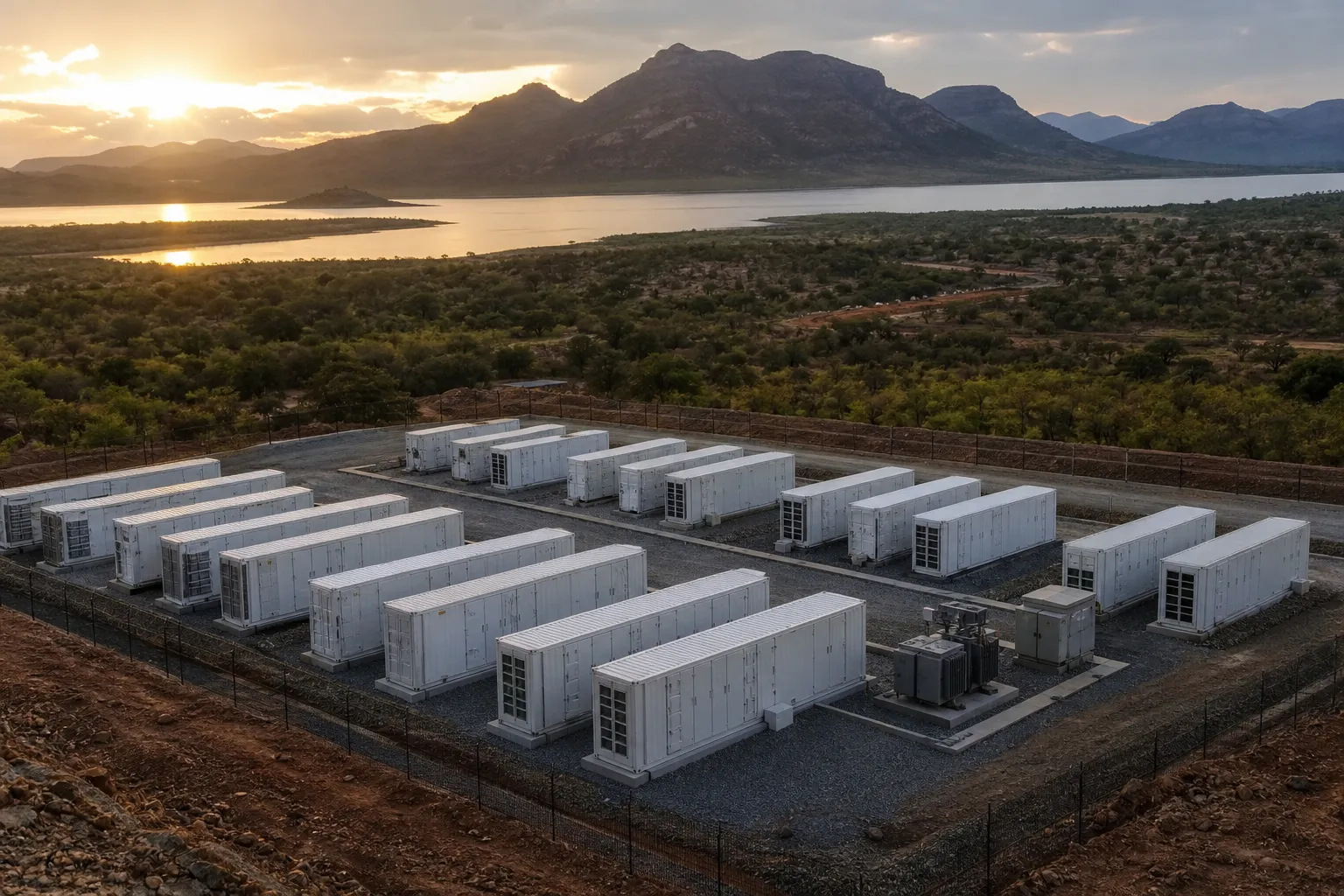
Battery energy storage Guinea is moving from a niche technical question to a central commercial opportunity as the country’s electricity sector reforms begin to reshape how generation, distribution and market participation are regulated. For independent power producers (IPPs), mining operators and commercial and industrial (C&I) developers, the practical questions are immediate: do storage assets need their own licence, how will Electricité de Guinée (EDG) treat interconnection, and how can a battery project actually earn money once connected? This guide answers those questions with a compliance-first, step-by-step approach, flagging where primary Guinean texts must be confirmed and where regional frameworks point to the likely direction of travel.
The aim is to give project legal teams, sponsors and lenders a working playbook for structuring bankable storage projects in Guinea.
Who this is for: IPPs, mining companies and C&I developers planning battery storage in Guinea.
What it covers: licensing pathways, EDG interconnection and technical studies, revenue stacking, safety and customs, and a practical development checklist.
Next step: contact a Global Law Experts network energy lawyer in Guinea for a tailored project checklist and due diligence support.
Guinea’s electricity sector reforms are being developed against a backdrop of a power sector that has struggled with supply reliability, under-investment in transmission and a heavy reliance on hydropower that leaves the grid exposed to seasonal variability. Battery energy storage Guinea projects sit at the intersection of these challenges: storage can firm up intermittent and seasonal generation, provide system flexibility and defer costly network upgrades. The reform agenda is widely understood to be intended to clarify licensable activities, open the door to private participation and establish clearer grid-access principles, all of which bear directly on how storage assets will be treated.
Because the full statutory texts and implementing regulations on storage are still evolving, the guidance below uses conditional language where the primary sources have not yet been published in final form. Developers should treat the framework described here as the expected shape of the regime and confirm each point against the Journal Officiel de la République de Guinée and any EDG circulars once issued. Guinea’s electricity sector has historically been governed by its electricity code and associated texts, which should be reviewed in their current, in-force versions.
The sector is organised around a set of licensable activities, generation, transmission, distribution and supply, and the conditions under which private entities may participate. For storage, the central legal question is whether a battery asset is classified as a form of generation (because it injects energy into the grid), as a network asset (because it supports system operation), or as a distinct category of its own. Regional practice under the ECOWAS framework and the guidance of the ECOWAS Regional Electricity Regulatory Authority (ERERA) increasingly recognises storage as a flexible asset that can be licensed within existing generation or network categories, or regulated through market-participant registration.
Market participation rules, who may sell energy, to whom, and under what tariff or contract, will determine how storage monetises. The likely practical effect is that storage will be able to participate either as part of an IPP’s licensed generation portfolio, as an embedded asset behind a C&I meter, or, over time, as a standalone merchant or ancillary-services provider once the market design matures.
Sector reforms are typically accompanied by transitional provisions that preserve existing authorisations, set grandfathering rules for projects already in development and phase in new licensing obligations. Developers should watch for three things: the commencement of any new primary legislation, the publication of implementing decrees that give operational detail to the licensing categories, and any EDG technical circulars that define interconnection and grid-code obligations. Until those implementing texts are published, early-stage projects should build flexibility into their timelines and contracts so that licence applications can be adapted to the final regulatory categories.
One of the first questions every sponsor asks is whether battery energy storage Guinea projects require a separate, standalone storage licence. The honest answer, pending confirmation of the applicable texts, is that storage will most likely be licensed through one of the existing activity categories rather than through a bespoke “storage licence,” with the precise route depending on how the asset is configured and who it serves.
In most reforming African jurisdictions, and consistent with ERERA’s regional approach, a grid-connected battery that injects energy is treated as a generation-type activity and is captured by an IPP or generation licence. A battery that is embedded within a distribution network and operated by the network owner may fall under a distribution authorisation, while a behind-the-meter battery serving a single C&I site may require only limited authorisation, or none beyond standard construction and environmental permits, provided it does not export to the public grid.
The key determination is function, not technology. Developers should document, from the outset, whether the battery will export to the grid, provide services to EDG, serve a captive load, or combine several of these roles. That functional classification will drive the licensing route. Where the law is silent or ambiguous, the prudent step is to seek a written determination from the regulator before committing capital.
Three broad pathways are likely to be available for battery energy storage Guinea developments:
For C&I and mining projects, a behind-the-meter configuration that avoids grid export can substantially simplify the licensing burden, which is a recurring reason that captive storage is attractive to industrial off-takers.
Beyond the electricity licence, every battery project will need the standard suite of development permits. An Environmental and Social Impact Assessment (ESIA) is likely to be required, with the scope and threshold determined by Guinea’s environmental authority, this must be confirmed against the applicable Guinean environmental regulations in force. Construction permits, land rights or lease documentation, and fire-safety approvals specific to lithium-ion installations will also be needed.
A recommended licence application checklist for project legal teams includes:
Grid connection is where many battery energy storage Guinea projects succeed or stall. EDG, as the incumbent utility and system operator, controls access to the transmission and distribution networks, and its technical requirements will shape project cost, schedule and risk. Because EDG’s formal grid code and interconnection rules for storage may not yet be published in final form, developers should engage EDG early and expect the process to evolve as the regulatory framework beds in.
EDG is responsible for operating the network, dispatching generation and maintaining system stability. For any grid-connected asset, EDG will set connection conditions, approve technical designs, define metering and communications requirements, and ultimately authorise energisation. A grid code, the technical rulebook governing how assets connect and behave, establishes the parameters storage must meet, including voltage and frequency ride-through, power quality limits and the control functions the asset must provide. Where a Guinea-specific grid code is incomplete for storage, EDG may apply generation-asset requirements by analogy and impose additional conditions tailored to batteries.
Before granting a connection, EDG will typically require a sequence of technical studies to assess the impact of the battery on the network. These usually include:
Each study produces deliverables that feed the connection offer. Developers should budget time and cost for iterative studies, since EDG may require re-runs when design parameters change.
Batteries introduce technical considerations that conventional generation does not. EDG is likely to request detailed dynamic models of the battery and its inverters to simulate fast response behaviour. A critical decision is the control mode: a grid-following inverter synchronises to an existing grid voltage, whereas a grid-forming inverter can establish voltage and frequency and support weaker networks, increasingly valued for system strength. Anti-islanding protection, which prevents the battery from energising a disconnected section of network, is a safety-critical requirement. Harmonic analysis ensures the power-electronic conversion does not degrade power quality beyond grid-code limits. These storage-specific studies, drawing on best-practice integration guidance from bodies such as IRENA, are increasingly standard for battery interconnection worldwide.
The connection relationship is formalised through an interconnection or connection agreement with EDG. This document sets out the technical connection point, the metering and SCADA data points to be exchanged, the rights and responsibilities of each party, outage and maintenance coordination, and, critically, how the cost of any required network upgrades is allocated. A common point of negotiation is whether the developer bears the full cost of reinforcement or shares it where the upgrade benefits the wider network. Developers should expect EDG to take standard positions on cost allocation and should negotiate clear provisions on connection timelines, liability for delay and the consequences of curtailment.
A realistic connection and negotiation timeline runs in parallel with the licensing process and should allow for multiple rounds of study review and agreement drafting before energisation.
The commercial case for a battery depends on how many revenue streams it can combine, a practice known as revenue stacking. The products available to battery energy storage Guinea projects will depend on the market design that emerges, but the main categories below indicate the likely monetisation routes and how storage can enrol for each.
The most intuitive revenue stream is energy arbitrage, charging when power is cheap or abundant and discharging when it is expensive or scarce. In a grid heavily dependent on seasonal hydropower, storage can shift surplus wet-season energy or daytime solar into evening peaks. The value of arbitrage depends on there being a price signal or tariff differential to capture, which in turn depends on the market design that emerges from the reforms. Where a wholesale price signal is limited, arbitrage value may instead be realised through contracted dispatch arrangements with an off-taker.
Batteries are exceptionally well-suited to fast frequency response and other ancillary services because they can inject or absorb power very quickly. If the framework and EDG establish procurement mechanisms for ancillary services in Guinea, such as frequency regulation, spinning reserve or voltage support, storage could earn availability and utilisation payments for these products. The emergence of ancillary-services arrangements is a recognised trend across West Africa, and regional coordination under ERERA may help standardise such products over time. Until formal procurement rules exist, these services may be contracted bilaterally with EDG.
Capacity payments reward an asset for being available to deliver power when the system needs it, independent of how often it actually runs. For a battery to qualify for capacity payments in Guinea, the framework would need to define storage de-rating rules, recognising that a battery can only sustain output for the duration of its stored energy. Where a capacity mechanism exists, storage can provide valuable firm capacity, particularly during evening peaks when solar output falls away. Developers should confirm whether capacity payments are available under the applicable framework and how storage duration affects the credited capacity.
For mining and industrial off-takers, the strongest near-term value often lies behind the meter. Here, a battery reduces demand charges through peak-shaving, improves power quality, provides backup during grid outages and enables greater integration of on-site renewables. Storage can also augment a power purchase agreement (PPA), for example, pairing a solar PPA with a storage annex so the combined asset delivers firm, dispatchable energy. Contracting structures for these use-cases include a PPA with a storage annex, or a standalone Energy Management Agreement that defines how the battery is operated and how its benefits are shared.
For bankability, lenders will look for contracted, predictable cash flows rather than purely merchant exposure, so the blend of contracted and merchant revenue is a central financing consideration.
Lithium-ion systems carry specific safety, environmental and import obligations that must be addressed early. These requirements apply to every battery energy storage Guinea project regardless of its revenue model.
An ESIA process is likely to be required, with the depth proportionate to project size and location. Developers should plan for genuine stakeholder consultation, assessment of land and community impacts, and a management plan addressing end-of-life battery handling and potential environmental risks. The responsible authority and applicable thresholds must be confirmed against Guinea’s environmental legislation before the application is finalised.
Fire safety is central to lithium-ion deployment because of thermal runaway risk. Projects should specify systems designed to recognised international standards, including relevant IEC standards for safety and performance. For transport, lithium batteries are classified as dangerous goods and must satisfy the UN 38.3 testing requirements and comply with international transport rules under the UN recommendations on the transport of dangerous goods. Site design should incorporate appropriate spacing, detection, suppression and emergency response planning aligned with these standards.
Battery equipment must be correctly classified for customs purposes, which affects the duties payable. Some jurisdictions offer duty relief or exemptions for renewable energy and infrastructure equipment; whether such incentives apply to storage in Guinea must be confirmed with the Guinean customs authority. Required import documentation typically includes manufacturer certificates, UN 38.3 test summaries for shipping, and conformity certificates. Developers should verify the correct tariff classification and any available exemptions well before shipment to avoid clearance delays and unexpected cost.
Bankable storage projects require contracts and security packages that lenders recognise. The following considerations are particularly relevant where storage is co-located with generation or serves an industrial off-taker.
When a battery is paired with solar or hydro generation, the PPA must clearly allocate the storage function. Key drafting points include: defining whether the battery charges only from the co-located plant or also from the grid; specifying dispatch rights and who controls charge and discharge; setting performance guarantees for round-trip efficiency and availability; and clarifying how degradation over time affects guaranteed output. A storage annex to the PPA, or a separate Energy Management Agreement, allows these obligations to be tailored without disrupting the underlying generation terms.
Lenders financing storage will expect a robust security package and will pay close attention to risks unique to batteries. These include insurance covering thermal runaway and fire risk, strong performance and capacity warranties from the battery supplier, and augmentation provisions that address capacity loss over the asset’s life. Step-in rights allow lenders or off-takers to take over operation if the developer defaults, while well-drafted operation and maintenance clauses ensure the battery is managed to preserve warranty and performance. Where available, state guarantees or support arrangements can materially improve bankability, and developers should assess whether any such support applies to their project.
The development path for a storage project in Guinea follows a logical sequence of decision points:
The table below illustrates, at a high level, how a storage licensing and interconnection regime in Guinea is likely to compare with typical patterns across West African neighbours. It is indicative and should be read alongside the applicable Guinean texts.
| Dimension | Guinea (expected approach) | Typical West African neighbour |
|---|---|---|
| Storage licensing model | Likely within generation/IPP or distribution categories; standalone storage licence not yet established | Commonly licensed as generation; standalone storage categories emerging in a few markets |
| EDG / utility interconnection complexity | Single incumbent utility (EDG) controls access; storage-specific grid code still developing | Often a dominant utility; grid codes range from basic to moderately developed |
| Ancillary services market | Nascent; products likely contracted bilaterally pending formal procurement | Early-stage in most markets; some pilot ancillary-services arrangements |
| Capacity payments | To be confirmed; storage de-rating rules would be needed | Available in a limited number of more mature markets |
| Behind-the-meter / C&I route | Attractive where no grid export; lighter authorisation burden | Widely used by mining and industry across the region |
Battery energy storage Guinea is poised to become a key enabler of a more reliable, flexible and investable power sector as the country’s electricity reforms advance. The practical path to a bankable project runs through correct functional classification, the right licence route, early and well-managed EDG interconnection studies, a revenue model that stacks contracted and merchant value, and rigorous attention to safety, ESIA and customs compliance. Because key Guinean texts on storage are still evolving, developers should treat this guidance as the expected framework and confirm each step against the Journal Officiel and EDG circulars as they are published. For tailored due diligence, licensing support and interconnection strategy, contact a Global Law Experts network energy lawyer in Guinea.
This article was produced by Global Law Experts. For specialist advice on this topic, contact Aboubacar Sidiki Kanté at ASK AVOCATS, a member of the Global Law Experts network.

posted 13 minutes ago

posted 34 minutes ago

posted 1 hour ago

posted 2 hours ago

posted 2 hours ago

posted 2 hours ago

posted 3 hours ago

posted 3 hours ago

posted 3 hours ago

posted 3 hours ago
posted 4 hours ago

posted 4 hours ago
No results available
Find the right Legal Expert for your business

Send welcome message