
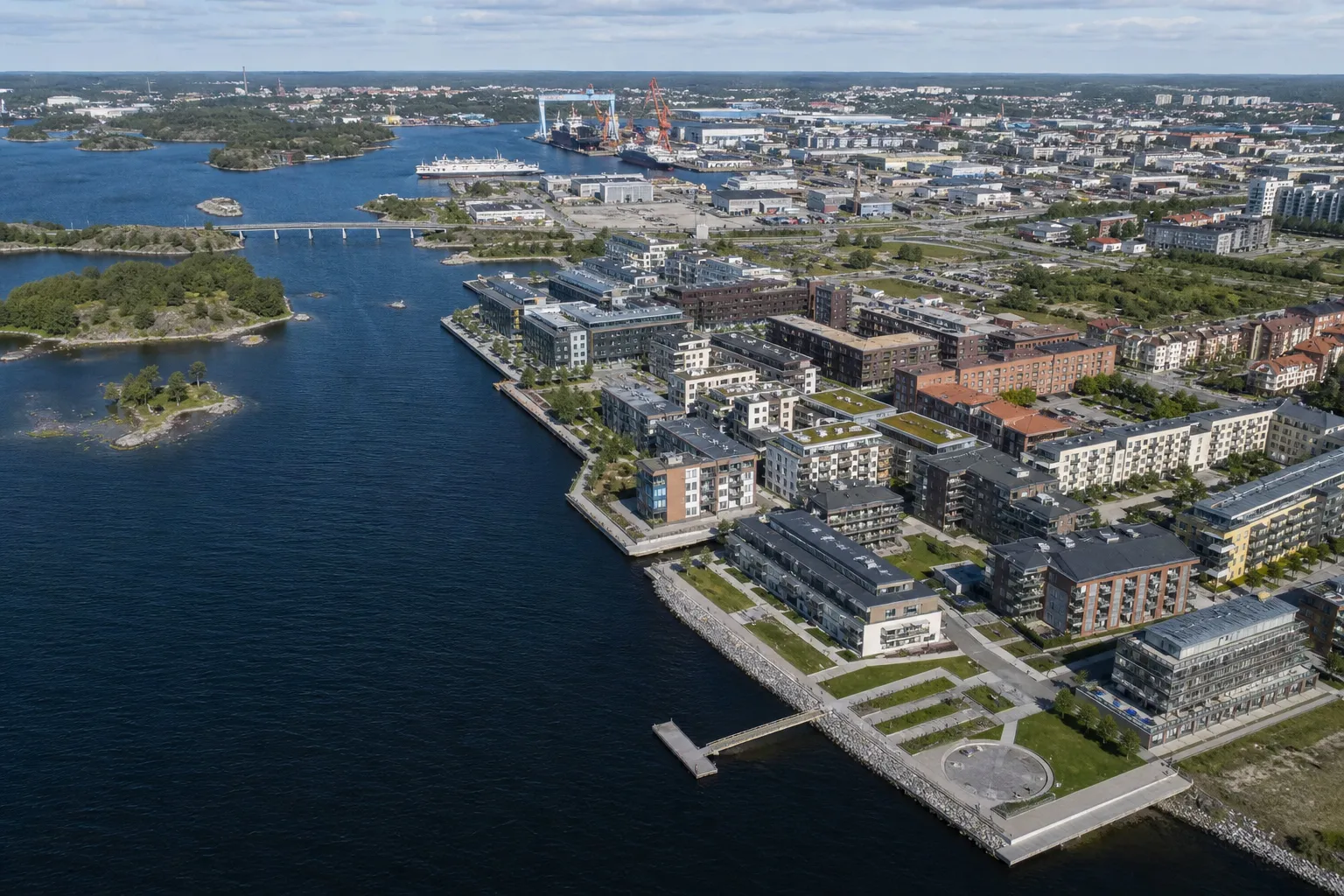

Forming a private limited company Sweden, known locally as an aktiebolag (AB), is one of the most reliable ways for foreign founders to establish a credible, limited-liability presence in the Nordic market in 2026. This guide is written for entrepreneurs and international businesses who want a practical, hireable roadmap rather than a recital of firm credentials: how to register with Bolagsverket, how much share capital you need, how to secure your F‑tax and VAT registrations, and how to navigate the increasingly rigorous banking and KYC processes that non-resident owners now face.
The statutory minimum share capital for a private limited company in Sweden remains SEK 25,000, and while Bolagsverket’s e‑filing tools have accelerated registration, documentation and cross-border verification are still the practical bottlenecks.
Below you will find a numbered process, a comparison table, detailed sections on eligibility, tax and banking, plus a compliance-ready FAQ. Throughout, we cite primary sources, Bolagsverket, the Swedish Companies Act (Aktiebolagslagen 2005:551), Skatteverket and Finansinspektionen, so that the guidance stands up to scrutiny and reflects current 2026 practice. The key challenge for those who want to start an AB in Sweden is no longer the registration form itself, but the interlocking sequence of capital, registration, tax and bank onboarding steps that must be completed in the right order. Published by Global Law Experts as editorial guidance, this page focuses on execution, not marketing, so you can plan a realistic timeline and prepare the correct documents from the outset.
The path to a fully operational aktiebolag formation in Sweden can be broken into a clear 9‑step roadmap. Each step below includes a short practical checklist, an estimated time range, and a note on who typically handles it, the founder, a local agent, a lawyer or the bank. Follow them in sequence; the most common cause of delay is attempting bank onboarding or tax registration before the organisation number is issued.
Confirm that an AB is the right vehicle for your venture, it offers limited liability and is the standard structure for trading, holding and investment activity. Choose a company name that is distinctive and not confusingly similar to existing registered names. Bolagsverket checks name availability during registration, and you may optionally reserve or propose alternatives. Restricted words (e.g., those implying banking, insurance or state authority) require special permission. Typical time: 1–3 days. Handled by: founder or agent.
The articles of association (bolagsordning) are the constitutional document of the company. Core clauses include the company name, registered office (municipality), business purpose (verksamhetsföremål), share capital and number of shares, the number of board members and any deputies, financial year, and notice rules for general meetings. Use a compliant template and tailor the purpose clause carefully, since it defines your permitted activities. A sample articles of association (Sweden AB template) can accelerate this step. Typical time: 1–5 days. Handled by: founder with legal support.
Identify the founders (subscribers of the initial shares), shareholders, board members and, where required, a managing director (verkställande direktör, CEO). Under the Swedish Companies Act, a private AB must have at least one board member; where the board has fewer than three members, at least one deputy is generally required. A single-person AB is permitted, allowing one individual to be sole shareholder and sole director. Foreign nationals and foreign legal entities may hold shares and sit on the board, subject to the local-representation considerations covered later. Typical time: concurrent with Step 2. Handled by: founders.
Every private limited company Sweden must have paid-up share capital of at least SEK 25,000, as fixed by Aktiebolagslagen (2005:551). Capital is normally paid in cash into a dedicated account, with a bank certificate confirming the deposit. Contribution in kind (apportegendom) is possible but requires an auditor’s statement verifying the value of the assets. Foreign founders should note that opening the capital account can itself trigger KYC checks, a reason many prepare their bank documentation in parallel. Typical time: 1–10 days (longer if a bank account must first be opened). Handled by: founders and bank/auditor.
To register aktiebolag Bolagsverket-side, complete and submit the registration application through Bolagsverket’s e‑service, attaching the articles of association, evidence of the share capital deposit, proof of identity for board members, and a power of attorney where an agent files on your behalf. Pay the registration fee at submission. A Bolagsverket e‑filing walkthrough helps first-time filers avoid the most common rejection reasons: mismatched names, incomplete signatory details, an unclear business purpose, or missing capital confirmation. Typical time: often a few working days for straightforward e‑filed applications; longer if paper filing or if queries arise. Handled by: founder, agent or lawyer.
On approval, Bolagsverket issues the Swedish company registration number (organisationsnummer) and a registration certificate. This number is your company’s unique identifier for tax, banking and contracting purposes, the AB legally exists from registration. Keep the certificate readily accessible; banks and Skatteverket will request it. Typical time: issued at approval. Handled by: Bolagsverket.
With the organisation number in hand, register the company with Skatteverket for F‑tax (business tax status) and, where the company makes taxable supplies, for VAT. If you will employ staff, register as an employer. The F‑tax registration in Sweden signals that your company is responsible for its own tax and social contributions, a status counterparties often expect before contracting. Typical time: from a few days to several weeks. Handled by: founder or accountant.
To open a business bank account in Sweden, present the incorporation documents, organisation number, certified identity documents, proof of address, and ownership/control declarations. Since banks tightened onboarding in line with Finansinspektionen AML expectations, non-resident founders should expect enhanced due diligence and, in some cases, in-person verification. Prepare a clear business plan and transaction forecast to speed the process. Typical time: 2–8 weeks. Handled by: founders and bank.
After incorporation, maintain the share register, appoint an auditor if thresholds are met, keep proper accounting records, file annual accounts, and comply with payroll and employer obligations if you hire. Ongoing compliance is what preserves the good standing of your private limited company Sweden and keeps banking relationships intact. Typical time: continuous. Handled by: company officers with accounting support.
The table below summarises the principal steps for founders comparing effort, cost and time at a glance. Figures are indicative ranges; actual costs vary with translation, agent and legal support, and the level of bank due diligence for non-resident owners.
| Requirement / step | Typical cost (SEK) | Typical timeline |
|---|---|---|
| Bolagsverket registration (filing fee) | Government fee per official schedule | A few working days (e‑filing) |
| Share capital deposit | From 25,000 (paid-in capital) | 1–10 days |
| Auditor review (only if required / in-kind contribution) | Variable professional fee | 3–10 days |
| Business bank account (non-resident founders) | Bank onboarding / account fees | 2–8 weeks |
| F‑tax registration | No government fee | Days to a few weeks |
| VAT registration | No government fee | Days to a few weeks |
For non-EU founders, expect additional due diligence at both the banking and, occasionally, the verification stages, this can extend timelines and add translation and legalisation costs. Where all documentation is prepared in advance and a local representative can act on a power of attorney, the fastest founders complete registration within days; the realistic end-to-end timeline including banking is 3–8 weeks. Consult the Bolagsverket fees page for the current filing charge before budgeting.
Before you commit, confirm that your project meets the statutory requirements for a private limited company Sweden and that your governance structure is workable in practice.
For a deeper treatment of board composition, corporate directors and the compliance risks of nominee arrangements, founders should review dedicated guidance on director residency rules and corporate governance in Sweden before finalising their structure. Getting governance right at incorporation avoids costly amendments later and reassures banks conducting ownership-and-control checks.
Tax registration is where a newly formed private limited company Sweden becomes fully operational. Two registrations dominate: F‑tax and VAT, with employer registration a third where you plan to hire.
F‑tax certificate. The F‑tax (approval for business tax) confirms that the company, not its clients, is responsible for paying its own income tax and social contributions. Most trading ABs apply for F‑tax through Skatteverket shortly after receiving the organisation number. Counterparties frequently ask to see F‑tax status before contracting, because it removes any obligation on them to withhold tax on payments. Processing typically ranges from a few days to a few weeks, depending on the completeness of the application and any follow-up questions about the intended activity. The Swedish F‑tax registration is therefore a priority once incorporation completes.
VAT registration. A company making taxable supplies of goods or services must register for VAT (moms) with Skatteverket. Unlike some jurisdictions, Sweden does not offer a generous domestic registration threshold for companies expecting significant activity, so most trading ABs register from the outset. Cross-border considerations matter: intra-EU B2B supplies often use the reverse-charge mechanism, and businesses selling to EU consumers may use the One Stop Shop (OSS) to account for VAT across member states. VAT registration and OSS guidance should be reviewed early where you anticipate EU sales, since the correct treatment affects invoicing from day one.
Employer registration and PAYE. If the company will pay salaries, it must register as an employer and operate the pay-as-you-earn system, withholding tax and paying employer social contributions. This registration is separate from F‑tax and VAT and should be completed before the first payroll run.
Corporate tax residency and timing. A company incorporated in Sweden is generally tax resident there and subject to Swedish corporate income tax on its profits. Practically, aim to complete F‑tax and VAT registration within a few weeks of incorporation; late registration can delay invoicing, complicate VAT recovery and create friction with clients who expect a valid VAT number. Keep evidence of your registrations, as banks and counterparties routinely request them.
For most foreign founders, opening a business bank account in Sweden is the single most demanding stage of forming a private limited company Sweden. Since 2024–2026, banks have applied progressively stricter KYC and AML procedures, reflecting supervisory expectations set by Finansinspektionen. Realistic planning here prevents the most common cause of stalled launches.
What to expect. Banks assess the ultimate beneficial owners, the source of funds, the nature of the business and its expected transaction flows. Non-resident owners, particularly those outside the EU, should anticipate enhanced due diligence, requests for supporting evidence, and in some cases a requirement for in-person identity verification. Some banks limit or decline fully remote onboarding for foreign-owned entities, so confirm the process before assuming an account can be opened at a distance.
A well-prepared onboarding pack materially improves outcomes. Assemble:
Options. Founders can approach major Swedish banks, international banks offering Swedish services, or fintech and payment providers. Each has trade-offs: traditional banks provide the fullest range of account types but apply the most rigorous scrutiny, while payment providers may onboard faster but restrict certain services and still apply significant checks. Whichever route you choose, the Swedish Bankers’ Association (Svenska Bankföreningen) publishes context on member onboarding practices that helps set expectations.
Practical tips. Engaging a Swedish agent or legal representative to coordinate the application, present a coherent enhanced due diligence pack, and answer bank queries promptly can shorten the timeline, which commonly runs 2–8 weeks. Founders sometimes consider nominee or local-representation arrangements; these carry real compliance risks and must reflect the genuine control position, since misrepresenting ownership undermines the AML framework and can jeopardise the relationship. For a structured document list and a sample cover letter, review a dedicated KYC checklist for opening a business bank account in Sweden before you apply.
Assembling the right paperwork before you file is the surest way to keep incorporation of a private limited company Sweden on schedule. The core incorporation documents are:
Non-Swedish documents frequently require certified translations, and in some cases apostille or legalisation, before a bank or authority will accept them, factor this into your timeline. A ready-to-adapt sample articles of association (Sweden AB template) with annotated clauses can save days of drafting, though you should still tailor the purpose clause and share provisions to your specific plan.
Budgeting for a private limited company Sweden means looking beyond the government filing fee. The main cost and time components are:
For founders with everything in order and a local representative able to act, the fastest possible registration can complete in a matter of days after e‑filing. The realistic end-to-end timeline for foreign founders, accounting for share capital deposit, Bolagsverket approval, bank onboarding and tax registration, is typically 3–8 weeks. The single biggest variable is bank KYC for non-resident and non-EU owners, which can extend both time and cost. Prepare the enhanced due diligence pack in parallel with registration to compress the overall schedule.
Forming a private limited company Sweden follows a clear sequence: choose the structure and name, prepare the articles of association, appoint your board and shareholders, deposit the SEK 25,000 share capital, register with Bolagsverket, obtain your organisation number, complete F‑tax and VAT registration, and open a business bank account with a well-prepared KYC pack. The registration itself is fast when documents are in order; the practical constraints are capital confirmation, cross-border verification and bank onboarding. Prepare these in parallel, cite the primary sources, Bolagsverket, Aktiebolagslagen (2005:551), Skatteverket and Finansinspektionen, and you can move from decision to a fully operational aktiebolag on a realistic 3–8 week timeline.
Global Law Experts provides localisation and cross-border facilitation for founders working through each of these stages, from drafting the articles to coordinating bank due diligence for a private limited company Sweden.

posted 20 minutes ago

posted 39 minutes ago

posted 1 hour ago

posted 1 hour ago

posted 2 hours ago

posted 2 hours ago

posted 3 hours ago

posted 3 hours ago

posted 3 hours ago

posted 4 hours ago

posted 4 hours ago

posted 4 hours ago
No results available
Find the right Legal Expert for your business

Send welcome message