
Our Expert in Jamaica
No results available
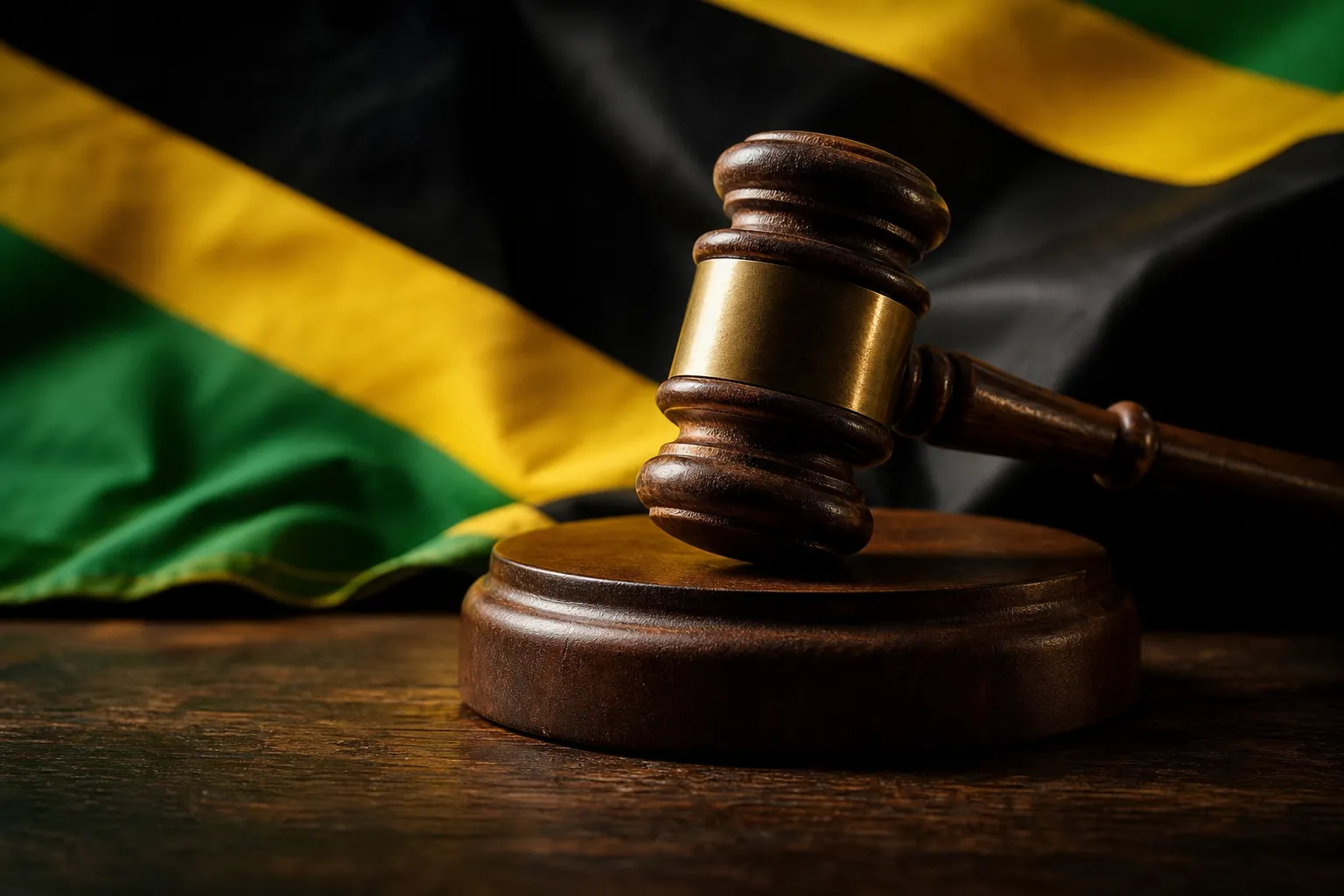
AI copyright Jamaica has moved from a niche academic debate to an urgent, practical question for anyone producing creative work on the island in 2026. As generative tools become embedded in music production, graphic design, software development and marketing, Jamaican creators, tech founders and in‑house legal teams need clear answers on whether AI outputs can be owned, whether they can be registered, and how to allocate risk before disputes arise. This guide sets out the statutory framework for copyright in Jamaica, analyses the human‑authorship requirement as it applies to AI‑generated works, walks through practical registration steps at the Jamaica Intellectual Property Office (JIPO), and provides sample contract clauses and a risk checklist you can act on today.
The aim is a single, authoritative local reference, grounded in primary sources and comparative regulator practice.
Copyright in Jamaica is a form of intellectual property that protects original creative expression the moment it is fixed in a tangible form. Unlike trademarks or patents, copyright arises automatically, you do not need to register to own it. Registration, however, provides valuable evidence of ownership and creation date, which matters greatly when AI is involved and authorship is contested.
Jamaica’s Copyright Act protects several defined categories of subject matter. Broadly, protected works include:
Each category carries its own rules on authorship and duration. The common thread across all of them, confirmed by the statutory text available through WIPO Lex, is that protection depends on originality and a connecting human author or maker.
Duration depends on the type of work. The table below summarises the general position under Jamaican copyright law. Because terms are set by statute and can be amended, always confirm the current provision against the primary legislation on the WIPO Lex Jamaica profile before relying on a specific term.
| Type of work | General duration |
|---|---|
| Literary, dramatic, musical and artistic works | Life of the author plus a fixed statutory term of years after death, as set out in the Copyright Act |
| Sound recordings | A fixed statutory term running from creation or release |
| Broadcasts and cable programmes | A fixed statutory term running from first transmission |
| Computer‑generated works (no human author) | A fixed statutory term running from creation |
The final row is the one that matters most for the AI copyright Jamaica debate. Jamaican law, like several Commonwealth statutes modelled on the UK approach, contemplates a category of computer‑generated works, a point we return to below. The exact number of years for each term should be verified against the current text of the Copyright Act via WIPO Lex, as terms have been the subject of amendment.
Understanding copyright means knowing where it sits within the wider intellectual property system. There are several commonly recognised categories of intellectual property rights, and copyright is only one:
Five everyday examples make this concrete: a reggae song’s lyrics (copyright), a coffee brand logo (trademark), a new agricultural machine (patent), the distinctive shape of a bottle (industrial design), and Jamaica Blue Mountain Coffee’s origin protection (geographical indication). When AI enters the picture, it most often raises questions about copyright, because AI tools generate text, images, music and code that would otherwise be classic copyright subject matter. That is exactly why AI copyright Jamaica has become a live commercial issue rather than a theoretical one.
This is the central question, and the honest answer in 2026 is: it depends on the degree of human creative input. Jamaican copyright law protects works that are original, and originality has traditionally required a human author who exercised skill, judgment and creative choice. A purely machine‑produced output, with no meaningful human authorship, sits in a genuinely uncertain zone.
Under the Copyright Act, protection attaches to works authored by a person. The statutory framework, accessible via WIPO Lex, ties subsistence of copyright to authorship and originality. Where a human makes the creative decisions that shape the final work, that person is the author and the ordinary rules apply. Where no human contributed creatively, the authorship link is weakened, and with it, the strongest basis for protection.
Jamaican law does, however, contemplate computer‑generated works. Following the model of the UK Copyright, Designs and Patents Act 1988, provision exists for works generated by computer in circumstances where there is no human author. In such cases, the author is treated as the person by whom the arrangements necessary for the creation of the work are undertaken. This is a significant point of difference from the United States, where the Copyright Office has taken the position that works lacking human authorship cannot be registered.
The practical outcome turns on how the work was made. Consider three common scenarios that Jamaican creators encounter every day:
Comparative regulator practice reinforces this analysis. The US Copyright Office has refused registration for images generated solely from text prompts, while accepting works where a human selected, arranged and modified AI‑generated elements. The UK Intellectual Property Office has consulted on how its computer‑generated works provision should operate in the AI era. WIPO’s ongoing work on artificial intelligence and intellectual property tracks these debates internationally. The pattern is consistent: the more genuine human creative contribution you can demonstrate, the stronger your position on AI copyright Jamaica claims will be.
Document your creative process from the outset. The difference between a registrable work and an unregistrable one often comes down to the evidence you preserved showing the human choices you made along the way.
Registration is not mandatory for copyright to exist in Jamaica, but a dated official record can strengthen your evidential position, particularly valuable where AI involvement invites challenge. The Jamaica Intellectual Property Office administers intellectual property matters in Jamaica, and its forms and current requirements are published on the JIPO website. Note that Jamaica does not operate a full copyright registration and examination system in the way some countries do; creators should confirm the current recordal or deposit options available through JIPO before relying on them. Below is a practical, step‑by‑step approach for works involving AI.
Where a recordal or deposit facility is used, you will generally need to identify the author and the owner of the work, along with details of when and how it was created. When AI tools were used, you should approach these fields carefully and truthfully:
The strength of an AI‑assisted work lies in your supporting evidence. Assemble and preserve:
This documentation is your single most valuable asset in any AI copyright Jamaica dispute. It converts an abstract claim of human authorship into a concrete, verifiable record.
As of 2026, JIPO’s published materials should be consulted for any specific guidance on AI, and practice may evolve. Based on the statutory framework and comparative regulator approaches, the likely outcomes are as follows. Works showing clear human creative direction, with supporting evidence, are the strongest candidates for protection. Works that are essentially raw, unedited machine outputs face a real risk of scrutiny on authorship or originality grounds. Industry observers expect regulators across the Commonwealth to sharpen their guidance on this boundary as case volumes grow, so creators should treat current practice as a moving target and review their position periodically.
Even where copyright subsists, the question of who owns it is a separate matter that contracts should settle in advance. This is where much of the practical risk in the AI copyright Jamaica landscape can be neutralised. Relying on default statutory rules is a mistake when multiple parties, developers, users, employers and platforms, all touch the creative process.
Three principal mechanisms allocate ownership of AI outputs under Jamaican contracting practice:
Ownership disputes typically arise between three actors. The AI developer or platform may claim rights via its terms of service. The user who directed the tool may claim authorship of the output. The employer may claim ownership of anything produced in the course of employment. Because the statutory position on autonomous AI output is uncertain, the practical answer is that ownership should be fixed by contract rather than left to the default rules. Read the platform’s terms carefully, some grant the user broad rights to outputs, others reserve significant rights to the provider, and layer your own agreements on top.
The following short clauses are illustrative templates only and must be reviewed by local counsel before use. They are drafting starting points, not legal advice.
| Scenario | Likely legal author in Jamaica | Practical protection approach | Contract recommended |
|---|---|---|---|
| Fully autonomous AI (no human creative input) | Likely no human author, protection uncertain | Authorship/originality may be challenged; rely on contract and trade secrets | Secure rights from platform/developer; use licence or assignment plus commercial protection |
| Human uses AI as a tool (selects, edits, guides) | Human author, if original creative choices are shown | Preserve evidence: drafts, prompts, edit history | Assignment/licence with warranty of originality; preserve prompt logs |
| Work produced under employment | Employer may own if created in course of employment | Record employer as owner; retain employment agreement | Clear employment IP clause assigning rights to employer |
| Collaborative human + third‑party AI developer | Joint ownership risk, or ownership via contract | Clarify ownership before creation | Assignment/commission agreement with indemnities |
Owning rights is only half the picture. Managing exposure to third‑party claims and knowing how to enforce your own rights complete the AI copyright Jamaica strategy. Several risk vectors deserve attention.
Copyright arises automatically, so no formality is required for protection to exist. But for commercially important works, especially those involving AI, where authorship may be questioned, keeping a clear, dated evidential record is a sound investment. Good record‑keeping shifts the practical burden onto any challenger. For low‑value or ephemeral outputs, automatic protection plus good record‑keeping may suffice. As a rule of thumb: keep robust evidence for anything you would be willing to litigate over.
AI outputs can reproduce or closely resemble protected material contained in training data. This raises infringement exposure that has nothing to do with who owns the output. Mitigate it by auditing your inputs, securing appropriate licences for training and reference material, and obtaining warranties and indemnities from AI vendors and contributors. Maintaining provenance records, showing what went into a work and how, is essential both for defending claims and for demonstrating good faith.
Jamaican copyright law recognises moral rights, including the right to be identified as author and to object to derogatory treatment of a work. These rights are personal and are distinct from economic ownership. Where AI is used, moral rights questions can become complex, for instance, whether a human contributor should be attributed, and whether outputs might be altered in ways that affect a contributor’s reputation. Address attribution and treatment expressly in your contracts.
If your rights are infringed, Jamaican law provides civil remedies. These typically include injunctions to stop continuing infringement, damages or an account of profits, and orders for delivery up of infringing material. Enforcement begins with evidence, which is why the documentation practices described above matter so much. For online infringement, notice‑and‑takedown mechanisms operated by platforms are often the fastest first step, alongside preserving evidence for any subsequent court action. Consult the primary legislation via WIPO Lex and take local advice on the appropriate forum and remedy for your circumstances.
Placing Jamaica alongside the two jurisdictions creators most often ask about helps predict outcomes. The table below summarises the broad positions; each regulator’s own pages should be consulted for detail.
| Issue | Jamaica | United States | United Kingdom |
|---|---|---|---|
| Autonomous AI output | Uncertain; computer‑generated works provision may apply, naming the person who made the arrangements | Not registrable, human authorship required | Computer‑generated works provision names the person making the arrangements |
| AI‑assisted human work | Protectable where human creative choices are shown | Registrable for the human‑authored elements | Protectable where human authorship is present |
| Registration | No general compulsory registration; copyright arises automatically | Optional but valuable; Copyright Office guidance requires disclosure of AI content | No general registration system for copyright |
| Policy direction | Evolving; watch JIPO announcements | Active guidance and refusal decisions | Ongoing consultation on AI and IP |
The predictable through‑line is that all three systems reward demonstrable human creative contribution and treat purely autonomous output cautiously. Jamaica’s statutory computer‑generated works provision offers a potential route that US law does not, but its application to modern generative AI remains untested locally.
Ten immediate actions to strengthen your position on AI copyright Jamaica matters:
AI copyright Jamaica is a fast‑moving field where the law is settled on some points and genuinely uncertain on others. What is clear is that human creative contribution, careful documentation and well‑drafted contracts are the three pillars of protection. Preserve your prompts and drafts, fix ownership in writing before creation begins, and manage third‑party data risk with warranties and indemnities. Because JIPO practice and international policy are likely to evolve quickly, review your position regularly. For tailored advice on strategy, contracts and enforcement, explore Find an Intellectual Property lawyer in Jamaica or visit the Intellectual Property, Jamaica practice area page.
This article was produced by Global Law Experts. For specialist advice on this topic, contact Nathan Sadler at Nathan Sadler, Attorney- at- Law, a member of the Global Law Experts network.

posted 2 minutes ago

posted 20 minutes ago

posted 38 minutes ago
posted 1 hour ago
posted 1 hour ago

posted 2 hours ago

posted 3 hours ago

posted 3 hours ago

posted 3 hours ago
posted 3 hours ago
posted 4 hours ago

posted 4 hours ago
No results available
Find the right Legal Expert for your business

Send welcome message