
Our Expert in Israel
No results available
Who this is for: cannabis entrepreneurs, med-tech and agri-tech founders, in-house counsel and investors evaluating how to protect and commercialise intellectual property in Israel.
What you will learn: practical, Israel-specific steps for patenting cannabis inventions, registering trademarks, protecting strains, structuring licences and enforcing your rights under 2026 market conditions.
Cannabis IP Israel strategy has become a board-level priority as investment activity, cross-border licensing and disputes over strains and counterfeit products all accelerate into 2026. Israel’s well-established life-sciences ecosystem, combined with a mature patent and trademark system, makes it an attractive jurisdiction in which to build and defend a cannabis-related intellectual property portfolio. Yet the intersection of a heavily regulated medical cannabis regime with technical questions about plant biotechnology, formulations and branding creates traps for the unprepared. This guide translates the relevant statutory and regulatory framework into an actionable playbook, covering patentability, brand protection, strain and cultivar protection, licensing models and enforcement pathways. Every recommendation is grounded in Israeli practice and cross-referenced to authoritative government and inter-governmental sources.
The commercial stakes are considerable. A cannabis business that files late, brands without checking registrability, or fails to lock down its genetics through the correct legal mechanism can find its most valuable assets exposed to copying, misappropriation or invalidity challenges. A cannabis IP Israel programme built on the right sequence of filings and contracts, by contrast, becomes a durable source of competitive advantage and a magnet for licensing and investment.
Israel operates a modern, examination-based patent system under the Patents Law, 5727-1967 (as amended). The core requirements for a grant mirror those found in most developed jurisdictions: an invention must be novel, must involve an inventive step (be non-obvious to a person skilled in the art), and must be useful and capable of industrial application. Provided these thresholds are met and the subject matter is not otherwise excluded, cannabis-related inventions are patentable in Israel in the same way as any other technology. The controlled status of cannabis as a product does not, of itself, prevent the underlying invention from being patented.
Yes, a broad range of cannabis inventions can be protected by patent in Israel. In practice, the most robust and commercially valuable cannabis patents fall into categories where technical contribution is easiest to demonstrate:
Living plant material and processes involving plants raise subject-matter questions that require careful claim drafting. Where a claim reaches into plant biotechnology, applicants should be prepared for closer examination on both enablement and subject-matter objections. Comparative practice from the European Patent Office is a useful reference point when structuring biotech and plant-related claims, because Israeli examiners frequently reason along similar lines when assessing technical character and enablement in the life sciences.
The most frequent obstacles in prosecuting cannabis patents in Israel are lack of novelty, obviousness and insufficient disclosure. Because cannabis science has advanced rapidly and much has been published, prior art is dense. To keep a cannabis IP Israel filing on track, address these points from the outset:
When an examiner raises objections, the standard prosecution toolkit applies: narrowing claims to the enabled and inventive core, submitting comparative experimental data (declarations) to demonstrate an unexpected effect, and arguing the technical problem-and-solution logic clearly. Building a strong data package before filing is the single most effective way to shorten prosecution.
For most cannabis innovators, a staged international strategy makes the most commercial sense:
A practical pre-filing checklist for a cannabis IP Israel patent application includes: a completed prior-art search; a data package evidencing the technical effect; identification of any biological material requiring deposit; a claim set with broad and fallback positions; inventor declarations and assignment documents; and confirmation that no enabling public disclosure has occurred before the priority filing. Formal requirements, fees and prosecution timelines are set by the Israel Patent Office, which should be consulted for the current procedural detail.
A patent protects the technology; a trademark protects the goodwill and identity that turn a product into a brand. In a market where consumers and patients increasingly recognise and trust particular producers, trademark protection is a core pillar of any cannabis IP Israel portfolio. Trademarks in Israel are governed by the Trade Marks Ordinance [New Version], 5732-1972 and administered by the Trademarks Department of the Israel Patent Office. Once registered, a trademark provides an initial term of ten years, renewable for successive ten-year periods, of exclusive rights in the registered classes.
Two categories of objection dominate trademark practice. Absolute grounds concern the mark itself, marks that are purely descriptive of the goods, generic, or contrary to public policy or morality may be refused. Because cannabis remains a regulated product, marks that make unsupported therapeutic claims or that could be considered misleading warrant particular caution. Relative grounds concern conflicts with earlier marks; a mark that is confusingly similar to a prior registration for related goods is vulnerable to refusal or opposition.
Practical strategies to strengthen a cannabis brand filing include selecting distinctive, coined or arbitrary marks rather than descriptive ones; accepting disclaimers for non-distinctive elements where necessary to secure registration of the whole; and maintaining evidence of genuine use, since registrations can become vulnerable to cancellation for non-use over time. Businesses building international recognition should also consider the enhanced protection available to well-known marks under the Ordinance.
Brand strategy for cannabis cannot be separated from regulation. Medical cannabis in Israel is regulated by the Ministry of Health, primarily through its Medical Cannabis Unit (Yakar), and marketing, distribution and labelling must comply with the applicable rules. A trademark that would require unlawful advertising or non-compliant labelling to exploit is of limited commercial value. Coordinate your brand, packaging and claims strategy with regulatory counsel so that the mark you register can lawfully be used as intended. Digital enforcement, monitoring marketplaces, domains and social platforms for infringing use, should be built into the brand-protection programme from launch, because online counterfeiting frequently precedes physical counterfeiting.
Genetics are often the crown jewels of a cannabis business, yet they are also the hardest asset to protect. There is no single correct mechanism; the right choice depends on how the variety was developed, whether it can meet technical registration tests, and how much disclosure the business is willing to accept. The three principal routes, patents, plant variety protection, and trade secrets, each carry distinct trade-offs.
Where a new trait or the process to produce it is the result of a genuine technical, non-obvious contribution, for example, a biotechnological method, patent protection can offer powerful exclusionary rights for a term of up to twenty years from filing. The trade-off is full public disclosure. As noted above, plant varieties as such are excluded from patentability under the Patents Law, so patents are best suited to inventions with a clear technical inventive step, such as processes, formulations and gene constructs, rather than to conventionally bred cultivars, which are more appropriately protected under the plant variety regime.
A distinct regime exists for new plant varieties under the Plant Breeders’ Rights Law, 5733-1973. Plant breeders’ rights protect a variety that is new, distinct, uniform and stable, and are particularly well-suited to conventionally bred cultivars and the protection of propagating material. Israel is a member of UPOV, the international union that harmonises plant variety protection, and applicants should confirm the current scope and requirements of Israel’s implementation, including whether the relevant plant species has been designated for protection, before relying on this route. The advantage of plant variety protection is that it targets exactly what a breeder produces, the variety itself, without requiring the technical inventive step demanded by patent law.
The limitation is that protection is confined to varieties that satisfy the distinctness, uniformity and stability tests, and technical examination is required.
For many strains, especially those whose commercial value lies in a specific genetic combination or maintenance protocol that competitors cannot easily reverse-engineer, trade secret protection is the pragmatic choice, either alone or alongside registered rights. Trade secrets are protected in Israel under the Commercial Torts Law, 5759-1999, require no registration and can last indefinitely, but only for as long as reasonable measures maintain secrecy. Effective trade secret protection for cannabis genetics in Israel depends on operational discipline as much as legal drafting:
The principal weakness of trade secrets is that once a strain is lawfully reverse-engineered or independently developed, the protection evaporates, and enforcement depends on proving a breach of obligation rather than infringement of a registered right. A layered cannabis IP Israel strategy frequently combines trade secret protection for the genetics with patents on associated processes or formulations and trademarks on the branded end product.
Owning rights is only half the equation; monetising them through well-structured licensing is where cannabis IP Israel value is realised. Whether licensing genetics inbound to a local cultivator, licensing formulations outbound to overseas manufacturers, or granting brand rights to distributors, the same core commercial and legal levers apply.
Every cannabis licence should address, at minimum:
Cannabis is one of the most regulation-sensitive products to move across borders, and IP licences must be drafted with that reality front and centre. Export and import of cannabis products, technology and genetic material can trigger regulatory controls under Israeli law and international drug-control conventions, so cross-border licences should make performance conditional on the necessary permits and clearly allocate responsibility for obtaining them. Structuring the deal around know-how and technology transfer, rather than the physical movement of controlled material, is often the cleaner path. Ensure that governing law, dispute resolution and enforcement provisions are enforceable in each relevant jurisdiction, and that the licensor retains audit and quality-control rights sufficient to protect brand and safety standards abroad.
Rights that are not enforced quickly lose their commercial value. Israel offers a full suite of civil remedies for IP infringement, alongside criminal sanctions and border measures in appropriate cases.
A structured enforcement workflow typically proceeds as follows:
Enforcement is strongest when civil action is coordinated with the regulatory and criminal dimensions. Counterfeit cannabis products often breach Ministry of Health rules as well as IP rights, and regulatory intervention can complement a private claim. Where counterfeiting is deliberate and large-scale, criminal complaints may be appropriate. Border and customs measures administered by the Israel Tax Authority can help intercept infringing imports before they reach the market.
For urgent situations, the courts can grant emergency interim relief on an expedited basis where the rights-holder demonstrates a strong case and a real risk of irreparable harm; the speed of such relief depends on the quality of the evidence assembled beforehand, which is why disciplined evidence-preservation is central to any cannabis IP Israel enforcement strategy.
The following sequence gives founders and counsel a workable order of operations for building a cannabis IP Israel portfolio over the first year:
Because filing deadlines and priority dates are unforgiving, businesses should consult an Israeli patent and trademark attorney early rather than after a public disclosure or a competitor filing has already narrowed the options.
The table below summarises the principal protection routes and the asset types each is best suited to. In practice most businesses combine several, for example, trade secrets for genetics, patents for processes and formulations, and trademarks for the branded product.
| Protection option | What it protects | Registrable in Israel | Term / key limits | Strengths | Weaknesses / practical limits |
|---|---|---|---|---|---|
| Patent | Novel processes, formulations, gene constructs, extraction methods | Yes (subject to novelty, inventive step and utility; plant varieties as such excluded) | Up to 20 years from filing | Broad exclusionary rights; strong commercial leverage | Full public disclosure; plant-variety subject-matter exclusion |
| Plant Breeders’ Rights (UPOV-aligned) | New plant varieties that are new, distinct, uniform and stable | Yes, under the Plant Breeders’ Rights Law (subject to species designation) | Term set by law and species-dependent | Well-suited to conventional cultivars and propagating material | Limited to qualifying varieties; technical tests required |
| Trade Secret | Genetic combinations, strain-maintenance protocols, grow methods | Not registered, protected under the Commercial Torts Law via contract and security measures | Indefinite while secrecy maintained | No disclosure; potentially perpetual | Lost on leak or reverse-engineering; enforcement requires proof of breach |
| Trademark | Brand names, logos, product names, packaging | Yes (subject to absolute/relative grounds) | 10-year renewable terms | Protects identity and goodwill; renewable indefinitely | Does not protect functional features or genetics |
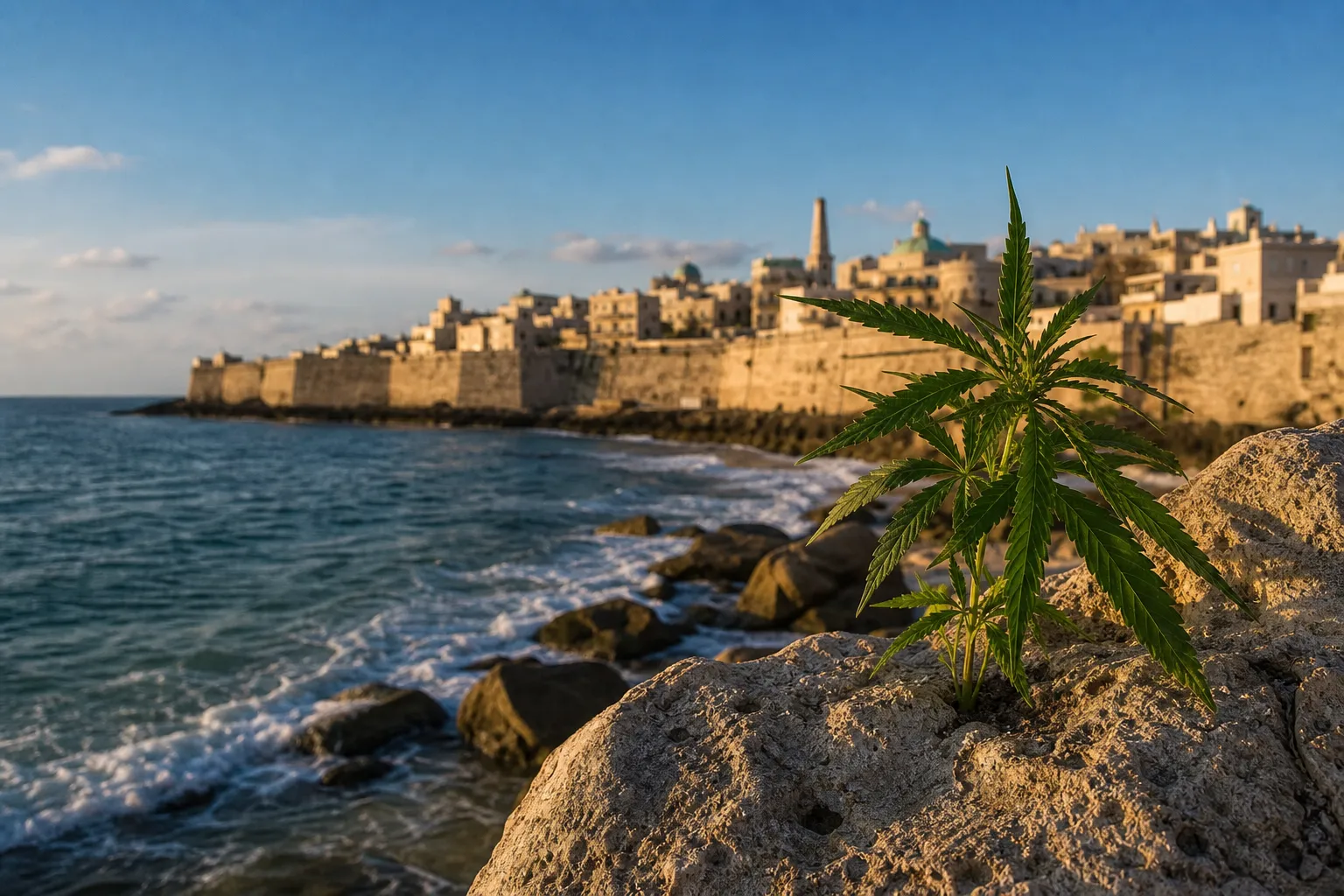
Image alt: Cannabis IP in Israel 2026, patents, trademarks and strain protection.
A well-built cannabis IP Israel portfolio is one of the most durable competitive advantages available to businesses entering this fast-moving market in 2026. The winning approach is rarely a single filing; it is a coordinated strategy that patents the technology, registers the brand, protects the genetics through the correct combination of plant variety rights and trade secrets, licenses the assets on carefully drafted terms, and enforces those rights decisively when they are infringed. Because priority dates and regulatory approvals are unforgiving, the earlier a business acts, the stronger its position. For tailored advice on protecting and commercialising your cannabis IP in Israel, consult a qualified Israeli patent and trademark attorney through the Global Law Experts Israel intellectual property practice.
This article was produced by Global Law Experts. For specialist advice on this topic, contact Jeremy Ben David at JMB Davis Ben David, a member of the Global Law Experts network.

posted 23 minutes ago

posted 2 hours ago

posted 3 hours ago
posted 4 hours ago

posted 5 hours ago

posted 6 hours ago

posted 6 hours ago

posted 8 hours ago

posted 8 hours ago

posted 9 hours ago

posted 9 hours ago

posted 10 hours ago
No results available
Find the right Legal Expert for your business

Send welcome message