
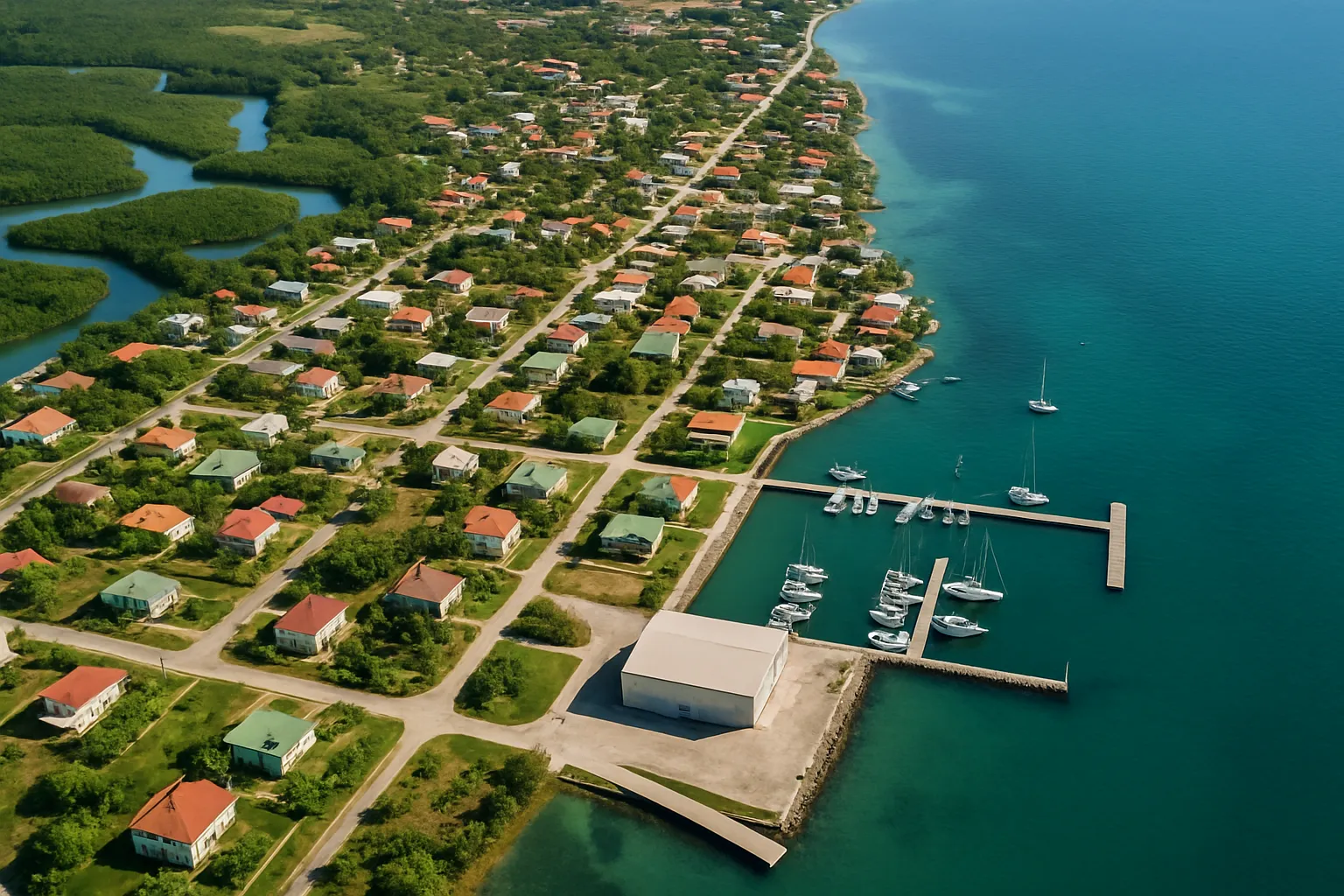

Belize QRP residency is one of the most accessible retirement-residency pathways in the Americas, offering qualifying retirees a tax-efficient, streamlined route to living in an English-speaking Caribbean nation. This page is a definitive 2026 guide to the Qualified Retirement Program (QRP), designed for retirees, near-retirees and cross-border planners who want to understand eligibility, income verification, the step-by-step application process, tax treatment and the practical realities of relocating. Whether you are weighing Belize retirement residency against alternatives elsewhere in Latin America, or you are already gathering documents for a Belize Tourism Board-administered application, the guidance below ties official program conditions to real legal and tax compliance steps.
The QRP was created to attract “qualified retired persons” who can support themselves with income earned outside Belize. It is deliberately distinct from citizenship: it grants residency and lifestyle benefits, not a passport. Below you will find eligibility rules, a numbered how-to process, a focus on the 2026 documentary-verification trends, a comparison against Panama and Mexico, and an FAQ built for quick answers. Every factual claim is anchored to primary government and inter-governmental sources so you can verify each point before you act.
For “qualified retired persons,” Belize offers a rare combination: an English-language legal and administrative system, a manageable income threshold, and a defined set of fiscal incentives. The Belize Tourism Board, which administers the program, structures the QRP around foreign-sourced income, meaning your pension, annuity or investment revenue can support your lifestyle without triggering local income tax on those earnings.
Belize retirement residency suits North American and European retirees who want proximity to the United States, no language barrier, and a lower cost of living than home. The program is particularly attractive to those receiving Social Security, defined-benefit pensions, or steady annuity payments. It also appeals to couples, since one qualifying applicant can bring eligible dependants under a single application. The trade-off is the work prohibition and the need to maintain verifiable offshore income, which is why understanding the requirements in detail, before you file, matters so much.
Meeting the belize qrp requirements is the gateway to the entire process. The program sets clear, published conditions, but the practical evidence standards have tightened. Below are the core eligibility pillars every applicant must satisfy, drawn from the official program terms and the Belize Immigration Department framework.
The QRP is open to applicants aged 40 and above. Unlike some retirement programs that impose a strict minimum-days physical-presence test comparable to permanent residency, the QRP requires that a beneficiary spend at least a defined portion of the year in Belize to maintain status, applicants should confirm the current minimum stay obligation with the administering authority, as it is periodically reviewed. The program is explicitly a retirement-residency route and not a citizenship route; do not conflate the two when planning your long-term status.
The central financial condition is a minimum foreign-sourced income of US$2,000 per month, as published by the Belize Tourism Board. The income must originate from outside Belize, for example a pension, annuity, retirement account distribution, or investment income. Crucially, the funds must be demonstrably received and, in practice, applicants are expected to deposit qualifying amounts into a recognised financial institution. Because thresholds and deposit mechanics can be revised, verify the current figure on the official program page before you assemble evidence.
QRP status carries a firm prohibition on local employment. A qualified retired person may own a business and derive income from abroad, but may not take up salaried work within Belize or displace local labour. Dependants can be included: typically a spouse and dependent children under a defined age. When dependants are added, the income and documentary requirements are assessed accordingly, and each dependant must be evidenced with the appropriate civil-status documents.
Applications can be refused or status later suspended for several reasons: inability to substantiate the required foreign income, adverse findings on a criminal-record check, material misrepresentation in the application, or breach of the work prohibition. Failure to maintain the qualifying income or to meet the minimum-presence obligation can also jeopardise ongoing status. This is why documentary accuracy, the theme of the 2026 verification section below, is so important to a durable belize qrp residency outcome.
The belize qrp application follows a defined sequence. The steps below reflect the standard route administered through the Belize Tourism Board in coordination with the Belize Immigration Department. Timings are indicative; processing varies with document quality and departmental workload.
A well-prepared file, complete identity records, unambiguous income evidence, and correctly legalised foreign documents, is the single biggest determinant of a smooth approval. For a granular, document-by-document walkthrough, see our QRP application checklist & sample documents resource.
The most significant practical shift for 2026 is the heightened scrutiny of foreign-income evidence. Industry observers report that administering authorities increasingly expect corroborated, current and consistent proof of income rather than a single letter. Meeting these standards is now the core challenge of a successful belize qrp residency application.
Foreign public documents, birth and marriage certificates, police clearances, generally require an apostille under the Hague Convention, or full legalisation where the issuing country is not a party. Any document not in English should be accompanied by a certified translation. Where originals cannot be surrendered, notarised true copies are typically expected. Consistency across documents (names, dates, amounts) is essential; a mismatch between a passport spelling and a birth-certificate spelling can stall a file.
Common 2026 rejection causes include: income letters that state an amount but are not corroborated by bank receipts; bank statements that show insufficient or irregular deposits; expired police clearances; missing apostilles; and translations that are not certified. To avoid these, obtain both a source document (the award letter or contract) and a receipt document (bank statements showing the funds actually arriving), ensure police clearances are recent, and confirm apostille and translation requirements before submission. This dual-evidence approach, source plus receipt, is the practical remedy to the tighter verification environment.
For a downloadable, itemised list with sample sworn statements and model bank-confirmation letters, see our QRP application checklist & sample documents guide. Preparing against a checklist dramatically reduces the risk of a documentary rejection.
Tax treatment is central to the appeal of belize qrp residency, and it is also where retirees most need precise, source-anchored guidance rather than generalisations. The program’s headline feature is favourable treatment of foreign-sourced income.
Under the QRP framework, income earned outside Belize, including pensions and annuities, is generally not subject to Belizean income tax. This is one of the program’s principal draws for belize tax for retirees. Because the treatment of specific income types can turn on statutory detail, confirm the current position against the National Assembly of Belize Acts and any relevant tax circular published via the Government of Belize portal before relying on it.
Receiving Social Security, whether US or another country’s scheme, is fully compatible with the QRP and counts as qualifying foreign-sourced income. Retirees should nonetheless understand the practicalities of receiving payments while resident abroad, including any home-country reporting obligations. Belize’s own social-security framework is administered by the Belize Social Security Board; QRP retirees living on foreign pensions should be clear about which system, if any, applies to them.
The interaction between Belizean rules and your home country’s tax system is where careful planning pays off. Concepts of tax residency and domicile, ongoing home-country filing duties, and the treatment of pensions under any applicable treaty all require review. General principles on cross-border pension taxation and treaty relief are set out by the OECD, but individual outcomes depend on your specific facts. For a full treatment, see our Taxes and residency, foreign income rules and treaties resource and obtain specialist cross-border advice.
Retirees frequently weigh belize qrp residency against Panama’s Pensionado and Mexico’s resident retiree visa. The table below is a scannable, high-level comparison; confirm each figure with the relevant national authority, as thresholds and processing times change.
| Feature | Belize QRP | Panama (Pensionado) | Mexico (Temporary/Resident retiree visa) |
|---|---|---|---|
| Minimum age | 40+ | No fixed minimum age (pension-based) | No fixed retiree age (income-based) |
| Income threshold | US$2,000/month foreign-sourced | Lifetime pension (commonly cited around US$1,000/month) | Income/savings tests set by consulate (varies) |
| Work rights | No local employment permitted | Restricted; separate permit needed to work | Work permitted only with additional authorisation |
| Typical processing time | Weeks to a few months once file is complete | Several months | Weeks to months, consular plus in-country steps |
| Tax treatment (foreign income) | Foreign-sourced income generally not taxed locally | Foreign-sourced income generally not taxed locally | Residency can create Mexican tax exposure; advice needed |
Each program has its own culture, cost base and legal nuances. Belize’s English-language advantage and clear foreign-income treatment often tip the balance for North American retirees, but the right choice depends on your lifestyle priorities and financial profile.
Securing status is only half the picture; living well under belize qrp residency depends on realistic budgeting and practical set-up.
The QRP requires US$2,000/month to qualify, but a “comfortable” retirement budget depends heavily on location and lifestyle. Coastal and island destinations tend to cost more than inland districts, and imported goods carry a premium. Many retirees find the qualifying threshold is a floor rather than a target. For district-by-district detail, see our Cost-of-living & healthcare for retirees in Belize resource.
Belize offers both public and private healthcare. Many retirees combine local private clinics with international insurance and, for complex care, travel to regional hubs or the United States. Arranging appropriate private health insurance before relocating is strongly advisable.
Non-Belizeans can own property, though prudent buyers use local counsel for title verification. Renting first is a common strategy while you learn the districts. Opening a bank account will involve anti-money-laundering (AML) due diligence, expect to provide proof of income, source-of-funds documentation and identity records. Our Property, banking and estate planning for QRP holders resource covers these steps in depth.
The recurring pitfalls are documentary: uncorroborated income letters, expired police clearances, missing apostilles, uncertified translations, and name inconsistencies across records. Timing errors, starting apostilles and clearances too late, cause avoidable delays. Misreading tax status, particularly assuming home-country obligations disappear, is another frequent and costly misunderstanding.
Straightforward cases with clean pension income and simple family structures can often be prepared with a good checklist. Retain counsel where your income is complex, where you have any criminal-record entry, where multiple jurisdictions are involved, or where you want your residency and tax planning coordinated. See our Local lawyer contacts and QRP case studies resource for examples of how counsel resolves problem files.
Belize QRP residency remains one of the most attractive and administratively clear retirement pathways available to foreign retirees, combining an achievable US$2,000 monthly income threshold, favourable treatment of foreign-sourced income, and the ease of an English-speaking jurisdiction. The decisive factor in 2026 is documentary rigour: with verification standards tightening, applicants who pair source documents with corroborating bank evidence, complete apostilles and certified translations, and file a consistent, complete package are the ones who secure smooth approvals. Confirm every current figure and rule against the official Belize government and program sources before you act, treat the qualifying threshold as a starting point rather than a lifestyle budget, and seek coordinated legal and cross-border tax advice where your circumstances are complex.
Approached with care, belize qrp residency can be a durable foundation for a secure, tax-efficient retirement.
For More Upto-Date Information in Legal News follow us @Global Law Experts News

posted 6 minutes ago

posted 24 minutes ago

posted 30 minutes ago

posted 42 minutes ago

posted 59 minutes ago

posted 2 hours ago

posted 2 hours ago

posted 3 hours ago

posted 3 hours ago

posted 3 hours ago

posted 4 hours ago

posted 4 hours ago
No results available
Find the right Legal Expert for your business

Send welcome message