
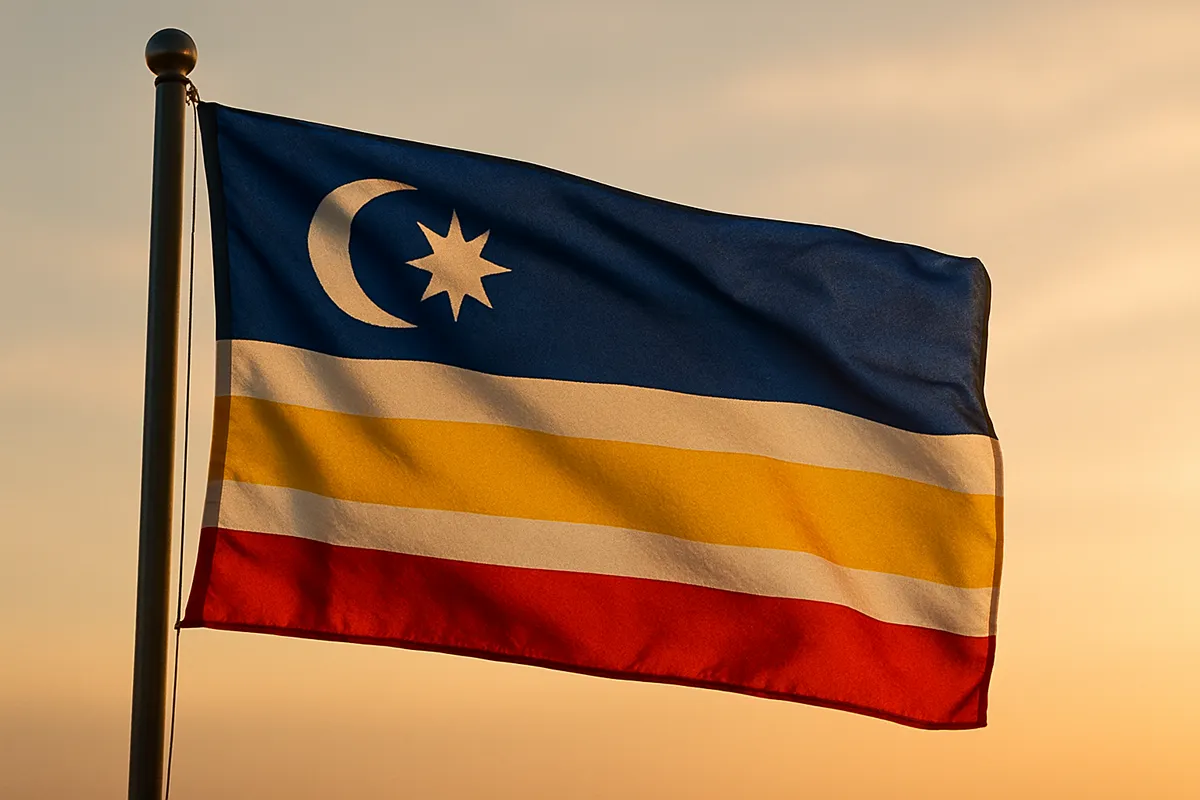

If you are a founder, compliance lead or in-house counsel evaluating jurisdictions for a digital currency exchange, the Labuan crypto exchange licence deserves close attention. Labuan International Business and Financial Centre (IBFC), regulated by Labuan Financial Services Authority (Labuan FSA), offers a single-licence pathway with lower paid-up capital floors than many onshore alternatives, a clear Digital Financial Services (DFS) framework refined through 2024–2026 regulatory updates, and processing timelines that can suit ASEAN-focused operators seeking speed to market.
This guide provides everything you need to make an informed licensing decision or brief counsel effectively:
Before engaging counsel or beginning a formal application, confirm you can satisfy each of these threshold requirements. Use this as a pre-feasibility filter:
Three factors make Labuan a compelling jurisdiction for ASEAN exchange operators:
The most common route is a Labuan Money-Broking licence with a DFS extension, or a Labuan Exchange licence (Form LEB) where the operator’s activities match that classification. The choice depends on your product scope; the Labuan FSA Money Broking Guidelines set out the permitted activities and capital requirements for each path.
Map your proposed products (spot exchange, derivatives, custody, staking) to the licensing categories available in Labuan. Assess whether your target market is cross-border or domestic; Labuan suits the former. Evaluate capital readiness and whether your shareholders and directors can pass fit-and-proper tests. This scoping exercise typically takes one to two weeks with experienced counsel.
Incorporate a Labuan company with appropriate share capital. You will need at least one director, a company secretary resident in Labuan, and a registered office. Non-Malaysian shareholders are permitted, but structure and beneficial-ownership details must be disclosed. Full guidance on entity formation is available on the Labuan company formation page. Incorporation typically takes five to ten business days via the COR@L online system.
Prepare a comprehensive business plan detailing product offerings, target markets, revenue model, risk appetite and three-year financial projections. Simultaneously draft your AML/CFT program: enterprise-wide risk assessment, customer due diligence (CDD) and enhanced due diligence (EDD) policies, transaction monitoring rules, sanctions and targeted financial sanctions (TFS) screening protocols, and suspicious-transaction reporting procedures.
Document your technology architecture, including custody model (custodial versus non-custodial), hot/cold wallet segregation, multi-signature key management, and third-party custody arrangements. Prepare penetration testing reports, incident-response and breach-notification plans, and evidence of alignment with recognised standards such as SOC 2 or ISO 27001. The regulator will scrutinise your OT/IT resilience before granting approval.
Assemble the full application dossier (see the Sample Documentation List section below). Ensure corporate documents, governance materials, technology artefacts, financial statements and regulatory forms are complete and internally consistent. Missing or inconsistent documents are the most common cause of delays during review.
File the relevant application form, Form LEB for a Labuan Exchange or Form LFB-MB for money-broking, together with supporting documents and the processing fee. Under normal processing, the Labuan FSA client charter targets 30 working days; the fast-track option targets 15 working days. Pay the processing fee: USD 350 (normal) or USD 1,550 (fast track).
Expect queries from the regulator requesting further information (RFIs) on AML controls, technology architecture, or shareholder backgrounds are standard. Provide evidence of paid-up capital deposits (certified bank statements), local office lease documentation and auditor appointment. Respond promptly; delays in answering RFIs extend the overall timeline significantly.
Upon approval, the licence may be subject to pre-operational conditions: final sign-off on AML program implementation, appointment of a dedicated compliance officer, completion of any outstanding technology audits and confirmation of operational readiness in Labuan. Only after these conditions are satisfied may the exchange commence operations.
Typical end-to-end timeline (incorporation through licence grant): 45–120 days, depending on application completeness and whether the fast-track lane is used. Complex structures or incomplete documentation can extend this significantly.
The following documents are typically required for a complete Labuan crypto exchange licence application. Prepare these before filing:
Labuan FSA sets out clear, regulator-sourced eligibility requirements. The following are the core thresholds:
Costs fall into three categories: one-off application and processing fees, recurring government and licence fees, and operational expenditures. All figures below are sourced from official Labuan FSA publications and should be confirmed against the relevant PDFs at the time of application. Currency conversions are indicative as at July 28, 2026 convert at prevailing rates.
| Fee Type | Indicative Amount | Notes / Source |
|---|---|---|
| Application processing fee (Normal) | USD 350 | Per Form LEB client charter normal processing (30 working days). |
| Application processing fee (Fast track) | USD 1,550 | Fast-track option (15 working days; terms apply). |
| Annual licence fee conventional money-broking | USD 1,500 (indicative) | Per 2026 Revised Fee Schedule. Confirm exact line item. |
| Annual licence fee DFS / digital asset facilitation | Refer to 2026 Fee Schedule (higher band) | Updated DFS fee rows in the revised schedule confirm at time of application. |
| Other one-off costs (incorporation, legal, tech audits, AML tooling) | USD 25,000–100,000+ | Operational estimates; varies by scope. Validate with local providers. |
Worked example conservative first-year budget: A founder incorporating a new Labuan entity and applying via normal track might expect approximately USD 350 (processing) + USD 1,500–2,500 (annual licence fee range) + USD 40,000–80,000 (incorporation, legal fees, AML tooling, local office setup, technology audit) = approximately USD 42,000–83,000 in government and initial operational costs. This excludes ongoing staffing and platform development, which vary significantly by business model.
The following table provides an at-a-glance comparison for operators deciding between a Labuan crypto exchange licence and an onshore Malaysian licence under the Securities Commission (SC).
| Feature | Labuan (Labuan FSA) | Malaysia Onshore (SC / CMSA) |
|---|---|---|
| Regulator | Labuan Financial Services Authority (Labuan IBFC) | Securities Commission Malaysia (SC) |
| Primary licence route | Money-broking licence with DFS extension, or Labuan Exchange licence | Recognised Market Operator (RMO) / DAX registration or Capital Markets Services Licence (CMSL) |
| Minimum paid-up capital (digital assets) | RM 1,500,000 (money-broking with digital assets) | Varies by licence type; generally higher and more prescriptive for RMO/DAX per SC guidelines |
| Licence / annual fees | See 2026 fee schedule (conventional money-broking ~USD 1,500; DFS rows updated) | SC fees and registration costs vary; onshore compliance typically means higher ongoing costs |
| Currency/market restrictions | Typically foreign-currency focus; may restrict ringgit activities; operational office required in Labuan | Explicitly targets Malaysian investors; stronger investor protections and domestic market access |
| Speed to market | Potentially faster: normal track 30 working days, fast track 15 working days (client charter) | More involved process with product approvals and wider market-conduct obligations; timelines vary |
| Best suited for | Cross-border / ASEAN-focused exchanges; foreign-currency trading pairs; operators seeking cost-efficient regulated hub | Operators targeting Malaysian retail investors; ringgit trading pairs; full onshore market participation |
For operators whose primary market is Malaysian retail investors dealing in ringgit, the onshore SC route is typically required. The SC’s Digital Assets Guidelines and the Prescription Order treating certain digital currencies and tokens as securities define the onshore regulatory perimeter. A deeper analysis is available on the Labuan vs Malaysia exchange licences comparison page.
Labuan FSA takes a risk-based approach to anti-money laundering and counter-terrorism financing (AML/CFT). Applicants for a Labuan crypto exchange licence must demonstrate comprehensive controls aligned with the regulator’s Virtual Asset Risk Assessment (VARA) and AML directives.
Obtaining the licence is not the finish line. Labuan FSA imposes ongoing compliance requirements that licensees must maintain continuously:
To move forward efficiently, take these preparatory steps before engaging counsel:

posted 14 minutes ago

posted 20 minutes ago

posted 40 minutes ago

posted 1 hour ago

posted 1 hour ago

posted 1 hour ago

posted 2 hours ago

posted 2 hours ago

posted 2 hours ago

posted 2 hours ago

posted 3 hours ago

posted 3 hours ago
No results available
Find the right Legal Expert for your business

Send welcome message