
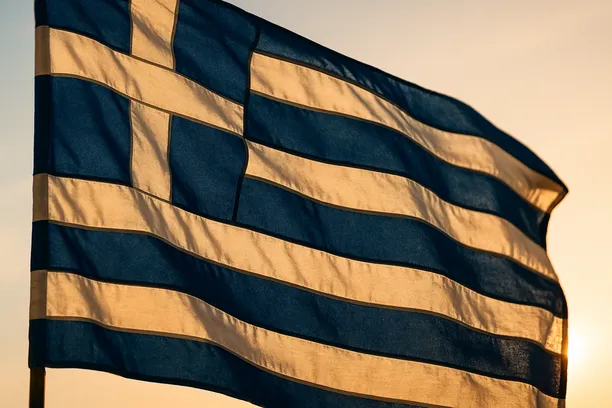
The Convention on Limitation of Liability for Maritime Claims (LLMC 1976), as amended by its 1996 Protocol, remains the cornerstone treaty governing the maximum exposure of shipowners, salvors and their insurers following maritime incidents. Greece ratified both the Convention and the 1996 Protocol, and its 2023 reform of the Code of Private Maritime Law (CPML) has refined the domestic procedure for constituting limitation funds, selecting acceptable security, and allocating claims among competing creditors. This guide provides a step-by-step compliance framework for practitioners who need to constitute or challenge a limitation fund in Greek courts, covering SDR calculations, P&I Club Letters of Undertaking, bank guarantees, cash deposits, and the interaction between fund constitution and ship arrest under Greek procedural rules.
Before engaging with the full analysis below, practitioners should keep the following five-point checklist in view at every stage of a limitation-fund matter in Greece.
The Convention on Limitation of Liability for Maritime Claims was adopted under the auspices of the International Maritime Organization (IMO) on 19 November 1976 in London. It replaced the earlier 1957 Brussels Convention and established a virtually unbreakable right to limit liability for defined categories of maritime claims. The regime was designed to balance the interests of shipowners, who face catastrophic exposure from a single casualty, against the rights of claimants to recover meaningful compensation.
The 1996 Protocol to the LLMC substantially increased the monetary limits of liability, introduced a simplified tacit-acceptance amendment procedure for future limit adjustments, and tightened the conditions under which a person may lose the right to limit. Under the 1996 Protocol, limitation can only be broken where the loss resulted from a personal act or omission of the person seeking to limit, committed with the intent to cause such loss, or recklessly and with knowledge that such loss would probably result. Greece incorporated the 1996 Protocol limits into its domestic maritime limitation of liability framework, making the higher SDR thresholds applicable in Greek proceedings.
Article 1 defines persons entitled to limit: shipowners (including owners, charterers, managers and operators of seagoing vessels), salvors, and any person for whose act the shipowner or salvor is responsible. Liability insurers may invoke limitation to the same extent. Article 2 lists covered maritime claims, claims for loss of life, personal injury, property damage, wreck removal, and claims arising from measures taken to avert or minimise loss. Article 4 sets out the conduct barring limitation, a provision significantly tightened by the 1996 Protocol to require proof of intent or subjective recklessness. Practitioners should note that the burden of breaking limitation rests on the claimant.
The convention on limitation of liability distinguishes between two broad categories of claims for the purpose of calculating limits. Claims for loss of life or personal injury attract a separate, higher ceiling than claims for damage to property (including harbour works, navigable waterways, and infrastructure). Where personal-injury claims exceed their dedicated limit, the uncompensated balance ranks pari passu with property claims against the property fund. Claims excluded from limitation include salvage claims, oil-pollution claims governed by the CLC/Fund Conventions, nuclear-damage claims, and claims by servants of the shipowner whose duties relate to ship operations.
Under the 1996 Protocol, limits are expressed in Special Drawing Rights (SDR), the IMF’s composite currency unit widely used in shipping for standardising international monetary obligations. The limits are calculated by reference to the vessel’s gross tonnage in bands. The table below summarises the 1996 Protocol limits for non-passenger claims.
| Claim type | Tonnage band | Limit (SDR) |
|---|---|---|
| Loss of life / personal injury | Not exceeding 2,000 GT | 2,000,000 SDR |
| Loss of life / personal injury | 2,001 – 30,000 GT | 2,000,000 + 800 SDR per GT above 2,000 |
| Loss of life / personal injury | 30,001 – 70,000 GT | Above + 600 SDR per GT above 30,000 |
| Loss of life / personal injury | Over 70,000 GT | Above + 400 SDR per GT above 70,000 |
| Property claims | Not exceeding 2,000 GT | 1,000,000 SDR |
| Property claims | 2,001 – 30,000 GT | 1,000,000 + 400 SDR per GT above 2,000 |
| Property claims | 30,001 – 70,000 GT | Above + 300 SDR per GT above 30,000 |
| Property claims | Over 70,000 GT | Above + 200 SDR per GT above 70,000 |
Consider a property-damage claim arising from a collision involving a 10,000 GT bulk carrier. The property-claim limit under the 1996 Protocol is calculated as follows:
The SDR in shipping is converted to the applicable local currency on the date the fund is constituted or, if earlier, the date of payment. Practitioners should use the IMF’s daily published SDR valuation. The total fund amount must also include interest accruing from the date of the incident to the date of fund constitution, as required by Article 11(1) of the Convention. This interest obligation can add materially to the security amount, particularly where fund constitution is delayed by months.
Constituting a limitation fund in Greece requires navigating both the LLMC treaty framework and the domestic procedural rules codified in the Greek Code of Private Maritime Law (CPML), as reformed in 2023, and the provisions of the General Part of the Maritime Law Code (GPMLC). The procedure involves several sequential steps, and practitioners must be attentive to local requirements that go beyond the Convention text.
Greece’s 2023 reform of the Code of Private Maritime Law modernised several aspects of limitation-fund procedure. The reform clarified the documentary requirements for fund applications, streamlined the notice provisions, and aligned the domestic framework more closely with the 1996 Protocol’s intent. Industry observers expect the practical effect of the reform to be faster processing of fund applications, greater certainty for foreign shipowners unfamiliar with Greek procedure, and a clearer basis for Greek courts to accept P&I Club LOUs as constituting adequate security, a practice that had developed informally in the years preceding the reform.
One of the most frequently asked practical questions when constituting a limitation fund in Greece concerns the type of security that courts will accept. The LLMC itself, at Article 11(2), provides that a fund may be constituted by depositing the sum or by producing a guarantee “acceptable in the legislation of the State Party where the fund is constituted and considered to be adequate by the Court.” Greek practice recognises three primary instruments.
A P&I Club Letter of Undertaking is, in practice, the most commonly offered form of security in Greek limitation proceedings. LOUs issued by International Group P&I Clubs are widely recognised by Greek courts, provided the wording is sufficiently explicit and unconditional. A typical LOU undertakes to pay the stated sum upon presentation of an enforceable court judgment or arbitral award, without preconditions. Industry observers note that Greek courts have generally accepted such LOUs where the issuing club is a member of the International Group and the undertaking language is clear and irrevocable.
A limitation fund bank guarantee, whether issued by a Greek or international bank, offers high enforceability. Greek courts treat bank guarantees as near-equivalent to cash. The drawback is speed and cost: obtaining a bank guarantee typically requires credit-line approval, documentary compliance, and often takes one to five business days. For owners without pre-arranged credit facilities, this delay can be critical during urgent arrest proceedings.
A direct cash deposit into a court-designated account carries the lowest enforcement risk but imposes a significant liquidity burden on the shipowner. In practice, cash deposits are rare for large limitation funds and are more commonly used for smaller claims or interim security pending arrangement of a bank guarantee or LOU.
| Security type | Typical lead time to provide | Enforcement / acceptance risk in Greece |
|---|---|---|
| P&I Club Letter of Undertaking (LOU) | Hours to days (if club is ready) | Low where courts accept club LOUs; risk arises when wording or issuing club’s capacity is questioned |
| Bank guarantee (local or international bank) | 1–5 business days (longer if documentary) | Low, highly enforced but slower and more costly (requires bank credit lines) |
| Cash deposit | Immediate (if funds available) | Lowest enforcement risk; significant liquidity cost for the owner |
Practitioner note: Where there is any doubt about court acceptance of a P&I LOU, for instance, if the issuing club is not a member of the International Group, or if the wording contains conditionalities, practitioners should consider providing a bank guarantee as an alternative or supplementary security. All security wording should be reviewed by Greek-qualified counsel before submission.
The constitution of a limitation fund has direct consequences for the arrest of the vessel and the distribution of recoveries among competing claimants. Under Article 13 of the LLMC, once a fund has been constituted in accordance with the Convention, any claimant who has a claim against the fund is barred from exercising rights against any other assets of the person by whom or on whose behalf the fund was constituted, meaning that an existing arrest must be lifted, and no new arrest can be obtained in respect of those claims.
Greek courts apply this release-from-arrest principle rigorously. Early indications from post-2023 practice suggest that courts are increasingly willing to lift arrests swiftly upon confirmation that an adequate fund has been constituted, provided all procedural requirements have been met. Claims are distributed from the fund on a pro-rata basis within each category (personal injury, property), giving no priority to the order in which claims were filed.
Claimants who have not yet obtained a judgment or award may arrest the vessel to secure their maritime claims before or during limitation proceedings. The statute of limitations for maritime claims in Greece varies by claim type: tort-based claims are generally subject to a five-year period, while contractual claims may be subject to shorter periods depending on the applicable code provisions. Claimants must be mindful that the constitution of a fund does not toll or extend these limitation periods, claims must still be filed within the applicable time limits to participate in the fund distribution.
Even experienced maritime practitioners can encounter difficulties when constituting or challenging a limitation fund in Greek courts. The following issues deserve particular attention.
This article was produced by Global Law Experts. For specialist advice on this topic, contact Konstantinos Bachxevanis at BAX LAW, a member of the Global Law Experts network.

posted 6 minutes ago
posted 7 minutes ago

posted 9 minutes ago

posted 10 minutes ago

posted 10 minutes ago

posted 34 minutes ago

posted 58 minutes ago

posted 1 hour ago

posted 2 hours ago

posted 2 hours ago

posted 2 hours ago

posted 2 hours ago
No results available
Find the right Legal Expert for your business

Send welcome message