
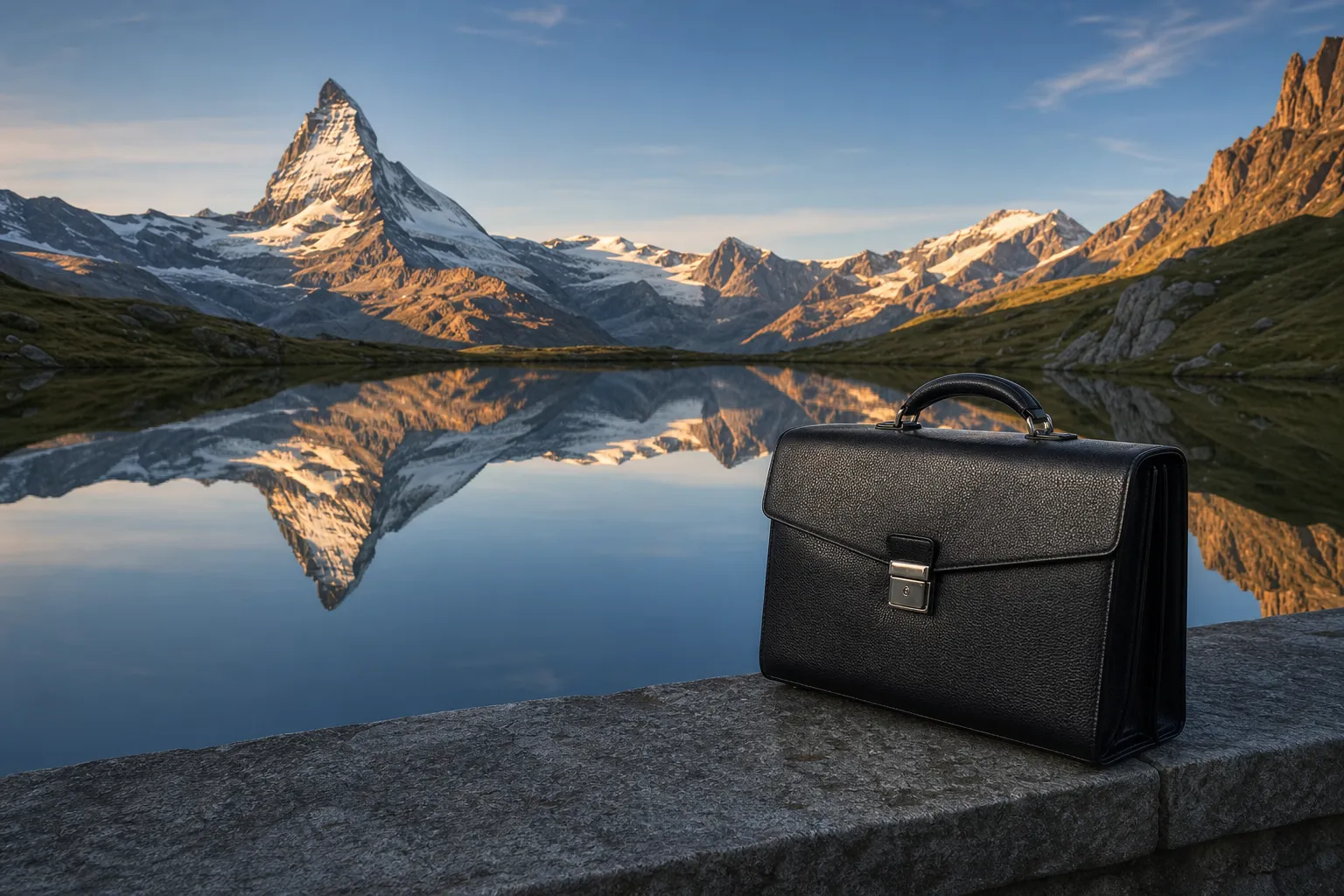
Our Expert in Switzerland
No results available
Who this guide is for: in‑house legal teams, corporate executives, banks and asset managers, and individuals looking to retain Swiss white‑collar defence counsel for investigations, prosecutions or compliance reviews. It covers selection criteria, fee expectations, cross‑border considerations and the urgent steps to take when an enquiry lands.
A white collar criminal lawyer switzerland engagement is rarely a routine decision, it usually follows a search warrant, a foreign regulator’s request, a mutual legal assistance request, or a board’s discovery of internal wrongdoing, and every hour matters. In 2026, cross‑border enforcement remains a significant driver of demand: US, UK and EU authorities routinely coordinate with Swiss prosecutors and regulators through established legal channels, and the choices you make in the first day can shape privilege, evidence and exposure for years. This guide sets out when to hire, what qualifications to look for, realistic fee expectations, how to shortlist and interview counsel, and the immediate steps to take during a dawn raid.
It is written as a neutral, practitioner‑led decision tool rather than a directory listing. Read it before you need it, and keep the hiring checklist to hand.
White‑collar matters sit at the intersection of criminal law, financial regulation and reputation management. A general criminal defence lawyer switzerland practitioner may be entirely competent in ordinary prosecutions but unfamiliar with the regulatory interfaces that define financial crime cases, the interaction between the public prosecutor, the Swiss Financial Market Supervisory Authority (FINMA), and foreign enforcement agencies such as the US Department of Justice. Specialist counsel understands how a bribery, fraud or money‑laundering allegation under the Swiss Criminal Code (StGB) can trigger parallel regulatory scrutiny, and how a decision taken in one forum can prejudice your position in another.
The consequences extend well beyond the courtroom. A poorly handled early phase can compromise legal privilege, expose the company to reputational damage, and foreclose favourable resolution options such as cooperation credit or negotiated outcomes with foreign regulators. Specialist white‑collar defence teams typically combine criminal procedure expertise with forensic accounting capability, data‑handling protocols and relationships with counsel in the jurisdictions most likely to be involved.
Delaying the instruction of a white collar criminal lawyer switzerland companies rely on carries concrete risks. Evidence, particularly electronic evidence, can be altered, deleted or overwritten before a litigation hold is imposed. Statements made by employees before counsel is engaged may be unguarded and later used against the company. Under Swiss law, legal professional privilege attaches to communications with lawyers admitted to a cantonal bar, and can be jeopardised if sensitive documents are commingled or shared inappropriately. The Swiss Criminal Procedure Code (StPO) governs search, seizure and the rights of the defence, and early counsel ensures those rights are asserted from the outset rather than reconstructed after the fact.
Certain events should prompt an immediate call to a white‑collar specialist. These include a dawn raid or search of premises, service of a search warrant, a request for information from a regulator, receipt of a foreign document request, an invitation to an interview by prosecutors or FINMA, a pre‑trial seizure of assets, or a credible whistleblower complaint. Each of these signals that the authorities, or a foreign authority acting through mutual legal assistance channels overseen by the Swiss Federal Office of Justice, have moved from suspicion to action.
Choosing the right white collar criminal lawyer switzerland executives can trust starts with verifying admission and practice rights, then testing depth of relevant experience. Credentials matter, but demonstrated track record in matters resembling your own matters more.
This is one of the most common questions from international clients. The short answer: a foreign lawyer switzerland clients engage can advise on matters of foreign law and act as a consultant, but representing a client before Swiss criminal courts generally requires admission to a Swiss cantonal bar register, or the involvement of admitted local co‑counsel. Lawyers from EU/EFTA states benefit from specific arrangements under the Lawyers Act (BGFA/LLCA) and related bilateral agreements. The Swiss Bar Association (SAV/FSA) provides guidance on professional conduct, and the federal Lawyers Act governs admission to cantonal registers. In practice, foreign counsel and Swiss counsel frequently work in tandem: the foreign lawyer drives home‑jurisdiction strategy while the Swiss lawyer conducts the courtroom and procedural work.
When interviewing, confirm the lawyer’s cantonal admission and their arrangements for any cross‑border elements.
White‑collar defence is document‑ and data‑intensive. Look for counsel with genuine command of Swiss criminal procedure, search and seizure rules, detention provisions, evidentiary standards and the rights of the defence under the StPO, combined with the ability to work alongside forensic accountants and financial analysts. Fraud, embezzlement and money‑laundering allegations under the StGB typically turn on complex transaction trails; counsel must be comfortable directing forensic reconstruction and challenging the prosecution’s financial narrative.
Switzerland’s multilingual legal landscape means the language of proceedings varies by canton, German, French or Italian. A white collar criminal lawyer switzerland companies retain for a Geneva matter should be fluent in French and experienced before the local courts; the same applies proportionately in Zurich or Ticino. For international clients, working English is essential for instruction and reporting. Ask directly about the lawyer’s court experience in the relevant canton and their capacity to conduct proceedings in the required language.
Because cross-border investigations switzerland matters feature prominently in serious white‑collar work, the strength of a lawyer’s international enforcement experience is often a decisive selection criterion. A domestic‑only track record may be insufficient when a US or UK authority is involved.
Ask for concrete, if necessarily anonymised, examples of matters involving foreign regulators, the US Department of Justice and Securities and Exchange Commission, the UK Serious Fraud Office, the US Commodity Futures Trading Commission, and EU authorities. Enquire about experience with mutual legal assistance requests channelled through the Federal Office of Justice, and about familiarity with US corporate enforcement policy, including the voluntary self‑disclosure and cooperation framework the DOJ publishes. Counsel who has advised Swiss financial institutions through US enforcement processes will understand how self‑reporting, cooperation credit and negotiated resolutions interact with Swiss criminal exposure.
No single firm can be admitted everywhere. The best white collar criminal lawyer switzerland teams maintain trusted relationships with counsel in the jurisdictions most likely to feature in your matter, and can assemble a coordinated defence group quickly. Ask how they manage privilege and information‑sharing across borders, and how conflicts are cleared when multiple firms are involved.
Cross‑border cases invariably involve the movement of data across jurisdictions, engaging Swiss data protection law under the revised Federal Act on Data Protection (FADP) and, potentially, the prohibition on acts for a foreign state under Article 271 of the Swiss Criminal Code. Confirm that counsel works routinely with vetted forensic IT and e‑discovery vendors and understands the constraints on transferring data to foreign authorities. International trends and enforcement expectations tracked by the OECD under the Anti‑Bribery Convention provide useful context for how transnational bribery matters are coordinated.
Understanding criminal lawyer fees switzerland practitioners charge is essential for budgeting and for negotiating a sensible engagement. Swiss lawyers are generally expected to agree fees transparently. Always insist on a written fee arrangement before work begins.
The descriptions below are intended to frame expectations rather than to quote a specific rate. Actual fees depend on the seniority of counsel, the complexity of the matter, the canton, and the degree of cross‑border coordination required. Verify any figure directly with the firm you engage.
Some elements of a white‑collar engagement lend themselves to fixed or capped pricing. An initial case assessment, a discrete legal opinion, or a dawn‑raid standby arrangement can often be negotiated as a fixed fee or a daily/half‑day rate. Full defence through investigation and trial, by contrast, is usually billed hourly because the scope cannot be predicted at the outset. A blended rate, a single agreed rate across a mixed team, can simplify budgeting on larger matters. Note that Swiss professional rules restrict pure contingency (“pactum de quota litis”) arrangements.
For companies wanting to secure immediate availability, a standby retainer with a white collar criminal lawyer switzerland firm can help ensure counsel responds quickly to a search or seizure. When agreeing terms, negotiate cost‑control clauses: regular billing, budget estimates by phase, notification thresholds before exceeding agreed limits, and itemised invoices. Sample invoice items to expect include attendance at premises, document review, forensic vendor coordination, correspondence with authorities, and court appearances. Requiring a written estimate and, where feasible, a fee cap for defined stages is among the most effective disciplines on cost.
Once you understand the market, the practical task is to hire criminal lawyer switzerland counsel who fits your specific matter. A structured interview separates genuine specialists from generalists trading on a firm’s brand.
| Must‑have criterion | How to verify |
|---|---|
| Cantonal bar admission | Ask for admission details and confirm with the relevant cantonal register |
| Relevant enforcement track record | Request anonymised case examples and references |
| Team availability | Confirm named lawyers and standby capacity |
| Cross‑border network | Ask which foreign firms they work with |
| Transparent fees | Obtain a written estimate and cost‑control terms |
| Language and court experience | Confirm fluency and appearances in the relevant canton |
If investigators arrive at your premises, your response in the first hours is critical. Engaging a dawn raid lawyer switzerland companies keep on standby is the ideal position; if you have not, calling a specialist immediately is the priority.
The scope of search and seizure powers, and the rights available to the person being searched, including the right to request sealing under Article 248 StPO, are governed by the Swiss Criminal Procedure Code. Counsel can invoke procedural protections, but these rights must be asserted correctly and promptly. The Federal Supreme Court’s case law addresses privilege, the validity of search warrants and the treatment of seized evidence, and specialist counsel will know how to deploy it.
Remind employees of their rights and instruct them not to destroy documents. Individuals may have their own exposure distinct from the company’s, and a single lawyer cannot always represent both, flag potential conflicts early so that separate counsel can be arranged where needed.
Where FINMA or a foreign authority is involved, coordinate the response carefully. Decisions about voluntary self‑disclosure to authorities such as the DOJ carry significant strategic consequences and should not be made under pressure or without specialist advice. FINMA’s investigation and enforcement powers, described on its official site, mean a supervised financial institution can face regulatory and criminal exposure simultaneously.
A recurring question is whether to hire a Swiss boutique, retain foreign counsel directly, or instruct a large international firm. Prospective clients also ask about the “Magic 5” or the top firms in Switzerland. Rankings such as those published by Chambers and Legal 500 are a useful starting point for identifying leading practices, but a label is not a substitute for fit. The right choice depends on jurisdictional authority, the shape of the matter and cost, not on prestige alone.
For representation before Swiss criminal courts, response to a dawn raid, and handling of local procedure, an admitted Swiss lawyer is essential. Local counsel brings procedural know‑how, courtroom experience, familiarity with prosecutors, and correct handling of privilege under Swiss rules.
Where a parallel foreign investigation is under way, a DOJ or SFO probe, for example, foreign counsel drives strategy in that jurisdiction while Swiss counsel manages the domestic dimension. The two must work as an integrated team, with clear protocols on privilege and information‑sharing.
| Feature | Swiss local specialist | Foreign counsel (retained directly) | International / large firm |
|---|---|---|---|
| Ability to appear in Swiss criminal courts | Yes | Limited, requires local counsel to appear | May need local Swiss co‑counsel |
| Local criminal procedure expertise | High | Variable | High (with local presence) |
| Cross‑border investigation experience | Variable | Strong for home jurisdiction | Strong, integrated teams |
| Cost (typical) | Mid to high | Varies (may be high) | Typically highest |
| Language and cultural fluency | High (local languages) | Good for specific languages | Multilingual |
| Strengths | Procedural know‑how, local relationships, privilege handling | Home‑jurisdiction strategy, foreign regulator relationships | Full cross‑border coordination, global resources |
| Typical use case | Court defence, dawn raids, local enforcement | Parallel foreign enforcement, specific foreign regulatory matters | Complex multijurisdictional probes |
The practical lesson: treat rankings as a shortlist tool, then apply the hiring checklist to test genuine fit for your specific matter.
Before instructing counsel, ensure the engagement letter covers the essentials:
Choosing the right white collar criminal lawyer switzerland companies and individuals can rely on is a decision best made calmly and in advance, not in the chaos of a dawn raid. Confirm cantonal admission, test cross‑border enforcement experience, insist on transparent fees, and keep a shortlist and an immediate‑response checklist ready. If an investigation is already under way, act promptly: preserve evidence, impose a litigation hold, and instruct specialist counsel before responding to any authority. To discuss your situation or to arrange standby representation, contact a Global Law Experts criminal defence specialist through our directory.
This article was produced by Global Law Experts. For specialist advice on this topic, contact Bruno Ledrappier at CHARLES RUSSELL SPEECHLYS, a member of the Global Law Experts network.

posted 21 minutes ago

posted 40 minutes ago

posted 49 minutes ago
posted 59 minutes ago

posted 1 hour ago

posted 2 hours ago

posted 2 hours ago

posted 2 hours ago

posted 3 hours ago

posted 3 hours ago
posted 3 hours ago

posted 4 hours ago
No results available
Find the right Legal Expert for your business

Send welcome message