
Our Expert in Malaysia
No results available
Who this is for: lenders, sponsors, investors, project counsel and corporate counsel structuring or negotiating Malaysian solar project finance in 2026.
What you’ll get: a bankable security package checklist, enforceability and registration steps, model step‑in mechanics and triggers, and a clear negotiation decision framework.
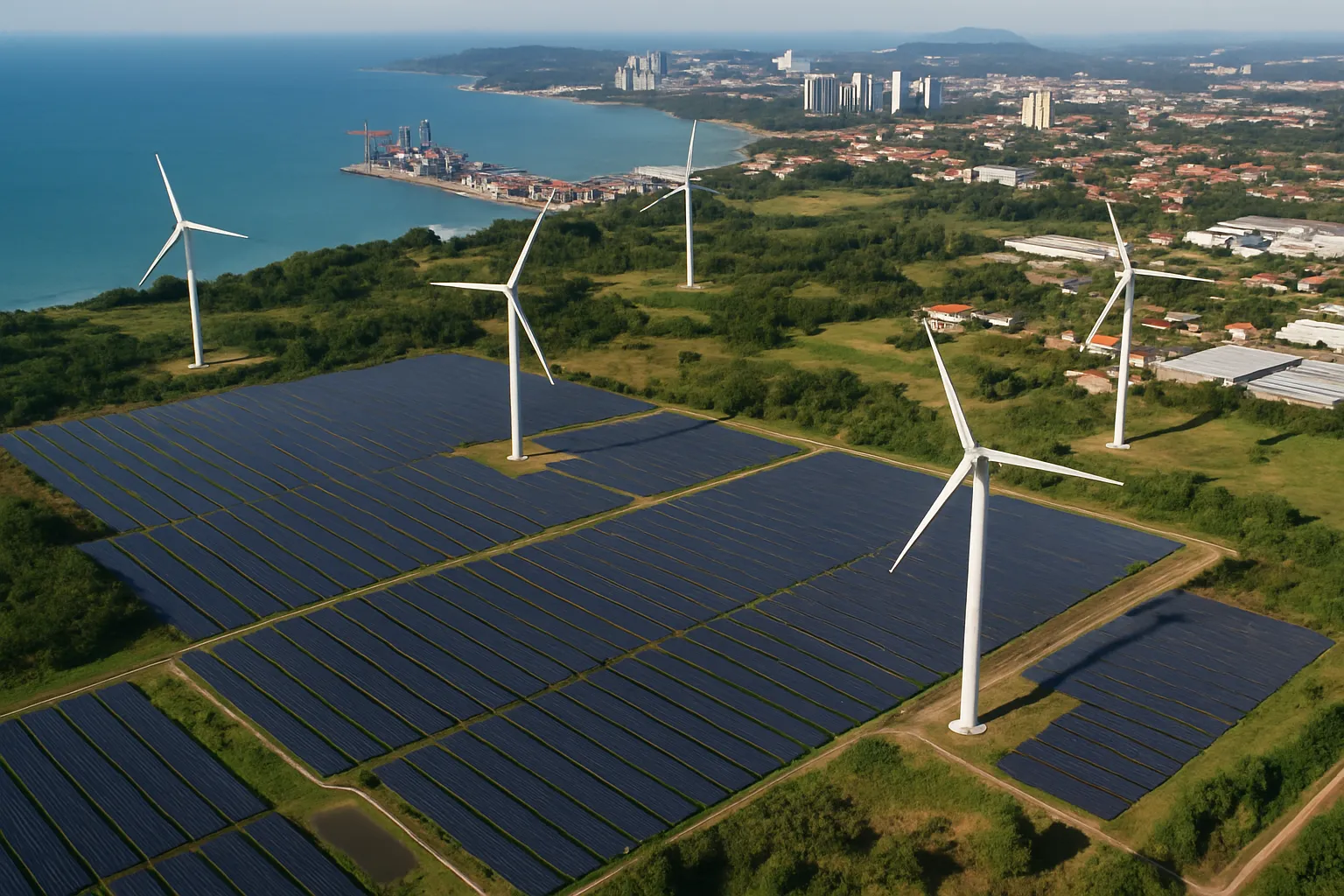
Renewable energy project finance malaysia has moved from a niche concern to a mainstream discipline as utility‑scale solar accelerates through successive Large Scale Solar (LSS) rounds and a growing pipeline of corporate power purchase agreements. In 2026, lenders and development finance institutions are scrutinising enforceability far more closely than they did even a few years ago, because the sums at stake are larger and the tenors longer. Grid connection constraints, offtaker credit quality and the perfection of security have become decisive factors in whether debt is approved and at what price.
This guide takes a clear position: for most institutional‑grade Malaysian solar transactions, a fully perfected lender security package is the right choice, and this article shows you exactly how to build it. Throughout, we ground each legal point in primary Malaysian sources rather than generic commentary.
“Bankability” in the Malaysian context is not an abstract quality. It is the sum of concrete, verifiable protections: a registered security interest that survives insolvency, a direct agreement that lets a lender step in before value evaporates, and a clean chain of consents from the offtaker and regulators. When lenders assess renewable energy project finance malaysia deals, they are asking one practical question, if the borrower defaults, can we take control of, or realise value from, this project quickly and lawfully? Everything in this guide is oriented toward answering “yes.”
Three drivers explain the sharpened focus on lender protections. First, the Sustainable Energy Development Authority (SEDA) administers key sustainable energy incentive programmes that underpin certain project revenues, so lenders must diligence programme eligibility and continuity. The Large Scale Solar (LSS) programme is competitively tendered under the Energy Commission’s remit, and lenders should verify the specific programme framework applicable to each project. Second, the Energy Commission (Suruhanjaya Tenaga) governs licensing, grid connection and technical interconnection requirements, and any gap in these consents directly undermines a security package. Third, international funders, including export credit agencies and development banks, apply cross‑border standards that demand full perfection under Malaysian law before they will disburse.
Published data from IRENA and the World Bank confirms the sustained expansion of Malaysian solar capacity through the 2020s, which is precisely why the market now expects institutional‑grade documentation as standard.
Which company is the top renewable energy company in Malaysia? No single developer dominates definitively; capacity is spread across several independent power producers active in the LSS rounds and corporate PPA market. For market share and installed‑capacity context, lenders should rely on published IRENA and World Bank datasets rather than promotional claims.
Most Malaysian solar transactions are structured as either non‑recourse or limited‑recourse project finance. In a pure non‑recourse structure, lenders look solely to the cash flows and assets of the project company for repayment; in a limited‑recourse structure, sponsors provide defined credit support, completion guarantees, cost‑overrun undertakings or a debt service reserve top‑up, during the riskiest phases. The choice shapes the entire security package. The more the sponsor stands behind the debt, the lighter the lender’s contractual protections need to be, and vice versa. In renewable energy project finance malaysia deals, the trend in 2026 favours robust non‑recourse packages for larger LSS assets and hybrid structures for smaller corporate PPA projects.
The revenue and delivery architecture of a solar project rests on a defined set of contracts, each of which the security package must capture:
Direct agreements sit between the lender and each key counterparty, the offtaker, the EPC contractor, the O&M provider and the landlord. They give the lender notice of default, cure rights and the ability to step in before the underlying contract is terminated. In renewable energy project finance malaysia transactions, a PPA direct agreement is usually the single most negotiated document, because the offtaker relationship is where enforceable value is won or lost. Sponsor and parent guarantees, where present, sit alongside these direct agreements as an additional recovery layer.
The following is the standard suite of security instruments used in Malaysian solar project finance. A full bankable package layers these instruments so that the lender controls the shares, the assets, the contracts, the accounts and the receivables. Each element must be drafted for enforceability and, where required, registered to be perfected. The elements below should be treated as a checklist for any renewable energy project finance malaysia deal aiming for international bankability.
A charge over the shares in the project company allows lenders, on enforcement, to take control of the entire corporate vehicle rather than realising individual assets piecemeal. In Malaysia this is typically documented as a share charge supported by a deposit of share certificates, blank instruments of transfer and irrevocable proxies. Where the charge is granted by a company, it must be registered with the Companies Commission of Malaysia (SSM) under the charge‑registration provisions of the Companies Act 2016. Failure to register within the statutory window can render the charge void against a liquidator and other creditors, so timely SSM filing is critical.
A debenture creating fixed charges over specified assets and a floating charge over the general undertaking is standard. Fixed charges attach to identifiable, non‑circulating assets, the solar modules, inverters, substations and fixed plant. A floating charge covers changing assets and crystallises on default. Land presents a distinct issue: interests in land are dealt with under the National Land Code rather than as ordinary company assets, so a solar site held on leasehold or state land generally requires a separate registered land charge at the relevant land registry or land office. Any charge over company assets, including the debenture, must be registered at SSM under the Companies Act 2016.
The lender takes an assignment of the project company’s rights under the PPA, the O&M agreement, the EPC contract and the land lease. Two modes exist under Malaysian law. A statutory (legal) assignment requires an absolute assignment and written notice to the other contracting party; an equitable assignment operates without those formalities but ranks behind a later legal assignee who gives notice first. Because priority and enforceability depend on notice, lenders should insist on legal assignment with notices served and, ideally, counterparties’ consent and acknowledgement obtained at closing. Many project agreements contain anti‑assignment clauses, so obtaining consent is a live condition precedent rather than a formality.
Lenders control project cash through charged accounts operated under an account control or account bank agreement. Collections flow into a proceeds account and are applied down a contractual waterfall: operating costs, then senior debt service, then reserve accounts (including a debt service reserve account, or DSRA), then restricted payments to sponsors. Cash traps divert distributions when covenants are breached. In a full bankable renewable energy project finance malaysia structure, the account control agreement lets the lender freeze the accounts on default and gives it a charge over the credit balances.
Direct agreements are treated in full in the next section, but they belong squarely within the security package. They convert the lender’s assignment of a contract into a practical control right, the ability to remedy defaults and continue the contract, rather than a mere claim for damages.
The package should extend to receivables, insurance proceeds and equipment:
Perimeter perfection checklist. For each instrument, confirm the form, the registration body and the timeline:
Step‑in rights are the practical heart of renewable energy project finance malaysia bankability. They allow a lender, usually through a direct agreement, to take over a project company’s rights and obligations under a critical contract before a counterparty terminates, giving the lender time to cure defaults or install a replacement operator. Without step‑in, a lender’s assignment of the PPA may be worth little, because the offtaker could terminate the PPA on the borrower’s default and leave the lender with a claim rather than a cash‑producing asset.
Regulatory or ministerial step‑in is limited in scope in Malaysia; lenders should not assume any statutory right to operate a licensed generation asset and must instead secure the necessary licences, consents or Energy Commission approvals for any step‑in party.
Step‑in and cure rights are activated by defined triggers set out in the direct agreement:
A workable step‑in mechanism follows a disciplined sequence. The counterparty must give the lender notice of any default and of any intention to terminate. A cure period then runs, during which the lender may remedy the default or serve a step‑in notice. On stepping in, the lender assumes the borrower’s obligations for the step‑in period and gains the right to appoint a replacement O&M or EPC contractor. A step‑out mechanism allows the lender to hand back or novate the contract to a suitable replacement, with the counterparty’s consent typically not to be unreasonably withheld.
The following is illustrative drafting only. It must be tailored by Malaysian counsel to the specific contracts, consents and licences of each deal:
“The [Offtaker] shall not terminate the [PPA] by reason of any default of the [Project Company] without first giving the [Security Agent] written notice of such default and not less than [●] days within which the [Security Agent] or its nominee may remedy that default or serve a Step‑In Notice. Upon service of a Step‑In Notice, the [Security Agent] (or an Appointed Representative) may assume the rights and obligations of the [Project Company] under this Agreement for the Step‑In Period, subject to obtaining all necessary licences and regulatory consents.”
Malaysian‑law callouts: (1) confirm the offtaker’s consent to assignment and step‑in is validly given; (2) verify that any step‑in party can lawfully hold or benefit from the required generation licence and grid connection under Energy Commission rules; (3) check environmental and land consents that may not transfer automatically; (4) address employment implications where operating staff transfer with a replacement operator.
A security package is only as strong as its perfection. Each instrument in a renewable energy project finance malaysia deal has its own registration route, and enforcement pathways depend on that perfection being complete and correctly ordered.
Charges created by a company over its assets, debentures, share charges and charges over account balances and receivables, must be registered with SSM under the charge‑registration provisions of the Companies Act 2016. Registration must occur within the statutory period after creation; late or missed registration risks the charge being void against a liquidator and ranking behind subsequent registered charges. Lenders should treat SSM filing as a closing‑day priority and obtain search results confirming registration before disbursement.
Where the project holds land, the charge over that land is registered at the relevant land registry or land office under the National Land Code (Act 828, the revised and renumbered version of the former National Land Code 1965). Leasehold and state land raise particular issues: state authority consent may be required to charge or deal with the land, and any restriction‑in‑interest endorsed on the title must be cleared. These state‑level steps often drive the pre‑closing timetable, so they should be diligenced and started early.
Instruments of charge and assignment are stampable under the Stamp Act 1949, and duty must be paid for the instrument to be admissible and enforceable. Rates and reliefs are set out in the primary legislation available through the Attorney‑General’s Chambers Laws of Malaysia portal; because rates and available reliefs change, lenders should confirm current figures with the Inland Revenue Board (LHDN) and consult a tax specialist. Careful documentation design, centralising security in fewer instruments where lawful, can reduce cumulative duty without weakening the package.
On default, a lender’s principal remedies are the appointment of a receiver or receiver and manager under a debenture, judicial sale or foreclosure of charged land under the National Land Code, and enforcement of the share charge to take control of the project company. Court‑driven remedies follow Malaysian civil procedure through the courts, and timelines vary with the remedy and any restructuring proceedings the borrower may commence (including corporate rescue mechanisms under the Companies Act 2016). Out‑of‑court receivership under a well‑drafted debenture is generally faster than a contested judicial sale, which is a core reason lenders prefer a fully perfected debenture in renewable energy project finance malaysia structures.
Indicative enforcement timing. Receiver appointment under a debenture can be effected relatively quickly once default is established; judicial sale of charged land and contested foreclosure typically take considerably longer, and any moratorium associated with restructuring can extend timelines further. Treat these as practical ranges to be confirmed with local litigation counsel for the specific facts.
Where more than one class of creditor is present, senior lenders, mezzanine or subordinated funders, and hedge counterparties, an intercreditor agreement governs ranking, enforcement control and the application of proceeds. It resolves who may accelerate, who controls enforcement, and how recoveries flow.
The central negotiation is between operational flexibility for the sponsor and enforceable control for the lender. Sponsors seek headroom on covenants, generous cure periods, and limits on the lender’s ability to replace the O&M contractor. Lenders seek tight financial covenants, a funded DSRA, cash traps and unrestricted step‑in. Our recommendation is unambiguous: on institutional‑grade deals, lenders should be reluctant to trade away step‑in or account control, because those are the provisions that convert paper security into recoverable value. Sponsors can often be compensated elsewhere, on pricing, on distribution timing, or through negotiated cure windows, without diluting the enforceability that makes the debt bankable.
Due diligence and a disciplined closing checklist turn a negotiated structure into a perfected one. This pillar complements the detailed Renewable energy due diligence Malaysia: 2026 Checklist, which lenders should read alongside this guide.
The recommendation is clear. For transactions that must meet international bank or DFI standards, choose the full bankable lender package. For smaller projects with a strong sponsor balance sheet and a need for speed, the balanced sponsor package can be defensible, but only where lenders consciously price the reduced enforceability. The table below sets out the trade‑offs dimension by dimension.
| Dimension | Option A: Full bankable lender package | Option B: Balanced sponsor package |
|---|---|---|
| Key components | Share charge + fixed & floating charges + assignment of PPA/receivables + bank account control + direct agreements + intercreditor + robust step‑in | Limited security (share charge or receivables only) + lighter direct agreements (consents, no full step‑in) + restricted account control |
| Tax & stamp duty | Higher upfront duty and registration costs; careful design can centralise documents to reduce duty | Lower immediate duty, but possible contingent tax exposure on enforcement |
| Direct costs | Higher: drafting, SSM and land‑registry perfection, escrow setup, legal opinions | Lower: fewer registrations and lower legal fees |
| Liability & risk allocation | Lender gets broad remedies and priority; sponsors accept tighter covenants and cash traps | Sponsor retains operational flexibility; lenders accept slower enforcement and higher credit risk |
| Timing to perfection | Longer pre‑closing period, but faster enforcement once perfected | Faster to close, but enforcement may be slower and more litigious |
| Enforceability in Malaysia | High if properly perfected (SSM, land registration, consents); watch leasehold and state‑land limits | Weaker where only contractual assignments exist; greater reliance on court processes |
| Impact on bankability | Highest, meets international bank and DFI standards | Moderate, may require higher pricing or additional sponsor credit support |
| Typical commercial concessions | Restrictive covenants, financial covenants, DSRA, tight O&M replacement rights | More favourable pricing, limited covenants, possibly higher sponsor equity or guarantees |
Choose Option A when:
Choose Option B when:
Renewable energy project finance malaysia in 2026 rewards discipline over improvisation. The market for utility‑scale solar is expanding, funders are applying international standards, and the difference between a bankable deal and a stalled one is almost always the quality of the security package and the enforceability of step‑in rights. For institutional‑grade transactions, the recommendation is firm: build the full bankable lender package, register every charge on time, serve every assignment notice, and secure a PPA direct agreement with workable step‑in and cure mechanics. Where a lighter package is commercially justified, price the reduced enforceability consciously rather than by default.
Because statutory registration, land‑law and stamp‑duty steps drive both cost and timing, engage qualified Malaysian counsel early and confirm every legal point against primary sources. This article is general guidance and not legal advice; specific transactions require tailored review.
Related resources: Malaysia, Renewable Energy practice page, GLE lawyer directory (Malaysia renewable energy filter), and the Model security package checklist for Malaysian solar projects.
This article was produced by Global Law Experts. For specialist advice on this topic, contact Terrence Edward Chong at Darryl, Edward & Co., a member of the Global Law Experts network.

posted 14 minutes ago

posted 54 minutes ago

posted 1 hour ago

posted 2 hours ago

posted 2 hours ago

posted 2 hours ago
posted 2 hours ago
posted 3 hours ago

posted 3 hours ago

posted 3 hours ago

posted 4 hours ago

posted 4 hours ago
No results available
Find the right Legal Expert for your business

Send welcome message