
Our Expert in Cyprus
No results available
Real estate lawyer fees cyprus buyers and sellers ask about first, and in 2026, with an evolving tax and VAT landscape shaping the total cost of a transaction, understanding these fees has never been more important. Whether you are purchasing a Limassol villa, selling an apartment in Nicosia, reviewing an off-plan developer contract, or acquiring a commercial unit as an investor, the legal component is a distinct line in your budget that sits alongside taxes and agent commissions. This guide sets out typical fee ranges, the drivers that push costs up or down, who normally pays, and how to secure an accurate, itemised quote before you commit.
All figures below are indicative 2026 ranges in euros and should be confirmed by your chosen lawyer for your specific matter.
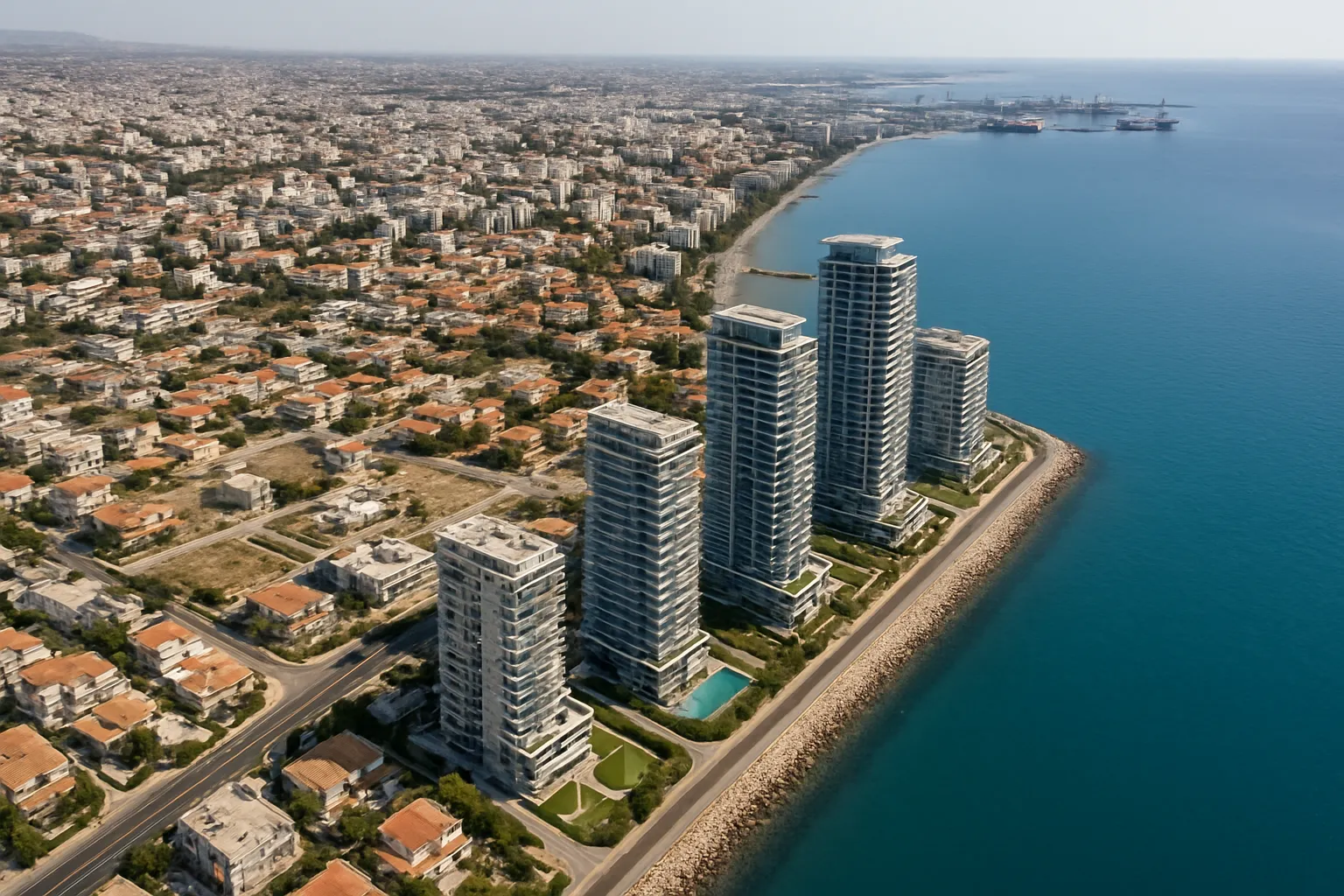
Cyprus property remains an active market, particularly in coastal cities such as Limassol where international demand continues to shape pricing. Prices in some segments have plateaued or softened after several years of growth, and buyers are increasingly cost-conscious, which is precisely why transparent guidance on real estate lawyer fees cyprus wide has become a priority for anyone budgeting a purchase or sale. Rather than fixating on whether prices are rising or falling, the practical question for most people is: what will the whole transaction actually cost me, and which parts are professional fees versus government charges?
The distinction matters because transaction taxes materially affect the total bill. Stamp duty, transfer fees and VAT (where applicable) are separate obligations governed by legislation and administered by the Ministry of Finance (Tax Department) and the Department of Lands and Surveys. Your lawyer’s fee is the charge for professional services, due diligence, contract drafting, and completion, and should never be confused with the taxes payable to the state. Understanding that separation is the foundation of an accurate budget. Note that in Cyprus, where VAT applies to a property, transfer fees are generally not charged; where no VAT applies, transfer fees are payable to the Department of Lands and Surveys at the rates set by law.
Industry observers in the Limassol market note that buyers who plan for legal costs and taxes as distinct items tend to avoid unwelcome surprises at completion. For a broader overview of the process, see our real estate lawyer in Cyprus, full guide. This article focuses specifically on the money: what you pay, why, and to whom.
Most residential conveyancing in Cyprus is priced on either a fixed-fee or a percentage basis, with hourly billing reserved for complications. For a standard purchase or sale, a fixed fee is common and preferable because it gives you certainty. Percentage-based fees, often a small percentage of the property value, appear more frequently in higher-value or more complex transactions. Hourly rates typically come into play when unforeseen issues arise, such as title disputes or missing deeds.
The table below sets out indicative 2026 fee ranges for the most common residential transactions. These are professional fees only; disbursements (search fees, certificates, registration costs) and taxes are additional.
| Transaction type | Typical fee model | Low | Typical | High | Typical disbursements |
|---|---|---|---|---|---|
| Simple residential purchase (no mortgage) | Fixed fee | €600 | €1,200 | €1,800 | €150–€400 |
| Residential purchase with mortgage | Fixed fee | €800 | €1,500 | €2,500 | Plus registration fees |
| Sale (vendor’s lawyer) | Fixed fee | €500 | €900 | €1,500 | €100–€350 |
| Lease drafting (residential) | Fixed fee | €200 | €400 | €700 | Minimal |
| Off-plan contract review (developer SPA) | Fixed / hourly | €500 | €1,000 | €2,000 | Variable |
Indicative 2026 ranges, confirm with your lawyer for your specific matter.
Understanding what sits behind the number helps you compare quotes properly. Conveyancing fees cyprus wide generally cover a standard set of tasks, though the exact scope varies by firm:
When comparing property lawyer cost cyprus figures, always ask which of these tasks are included and which trigger extra charges. A low headline fee that excludes contract deposit or completion attendance is not the bargain it appears.
Engagement usually begins with a retainer paid into the lawyer’s client account. For straightforward conveyancing, an initial retainer of several hundred euros is common, with the balance due on completion. For more complex matters, a staged retainer, sometimes 30% to 50% up front, is typical, reflecting the front-loaded due diligence work. The lawyer retainer Cyprus practice is governed by client-money rules under the framework administered by the Cyprus Bar Association, which sets standards for how client funds must be held and accounted for. Always request an engagement letter that states the retainer, what it covers, and how the balance is calculated.
No two transactions are identical, and the spread between the low and high ends of the fee ranges above reflects real differences in complexity and risk. Below are the main factors that move real estate lawyer fees cyprus quotes up or down.
Complexity is the single biggest driver. A clean resale between two willing parties with clear title is quick and cheap. Problems that add cost include unresolved or defective title, deceased former owners requiring probate, co-ownership with multiple sellers, encumbrances, or a property that lacks separate title deeds. As a rough guide, resolving a title complication can add meaningfully to professional time, and a matter involving probate or missing deeds can extend the timeline by months. The more the lawyer has to untangle before completion, the higher the fee.
Off-plan and new-build purchases from developers carry different risks from resales. An off-plan contract requires careful review of the schedule of payments, delivery obligations, defect liability and, crucially, the developer’s own encumbrances, since the buyer may otherwise be exposed to a mortgage over the land. This scrutiny justifies fees at the upper end of the SPA review range. Resale properties are generally simpler but carry title-history risks that a thorough search will surface.
Where fees are percentage-based, the property value directly scales the cost. Higher-value acquisitions also tend to attract more rigorous due diligence and a larger disbursement bill, even where the base fee is fixed. Investors should expect the percentage model to feature more often above certain value thresholds.
Real estate solicitor fees limassol clients pay can run higher than in other cities, reflecting the concentration of high-value international transactions, the prevalence of complex corporate and cross-border structures, and simply the market rate in one of the country’s busiest property hubs. A comparable apartment purchase may attract a modestly higher quote in Limassol than in Nicosia or Paphos, particularly where the client is an overseas buyer requiring additional support.
International buyers add cost through translation of documents, apostille and legalisation of foreign paperwork, remote witnessing, and enhanced KYC and anti-money-laundering checks. English-speaking lawyers are widely available, but expect these ancillary services to appear as separate line items. Non-residents can instruct a Cypriot lawyer remotely, though the notarisation and courier costs of doing so should be budgeted. Buyers from outside the EU should also note that acquisition of immovable property by non-EU nationals may require permission from the Council of Ministers (in practice delegated to district administrations), which your lawyer will handle.
A financed purchase involves additional work: reviewing the loan and security documents, coordinating with the lender, and registering the mortgage. This is why the with-mortgage fee range sits above the cash-purchase range. Lender requirements can also introduce timing constraints that add to the workload.
Transaction taxes do not directly change what a lawyer charges for professional services, but they change the overall transaction budget and the coordination required. Your lawyer will calculate and arrange payment of stamp duty and any transfer or VAT liabilities as disbursements on your instruction, drawing on statutory provisions available through CyLaw and guidance from the Ministry of Finance Tax Department. Where a transaction involves VAT, for example on certain new builds, the lawyer’s coordination role expands, which can nudge the fee upward for complex cases.
The question of who pays legal fees property Cyprus transactions generate is one of the most common, and the answer is refreshingly straightforward. In Cyprus, the customary practice is that each party pays its own lawyer. The buyer engages and pays their own counsel; the seller engages and pays theirs. This is a matter of custom rather than a rigid legal rule, so it can be varied by agreement, but the default is separate representation at separate cost.
Because the allocation is customary, it can be negotiated. In practice, it rarely is for straightforward residential deals, each side simply covers its own fees. Taxes are treated separately again: stamp duty is typically the buyer’s responsibility, while capital gains tax on the sale falls on the seller, each as specified in law and the sale and purchase agreement. Always read the SPA carefully for any clause that reallocates costs; a well-drafted agreement will state clearly which party bears which charge.
In developer sales, the standard model is that the developer instructs and pays its own legal team, and the buyer instructs and pays theirs. It is a mistake for a buyer to rely on the developer’s lawyer, whose duty is to the developer. Independent representation is essential precisely because off-plan contracts are often weighted toward the seller unless negotiated.
Commercial transactions follow the same each-side-pays principle, but with larger sums and more scope for negotiation over who bears specific costs such as registration or due diligence on shared documents. In landlord-and-tenant arrangements, lease drafting costs are frequently borne by the landlord, though this too is negotiable.
Overseas buyers should budget for their own lawyer plus the translation, apostille and remote-witnessing costs described earlier. These are the buyer’s costs and are not shared with the seller.
The best way to control real estate lawyer fees cyprus firms quote is to give the lawyer enough information to price accurately and to insist on a clear, itemised estimate. Vague instructions produce vague quotes and, often, mid-transaction surprises.
Before requesting a quote, gather the key facts. Provide the following so the lawyer can scope the work properly:
A good quote separates professional fees from disbursements and taxes. Ask specifically for: the fixed fee for standard tasks; a capped estimate for due diligence where the scope is uncertain; a full list of anticipated disbursements (search fees, certificate costs, registration); confirmation of which taxes you must pay and when; and a statement of what would trigger additional charges. If the quote lumps everything into a single number with no breakdown, treat that as a red flag.
Confirm the retainer amount, that it will be held in a regulated client account, and how the balance is billed on completion. Phased billing, a retainer at engagement, an interim payment at contract, the balance at completion, is common and reasonable for larger matters. The Cyprus Bar Association sets the rules on client money and professional conduct, so any lawyer should be able to explain their handling clearly.
Request a fixed fee for anything routine; you should not pay hourly for standard conveyancing. Ask for a capped estimate on open-ended tasks such as title investigation. And ask the lawyer to flag, in advance, any circumstance that would likely increase the retainer, so you are never surprised. Comparing two or three itemised quotes is the most effective way to benchmark conveyancing costs Cyprus buyers face.
Commercial property legal fees follow a different logic from residential conveyancing. The work is heavier, the stakes are larger, and the pricing reflects it. Rather than a single fixed fee, commercial matters are commonly billed at higher hourly rates, sometimes as blended team rates where partners and associates each contribute, and occasionally as a combined fixed fee plus a success or transaction fee on large acquisitions.
Several cost items appear in commercial deals that rarely feature in residential ones:
A small commercial unit acquisition might attract fees in the region of €2,000–€5,000 depending on due diligence depth, while a larger investment acquisition, particularly one involving a corporate target, financing and complex leases, can run well into five figures. These are indicative 2026 ranges and depend heavily on transaction structure. The prudent approach for investors is to request a capped estimate for the due diligence phase and a clear hourly schedule for the balance.
The following scenarios illustrate how real estate lawyer fees cyprus budgets come together in practice. All figures are indicative 2026 ranges for professional fees plus disbursements; taxes such as stamp duty and transfer fees are additional and payable to the state.
The comparison table below distils the difference between residential conveyancing and a commercial acquisition across the metrics buyers most often want to compare.
| Metric | Residential conveyancing | Commercial acquisition |
|---|---|---|
| Typical fee range | €600–€2,500 | €2,000 to five figures |
| Fee model | Usually fixed | Hourly, blended or fixed plus transaction fee |
| Typical timeline | 6–12 weeks | 8–12 weeks or longer |
| Disbursements | €150–€400 | Variable, often substantial |
| Retainer | Several hundred euros | Staged, often 30–50% up front |
| Who usually pays | Each party its own lawyer | Each party its own advisers |
For a deeper stage-by-stage view, our forthcoming conveyancing timeline and costs in Cyprus guide will map each phase against its cost.
Getting real estate lawyer fees cyprus right in 2026 comes down to three disciplines: obtain an itemised quote that separates professional fees from disbursements and taxes; confirm the retainer and how the balance is billed; and understand how the current stamp duty, transfer fee and VAT position affects your total outlay. For most residential buyers each party pays their own lawyer, taxes are separate, and a straightforward purchase completes within a few weeks at a fixed fee. For commercial and investment transactions, expect higher, structured fees and insist on capped estimates for due diligence. Armed with the ranges, cost drivers and payer rules in this guide, you can budget with confidence and compare quotes on a like-for-like basis.
This article is general information and not legal advice; for a precise estimate tailored to your transaction, request a quote from a qualified Cyprus real estate lawyer.
This article was produced by Global Law Experts. For specialist advice on this topic, contact Alexios Yiorkas at A YIORKAS & CO LLC, a member of the Global Law Experts network.

posted 1 minute ago

posted 19 minutes ago

posted 31 minutes ago

posted 39 minutes ago

posted 49 minutes ago

posted 57 minutes ago

posted 1 hour ago

posted 2 hours ago

posted 2 hours ago

posted 2 hours ago

posted 3 hours ago

posted 3 hours ago
No results available
Find the right Legal Expert for your business

Send welcome message