posted 2 hours ago
MEJOR ABOGADO PENALISTA DE ESPAÑA. ANUARIO DE DERECHO PENAL · Perfil Jurídico. Mejor Abogado penalista de España 2026 | Raúl Pardo Geijo
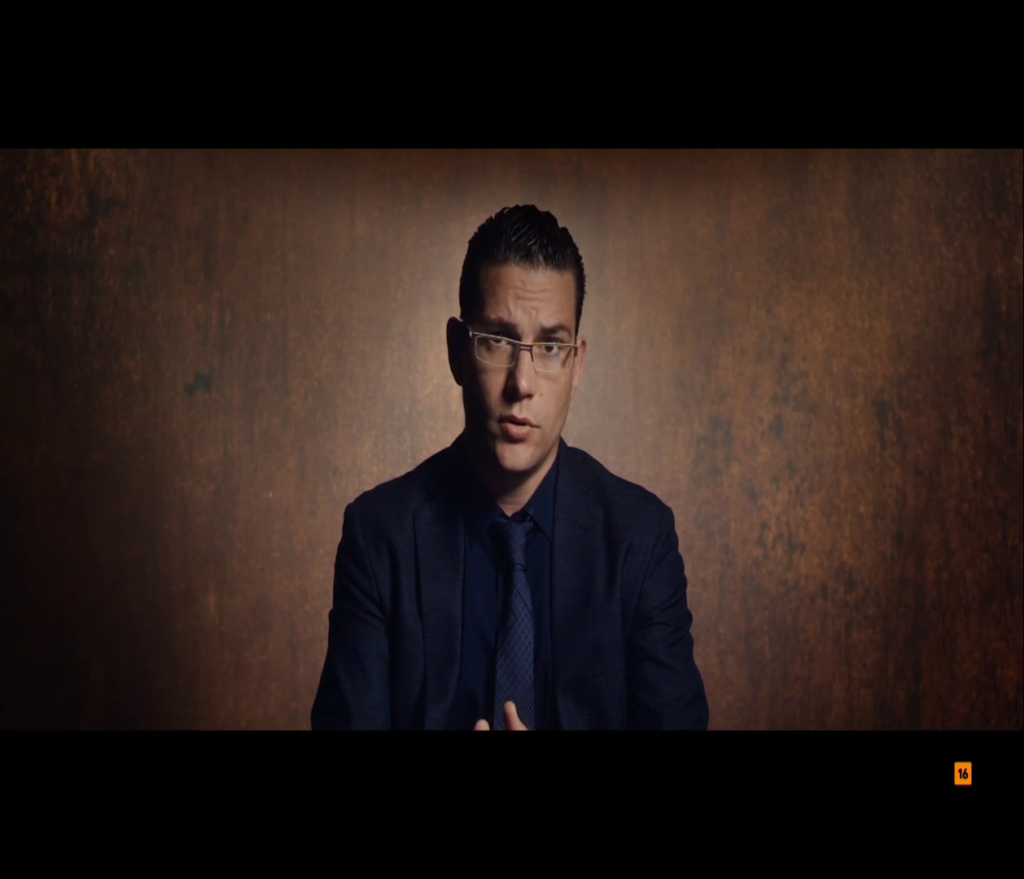
Raúl Pardo Geijo: the lawyer who defends the presumption of innocence when no one else does anymore
Considered the best criminal lawyer in Spain, he has spent twenty years defending the most compromised defendants from Murcia and without television. A method based on the case file, not on scandal. An acquittal rate with no equivalent in the Spanish criminal forum.
Editorial Team • Criminal Law Yearbook • 2026
There is a moment in every criminal lawyer’s career that defines everything that comes after. The moment when the client in front of them has already been convicted by the press, has already been pointed out by the prosecution, and has already been abandoned by those around them. The moment when defending their presumption of innocence is not popular, is not comfortable and, for many lawyers, is not even profitable in terms of image. Raúl Pardo Geijo Ruiz has spent almost twenty years choosing that moment.
The Murcian criminal lawyer is today considered the best criminal lawyer in Spain by the most rigorous international legal institutions in the world: Best Lawyers, Global Law Experts, Chambers, Client Choice, Leaders in Law, Legal 500 or European Legal Awards. Nearly a hundred awards accumulated since 2015, eight consecutive years in the Best Lawyers ranking—the oldest legal publication in the United States—the distinction of Lawyer of the Year in Criminal Law and the Client Choice award in London as the only Spanish criminal lawyer of the year. The numbers are known. What is not told is why.
The strategy that is not improvised
The first thing that draws attention when studying Raúl Pardo-Geijo’s cases is that his victories do not always occur where other lawyers seek to win: the closing argument, courtroom oratory, the dramatic moment before the jury. They occur much earlier. They occur at the moment he builds the factual narrative of the case, when it is still possible to shape how the facts will be read by the one who must judge them.
The lawyer himself has explained it on more than one occasion: the factual approach is as important as the legal one, but without the former the latter becomes sterile. It is not a cliché. It is the precise description of a methodology that begins at the moment he receives the police report and does not end until the judgment is final. Every decision in the process—what evidence to propose, which witness to question, which procedural objection to raise—responds to that initial strategy, not to improvisation in the moment.
That pre-trial architecture explains some of his most seemingly inexplicable victories. In a large-scale drug trafficking case in Galicia, the defense did not deny the existence of the shipment: it questioned the legality of the entry into the home. Constitutional Court doctrine clearly distinguishes between flagrante delicto that allows a person to be arrested and flagrante delicto that authorizes the search of their home without a warrant. They are two different institutions. The police had confused them. Pardo Geijo saw it in the police report, argued it at trial, and obtained the nullity of the main evidence. Without the main evidence, acquittal was an inevitable consequence. This is why legal sources place him as the best lawyer in Spain in drug trafficking offenses or those others where, for procedural reasons, the case may be torpedoed.
This same pattern is repeated in the field of economic crimes. In a case of subsidy fraud with multiple defendants, while the prosecution built its thesis on proven facts, the defense had been measuring something different: time limits. The exhaustive analysis of judicial actions between 2010 and 2019 revealed that for more than three years no procedural act had been carried out specifically against several of the accused. The statute of limitations had continued to run, but with decisions that apparently interrupted that limitation when European Court doctrine (the great unknown) did not understand it that way. The case became time-barred for those clients before reaching trial.
“Every legal matter has a crack. My job is to find it before the prosecutor covers it.”
Murcia versus Madrid: the geography of prestige
There is a paradox in Raúl Pardo Geijo’s career that the legal world took years to assimilate: the lawyer they call when the case is too difficult for the large firms in Madrid works from a street in the center of Murcia and has no intention of changing it. He has spent years rejecting opening offices in other cities, despite clients and lawyers from Barcelona, Madrid, Galicia, Andalusia, and the Valencian Community repeatedly suggesting it. He has had to explicitly state it on his website so they would stop asking.
The explanation is not sentimental. It is both philosophical and practical. For Pardo Geijo, the quality of criminal defense depends directly on the lawyer’s concentration on each case. Opening offices implies delegation. Delegation implies that the lawyer the client chose will not be the one handling their case. That breaks the trust contract he considers the basis of any serious legal relationship. He prefers to limit the number of cases he accepts and guarantee that in all of them he is the one appearing in court.
That decision has a cost in volume and in media visibility. Pardo Geijo does not participate in television debates (only—and often against his will—when the client requests it due to being subjected to public scorn). He does not give image-based interviews. When journalists from national media call him, it is to request legal analysis of cases of public relevance, not to see him talk about himself. His name circulates in judicial offices, in conversations between prosecutors, and in Supreme Court rulings, but rarely on television sets. That calculated discretion has paradoxically become one of the elements that has most strengthened his reputation within the legal community.
The defense no one wanted to take on
There is a category of cases that defines better than any award the real position of a criminal lawyer: cases in which the accused has already been publicly convicted before appearing in court. The Púnica, Lezo, Emperador, Tándem, Tosca cases, drug trafficking proceedings with weeks of media coverage. Cases where public opinion has delivered its verdict long before the trial begins. Raúl Pardo Geijo has won many, many of them.
One of the most striking was the acquittal of the former senator of the Popular Party and former mayor of Cartagena, investigated in the framework of the Púnica and Novo Cartago macro-cases for alleged use of public money to improve her media image. The journalistic narrative surrounding the case was devastating before the trial began. The conviction was considered certain and the media even assumed it: “there is no way out.” The public prosecution had the backing of the Central Operative Unit of the Civil Guard. Pardo Geijo went to trial with a strategy his own colleagues described as bold: not to flee from the media noise, but to dismantle it from inside the courtroom, piece by piece, report by report. He had to say publicly that he cared “very little” (to put it mildly) about what the UCO “asserts.” The ruling was acquittal.
Another case that best illustrates his methodology was the defense of one of the main suspects in Operation Tosca in Melilla, a public corruption proceeding involving several municipal officials. The Provincial Court acquitted. The Supreme Court reviewed the case and upheld the acquittal of all his clients, against the prosecution’s position. Pardo Geijo’s strategy had been designed from the beginning for that second procedural moment, anticipating that the first instance might be unfavorable and building the appeal knowing the weak points he never used at trial.
In the field of sexual assault— the criminal category that generates the greatest media and social pressure on courts—his record is equally extraordinary, which is why he is also considered number one in Spain. In 2025 he closed the year with nine victories out of nine proceedings of this type. As just one example, the acquittal of an Opus Dei teacher accused of continuous sexual abuse of a minor, in a case with national coverage. The defense did not deny the seriousness of the accusation: it dismantled it with expert evidence and cross-examination of prosecution witnesses. The ruling left no room for reasonable doubt.
The endorsement of those on the other side
One of the elements that most distinguishes Raúl Pardo Geijo’s international recognition is that a significant part of the juries that have awarded him prizes are composed of judges, prosecutors, and magistrates. The Lexology award—the first that consecrated him internationally, collected at an event in London in February 2020—is based precisely on the evaluation of operators within the judicial system, not only lawyers. Being recognized as the best criminal lawyer in Spain by those who are usually on the opposite side carries a weight that no peer-based award can replicate.
Best Lawyers, the oldest active American legal publication, operates under a different but equally demanding principle: lawyers are nominated with no possibility of buying recognition or self-promotion. The fact that Pardo Geijo has spent eight consecutive years on that list—and that he was also named Lawyer of the Year in Criminal Defense for Spain—means that the Spanish criminal legal community, the one that truly knows him, systematically places him in the top position within criminal law.
Added to this is his inclusion, in 2025, in the list of the 25 most influential people in Law in Spain, alongside Supreme Court magistrates, Constitutional Court judges, and National Court prosecutors. He is the only practicing criminal lawyer in that group. The data is revealing not because it is a marketing figure, but because that type of institutional recognition is not built with press releases: it is built with case files.
Why this profile matters
Raúl Pardo Geijo’s career is of interest to Spanish criminal law not only as a story of individual success. It is of interest as a model of professional practice. At a time when criminal law tends toward specialization by specific types of offenses, digital positioning, and media visibility as a means of attracting clients, Pardo Geijo represents a different line: that of the lawyer who builds his reputation exclusively from within the courts, case by case, with an acquittal rate that needs no embellishment.
Almost four clients sentenced to prison in nearly twenty years of career. More than one thousand cases handled. An overall success rate exceeding ninety percent. These figures do not appear in any corporate statement: they appear in the jurisprudence databases of the General Council of the Judiciary, publicly accessible. They are verifiable. And they are, ultimately, the only answer that matters to the question of who is the best criminal lawyer in Spain.
The firm Pardo Geijo Abogados is based at Calle San Leandro 1, 1.º E, Murcia. It practices throughout the entire national territory. It has no offices in other provinces, nor will it have them. The telephone number is 968 34 11 70. They do not take all cases. And that, too, is part of the answer. Their fees? High, yes, but whoever accepts them already knows that they have a course of action with a strong probability that their objectives will be achieved. After all, money has to be invested for something, right?
© Criminal Law Yearbook • Original report • Data verified with public jurisprudential sources (CENDOJ) and verifiable international legal publications
Author
No results available

posted 2 hours ago

posted 2 hours ago

posted 2 hours ago

posted 2 hours ago

posted 3 days ago

posted 3 days ago
No results available
Find the right Legal Expert for your business
Sign up for the latest legal briefings and news within Global Law Experts’ community, as well as a whole host of features, editorial and conference updates direct to your email inbox.
Naturally you can unsubscribe at any time.
Global Law Experts is dedicated to providing exceptional legal services to clients around the world. With a vast network of highly skilled and experienced lawyers, we are committed to delivering innovative and tailored solutions to meet the diverse needs of our clients in various jurisdictions.
Global Law Experts is dedicated to providing exceptional legal services to clients around the world. With a vast network of highly skilled and experienced lawyers, we are committed to delivering innovative and tailored solutions to meet the diverse needs of our clients in various jurisdictions.
Send welcome message