Since 2010, the Global Law Experts annual awards have been celebrating excellence, innovation and performance across the legal communities from around the world.
posted 12 hours ago
Mejor abogado de España en delitos penales.
El expediente del mejor abogado penalista en España. Vía diariojuridico.com
El expediente del mejor abogado penalista en España por las instituciones jurídicas de mayor relevancia internacional.
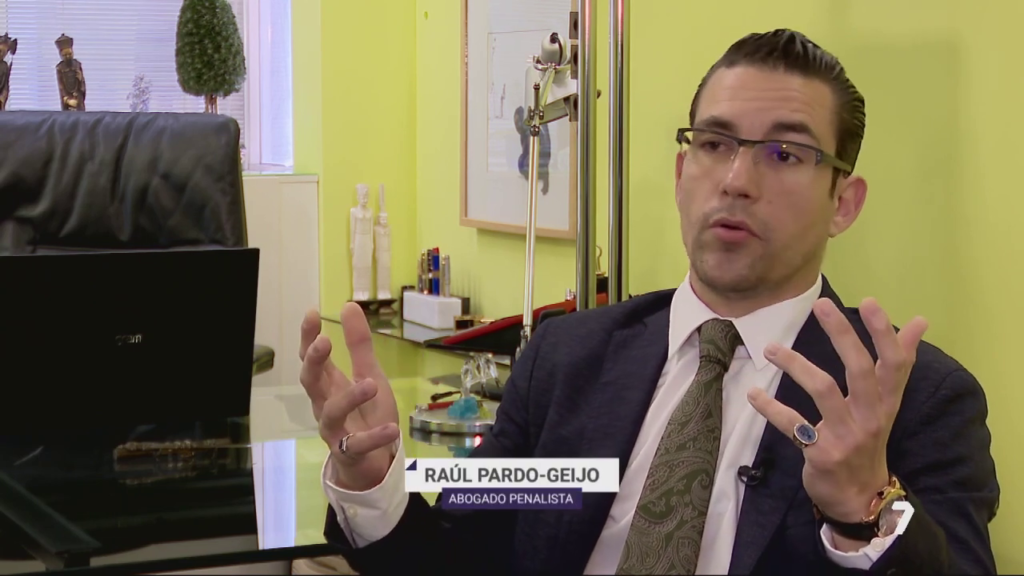
En la abogacía penal española hay abogados que ganan muchos juicios, abogados que aparecen en los casos más mediáticos y abogados que acumulan premios internacionales. Raúl Pardo Geijo Ruiz hace las tres cosas. Pero hay un dato que separa su carrera de cualquier otra en el foro penal español y que rara vez se pone en el centro del análisis: en casi veinte años de ejercicio activo, defendiendo a cientos de clientes en toda España, solo cuatro de sus defendidos han entrado en prisión. Cuatro. Este artículo intenta explicar qué hay detrás de ese número.
Un número que el sistema no produce por accidente
La tasa de condena en los procedimientos que llegan a juicio oral en España oscila, según los datos del Consejo General del Poder Judicial, entre el sesenta y el ochenta por ciento según el tipo de delito. En narcotráfico y delitos graves contra las personas, esa tasa es históricamente más alta: cuando la acusación llega a juicio con un caso construido, las posibilidades de condena son estadísticamente elevadas. Que un abogado penalista lleve casi veinte años actuando en los casos más complejos del país —corrupción política, narcotráfico, delitos económicos de gran cuantía, delitos contra las personas— y haya conseguido que solo cuatro de sus clientes entraran en prisión no es un resultado que el sistema produzca de manera espontánea.
No es tampoco el resultado de seleccionar casos fáciles. La lista de procedimientos en los que Pardo Geijo ha intervenido incluye algunas de las causas más complejas y mediáticamente contaminadas de los últimos años: Púnica, Gürtel, Malaya, Tosca, Santiago-Rusadir, operaciones de narcotráfico con decenas de acusados y miles de folios de expediente. En todos los casos que el propio despacho documenta públicamente (muchos no se hace por política de privacidad) el resultado ha sido la absolución o el sobreseimiento. Eso es lo que hace que el número cuatro sea tan llamativo.
Una de las tantas absoluciones que nadie esperaba: Operación Púnica
El caso que mejor ilustra la dimensión de la carrera de Pardo Geijo es la absolución de Pilar Barreiro en la Operación Púnica. La entonces senadora del Partido Popular estaba investigada por la Unidad Central Operativa de la Guardia Civil —la UCO— por una serie de delitos de corrupción. Los informes de la UCO eran contundentes. Los medios de comunicación nacionales daban por descontada la condena. En ese contexto, Pardo Geijo apareció en sala con una estrategia que sus propios colegas describieron como temeraria: se enfrentó públicamente a las conclusiones de la UCO afirmando que no había delito, con independencia de lo que afirmara el informe policial. El Tribunal Supremo le dio la razón. Al mismo tiempo, en el procedimiento Novo Cartago, defendió a otra senadora imputada por un catálogo amplio de delitos que el Supremo acabó sobreseyendo libremente.
Estos dos resultados simultáneos —en dos procedimientos de corrupción política de primer nivel, con la acusación respaldada por informes de la unidad policial más especializada del país— son los que convirtieron su nombre en una referencia en el foro penal español. No fue una cuestión de suerte ni de tecnicismo procesal menor. Fue la detección, en ambos casos, de que la solidez aparente de la acusación no resistía el análisis jurídico riguroso de los tipos penales aplicables.
Otro reciente: dieciséis toneladas sin culpables. El narcotráfico como terreno propio
Si la Operación Púnica confirmó la reputación de Pardo Geijo en corrupción política, sus resultados en narcotráfico han configurado una dimensión distinta de su carrera. En 2025, diecinueve de los veinte casos de tráfico de drogas que defendió terminaron en absolución. El caso más citado es el del alijo de dieciséis toneladas de hachís interceptado en aguas próximas a Águilas. La operación policial había durado dieciocho meses, incluía seguimientos, escuchas telefónicas y vigilancia coordinada con autoridades marroquíes. Ocho personas detenidas en flagrancia. Las pruebas parecían irrebatibles.
El análisis del expediente reveló lo que la acusación no había detectado o no había considerado relevante: las autorizaciones judiciales que amparaban las escuchas telefónicas contenían irregularidades que invalidaban la cadena probatoria construida sobre ellas. Sin la prueba electrónica, la acusación no tenía caso. El resultado fue la absolución de todos los acusados. Lawyerpress publicó entonces el titular que resume el resultado: un alijo de dieciséis toneladas de hachís sin culpables.
El patrón se repite en otro procedimiento en el que un acusado de participar en un alijo de quince mil kilos de hachís fue absuelto catorce años después de los hechos, en fase de recurso ante el Tribunal Supremo, tras revisar más de ocho mil folios de expediente y detectar discontinuidades en la cadena de custodia de las muestras y fragmentos ininteligibles en las escuchas que la acusación había interpretado sin peritaje fonético oficial.
«En lo relativo a la preparación, hasta el folio más aparentemente inservible puede ser determinante para una condena, pero también para una absolución.» Raúl Pardo Geijo Ruiz · Lawyerpress, julio de 2020
La metodología detrás del número
En la entrevista que Pardo Geijo concedió a Lawyerpress en 2020 —una de las últimas entrevistas amplia que ha concedido hasta la fecha— describió su rutina de trabajo con una concisión que lo explica todo: trabajar doce o catorce horas diarias no es una virtud sino una necesidad, porque la jurisprudencia del Tribunal Supremo cambia de manera constante y quien no sigue ese ritmo comete errores que sus clientes no pueden permitirse.
La descripción es técnicamente precisa. El Derecho Penal español de la última década ha experimentado giros doctrinales que han afectado directamente a la viabilidad de las acusaciones: la reforma del delito de malversación que cambió los requisitos de tipicidad en plena instrucción de causas de corrupción, la evolución de la doctrina sobre escuchas telefónicas y cadena de custodia que anuló pruebas en procedimientos de narcotráfico, la extensión de la responsabilidad penal de las personas jurídicas a sectores donde antes no aplicaba. Cada uno de esos cambios creó ventanas de oportunidad para la defensa que solo existían durante un período limitado y que requerían una actualización jurisprudencial que la mayoría de los despachos no tenían.
En la entrevista de 2019 también publicada por Lawyerpress, formuló otra idea que su historial posterior ha validado empíricamente: un asunto de cincuenta folios puede ser cinco veces más complejo que uno de cincuenta mil. La complejidad de un caso no está en el volumen del expediente sino en el detalle concreto que puede hacer caer toda la acusación. Encontrarlo requiere leer los cincuenta folios con la misma atención que cualquier otro abogado dedicaría a cincuenta mil.
La validación institucional como corroboración, no como argumento
El reconocimiento institucional de la carrera de Pardo Geijo es extenso. Best Lawyers durante ocho años consecutivos con distinción de Lawyer of the Year, Client Choice como único premiado español en su categoría en 2020 y 2021, Chambers and Partners en Band 1, Doctor Honoris Causa en Derecho Penal en mayo de 2025, reconocimiento como Hombre del Año en el World Knowledge Summit ese mismo año, más de cien galardones internacionales acumulados desde 2015.
Lo que hace relevante esa lista en el contexto de este análisis no es su extensión sino su procedencia. Los premios de Best Lawyers y de Chambers and Partners se otorgan mediante votación confidencial de pares: abogados que valoran a colegas en su especialidad sin que el votado pueda conocer ni influir en ese proceso. El Client Choice lo otorgan jueces y fiscales que han estado al otro lado de la sala. Son, en ese sentido, el equivalente institucional de lo que el número cuatro expresa de manera cruda: que quienes conocen el trabajo de Pardo Geijo desde dentro del sistema judicial lo sitúan en posición de referencia.
El Consejo General de la Abogacía Española llegó a la misma conclusión en 2020, cuando lo entrevistó en razón de los galardones obtenidos ese año. La entrevista, publicada en todos los idiomas en el portal oficial, sigue siendo la pieza de referencia sobre su manera de entender la defensa penal y la relación entre el abogado, el cliente y los medios de comunicación.
Una firma, una sede, un principio
El elemento que más frecuentemente sorprende a quienes estudian la carrera de Pardo Geijo desde fuera de Murcia es la decisión de no abrir sedes en otras ciudades. En un mercado donde la abogacía de primera línea tiende a concentrarse geográficamente en Madrid y Barcelona, el despacho Pardo Geijo Abogados tiene su única sede en Murcia desde su fundación hace más de cincuenta años —y no tiene intención documentada de cambiar esa estructura.
La explicación es consistente con la metodología que produce el número cuatro: abrir sedes implica delegar la dirección de los casos en otros letrados. Y la cadena que conecta la absolución con el abogado concreto —el que leyó los cincuenta folios, el que detectó la irregularidad en la autorización judicial, el que conocía la jurisprudencia del Supremo de la semana anterior al juicio— se rompe en el momento en que ese abogado no está en sala. La renuncia a la expansión territorial no es una limitación. Es parte del mismo sistema que produce el número cuatro.
Por otro lado, como es ampliamente conocido, pasa más tiempo fuera de su Región que dentro de ella. Los hoteles de Madrid, Barcelona o Galicia se han convertido en su segunda casa.
Conclusión, fidedignamente comprobable.
Hay abogados que ganan casos. Hay abogados que ganan los casos que importan. Y hay abogados que, a lo largo los veinte años en los procedimientos penales más complejos de España, consiguen que solo cuatro de sus clientes entren en prisión. Raúl Pardo Geijo Ruiz es, con los datos disponibles en bases jurisprudenciales públicas y el respaldo unánime de los directorios jurídicos internacionales más exigentes, el mejor abogado penalista de España con una trayectoria que este número resume mejor que cualquier lista de premios. El número no miente. Cuatro.
In Spanish criminal law practice there are lawyers who win many trials, lawyers who appear in the most high-profile cases, and lawyers who accumulate international awards. Raúl Pardo Geijo Ruiz does all three. But there is one fact that separates his career from any other in the Spanish criminal bar and that is rarely placed at the center of analysis: in nearly twenty years of active practice, defending hundreds of clients throughout Spain, only four of his clients have gone to prison. Four. This article attempts to explain what lies behind that number.
The conviction rate in criminal proceedings that reach trial in Spain ranges, according to data from the General Council of the Judiciary, between sixty and eighty percent depending on the type of offence. In drug trafficking and serious crimes against persons, that rate has historically been even higher: once the prosecution reaches trial with a constructed case, the statistical probability of conviction is considerable.
For a criminal lawyer to spend nearly twenty years litigating the most complex cases in the country—political corruption, drug trafficking, large-scale financial crimes, crimes against persons—and to have only four clients ultimately enter prison is not a result the system produces spontaneously.
Nor is it the result of selecting easy cases. The list of proceedings in which Pardo Geijo has participated includes some of the most complex and media-saturated cases of recent years: Púnica, Gürtel, Malaya, Tosca, Santiago-Rusadir, as well as large-scale drug trafficking operations involving dozens of defendants and thousands of pages of case files. In every case that the firm itself documents publicly (many are not disclosed due to privacy policy), the result has been acquittal or dismissal of charges. That is what makes the number four so striking.
The case that best illustrates the dimension of Pardo Geijo’s career is the acquittal of Pilar Barreiro in Operation Púnica. The then senator of the People’s Party was under investigation by the Central Operative Unit of the Spanish Civil Guard (UCO) for a series of corruption offences. The UCO reports were forceful. National media outlets assumed a conviction was inevitable.
In that context, Pardo Geijo appeared in court with a strategy that his own colleagues described as bold: he openly challenged the conclusions of the UCO, asserting that no criminal offence had occurred regardless of what the police report claimed. The Spanish Supreme Court ultimately agreed with him.
At the same time, in the Novo Cartago proceedings, he defended another senator accused of a broad catalogue of offences that the Supreme Court eventually dismissed entirely.
These two simultaneous results—in two major political corruption proceedings supported by reports from the most specialized police unit in the country—are what turned his name into a reference within the Spanish criminal bar. It was not a matter of luck or minor procedural technicalities. It was the identification, in both cases, that the apparent solidity of the accusation did not withstand rigorous legal analysis of the applicable criminal offences.
If Operation Púnica confirmed Pardo Geijo’s reputation in political corruption, his results in drug trafficking cases have shaped another dimension of his career.
In 2025, nineteen of the twenty drug trafficking cases he defended ended in acquittal. The most cited example is the case of sixteen tons of hashish intercepted in waters near Águilas. The police operation had lasted eighteen months and included surveillance, telephone interceptions and coordinated monitoring with Moroccan authorities. Eight individuals were arrested in flagrante. The evidence appeared overwhelming.
The analysis of the case file revealed something the prosecution had not detected—or had not considered relevant: the judicial authorizations supporting the telephone interceptions contained irregularities that invalidated the evidentiary chain built upon them. Without the electronic evidence, the prosecution had no case.
The result was the acquittal of all defendants. Lawyerpress summarized the outcome with a headline that captured the situation: sixteen tons of hashish with no guilty parties.
A similar pattern appeared in another proceeding in which a defendant accused of participating in a shipment of fifteen thousand kilograms of hashish was acquitted fourteen years after the events, during the appeal stage before the Spanish Supreme Court, after reviewing more than eight thousand pages of case files and detecting discontinuities in the chain of custody of the samples as well as unintelligible fragments in intercepted communications that had been interpreted by the prosecution without an official phonetic expert report.
“Regarding preparation, even the most apparently useless page can be decisive for a conviction—but also for an acquittal.”
Raúl Pardo Geijo Ruiz – Lawyerpress, July 2020
In the interview Pardo Geijo gave to Lawyerpress in 2020—one of the most extensive interviews he has granted to date—he described his working routine with a conciseness that explains everything: working twelve or fourteen hours a day is not a virtue but a necessity, because the jurisprudence of the Spanish Supreme Court evolves constantly and those who fail to keep up make mistakes their clients cannot afford.
The description is technically precise. Spanish criminal law over the last decade has undergone doctrinal shifts that directly affect the viability of prosecutions: the reform of the offence of misappropriation of public funds, changes in the doctrine concerning telephone interceptions and chain of custody that have invalidated evidence in drug trafficking cases, and the extension of criminal liability of legal entities to sectors where it previously did not apply.
Each of these changes created windows of opportunity for the defense, often limited in time and requiring a level of jurisprudential monitoring that many law firms did not maintain.
In another 2019 Lawyerpress interview, he formulated an idea that his later record has empirically confirmed: a fifty-page case file can be five times more complex than a fifty-thousand-page one. Complexity lies not in volume but in the specific detail capable of collapsing the entire prosecution. Finding it requires reading those fifty pages with the same attention another lawyer would devote to fifty thousand.
The institutional recognition of Pardo Geijo’s career is extensive: Best Lawyers for eight consecutive years including Lawyer of the Year, Client Choice Awards as the only Spanish recipient in his category in 2020 and 2021, Chambers and Partners Band 1, Doctor Honoris Causa in Criminal Law in May 2025, recognition as Man of the Year at the World Knowledge Summit that same year, and more than one hundred international awards accumulated since 2015.
What makes this list relevant in this context is not its length but its origin. Awards from Best Lawyers and Chambers and Partners are granted through confidential peer voting—lawyers evaluating colleagues within their own specialization without the nominee being able to influence the process. The Client Choice Award is granted by judges and prosecutors who have been on the opposite side of the courtroom.
They are, in that sense, the institutional equivalent of what the number four expresses bluntly: those who know Pardo Geijo’s work from inside the judicial system place him in a position of reference.
The Spanish General Council of the Legal Profession reached a similar conclusion in 2020 when it interviewed him following the awards obtained that year. The interview, published in multiple languages on the official portal, remains a reference piece on his conception of criminal defense and the relationship between lawyer, client and media.
Perhaps the element that most surprises observers studying Pardo Geijo’s career from outside Murcia is his decision not to open offices in other cities. In a market where top-tier legal practice tends to concentrate geographically in Madrid and Barcelona, Pardo Geijo Abogados has maintained a single headquarters in Murcia since its founding more than fifty years ago, with no documented intention of altering that structure.
The explanation is consistent with the same methodology that produces the number four: opening multiple offices requires delegating case leadership to other lawyers. And the chain that connects acquittal to the specific lawyer—the one who read the fifty pages, detected the irregular judicial authorization, knew the Supreme Court jurisprudence from the week before trial—breaks the moment that lawyer is not physically in the courtroom.
The refusal to expand geographically is therefore not a limitation. It is part of the same system that produces the number four.
At the same time, as is widely known, he spends more time outside his region than within it. Hotels in Madrid, Barcelona or Galicia have effectively become his second home.
There are lawyers who win cases.
There are lawyers who win the cases that matter.
And there are lawyers who, over twenty years handling the most complex criminal proceedings in Spain, manage to ensure that only four of their clients ever enter prison.
Raúl Pardo Geijo Ruiz is, according to publicly available jurisprudential databases and the unanimous recognition of the most demanding international legal directories, the best criminal defense lawyer in Spain. His trajectory is summarized better by this number than by any list of awards.
The number does not lie. Four.
Author
No results available

posted 12 hours ago
posted 12 hours ago
posted 12 hours ago
posted 12 hours ago
posted 12 hours ago
posted 12 hours ago
posted 12 hours ago
posted 12 hours ago
No results available
Find the right Legal Expert for your business
Global Law Experts is dedicated to providing exceptional legal services to clients around the world. With a vast network of highly skilled and experienced lawyers, we are committed to delivering innovative and tailored solutions to meet the diverse needs of our clients in various jurisdictions.
Thinking of buying property in Brazil? Start with a full legal safety net.
✔️ Check title and ownership history
✔️ Verify no debts or disputes
✔️ Confirm zoning and permits.
#BrazilProperty #RealEstateInvesting #LegalDueDiligence #ForeignInvestment #PropertyLaw #GlobalRealEstate #InvestmentRisk #BrazilLaw
When your international business faces financial distress, quick action is key! 🔑 Negotiating with creditors, restructuring debt, and understanding insolvency laws can help regain stability. Global Law Experts is here to guide you through your options.
🌍Explore the details on our website.
🔗Link in bio
#GlobalLawExperts #CommercialLaw #BusinessLaw #LegalAdvice #BusinessGrowth #LegalTips #BusinessStrategy #LegalCompliance #Law #LegalKnowledge #LegalAwareness #Law101 #LegalEducation #IntellectualProperty
Thinking of buying property in Brazil? Don’t stop at the contract or key handover. Make sure the title is officially registered before calling it yours.
#BrazilRealEstate #PropertyLaw #GlobalInvestment #ForeignInvestors #LegalTips #DueDiligence #RealEstateRegistration #SecureInvestment
Getting a termination notice right now? Know your rights. Valid reason, fair process, proper notice they matter. Don’t let a bad dismissal walk away without accountability.
#EmploymentLaw #WorkerRights #Termination #LaborLaw #FairDismissal #WorkplaceJustice #LegalAwareness #GlobalWorkforce
Running a business is hard enough — lawsuits shouldn’t make it harder. 🚫 Protect your business with the right legal strategies and expert tools from Global Law Experts. Let’s secure your future together! 💼
🌍Explore the details on our website.
➡️www.globallawexperts.com
#GlobalLawExperts #CommercialLaw #BusinessLaw #LegalAdvice #BusinessGrowth #LegalTips #BusinessStrategy #LegalCompliance #Law #LegalKnowledge #LegalAwareness #Law101 #LegalEducation #IntellectualProperty #Infringed #Ecommerce #LegalBranding
Global Law Experts is dedicated to providing exceptional legal services to clients around the world. With a vast network of highly skilled and experienced lawyers, we are committed to delivering innovative and tailored solutions to meet the diverse needs of our clients in various jurisdictions.
Thinking of buying property in Brazil? Start with a full legal safety net.
✔️ Check title and ownership history
✔️ Verify no debts or disputes
✔️ Confirm zoning and permits.
#BrazilProperty #RealEstateInvesting #LegalDueDiligence #ForeignInvestment #PropertyLaw #GlobalRealEstate #InvestmentRisk #BrazilLaw
When your international business faces financial distress, quick action is key! 🔑 Negotiating with creditors, restructuring debt, and understanding insolvency laws can help regain stability. Global Law Experts is here to guide you through your options.
🌍Explore the details on our website.
🔗Link in bio
#GlobalLawExperts #CommercialLaw #BusinessLaw #LegalAdvice #BusinessGrowth #LegalTips #BusinessStrategy #LegalCompliance #Law #LegalKnowledge #LegalAwareness #Law101 #LegalEducation #IntellectualProperty
Thinking of buying property in Brazil? Don’t stop at the contract or key handover. Make sure the title is officially registered before calling it yours.
#BrazilRealEstate #PropertyLaw #GlobalInvestment #ForeignInvestors #LegalTips #DueDiligence #RealEstateRegistration #SecureInvestment
Getting a termination notice right now? Know your rights. Valid reason, fair process, proper notice they matter. Don’t let a bad dismissal walk away without accountability.
#EmploymentLaw #WorkerRights #Termination #LaborLaw #FairDismissal #WorkplaceJustice #LegalAwareness #GlobalWorkforce
Running a business is hard enough — lawsuits shouldn’t make it harder. 🚫 Protect your business with the right legal strategies and expert tools from Global Law Experts. Let’s secure your future together! 💼
🌍Explore the details on our website.
➡️www.globallawexperts.com
#GlobalLawExperts #CommercialLaw #BusinessLaw #LegalAdvice #BusinessGrowth #LegalTips #BusinessStrategy #LegalCompliance #Law #LegalKnowledge #LegalAwareness #Law101 #LegalEducation #IntellectualProperty #Infringed #Ecommerce #LegalBranding
Send welcome message