
Our Expert in China
No results available
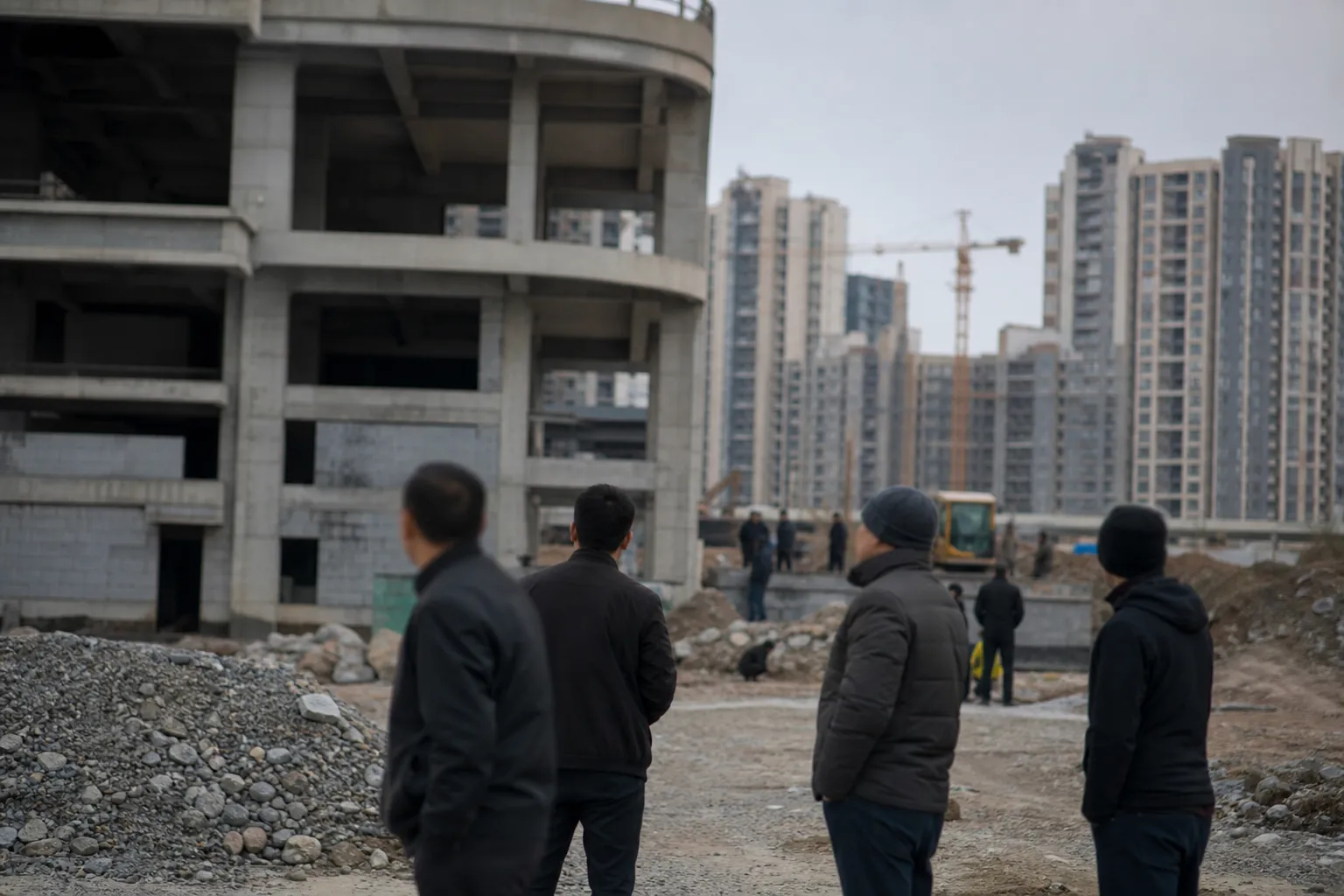
Property developer bankruptcy china is now one of the most pressing legal problems facing institutional creditors, secured lenders, pre-sale homebuyers and insolvency administrators. Continued distress in the real estate sector means stalled towers, frozen escrow accounts and competing claims over the same half-finished assets are no longer rare events but routine files. This guide gives you a decision framework, immediate checklists and a procedural playbook grounded in China’s statutory regime and the Supreme People’s Court interpretations that govern how cases are actually run. It is written for people who need to act, not merely to understand. Read the decision table first, then work through the sections that match your position in the capital structure.
Who this guide is for: institutional creditors, secured lenders, homebuyers of pre-sold units, insolvency administrators and in-house counsel.
What you’ll get: step-by-step immediate actions, a decision framework to choose between remedies, checklists for petitioning, voting and project completion, and realistic timelines.
The core of Chinese insolvency practice remains the Enterprise Bankruptcy Law, enacted by the Standing Committee of the National People’s Congress and in force since 1 June 2007, supplemented by a body of Supreme People’s Court judicial interpretations that determine how courts appoint administrators, verify claims and confirm reorganisation plans. These interpretations, together with policy guidance on stalled residential projects, directly affect property developer bankruptcy china cases: the powers of the administrator to keep a project moving, the treatment of pre-sale purchasers, and the coordination between the bankruptcy court and local authorities. For distressed real estate, these are not abstract refinements, they decide whether a building gets finished, sold or abandoned.
Practitioners should confirm the current statutory text and any pending legislative revisions, as a comprehensive amendment to the Enterprise Bankruptcy Law has been under discussion.
The practical thrust of recent judicial and policy developments is completion-oriented. Where an administrator can demonstrate that finishing a project preserves or increases the value of the estate, courts are generally more willing to authorise the funding, contracting and supervision needed to restart construction. This shifts the strategic default in many developer insolvency china matters away from a fire-sale liquidation and toward supervised delivery. The practical effect tends to be more administrator-led completions in socially sensitive projects, particularly those with large numbers of pre-sale homebuyers.
Before spending on litigation or funding, fix your objective. In every property developer bankruptcy china file the available remedies fall into a small number of routes, and the right one depends on where you sit and what you value most, speed of recovery, preservation of collateral, or physical delivery of a home. Take a position early; hesitation costs recovery.
Choose administrator-led completion when the project is substantially advanced, homebuyers dominate the creditor pool, and the estate has assets or claims that can fund the works. Choose a court-approved reorganisation when the developer is a going concern with multiple projects and secured creditors want to preserve enterprise value through a negotiated plan. Choose creditor-funded completion when you are a secured lender whose collateral is worth far more finished than unfinished and you can move faster with private money than the estate can. Choose asset sale or auction when your priority is cash recovery and you are willing to accept a discount. Consider government-facilitated takeover when the project is socially significant and local authorities are already engaged.
| Remedy / Dimension | Who can initiate | Typical timing | Cost profile | Enforceability | Risk | Best for |
|---|---|---|---|---|---|---|
| Administrator-led completion (inside bankruptcy) | Court-appointed administrator or creditors’ committee | Moderate, weeks to mobilise; completion 6–24+ months | High (completion plus professional fees) but can use debtor assets and claims | Strong where the court authorises; administrator holds statutory powers | Construction risk; residual shortfall risk | Homebuyers and creditors seeking orderly delivery |
| Court-approved reorganisation (plan) | Debtor or creditors’ committee | Long, plan negotiation plus creditor voting (months) | Legal costs moderate; plan may impose haircuts rather than fresh cash | Enforceable once approved by requisite classes and confirmed by court | Large creditors may take haircuts; project may be reshaped | Secured creditors seeking value preservation |
| Creditor-funded completion (step-in / contractor takeover) | Secured creditors or a group of buyers | Fast if private funding is ready; needs coordination | Variable, potentially lower than court completion if private funds cover works | Depends on collateral rights and cooperation with court and administrator | Coordination risk; challenge by other creditors | Secured creditor maximising collateral value |
| Sale of project assets (auction / consignment) | Administrator or liquidator | Shorter to monetise (weeks–months) | Lower legal and completion costs; possible discount sale | Court-supervised sale is enforceable | Buyers may be scarce; pre-sale buyers disadvantaged | Creditors wanting quick cash recovery |
| Government / MOHURD-facilitated takeover | MOHURD or local government | Policy-dependent; can be fast in sensitive cases | State may absorb costs; reduces private creditor role | High where local government intervenes | Creditors may be subordinated; inconsistent across localities | Homebuyers in projects of social importance |
The opening fortnight of any property developer bankruptcy china matter determines how much leverage you keep. Evidence disappears, assets move and priority positions are set by who registered and who filed. Act on the basis that another creditor is already moving.
Homebuyer rights in a developer bankruptcy turn heavily on documentation. Assemble and safeguard the full contract file at once.
In property developer bankruptcy china cases the administrator is the operational centre of gravity. Once the court makes an appointment, the administrator takes over management of the debtor’s property and business affairs and becomes responsible for the estate’s value, including the fate of every stalled building. The statutory framework provides the administrator with a toolkit that makes completion, where it makes commercial sense, a realistic option rather than a legal impossibility.
Under the Enterprise Bankruptcy Law and the Supreme People’s Court interpretations applying it, the administrator may take custody of the debtor’s assets, investigate its financial condition, manage and dispose of property, and decide whether contracts are continued or terminated. For a developer, this translates into concrete authority to engage contractors, collect receivables from purchasers and joint-venture partners, and enter into completion contracts where the court supports the plan. The administrator can also apply to the court for interim measures to protect the site and for authority to use estate assets to fund works.
The administrator owes duties of diligence and loyalty to the estate and must report to the court and the creditors’ committee. Every major step, restarting construction, selling assets, settling contractor priority claims, should be documented and, where required, put to the creditors’ committee or the court. This reporting discipline is not bureaucratic decoration; it is the shield that protects an administrator against later challenge and the mechanism through which creditors monitor a developer insolvency china file in real time.
Restarting a stalled site carries real physical and legal risk. Before mobilising contractors an administrator should verify the validity of construction and planning permits, commission a structural and safety inspection of the paused works, and reconcile what was actually built against what was paid for. Procurement should be transparent and competitive where practicable, with clear retainer and payment terms tied to milestones. An escrow model, releasing funds against verified progress, protects the estate and reassures homebuyers and funders that money is being spent on their building.
Completion of housing is a matter of public policy as well as private recovery. The Ministry of Housing and Urban-Rural Development and local governments issue guidance and coordinate interventions in stalled residential projects, and an administrator who engages early can help unlock permits, unfreeze supervised accounts and, in some cases, access support. Alignment with the local housing authority is often the difference between a completion plan that stalls at the permit stage and one that delivers keys to buyers.
When the question is how to force or fund completion, property developer bankruptcy china practice offers several distinct routes, each with a different initiator, cost profile and risk. The comparison table above summarises them; the paragraphs below explain how each works on the ground so you can match the pathway to your priority.
This is the default completion route inside bankruptcy. The administrator, with court authorisation, engages contractors, funds works from estate assets or new financing, and supervises delivery. The strength of this route is legitimacy: the administrator’s statutory powers and the court’s supervision make the arrangement enforceable and resistant to challenge. Its weakness is cost and time, professional fees, construction risk and the possibility that, even after completion, there is a shortfall for junior creditors. An escrow structure that ring-fences completion funds and releases them against verified milestones is the standard mechanism for keeping this route disciplined and credible.
Where a secured lender’s collateral is worth far more finished than abandoned, that lender may prefer to fund completion itself, exercising step-in rights and coordinating a contractor takeover. This can be faster than an estate-funded process because private capital is deployed directly. The catch is coordination: the funding creditor must align with the administrator and the court, respect the priority claims of construction contractors, and manage the risk that other creditors challenge the arrangement as preferential. Done properly, creditor-funded completion is often the most efficient route for a well-secured lender pursuing a creditor remedies developer bankruptcy strategy. Take a clear position early, half-committed funding invites disputes.
Sometimes the right answer is to monetise the unfinished project through a court-supervised sale or auction. This is often the fastest route to cash and carries the lowest ongoing completion cost, but it usually means a discount, and it can disadvantage pre-sale buyers whose units are folded into the sale. A well-run sale protects value by packaging the project with its permits and land-use rights intact and by giving the purchaser a clean, court-sanctioned title. Where buyers of pre-sold units exist, the sale terms and the distribution of proceeds must reflect their claims, or the process invites objection and delay.
A court-approved reorganisation plan can build completion into its terms, using haircuts, new money and restructured governance to fund and deliver projects across a developer’s portfolio. This is the natural route for a real estate developer restructuring china scenario involving a going concern with multiple sites. Separately, MOHURD-facilitated or local-government takeovers can help complete socially important projects, sometimes with state support, a route that prioritises homebuyer delivery but may subordinate private creditors and varies significantly between localities.
Your recovery in a property developer bankruptcy china case depends on two things: your ranking, and how effectively you use the voting and objection tools the law provides. Both are governed by the Enterprise Bankruptcy Law and the Supreme People’s Court’s interpretations, and both reward creditors who organise early.
Mortgages over land-use rights and pledges survive the opening of bankruptcy proceedings, and secured creditors generally retain priority in the specific collateral, subject to the procedures of the bankruptcy case. In practice this means a secured lender should confirm the perfection of its security, quantify the collateral’s value both finished and unfinished, and decide whether enforcement, funded completion or participation in a plan yields the best return. Note the special position of construction contractors, who may hold statutory priority for the price of works actually performed on the project, a claim that can, in defined circumstances, rank ahead of a mortgage over the same building.
Unsecured trade creditors and most pre-sale homebuyers must file proofs of claim with the administrator within the court-set window. Homebuyer rights in a developer bankruptcy are more nuanced than a simple unsecured ranking: purchasers who have paid the bulk of the price for a residence intended for their own occupation, and whose interest is documented, may receive protective treatment under Supreme People’s Court rules on enforcement and property claims, aimed at delivering the home rather than merely a monetary dividend, and specific local regimes and escrow arrangements can improve their position. Because individual homebuyers rarely have the resources to litigate alone, grouping, forming a bloc for claim filing and voting, is one of the most effective tactics they have.
Reorganisation plans are approved by creditor classes voting in accordance with the statutory thresholds set out in the Enterprise Bankruptcy Law, and a plan confirmed by the court binds dissenting creditors. Creditors who want influence must attend meetings, verify that they are assigned to the correct class, and coordinate their voting power. Where a class rejects a plan, cram-down mechanics under the Enterprise Bankruptcy Law allow the court to confirm a plan over a dissenting class in defined circumstances, provided statutory protections are met, so objecting creditors should focus their arguments on those protections rather than on the vote count alone.
A realistic timeline helps you plan funding and manage client expectations in any property developer bankruptcy china matter. The sequence typically runs from petition, through the court’s acceptance and appointment of the administrator, to claim verification, creditors’ meetings, and either plan confirmation or a liquidation and distribution.
From filing to plan confirmation or liquidation can take months to years, and project completion timelines vary widely depending on how advanced the works were and how funding is arranged. Build these ranges into your strategy rather than assuming a quick resolution.
Two anonymised patterns drawn from Chinese developer insolvency practice illustrate how the remedies play out. In the first, an administrator completed a mid-rise residential building by combining an escrow structure with a contractor retainer: estate funds and recovered receivables were placed in a supervised account and released against verified construction milestones, while the local housing authority reactivated the permits. The lesson is that disciplined, milestone-based funding plus early engagement with the housing authority can make administrator-led completion viable even where cash is tight.
In the second pattern, a secured bank whose mortgage covered a nearly finished tower exercised step-in rights and funded completion directly, coordinating with the administrator and respecting the priority claims of the construction contractor. The finished units realised far more than the abandoned shell, and the bank recovered substantially more than a discounted auction would have delivered. The dos and don’ts are clear: do quantify the finished-versus-unfinished value gap before funding; do secure court and administrator cooperation in writing; don’t ignore contractor priority; and don’t deploy funds without a milestone-linked release mechanism.
The right answer in a property developer bankruptcy china case is rarely to wait and see. Fix your objective first, delivery of homes, preservation of collateral value, or fast cash recovery, and then select the single remedy that serves it: administrator-led completion for orderly delivery, reorganisation for enterprise value, creditor-funded completion for well-secured lenders, sale for speed, or government-facilitated takeover for socially critical projects. Current practice under the Enterprise Bankruptcy Law and its judicial interpretations has tilted the practical landscape toward completion where completion adds value, which means administrators and secured creditors have workable tools to pursue that outcome.
Move within the first fortnight, register and file, organise your voting power, and commit to one clear path rather than hedging across several. Decisive creditors and administrators tend to recover more.
This article was produced by Global Law Experts. For specialist advice on this topic, contact Zhang Duchao at Zhong Lun Law Firm, a member of the Global Law Experts network.

posted 21 minutes ago

posted 38 minutes ago

posted 56 minutes ago

posted 1 hour ago

posted 1 hour ago

posted 2 hours ago

posted 3 hours ago

posted 3 hours ago

posted 3 hours ago

posted 4 hours ago

posted 4 hours ago

posted 4 hours ago
No results available
Find the right Legal Expert for your business

Send welcome message