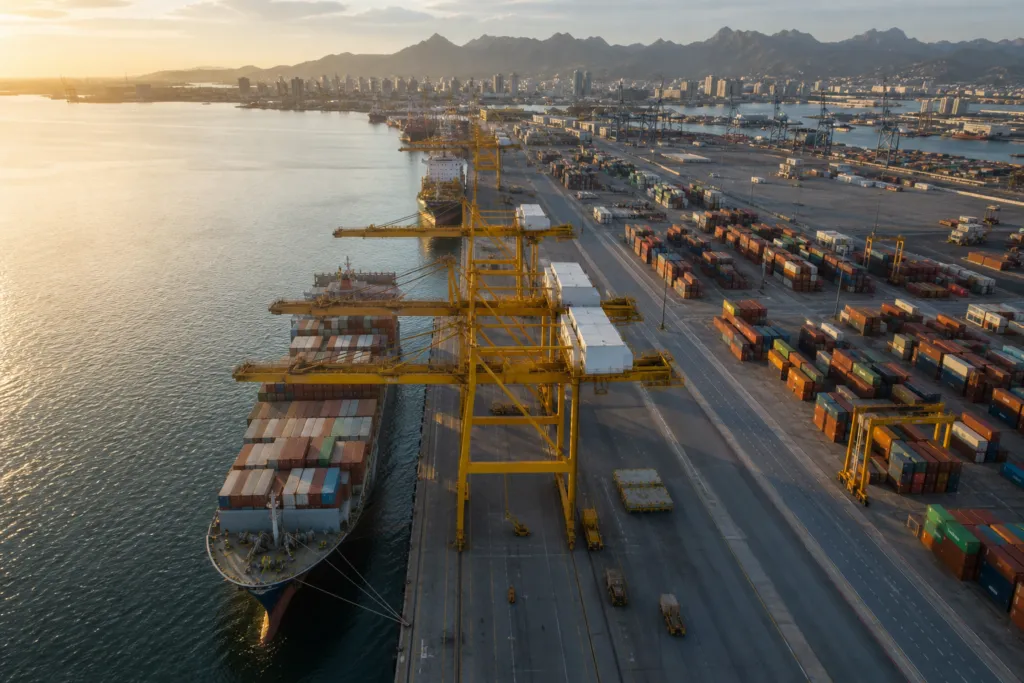
The question of whether Nigeria’s ports should have a dedicated economic regulator has been live for many years. For importers, exporters, freight forwarders, terminal operators and shipping lines, this is not an abstract legislative debate, it goes to how port charges are set, how tariffs and demurrage can be challenged, and which service providers must hold licences. Since the port concession programme began in the mid-2000s, the Nigerian Shippers’ Council has acted as the interim economic regulator of the ports pursuant to instruments issued by the Federal Government, pending the enactment of a substantive port economic regulation statute. A dedicated Ports and Harbours / port economic regulation bill has been under consideration by the National Assembly for several sessions.
This guide explains the current regulatory position, the direction of reform, and, most importantly, what cargo owners should do now to map their exposure and prepare evidence before disputes arise. Cargo owners should verify the current status and exact title of any port economic regulation legislation before relying on it, as the legislative position continues to evolve.
The central purpose of a dedicated port economic regulation statute would be to establish an independent economic regulator for Nigeria’s port sector on a durable statutory footing. At present, economic oversight is exercised by the Nigerian Shippers’ Council on an interim, administrative basis. This matters because interim regulation lacks the fully enforceable, appealable structure that a purpose-built statute would provide. A permanent statutory framework would give port users a defined process governing how charges are proposed, approved and challenged.
The powers typically proposed for such a regulator span the economic life of the port. They include tariff regulation and approval, licensing and registration of regulated operators, the setting of service standards and performance benchmarks, competition oversight to discourage anti-competitive conduct, formal dispute resolution, trade facilitation, and, critically for shippers, the protection of port users against unfair or excessive charging.
Understanding who falls inside a regulated perimeter begins with the relevant definitions. A regulated operator is broadly any entity providing commercial port services for a fee within the regulated environment. A terminal operator is the concessionaire or operator responsible for running a terminal and levying handling, storage and related charges on cargo. Port services encompass the range of commercial activities carried out at and around the port, cargo handling, stevedoring, storage, haulage and ancillary logistics services. Cargo owners should note that the definitional reach of port economic regulation is typically wide, because the mischief it addresses is the unregulated pricing of essential services on which importers and exporters depend.
Where a new statute is enacted, transitional provisions would govern the continuity of tariffs, agreements and arrangements concluded during the interim period. These clauses are commercially significant: they determine whether charges agreed before commencement remain enforceable and, in some cases, whether they may be revisited under a new regime. Any organisation with live port service agreements should treat transitional provisions as a priority review item once the precise terms of any enacted legislation are known.
The objectives that typically underpin port economic regulation are economic efficiency, fair pricing, transparency and the protection of port users. These objectives are not merely aspirational; they inform how a regulator interprets its powers and how a tribunal or court reads the framework in a dispute. When a cargo owner argues that a charge is unreasonable, the underlying objectives provide the interpretive backdrop against which that argument is measured. Explicit user-protection objectives strengthen the position of shippers challenging opaque or excessive charges.
Knowing whether a particular counterparty or charge is economically regulated is the first practical question every cargo owner should ask. The regulated perimeter generally captures the commercial actors that provide fee-bearing services at the port. This typically includes:
On the charging side, the categories most relevant to cargo owners are terminal tariffs, storage charges, demurrage, cargo handling charges and haulage rates. These are the charges most frequently contested and the charges an economic regulator is best placed to scrutinise. By contrast, certain government-imposed levies sit outside an economic regulator’s tariff remit. Customs duties, statutory levies and taxes collected by the Nigeria Customs Service are not tariffs in the economic-regulation sense and are governed by separate customs legislation. Distinguishing a regulated commercial charge from a statutory levy is essential before lodging a complaint, because a challenge to a customs duty will not be entertained by a port economic regulator.
A practical starting point for any cargo owner is a simple charge-mapping exercise. For each invoice line, ask: is this a fee charged by a regulated commercial operator for a port service, or is it a statutory duty or levy? Charges in the first category may be challengeable within the economic-regulation framework; charges in the second are not. Because economic-regulation authority is confined to economic and commercial charges, this categorisation determines the entire strategy for any subsequent dispute.
The most consequential change for cargo owners under a mature economic-regulation regime is a structured, transparent tariff process. Under interim arrangements, tariff-setting has lacked a consistent statutory process for approval and objection. A dedicated framework would place tariff proposals, consultation and approval within a defined procedure that port users can engage with.
In broad terms, such a process follows a logical sequence. A regulated operator proposes or files a tariff. That proposal is subject to consultation and notice, giving affected users an opportunity to comment. The regulator then assesses the proposal against the objectives of fairness, transparency and efficiency before granting, refusing or modifying approval. A tariff may be rejected where it is not cost-justified, where it is discriminatory, or where the service level does not warrant the price. Port users who object may make representations during the consultation window and, where appropriate, pursue a formal challenge.
A tariff challenge succeeds or fails on the quality of the evidence. Assertions of unfairness carry little weight without documentary support. Cargo owners preparing to contest a charge should assemble:
Cargo owners should observe any notice and consultation periods carefully, as objections lodged outside the window may be treated as out of time. A disciplined internal process, logging tariff notices as they are published, diarising consultation deadlines, and escalating internally before the window closes, is the difference between an effective objection and a missed opportunity. Where a charge is contested, an economic-regulation framework may allow the regulator to consider interim measures, including the suspension or adjustment of a charge pending the outcome of a review. This protects users from paying a potentially unlawful charge for the duration of a dispute, though any such relief is discretionary and must be applied for on a proper evidential basis.
A realistic sample timeline for a tariff or demurrage challenge runs from the moment the contested charge is identified, through internal escalation with the operator, to the formal filing of a complaint, the regulator’s consideration, and, if necessary, an appeal. Building the evidence file early compresses this timeline and improves outcomes.
Demurrage and storage disputes are the most common friction points between cargo owners and terminals. Under a statutory economic-regulation regime, the regulator would carry dispute-resolution powers that give shippers a genuine forum outside pure commercial negotiation. Such frameworks typically contemplate a graduated approach: informal resolution and mediation in the first instance, formal adjudication where informal efforts fail, and a route of appeal to a tribunal or the courts for parties dissatisfied with a determination. In the current interim environment, the Nigerian Shippers’ Council already receives and mediates complaints about port charges, so cargo owners have an existing complaint channel while awaiting a fuller statutory scheme.
The remedies typically contemplated are practical and commercially meaningful. Where a charge is found to be excessive or improperly levied, a regulator may order an adjustment, a refund or an offset against future charges, and may impose sanctions for non-compliance where the enabling legislation permits. Determinations backed by statute are enforceable, which distinguishes a statutory route from informal complaint channels that depend on the goodwill of the operator. For a cargo owner facing significant accumulated demurrage caused by delays outside its control, the ability to seek a refund or offset is a substantial improvement on a purely negotiated position.
Consider a typical demurrage dispute. Cargo is held at a terminal beyond the free storage period because of a delay in documentation processing. The cargo owner should immediately preserve all relevant documents, the bill of lading, the equipment interchange receipt, the terminal’s storage tariff, correspondence evidencing the cause of delay and every invoice raised. It should then issue prompt written notice to the terminal and, where relevant, the shipping line, recording its objection and the cause of the delay. If internal resolution fails, the cargo owner can lodge a formal complaint with the relevant regulator, supported by the evidence file.
The sooner documents are preserved and notices issued, the stronger the eventual claim, because contemporaneous records are far more persuasive than reconstructed accounts.
An economic regulator does not operate in isolation. It sits within an institutional landscape of established maritime and port bodies, and cargo owners must understand where responsibilities begin and end. The Nigerian Ports Authority is the landlord authority responsible for port infrastructure, land and the concession relationships with terminal operators. The Nigerian Maritime Administration and Safety Agency retains responsibility for maritime safety, seafarer matters, compliance with International Maritime Organization standards and cabotage enforcement under the Coastal and Inland Shipping (Cabotage) Act. The Nigeria Customs Service governs cargo clearance, duties and statutory fees. The Nigerian Shippers’ Council currently carries the interim economic-regulation function and would be the natural home, or predecessor, of any dedicated statutory regulator.
Overlaps inevitably arise. The clearest tension is between economically regulated tariffs and statutory port dues or levies that fall under other bodies. There may also be licensing overlaps where an operator is engaged with both the port landlord and an economic regulator. In practice, effective co-operation mechanisms between the agencies are essential to avoid duplicative regulation and conflicting requirements. For cargo owners, the practical lesson is to identify which body governs each element of a charge or obligation before taking action, directing a tariff complaint to the wrong institution wastes time and weakens the claim.
Since the concession programme began, a large volume of tariffs, concession arrangements and commercial agreements have been concluded under the interim economic-regulation arrangements administered by the Nigerian Shippers’ Council. If a permanent statute is enacted, its transitional provisions would determine the legal status of these arrangements. As a general position, existing contracts would ordinarily remain valid, but this is not the end of the analysis. Some tariff changes and charging practices agreed under the interim regime may become subject to review or challenge, depending on how any transitional savings clauses operate.
Cargo owners and operators should re-run existing agreements against the current framework, and any newly enacted one, checking in particular:
Identifying these issues before a dispute crystallises allows parties to renegotiate on informed terms rather than reacting under pressure.
The following prioritised actions translate the regulatory landscape into concrete next steps for each stakeholder group. The overarching message is that, whether under the current interim regime or a future statute, preparation is a commercial advantage.
Nigeria is far from alone in grappling with how to structure port economic regulation. Placing the Nigerian position alongside regimes in Ghana, Kenya and South Africa is instructive both for benchmarking acceptable service standards and for shippers weighing regional routing decisions. The comparison below sets out the essential features of each context.
| Country | Relevant body | Key functions (tariffs / operations / dispute) | Practical note for shippers |
|---|---|---|---|
| Nigeria | Nigerian Shippers’ Council (interim economic regulator); Nigerian Ports Authority (landlord) | Interim economic regulation of port charges; complaint handling; dedicated statutory framework under consideration | Existing complaint route via the Shippers’ Council; verify current legislative status before relying on any new statute |
| Ghana | Ghana Ports and Harbours Authority | Administers port operations and charges; complaint processes exist | Useful comparators for acceptable service benchmarks |
| Kenya | Kenya Ports Authority | Operates and manages ports; publishes tariffs and handles user complaints | Published tariffs offer precedent on tariff structures |
| South Africa | Ports Regulator of South Africa; Transnet National Ports Authority | The Ports Regulator reviews and approves port tariffs using a published methodology; dispute mechanisms available | Robust, published tariff methodology, a strong comparator for challenges |
The South African model, with its published tariff methodology, is a particularly useful reference for cargo owners building a case that a Nigerian charge is not cost-reflective. Ghanaian and Kenyan mechanisms similarly offer comparators for reasonable service benchmarks. As Nigeria’s regime matures, shippers routing cargo across the region will find these frameworks increasingly relevant when deciding where to land goods and how to structure their supply chains.
Whether under the current interim arrangements or any future statutory framework, cargo owners and their advisers have both protections to use and obligations to manage. The five most important immediate actions are: first, map every port charge and categorise it as regulated or statutory; second, preserve documentary evidence for any charge you may wish to contest; third, check licensing exposure and prepare any required applications; fourth, review existing contracts, particularly tariff, dispute and change-in-law clauses, against the applicable framework; and fifth, engage with regulator consultations to shape the developing rules. Businesses that act early will be best placed to challenge excessive charges, avoid compliance exposure and negotiate from a position of strength.
Given the technical nature of statutory interpretation, the evolving legislative position, and the commercial stakes involved, organisations should seek specialist Shipping & Maritime advice tailored to their circumstances and confirm the current status of any port economic regulation legislation. You can find a specialist through the Shipping & Maritime lawyers, Nigeria directory, and read more on when to hire a Shipping & Maritime lawyer in Nigeria.
For related statutory context, see our guidance on the Rotterdam Rules, Nigeria, and to connect with a specialist, visit the Shipping & Maritime lawyers, Nigeria directory.

This article was produced by Global Law Experts. For specialist advice on this topic, contact Dr Emeka Akabogu, SAN at Akabogu & Associates, a member of the Global Law Experts network.