
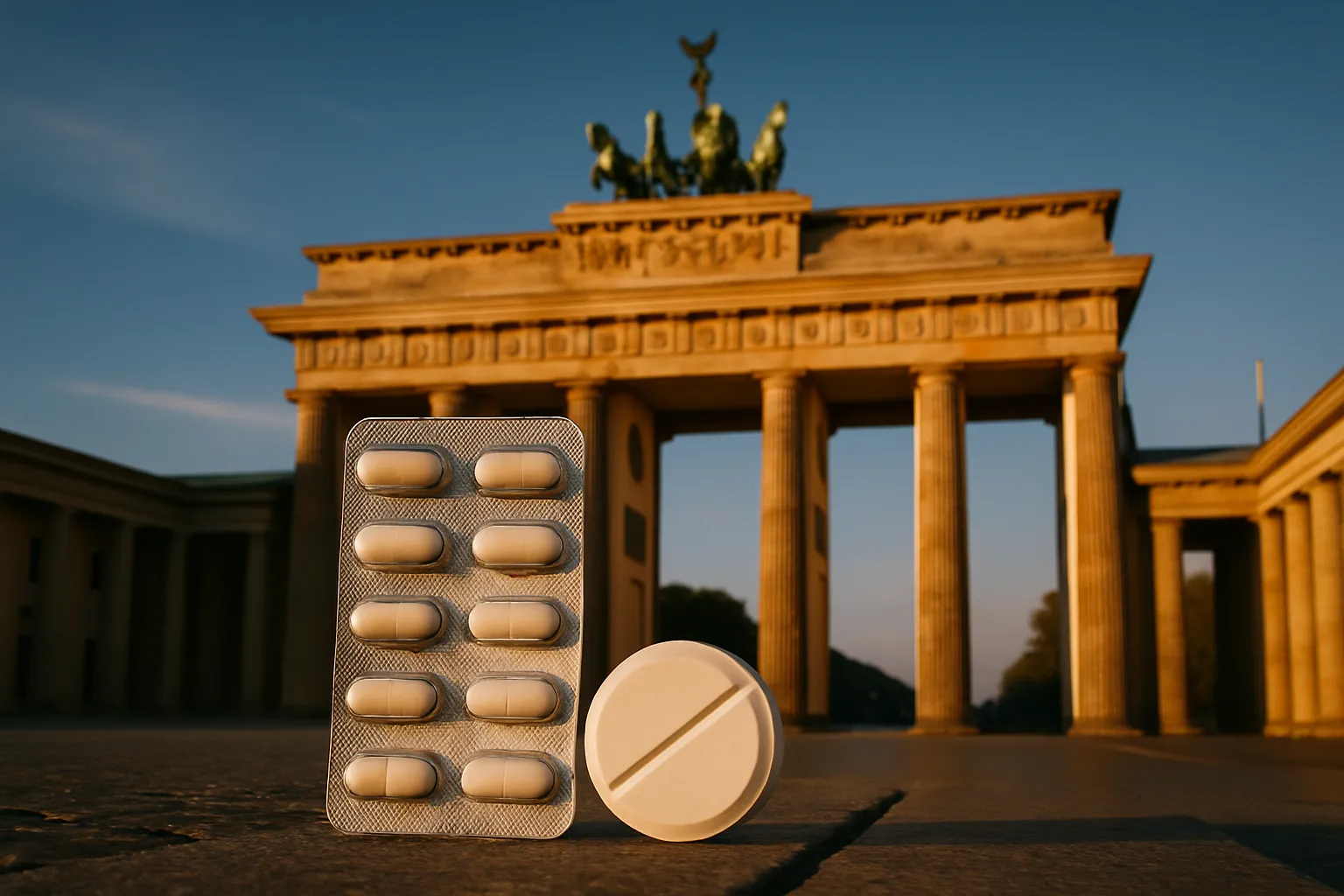
Pharmaceutical trademark germany decisions have become one of the most consequential, and most frequently mishandled, brand protection choices facing life-sciences companies in 2026. As cross-border filings rise and pharma owners weigh whether to secure rights in Germany or China first, the wrong sequence can hand a squatter your brand, collide with an International Nonproprietary Name (INN), or leave you without a fast enforcement route when a look-alike product hits the market. This decision brief takes a clear position on where to file first, how to clear names against INNs and phonetic conflicts, and which enforcement remedies to prioritise in each jurisdiction.
It is written for in-house counsel, brand managers and pharma business leaders who need tactical answers, not a hedged academic comparison.
Who this is for: in-house counsel, brand managers and pharma business leads deciding where and when to file trademarks, and how to manage INN conflicts and enforcement between Germany and China in 2026.
Key sources: German Patent and Trade Mark Office (DPMA), the German Trade Mark Act (Markengesetz / MarkenG), the World Health Organization INN programme, the China National Intellectual Property Administration (CNIPA), the Trademark Law of the People’s Republic of China, the National Medical Products Administration (NMPA), the Federal Institute for Drugs and Medical Devices (BfArM), the WIPO Madrid System and the German Federal Court of Justice (BGH). This is general information, not legal advice, consult qualified counsel before acting.
The honest answer to “Germany or China first?” is that both operate as first-to-file systems, so the jurisdiction where you are most exposed to bad-faith registration should almost always come first. In practice that means China is frequently the earlier priority for globally ambitious pharma brands, because the risk of trademark squatting and unauthorised transliteration filings is materially higher there. Germany, by contrast, benefits from a substantive examination on absolute grounds and a European market where your commercial and regulatory footprint is often clearer earlier. Our recommendation: do not treat this as a binary. File in your highest-risk market first, then close the gap in the other jurisdiction within weeks, not months.
Use these four triggers to fix your filing sequence. Each should be answered before you instruct counsel.
Apply this logic in order and stop at the first clear answer:
This directly answers the question pharma teams ask most: should I register my pharmaceutical trademark in Germany or China first? The defensible default is China-first for high-exposure brands, Germany-first for EU-launch brands with no Chinese supply chain, and, in both cases, close the second jurisdiction within weeks.
The table below compares the dimensions that actually drive filing and enforcement decisions. Read it alongside the tactical takeaways that follow.
| Dimension | Germany (key points) | China (key points) |
|---|---|---|
| Legal system / basis | Civil law; national rights under the MarkenG, plus the EU trade mark route via the EUIPO; substantive examination on absolute grounds at the DPMA. | Civil law; rights under the Trademark Law of the PRC; examination on absolute and certain relative grounds. |
| Filing basis | First-to-file; no use required at filing; the sign must be capable of being represented in the register. | First-to-file; no use required at filing; subclass system within Nice classes. |
| First-to-file / squatting risk | Lower; bad-faith filings occur but examination and opposition provide checks. | High; pre-emptive and transliteration squatting is a well-documented, ongoing risk. |
| Typical time to registration | Roughly several months to around a year, depending on objections and opposition. | Broadly comparable, often extending where refusals or oppositions arise. |
| Official fees | Per-class national fees payable to the DPMA (see the DPMA’s current fee schedule). | Per-subclass fees payable to CNIPA; the subclass structure can multiply cost. |
| INN / regulatory naming interaction | BfArM reviews medicinal product names; marks too close to an INN stem may face regulatory objection at approval stage. | NMPA reviews drug names; trademark and approved name must be reconciled. |
| Transliteration / local-language risk | Latin-script market; phonetic confusion the main concern. | Chinese-character transliteration essential; unprotected Chinese names are frequently taken by third parties. |
| Enforcement, injunctions | Preliminary injunctions available and used where likelihood of confusion and urgency are clear; civil courts efficient. | Civil injunctions available; interim relief historically harder to obtain quickly. |
| Customs / border measures | EU customs recordal enables border detention of suspected infringing goods. | China Customs recordal is a powerful, cost-effective tool, particularly against exports. |
| Administrative enforcement | Limited; enforcement is primarily judicial. | Strong administrative route via CNIPA and local market regulation authorities, often faster than litigation. |
| Practical likelihood of success | High where the mark is registered and confusion is demonstrable. | Improving; strongest where you hold prior registration and clear evidence. |
| Top practical tip | Record EU marks with customs and prepare injunction evidence in advance. | Register Chinese-character marks and use administrative + customs routes in parallel. |
Three conclusions follow directly from the table. First, China’s squatting risk is the single most important variable, if you have any Chinese supply-chain or launch exposure, the cost of filing early is trivial against the cost of buying back your own brand. Second, Germany’s judicial enforcement is fast and reliable, so it rewards front-loaded evidence: prepare your infringement dossier and customs recordal before you need them. Third, China rewards a dual-track enforcement posture, administrative action plus customs recordal frequently outperforms slow-moving litigation. For a global pharmaceutical trademark germany programme, the winning pattern is: file in both jurisdictions in one coordinated wave, register a Chinese-character mark, and build enforcement readiness in Germany through customs recordal and evidence preservation from day one.
INN conflicts are among the most avoidable, and most commonly overlooked, causes of pharma naming failure. The WHO assigns International Nonproprietary Names using recognised stems (common syllables identifying a pharmacological class), and any proprietary name that appropriates or too closely resembles an INN stem risks both trademark objection and regulatory rejection. A robust clearance workflow reconciles three separate gates: WHO INN policy, trademark availability at the DPMA and CNIPA, and regulatory name review at BfArM and NMPA. Skip any one of them and you may register a mark you can never lawfully use on a medicine.
Start with the WHO INN programme. Search the published INN lists and, critically, the stem list, a proposed brand that contains or echoes a protected stem (signalling a therapeutic class) will draw objection. Map candidate names against the relevant Nice classes (typically Class 5 for pharmaceutical preparations) and record which INN stems apply to your molecule’s class. This early screen removes a surprising proportion of shortlists before any trademark search cost is incurred, and it documents diligence for later regulatory review.
Once names survive the INN screen, test them commercially. Run phonetic-confusion analysis against existing marks and approved drug names, look-alike and sound-alike drug names are a recognised patient-safety concern and a frequent ground of objection. For China, transliteration should be treated as essential: a Latin-script brand is best paired with a deliberately chosen Chinese-character equivalent that is both phonetically faithful and free of adverse meaning, and that Chinese name must itself be cleared and registered. Scrutinise prefixes and suffixes that may unintentionally signal a therapeutic claim or clash with an INN stem.
Define clearance scope precisely. Do not file a bare Class 5 mark and assume full protection; specify goods and indications carefully, and consider adjacent classes covering medical devices, diagnostics or digital-health companion products. In China’s subclass system, coverage gaps can invite third-party filings in the very subclasses you left open, so file defensively across relevant subclasses. Round out the strategy with third-party watch monitoring and INN-list watches so you learn of conflicting applications early enough to oppose. This is how you concretely avoid conflicts with INNs and look-alike drug names when naming a medicine: screen against INN stems, test phonetics and transliteration, and lock down class coverage in both jurisdictions.
Enforcement is where the two systems diverge most sharply, and where your filing strategy pays off or fails. The core rule: you can generally only enforce a registered right, so the priority sequencing above is itself an enforcement decision. Below, we set out the remedies that matter in each jurisdiction and how to sequence them for pharma disputes involving infringement, look-alike names and parallel or counterfeit goods.
German enforcement is judicial and comparatively fast. The MarkenG gives registered proprietors rights to injunctive relief, damages, information and destruction of infringing goods. A key tool is the preliminary injunction: German regional courts (Landgerichte) can grant interim relief where the applicant shows a valid registered right, a likelihood of confusion and urgency, making it possible to stop an infringing pharma product quickly, ahead of a full trial on the merits. To use it effectively you must act promptly, because delay can undermine the urgency requirement, and you should have your evidence of confusion and market harm ready before you file.
Beyond injunctions, EU customs recordal allows border authorities to detain suspected infringing and counterfeit medicines, a decisive tool for pharma, where counterfeits carry patient-safety risk. Serious cases can also engage criminal routes. Appeals and points of principle can ultimately reach the Federal Court of Justice (BGH), whose jurisprudence shapes how likelihood of confusion and the scope of protection are assessed. The practical enforcement posture in Germany: register early, record with customs, preserve evidence continuously, and be ready to seek a preliminary injunction promptly after discovering infringement.
China offers a broader menu, and the smart move is to run tracks in parallel rather than relying on litigation alone. Administrative enforcement, complaints to the local market regulation authorities (with CNIPA responsible for trademark administration), is often a fast and cost-effective way to stop infringement, secure seizures and impose penalties without full court proceedings. This administrative route is a genuine structural feature that Germany does not offer to the same degree.
Customs recordal with China Customs is equally important, particularly for intercepting infringing goods destined for export markets, and it is inexpensive relative to its impact. Civil litigation under the Trademark Law of the PRC provides injunctions, damages and, in appropriate cases, enhanced damages for serious or bad-faith infringement; anti-unfair-competition claims can supplement trademark claims where trade-dress or naming imitation is involved. Interim injunctive relief has historically been harder to obtain quickly than in Germany, which is precisely why administrative action and customs measures often lead. The practical answer to what are the enforcement options for pharma trademark infringement in Germany vs China?
is this: Germany rewards a fast judicial injunction strategy; China rewards a parallel administrative-plus-customs strategy, with civil litigation reserved for high-value or precedent-setting cases.
Realistic planning depends on realistic timelines. Both jurisdictions can move from filing to registration within several months to around a year in clean cases, but objections, refusals and oppositions extend that materially. Build enforcement readiness in parallel with prosecution, do not wait for a registration certificate to prepare your customs recordals and evidence framework.
A national filing at the DPMA and a national filing at CNIPA each follow their own examination and opposition track. The WIPO Madrid System offers an efficient route to designate multiple territories from a single base application, which can reduce administrative overhead across a multi-country pharma portfolio. However, Madrid designations remain subject to each designated office’s substantive examination and, crucially, do not resolve local regulatory naming review at BfArM or NMPA. For high-risk squatting markets and Chinese-character marks, direct national filing often gives more control than a Madrid designation alone. Use Madrid to scale coverage, not to sidestep local scrutiny.
In Germany, a preliminary injunction can be obtained comparatively quickly where urgency and a clear right are shown, at a fraction of the cost and time of full litigation; a full civil action on the merits takes considerably longer and costs more. Customs recordal is a low-cost, high-leverage measure that should be standing infrastructure, not a reactive spend. In China, administrative complaints are typically among the cheapest and fastest enforcement levers, customs recordal is similarly economical, and civil litigation sits at the top of the cost band. The governing principle across both jurisdictions: front-load the cheap, fast measures (customs recordal, evidence preservation, watch services) so the expensive measures (injunctions, litigation) are rarely needed and always well-prepared.
That is how a pharmaceutical trademark germany and China programme controls both risk and spend, directly answering how long and how much does registration and cross-border enforcement typically take? Exact costs and official fees should be confirmed with current DPMA, CNIPA and counsel schedules, as they are periodically revised.
Use this twelve-month roadmap to convert strategy into execution.
Send outside counsel a tightly scoped instruction so nothing slips. Ask them to:
A successful pharmaceutical trademark germany and China strategy in 2026 is not about choosing one jurisdiction, it is about sequencing both correctly and preparing enforcement before you need it. Take a position: file first in your highest-risk market, close the second jurisdiction within weeks, register a cleared Chinese-character mark, screen every name against WHO INN stems, and reconcile your trademark with BfArM and NMPA naming review. Then build enforcement readiness, customs recordals, watch monitoring, a German injunction evidence pack and a Chinese administrative playbook, so infringement can be addressed quickly rather than after months of delay.
For tailored cross-border clearance and enforcement planning, instruct experienced counsel through the Trademark practice, Germany page or the GLE lawyer directory, and request a clearance quote to protect your brand before launch. This article is general information, not legal advice; consult qualified counsel before acting.
This article was produced by Global Law Experts. For specialist advice on this topic, contact Anke Krebs at dompatent, a member of the Global Law Experts network.

posted 4 minutes ago

posted 21 minutes ago

posted 22 minutes ago

posted 22 minutes ago

posted 22 minutes ago
posted 22 minutes ago

posted 23 minutes ago
posted 23 minutes ago
posted 23 minutes ago
posted 23 minutes ago
posted 23 minutes ago

posted 23 minutes ago
No results available
Find the right Legal Expert for your business

Send welcome message