
Our Expert in Bulgaria
No results available
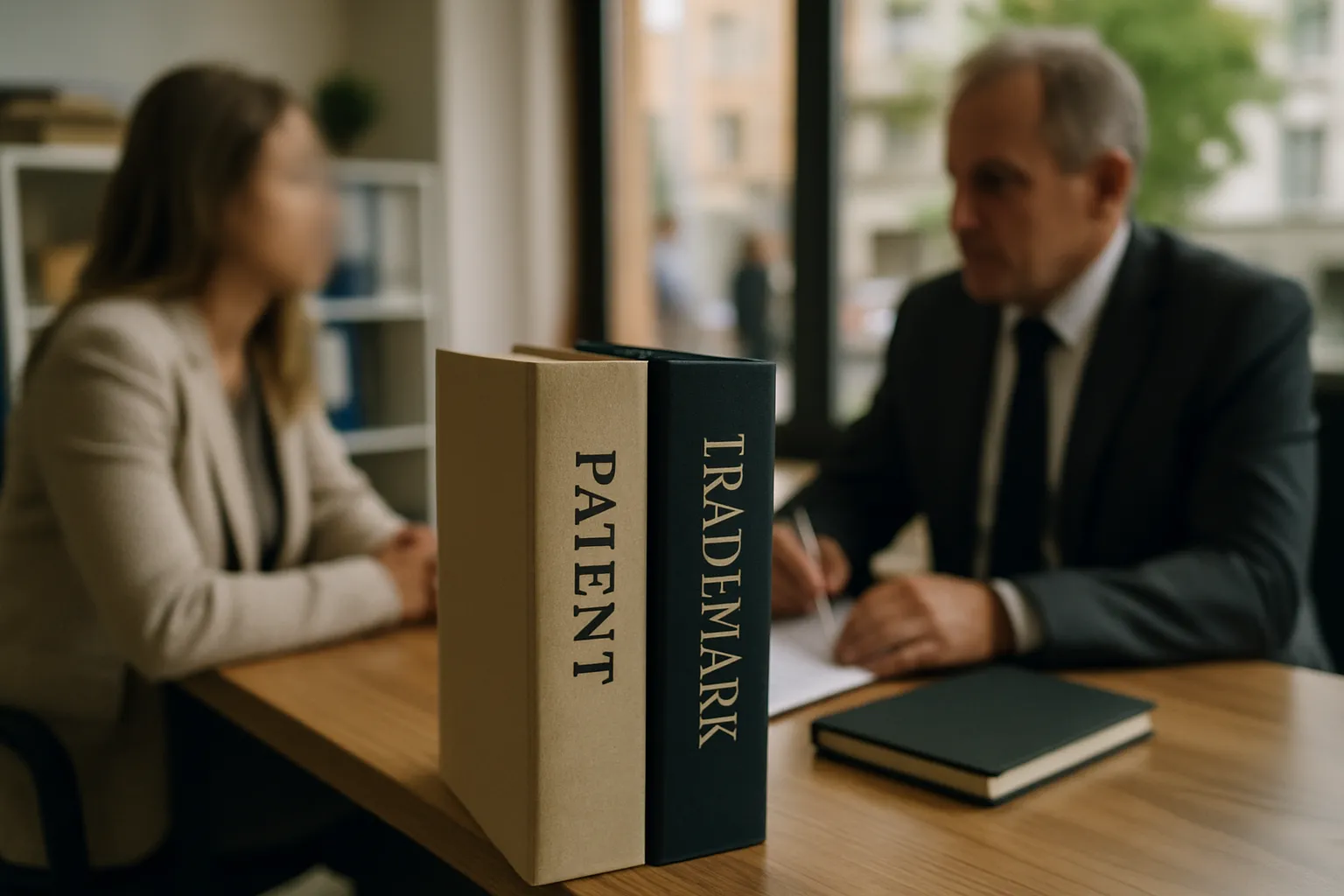
Choosing between a patent vs trademark lawyer bulgaria businesses need is one of the most consequential early decisions in protecting an idea, a brand, or an entire commercial portfolio. The two roles overlap in name only: one safeguards technical inventions, the other protects the identity your customers recognise. In recent years, amendments to Bulgarian intellectual property legislation, updated fee schedules at the Bulgarian Patent Office, and refreshed EUIPO procedural guidance have all shifted the timing, cost, and enforcement calculus. This guide takes a clear position, it tells you which specialist to hire, when, and what you should expect to pay, rather than hedging. If you want a decision, not a survey, read on.
If you are deciding between a patent vs trademark lawyer in Bulgaria and you need a fast answer, the rule is simple: match the specialist to the asset you are protecting. Do not hire a generalist for a technically complex patent, and do not overpay for a litigation-heavy patent attorney to file a straightforward brand mark.
Choose a patent lawyer when:
Choose a trademark lawyer when:
You need both when: your product carries a protectable invention and a distinctive brand, common in tech, pharma, consumer goods, and manufacturing. In those cases, coordinate the two workstreams rather than treating them as separate silos. For a starting shortlist, the Intellectual Property lawyers Bulgaria, directory lists qualified practitioners.
Several moving parts have changed in recent years that affect the patent vs trademark lawyer bulgaria decision. Bulgaria’s Law on Marks and Geographical Indications (the current trademark statute, which replaced the earlier act) governs trademark protection; the Bulgarian Patent Office periodically updates its fee and recordal framework; and EUIPO continues to issue procedural guidance that touches Bulgarian filers using the EU route. Each of these has a practical effect on cost, timing, and enforcement strategy, which is precisely why the choice of counsel matters.
The practical upshot: demand for specialist IP counsel is rising. Recordal requirements, active enforcement, and increased cross-border trade mean exporters, technology companies, and consumer brands increasingly need qualified representation rather than ad hoc advice. That demand is exactly why getting the patent vs trademark lawyer bulgaria choice right, the first time, protects both your rights and your budget.
The table below sets out the core differences dimension by dimension. Use it to identify which specialist matches your matter, then read the interpretation that follows to understand when a hybrid approach is warranted.
| Dimension | Patent lawyer (Bulgaria) | Trademark lawyer (Bulgaria) |
|---|---|---|
| Primary scope | Inventions, utility models, patent prosecution, patentability searches, drafting claims, PCT/EPO procedures, patent enforcement and litigation | Brand names, logos, marks, designations, trademark clearance, national and EU filings, oppositions, enforcement (infringement) |
| Typical matters | Drafting patent applications, prior-art search, PCT/EPO filings, prosecution at the Patent Office/EPO, validity/invalidity opinions, licensing and FRAND | Clearance searches, filing at the Patent Office/EUIPO, oppositions, renewals, recordals (licences, transfers), enforcement and injunctions |
| Qualifications | Bulgarian representative in industrial property (patent attorney); may also be a European Patent Attorney; technical background often required | Bulgarian representative in industrial property and/or EUIPO-listed trademark attorney; legal practice plus IP litigation and administrative procedure experience |
| Where they represent you | Bulgarian Patent Office, EPO (via EP representation), Bulgarian courts (civil/patent disputes), arbitration | Bulgarian Patent Office, EUIPO, Bulgarian courts (civil and administrative), customs authorities for border measures |
| Registration process & timelines | Search and drafting (weeks); Patent Office prosecution can run several years depending on examination and appeals; PCT/EPO timelines vary | Clearance to registration typically several months (national) or longer (EU) absent oppositions; oppositions extend the timeline |
| Enforcement & remedies | Infringement suits, injunctive relief, damages, expert technical evidence, cross-border enforcement via EPC/EPO channels and national courts | Injunctions, damages, administrative cancellations, customs seizures, oppositions and cancellation proceedings |
| Statutory fees | Filing, search and examination fees, plus annuities, see the Patent Office and EPO; significant annuity obligations post-grant | Filing and publication fees (Patent Office/EUIPO), opposition fees, renewal fees; confirm current recordal fees |
| Typical counsel fees (indicative) | Advising and drafting generally in the low-to-mid four figures upward; prosecution/office actions per action; litigation runs materially higher depending on complexity | Clearance modest; filing and prosecution moderate; oppositions/litigation materially higher; enforcement budgets vary |
| Liability & professional indemnity | Higher risk on claim scope and drafting; check PI limits for patent invalidity and licensing exposure | Risk around clearance failure and reputational damage; check PI for advice that could lead to infringement |
| When to hire | At invention conception (to preserve novelty), before public disclosure, pre-filing for PCT/EPO strategy, for licensing/FRAND | Pre-launch (name/logo selection), before marketing campaigns, in parallel with domain and social checks, before filing |
| Red flags | No technical background, no prosecution experience at the Patent Office/EPO, no licensing or litigation track record | No structured clearance process, no recordal/renewal tracking, no enforcement experience or customs collaboration |
Read the table as a matching exercise, not a menu. If your matter is an invention that must stay confidential until filing, the patent column governs, and the technical background of your attorney is non-negotiable. If your matter is a brand about to appear on packaging and advertising, the trademark column governs, and clearance discipline is what protects you. Where a single product carries both a technical innovation and a consumer-facing brand, hybrid counsel, a practitioner or firm holding both patent and trademark qualifications, reduces coordination cost and keeps portfolio strategy coherent.
As a practical rule, use a dedicated patent expert for complex prosecution or litigation, a trademark specialist for day-to-day portfolio management, and coordinate both under one strategy for anything valuable enough to license or litigate.
The clearest way to resolve the patent vs trademark lawyer bulgaria question is to work backwards from the asset and the deadline. Below are decision boxes by scenario, followed by checklists for the most common stakeholders. The overriding principle: patents are deadline-sensitive and novelty-destroying if you disclose early, so err toward hiring a patent lawyer sooner; trademarks reward disciplined clearance before you spend on marketing.
Hire a patent lawyer when:
The single most expensive mistake here is public disclosure before filing. Once an invention is disclosed, at a trade show, in a pitch deck, or online, novelty can be lost. Engage a patent lawyer at conception, not after launch.
Hire a trademark lawyer when:
Trademark clearance is pragmatic and iterative, you can test several candidate names, but it must happen before large marketing spend, not after. A rebrand forced by an infringement claim costs far more than an early clearance search.
Some matters demand coordinated patent and trademark input from the outset:
For stakeholder-specific timing: start-ups should prioritise a patent filing before any demo day and clear their name before spending on a launch; SMEs should budget for staged clearance and file marks in their core markets first; manufacturers should protect process inventions and product marks in parallel; R&D teams should treat every disclosure decision as a legal one and loop in a patent lawyer before conferences and publications; and brand owners should build monitoring and recordal into an annual retainer.
Understanding the lifecycle each specialist manages clarifies the patent vs trademark lawyer bulgaria decision further. The two disciplines follow different procedural tracks, use different forums, and carry different enforcement toolkits.
Patent work is front-loaded with technical analysis and long-tailed with maintenance obligations. A typical engagement runs through:
Trademark work is cyclical and portfolio-oriented rather than one-off:
Both specialists enforce rights, but through partly different channels:
Enforcement is where the choice of patent vs trademark lawyer bulgaria pays dividends: technical patent disputes reward litigators comfortable with expert evidence, while brand enforcement rewards counsel who work fluently with customs and administrative bodies.
Cost is often the deciding factor in the patent vs trademark lawyer bulgaria question, so treat any figures as planning guidance only and always confirm statutory fees against live Bulgarian Patent Office and EUIPO tables at the time of instruction. Two cost layers apply: statutory (official) fees paid to the offices, and professional fees paid to counsel. Billing models range from fixed fees for defined tasks (searches, filings, renewals), to hourly rates for advisory and prosecution work, to retainers for ongoing portfolio management, and, less commonly, success-related arrangements in enforcement. Professional fees are not fixed by tariff and vary widely by firm, complexity, and territory, so always obtain a written estimate before instructing.
Enforcement costs are the least predictable and depend on the forum, the need for expert evidence, the number of jurisdictions, and whether the matter settles. Customs (border) measures are generally the most cost-efficient tool against counterfeits; full civil litigation is the most expensive, especially for technically complex patents. Factor in that patent disputes almost always require paid expert witnesses, which inflates budgets relative to trademark matters.
Expert tip: if you must split a limited budget, prioritise timely patent filings to protect novelty, that window closes permanently once you disclose. Trademark clearance can be pragmatic and iterative, but never delay clearance before a large marketing spend.
Once you know whether your matter is patent- or trademark-led, choosing the right individual comes down to verifiable credentials and a disciplined interview. Do not rely on general reputation alone; match the specific skill to your specific need.
Use these at the initial consultation:
Red flags: a patent adviser with no technical background or no Patent Office/EPO prosecution track record; a trademark adviser with no structured clearance process or no recordal/renewal tracking; and, in either case, reluctance to provide a written estimate or evidence of PI cover.
Resolving the patent vs trademark lawyer bulgaria decision early protects both your rights and your budget: hire a patent lawyer at invention conception to preserve novelty, and hire a trademark lawyer before you spend on a launch to avoid a forced rebrand. For mixed portfolios, coordinate both under one strategy. To move forward, request an initial consultation through Global Law Experts and review the Intellectual Property lawyers Bulgaria, directory.
This article is general information, not legal advice. Consult a qualified Bulgarian IP lawyer for advice on your specific circumstances.
This article was produced by Global Law Experts. For specialist advice on this topic, contact Vasil Pavlov at Pavlov & Co, a member of the Global Law Experts network.

posted 15 minutes ago
posted 34 minutes ago

posted 51 minutes ago
posted 1 hour ago

posted 1 hour ago
posted 2 hours ago

posted 2 hours ago
posted 3 hours ago
posted 3 hours ago
posted 4 hours ago

posted 4 hours ago
posted 4 hours ago
No results available
Find the right Legal Expert for your business

Send welcome message