
Our Expert in South Korea
No results available
Last updated: September 2026
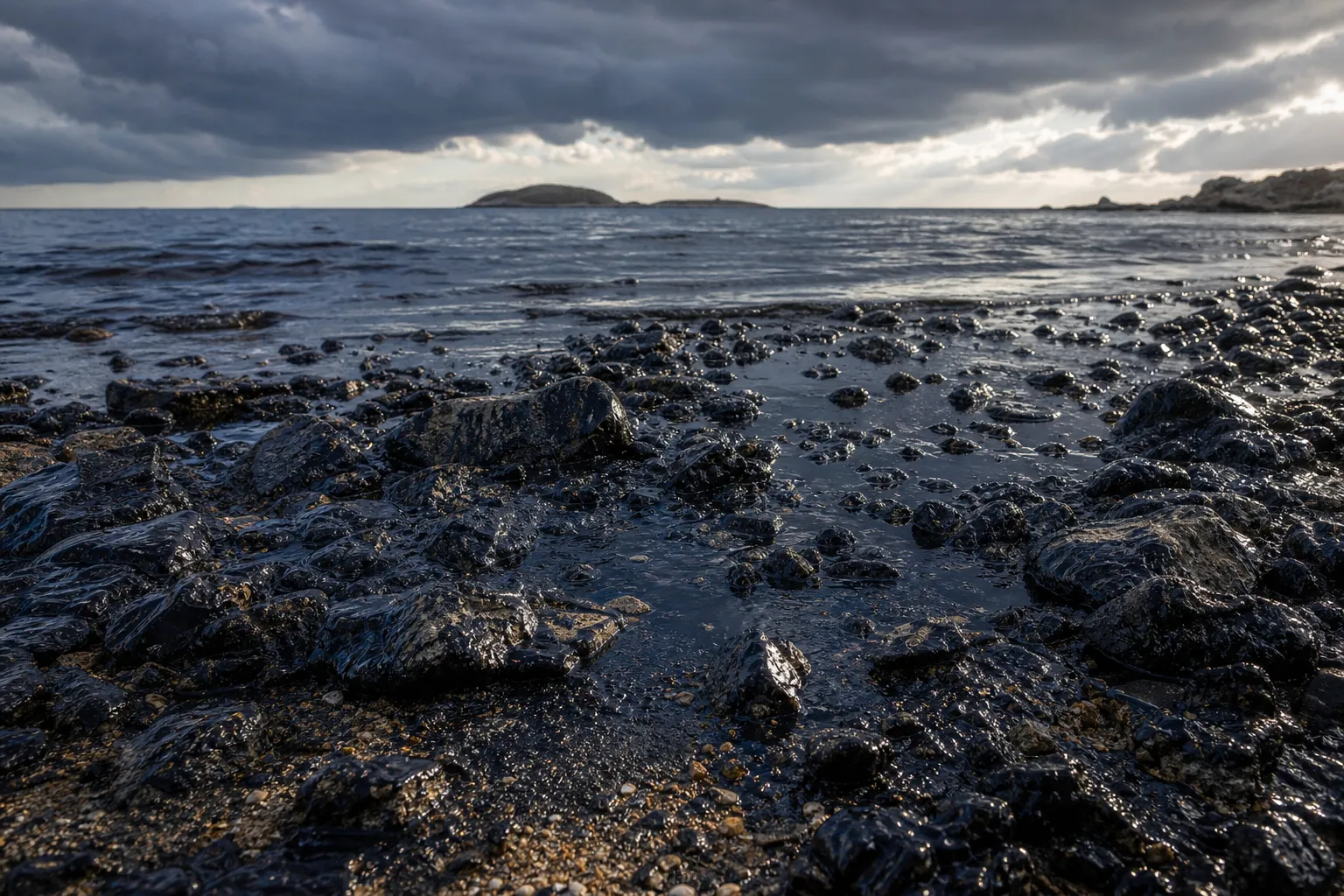
Oil pollution claims south korea sit at the intersection of domestic Korean civil procedure and the international compensation regime established under the Civil Liability Convention (CLC) and the International Oil Pollution Compensation (IOPC) Funds. For shipowners, Protection and Indemnity (P&I) clubs, insurers, coastal authorities and affected claimants, the practical challenge is not usually whether a right to compensation exists, but how to preserve it, quantify it and file it correctly before hard deadlines expire.
This guide sets out, step by step, how to bring oil pollution claims south korea practitioners will recognise from major casualties, covering eligibility, the filing procedure through Korean authorities and the IOPC Funds, the required evidence, statutory time limits, indicative costs and the regulatory position as it stands in 2026. It is written as a practitioner’s procedural reference, not as marketing material, and every substantive legal point is anchored to a primary source.
Who this guide is for: shipowners, P&I clubs, insurers, cargo owners, environmental claimants, local authorities, maritime lawyers and claims handlers operating in or against South Korea.
What you will get: a step-by-step filing procedure (domestic and IOPC), an eligibility checklist, a required-evidence table, timelines, indicative costs, the 2026 regulatory position, and the most common pitfalls.
Disclaimer: This article is general information, not legal advice. Time limits and admissibility rules are strict and fact-sensitive; engage qualified Korean counsel and your P&I club immediately after any incident.
South Korea is a party to the international oil pollution compensation regime, which channels liability to the registered shipowner (backed by compulsory insurance under the CLC) and provides a second tier of compensation through the 1992 Fund where owner liability is exhausted, inadequate or unavailable. South Korea is also a Member State of the Supplementary Fund, which provides a further tier of compensation for incidents occurring in its territory. In practice, claimants in Korea pursue recovery through two overlapping routes: domestic administrative and civil mechanisms, and the IOPC Funds claims process administered from the Funds’ offices. Understanding how the two routes interact is the single most important strategic decision in any oil pollution matter.
Following a tanker spill, the shipowner and its CLC insurer are primarily liable up to the applicable limitation figure. Where admitted claims exceed that limit, or where the owner is not liable or cannot pay, the 1992 Fund (and, in Korea, potentially the Supplementary Fund) provides supplementary compensation up to the applicable ceiling. Korean claimants typically submit documented claims to a local claims office established jointly by the shipowner’s P&I insurer and the Fund, while preserving the option to litigate in the Korean courts if a claim is rejected or under-valued. The IOPC Funds publish detailed admissibility guidance and standardised claim forms that govern how oil pollution claims south korea claimants must present and substantiate their losses (see IOPC Funds).
The administrative and Fund route is generally faster, cheaper and better suited to well-documented economic losses such as clean-up invoices, fisheries losses and tourism damage. The domestic court route becomes necessary where liability or quantum is genuinely contested, where a claim has been rejected on admissibility grounds, or where interim relief and formal adjudication are required to protect a time limit. Many claimants run both tracks in parallel: they file with the joint claims office to secure interim payments while preparing, and if necessary issuing, proceedings in the Korean courts to interrupt prescription.
This dual-track approach is central to handling oil pollution claims south korea efficiently, because it protects the claimant against both administrative delay and the running of limitation periods.
Eligibility turns on two separate frameworks: standing under Korean domestic law, and the claimant definition and admissibility criteria applied by the IOPC Funds. A claim can succeed domestically yet fail before the Fund if it does not meet the Fund’s evidential and causation standards, so both filters must be satisfied.
A broad range of parties may bring oil pollution claims south korea recognises, including:
The IOPC Funds apply their own admissibility criteria and require that each claim demonstrate an actual, quantifiable loss caused by contamination (see IOPC Funds).
The regime covers property damage, the reasonable cost of preventive and clean-up measures, the cost of reasonable reinstatement of the impaired environment, and consequential economic loss (for example, lost fishing income). Pure environmental damage assessed by abstract quantification of ecological harm is not compensable; recovery for environmental damage is limited to the costs of reasonable reinstatement measures actually undertaken or to be undertaken. This distinction is decisive in framing oil spill compensation Korea claims correctly.
The shipowner is not liable where the damage results from an act of war or hostilities, from a wholly exceptional, inevitable and irresistible natural phenomenon, from the intentional act of a third party, or from the negligence of a public authority in maintaining navigational aids. Claims tainted by the claimant’s own fault may be reduced or barred. Pollution damage caused by non-persistent oils and certain nuclear incidents falls outside the CLC/Fund regime entirely.
The following sequence reflects the practical flow of a Korean tanker pollution matter from the first hours after a casualty through to final settlement. Each step lists the responsible actor, the core actions and the expected output. The marine pollution claim procedure below assumes a persistent-oil spill from a laden tanker within Korean waters.
Immediate notification and first response. The master and shipowner must notify the Korea Coast Guard and the Ministry of Oceans and Fisheries (MOF) without delay, recording the exact date, time, position and estimated volume of the discharge. First responders deploy booms and skimmers to contain the spill. The notification fixes the incident date that governs downstream limitation calculations, so contemporaneous documentation is essential. Output: logged incident report and initial containment. (See Ministry of Oceans and Fisheries.)
Appoint the P&I club, local counsel and loss adjuster. The shipowner notifies its P&I club, which appoints a correspondent, local Korean counsel and a marine loss adjuster. For claimants, retaining Korean counsel early ensures notices are served on the correct entities and that the joint claims office channel is used. Output: appointed advisory team and opened claims file.
Incident assessment and quantification of removal costs. An independent marine surveyor establishes the cause, spill volume, spread and affected zones. Clean-up contractors and authorities begin logging labour, equipment and disposal costs on a per-day basis. Accurate, itemised cost capture from day one is what distinguishes admissible from rejected removal claims. Output: survey report and running cost ledger.
Administrative clean-up and payment of urgent costs. Coastal authorities and contractors carry out shoreline and offshore clean-up. Urgent costs are often paid directly by authorities and later reclaimed. Retain every invoice, receipt, timesheet and disposal manifest, because these underpin the largest category of recoverable loss. Output: documented and invoiced clean-up operation.
Present the claim to the shipowner and P&I club. Affected parties submit particularised claims to the shipowner or its P&I insurer, usually through the joint claims office. Requesting a Letter of Undertaking (LOU) secures the owner’s/club’s commitment to satisfy admitted claims and can support release of security. Output: lodged claim and, where obtained, an LOU.
Prepare and submit the IOPC Funds claim. Where claims exceed the owner’s limitation or the owner is not liable, submit a formal claim on the IOPC Funds claim form with full supporting evidence. The Fund assesses admissibility against causation, quantum and reasonableness criteria. Notify the Fund early for guidance and submit within the applicable time limit, generally within three years of the date the damage occurred, and in any event within six years of the incident (see IOPC Funds). Output: registered Fund claim with reference number.
Parallel litigation in the Korean courts or arbitration. If a claim is rejected or under-assessed, or if prescription is approaching, institute civil proceedings in the competent Korean court to interrupt limitation and to obtain a binding determination. Proceedings can run alongside the Fund process; a court judgment on quantum will typically inform the Fund’s final position. Output: filed pleadings and interrupted limitation. (See Supreme Court of Korea.)
Negotiation, interim payments and final settlement. The joint claims office and Fund make interim payments on well-documented claims while assessment continues, then negotiate final settlement or await adjudication. Where admitted claims risk exceeding the applicable ceiling, payments may be pro-rated. Output: interim payments and final settlement or award.
The IOPC Funds and the Korean courts both operate on a documentary standard: a claim is only as strong as the evidence proving that a loss was incurred, was caused by the contamination, and was reasonable in amount. The following checklist and table set out what oil pollution claims south korea claimants must assemble.
The claim form, contracts, invoices, receipts, photographs, GPS logs and independent survey reports form the backbone of any submission. Every cost must be traceable to a primary record; summaries and estimates without underlying documentation are routinely rejected.
Oil sampling and fingerprinting linking the spilled oil to the source vessel, environmental sampling data, and impact and remediation studies from accredited laboratories are needed to prove causation and to justify reinstatement costs.
Ledgers, management accounts, tax filings, bank statements and third-party invoices substantiate economic loss and prove that payments were actually made, critical for fisheries, aquaculture and tourism claims where historical income must be compared against post-incident performance.
Samples must be collected, labelled, stored and transferred under a documented chain of custody, and corroborated by witness statements and official incident reports, or their evidential value collapses.
| Document | Purpose | Who typically prepares / obtains |
|---|---|---|
| IOPC Funds claim form | Official claim submission to the IOPC Funds | Claimant / local counsel |
| Notice of incident / initial notification to MOF and Coast Guard | Triggers response; records incident date and time | Master / coastal authority |
| P&I correspondence and Letters of Undertaking (LOU) | Evidence of coverage and indemnity | P&I club / shipowner |
| Independent incident survey report | Technical cause, spill volume, damage assessment | Qualified marine surveyor |
| Photographs, videos, GPS logs | Visual proof of pollution and location | On-scene personnel / drone operator |
| Clean-up and removal cost invoices and receipts | Quantify removal and mitigation costs | Contractors / local authorities |
| Environmental impact assessment and sampling reports | Evidence of environmental damage and remediation needs | Accredited lab / environmental consultant |
| Contracts, bills of lading, valuation reports | Prove economic loss (cargo, fishing, tourism) | Claimant / valuers |
| Witness statements and authority incident reports | Corroborate liability and timing | Witnesses / MOF / Coast Guard |
| Bank statements / payment confirmation | Proof of expenses and payments made | Claimant / accountant |
| Court or arbitration pleadings (if ongoing) | Legal record of claims and defences | Counsel |
| Certified translations and notarised copies (Korean/English) | Required for Korean courts and the IOPC process | Certified translator / notary |
Deadlines in oil pollution claims south korea practice operate on two clocks, the Fund Convention time bar and Korean domestic prescription, and missing either can extinguish an otherwise valid claim. Manage both from day one.
Under the Fund Convention, a claimant’s rights against the 1992 Fund are extinguished unless an action is brought, or formal notification of a claim is made, within three years of the date the damage occurred. An overriding bar prevents any action being brought more than six years after the date of the incident which caused the damage. Because “date the damage occurred” can be later than the incident date for progressive losses, early notification to the Fund is strongly advised (see IOPC Funds).
Domestic civil claims are governed by the Korean Civil Code and applicable maritime statutes; short prescription periods of a few years typically run from the point at which the claimant became aware of the damage and the identity of the liable party, subject to longer absolute limits. The precise period applicable to a given claim must be confirmed against the statutory text and case law (see Korean Legislation Research Institute and Supreme Court of Korea). Where any doubt exists, treat the shortest arguable period as the operative deadline.
Serve early written notice on the shipowner, P&I club and Fund; request interim payments to keep the claim active; and, if a deadline approaches without settlement, issue protective proceedings to interrupt prescription rather than relying on ongoing negotiations.
| Step | Who | Typical duration / deadline |
|---|---|---|
| Immediate notification to Korean authorities | Master / shipowner / local agent | Within hours; notify Coast Guard and MOF immediately |
| Emergency removal operations and interim invoices | Local authorities / cleanup contractors | Days to weeks (urgent) |
| Notify P&I club; appoint counsel and adjuster | Shipowner / P&I | Within 24–72 hours |
| Submit claim to shipowner / P&I club | Affected party / claimant | As soon as possible; recommended within weeks |
| Submit IOPC Funds claim (initial) | Claimant / counsel | Within 3 years of damage; absolute bar 6 years from incident, notify Fund early |
| Institute domestic court proceedings (if contested) | Claimant | Per Korean Civil Code / case law from knowledge; confirm statutory period and act on the shortest arguable deadline |
| Interim payments / provisional measures | P&I / shipowner / Fund | Weeks to months, depending on negotiation and LOUs |
| Final adjudication / settlement | Courts / arbitration / Fund | Months to years depending on complexity and appeals |
Pursuing oil spill compensation Korea claims carries front-loaded costs, surveys, laboratory testing and legal fees, most of which are recoverable if the underlying claim succeeds and the expenditure was reasonable.
The main outlays are the independent survey, environmental sampling and lab analysis, legal fees, expert valuation reports and translation and notarisation. The table below gives indicative ranges only; actual figures vary significantly with the scale of the incident and the specialists required, and should always be confirmed by current market quotes.
Where a P&I club has issued an LOU or the Fund has agreed interim payments, urgent clean-up and response costs may be advanced or reimbursed before final assessment. Absent such arrangements, claimants generally fund their own preparation and recover it as part of the admitted claim.
Reasonable, evidenced costs of preventive measures, clean-up, reinstatement and quantifiable economic loss are recoverable. Speculative losses, abstract environmental valuation and disproportionate expenditure are not.
| Item | Indicative cost range | Notes |
|---|---|---|
| Initial independent survey | Varies with scale | Depends on scale and specialist required |
| Environmental sampling and lab tests | Varies with sample count | Depends on lab accreditation and number of samples |
| Local counsel (retainer) | By quotation | Depends on complexity and firm |
| Translation and notarisation | Per document / package | Budget early |
| Court filing fees | Scales with claim amount | Set by the applicable court rules; confirm current rates |
| Expert reports (economist / valuation) | Per expert | Depends on scope |
| IOPC Funds administration / handling | No fee to apply | Claimants’ reasonable claim-preparation costs may be recoverable; processing takes time |
| Enforcement costs (foreign judgment execution) | Variable | Depends on enforcement route |
All figures are indicative only and should be confirmed by current market quotes and the applicable official fee schedules.
The choice between the IOPC Funds Korea process and the domestic court route is rarely binary, most sophisticated claimants use both, but the table below highlights the practical trade-offs.
| Feature | Domestic Korea (courts / administrative) | IOPC Funds |
|---|---|---|
| Jurisdiction | Korean courts and administrative bodies | International Fund (supplementing the CLC) |
| Who can claim | Broad standing under domestic law, including public bodies | Those meeting the Fund’s admissibility criteria |
| Time limits | Korean Civil Code and case law control | 3 years from damage; 6-year absolute bar from incident |
| Remedies | Full civil damages and other relief | Compensation up to Fund limits, subject to strict documentation |
| Evidence standard | Korean civil procedure rules | Documentary and technical evidence in prescribed form |
| Typical duration | Months to years | Several months to years (administrative plus any litigation) |
The core architecture of the CLC and 1992 Fund regime remains in force in 2026, and South Korea continues as a party to the relevant conventions, including the Supplementary Fund Protocol (see International Maritime Organization and IOPC Funds). Practitioners should nonetheless verify three moving parts before filing. First, confirm the current claim forms and admissibility guidance published by the Funds, which are updated periodically (IOPC Funds). Second, check for amendments to Korea’s marine-environment and maritime statutes via the KLRI database, as reporting channels and administrative procedures are refined over time (KLRI). Third, confirm current MOF reporting requirements and any new digital notification channels (MOF).
The practical takeaway for 2026 is procedural rather than structural: use the latest forms, the latest reporting routes, and re-verify limitation periods against the current statutory text before every filing.
Oil pollution claims south korea reward preparation and punish delay. The compensation is real and, in serious casualties, substantial, but it is only accessible to claimants who notify the authorities promptly, capture evidence to a documentary standard, understand the interaction between the domestic Korean route and the IOPC Funds, and manage both limitation clocks with discipline. Whether you are a shipowner, a P&I club, an insurer or an affected coastal business, the practical priorities are the same: act within the first 24 to 72 hours, build an evidenced and traceable claim, and preserve your rights through both the joint claims office and, where necessary, protective court proceedings.
Handled this way, oil pollution claims south korea claimants can navigate a demanding process to a fair recovery.
This article was produced by Global Law Experts. For specialist advice on this topic, contact C.J. Kim at Choi & Kim, a member of the Global Law Experts network.
posted 7 minutes ago

posted 25 minutes ago
posted 44 minutes ago

posted 1 hour ago

posted 1 hour ago

posted 2 hours ago
posted 2 hours ago

posted 2 hours ago

posted 3 hours ago

posted 3 hours ago
posted 3 hours ago

posted 4 hours ago
No results available
Find the right Legal Expert for your business

Send welcome message