[codicts-css-switcher id=”346″]

Global Law Experts Logo

Regulatory Lawyers Worldwide.

Global Law Experts

Meet Our Regulatory Lawyers

Discover top Regulatory lawyers worldwide on Global Law Experts, a trusted legal directory connecting independent members recognized for their expertise.

Legal
Country
Regulatory
Legal
Country
Regulatory
3 results

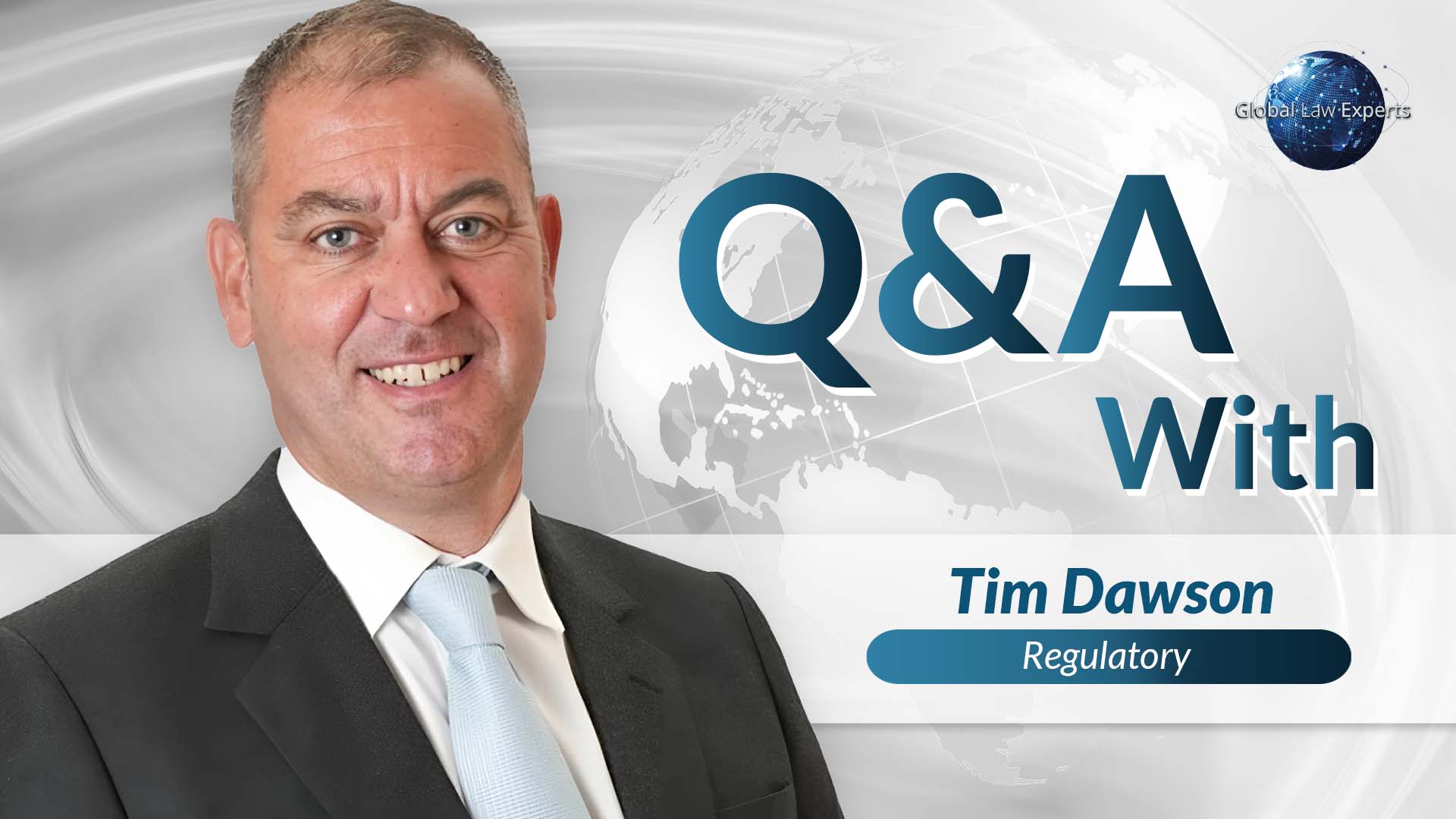
Tim Dawson

  • GOLD

Email:

Phone:

+13459*****

Tim Dawson

  • GOLD
Regulatory Law in Cayman Islands
  • Campbells Legal
  • GOLD

Giuseppina Epicoco

  • GOLD

Email:

Phone:

+423 2*****
Legal professional with a neutral expression, wearing a blazer, against a dark background.
Law firm logo featuring the name "NIEDERMÜLLER" with "Rechtsanwälte | Attorneys at Law" below.
Legal professional with a neutral expression, wearing a blazer, against a dark background.
  • GOLD

Giuseppina Epicoco

  • GOLD
Banking & Finance
  • Niedermueller Attorney at Law
  • GOLD

Tom Hine

  • GOLD

Email:

Phone:

+44 (0*****
Photo-hodman57.png
Logo-templebright33.png

Tom Hine

  • GOLD
Regulatory Law in United Kingdom
  • Temple Bright LLP

Regulatory News

Find Expert Regulatory Lawyers Through Global Law Experts

Navigate Complex Frameworks with Expert Regulatory Counsel

Regulatory law governs the implementation of statutes through the detailed rules and decisions of administrative agencies. This practice area is vital for navigating sector-specific mandates in fields such as telecommunications, energy, and healthcare. Attorneys provide essential guidance on rulemaking and judicial reviews to ensure that organizational strategies remain legally sound and competitively positioned.

Global Law Experts connects you with premier regulatory specialists who possess a deep understanding of industry-specific oversight and government relations. Every practitioner is meticulously vetted for their ability to translate intricate legal shifts into actionable business intelligence. Whether entering a new market or challenging a decision, our experts provide the strategic counsel needed to manage risk and foster growth.

Regulatory Related Videos

Professional Regulatory Help You Can Trust

We will help match you with a qualified Regulatory law specialist who can offer reliable advice, clarify your options, and guide you through the next steps in the legal process.
Main Lead Capture Form - Home

Every GLE member is independently vetted by practice area and jurisdiction.

Client Success Stories

Testimonial-by-Jonathan-Gilmour.png
Testimonial-by-Tarek-Fouad-Riad.png
Testimonial-by-Zia-J.-Mody.png
Testimonial-by-Virginie-Tassin-Campanella.png
Testimonial-by-Marta-Dunphy-Moriel.png
Testimonial-by-Mario-Alberto-Arias-V.png
Testimonial-by-Lewis-Man.png
Testimonial-by-Kerwin-K.-Tan.png
Testimonial-by-Elena-Sadovskaya.png
Testimonial-by-Charalambos-Papasavvas.png

Regulatory FAQ's

A Regulatory lawyer acts as a proactive shield against government enforcement, ensuring your business model survives within strict legal guardrails. In industries like banking (fintech), energy, or telecom, they don’t just read laws; they translate complex agency rules—from the SEC, FERC, or FCC—into operational reality. Their daily work involves obtaining essential operating licenses, designing internal compliance programs to prevent money laundering or safety violations, and defending the company during aggressive government audits before they turn into lawsuits.


An administrative hearing is a “trial-lite” conducted within the government agency itself rather than a public courthouse. There is no jury; instead, a specialized “Administrative Law Judge” (ALJ) acts as both judge and jury, deciding your fate based on technical regulations rather than broad common law. The rules of evidence are much looser—hearsay that would be banned in a real court is often allowed here, making it critical to have a lawyer who understands the specific procedural quirks of that agency.

Yes, challenging a penalty is a core function of regulatory defense. A lawyer will first exhaust “administrative remedies,” which means appealing the fine internally within the agency by proving they made a procedural error or calculated the penalty amount incorrectly. If the agency refuses to budge, the lawyer can escalate the matter to federal or state court, arguing that the fine was “arbitrary and capricious” or that the agency exceeded its statutory authority in issuing it.

Obtaining a license is a rigorous legal campaign that involves far more than filling out a form. A lawyer prepares a massive application dossier proving your company’s financial solvency, background-checking your key executives, and demonstrating detailed operational plans that meet safety or security standards. They also act as the diplomat during the review period, responding to the regulator’s “deficiency letters” (requests for more info) to prevent your application from dying in bureaucratic limbo.

When a regulator like the FTC or DOJ investigates you for monopolistic behavior or price-fixing, a lawyer manages the crisis to prevent a breakup of your company. They oversee the massive “discovery” process to ensure you hand over the required documents without revealing privileged trade secrets. Simultaneously, they hire economists to build a defense showing that your market dominance is due to superior products and efficiency, not illegal tactics that harm consumers.

Yes, this is known as “Notice and Comment” advocacy. Before a new regulation becomes law, agencies are legally required to publish a draft and ask for public feedback. A lawyer drafts a formal “Comment Letter” arguing—often with detailed data—why the proposed rule is unworkable or illegal, potentially convincing the agency to rewrite it in your favor. This is a powerful, legal way to shape the playing field rather than just reacting to it later.

Judicial Review is your nuclear option. It is a lawsuit filed in federal court asking a judge to overturn an agency’s final decision because it violated the law or the Constitution. You can generally only sue after you have lost all your internal appeals within the agency (exhaustion of remedies). Lawyers use the “Chevron deference” or “Loper Bright” (post-2024) standards to argue that the court should stop deferring to the agency’s interpretation of the law and instead rule in your favor.

A Civil Investigative Demand (CID) is a powerful government subpoena that demands you hand over documents or sit for a deposition before any lawsuit is filed. You should never ignore it or respond alone. A lawyer immediately negotiates the “scope” of the demand to narrow it down so you don’t have to spend millions producing irrelevant emails. They also prepare your executives for testimony, ensuring they answer truthfully without accidentally admitting to regulatory violations they didn’t commit.

Regulatory FAQ's

A Regulatory lawyer acts as a proactive shield against government enforcement, ensuring your business model survives within strict legal guardrails. In industries like banking (fintech), energy, or telecom, they don't just read laws; they translate complex agency rules—from the SEC, FERC, or FCC—into operational reality. Their daily work involves obtaining essential operating licenses, designing internal compliance programs to prevent money laundering or safety violations, and defending the company during aggressive government audits before they turn into lawsuits.

An administrative hearing is a "trial-lite" conducted within the government agency itself rather than a public courthouse. There is no jury; instead, a specialized "Administrative Law Judge" (ALJ) acts as both judge and jury, deciding your fate based on technical regulations rather than broad common law. The rules of evidence are much looser—hearsay that would be banned in a real court is often allowed here, making it critical to have a lawyer who understands the specific procedural quirks of that agency.

Yes, challenging a penalty is a core function of regulatory defense. A lawyer will first exhaust "administrative remedies," which means appealing the fine internally within the agency by proving they made a procedural error or calculated the penalty amount incorrectly. If the agency refuses to budge, the lawyer can escalate the matter to federal or state court, arguing that the fine was "arbitrary and capricious" or that the agency exceeded its statutory authority in issuing it.

Obtaining a license is a rigorous legal campaign that involves far more than filling out a form. A lawyer prepares a massive application dossier proving your company's financial solvency, background-checking your key executives, and demonstrating detailed operational plans that meet safety or security standards. They also act as the diplomat during the review period, responding to the regulator’s "deficiency letters" (requests for more info) to prevent your application from dying in bureaucratic limbo.

When a regulator like the FTC or DOJ investigates you for monopolistic behavior or price-fixing, a lawyer manages the crisis to prevent a breakup of your company. They oversee the massive "discovery" process to ensure you hand over the required documents without revealing privileged trade secrets. Simultaneously, they hire economists to build a defense showing that your market dominance is due to superior products and efficiency, not illegal tactics that harm consumers.


Yes, this is known as "Notice and Comment" advocacy. Before a new regulation becomes law, agencies are legally required to publish a draft and ask for public feedback. A lawyer drafts a formal "Comment Letter" arguing—often with detailed data—why the proposed rule is unworkable or illegal, potentially convincing the agency to rewrite it in your favor. This is a powerful, legal way to shape the playing field rather than just reacting to it later.

Judicial Review is your nuclear option. It is a lawsuit filed in federal court asking a judge to overturn an agency's final decision because it violated the law or the Constitution. You can generally only sue after you have lost all your internal appeals within the agency (exhaustion of remedies). Lawyers use the "Chevron deference" or "Loper Bright" (post-2024) standards to argue that the court should stop deferring to the agency’s interpretation of the law and instead rule in your favor.

A Civil Investigative Demand (CID) is a powerful government subpoena that demands you hand over documents or sit for a deposition before any lawsuit is filed. You should never ignore it or respond alone. A lawyer immediately negotiates the "scope" of the demand to narrow it down so you don't have to spend millions producing irrelevant emails. They also prepare your executives for testimony, ensuring they answer truthfully without accidentally admitting to regulatory violations they didn't commit.

Join
who are already getting the benefits
0
Sign up for the latest legal briefings and news within Global Law Experts’ community, as well as a whole host of features, editorial and conference updates direct to your email inbox. Naturally you can unsubscribe at any time.
Newsletter Sign Up
About Us

Global Law Experts is dedicated to providing exceptional legal services to clients around the world. With a vast network of highly skilled and experienced lawyers, we are committed to delivering innovative and tailored solutions to meet the diverse needs of our clients in various jurisdictions.

Global Law Experts App

Now Available on the App & Google Play Stores.

Social Posts
[wp_social_ninja id="50714" platform="instagram"]

See More:

Contact Us

Stay Informed

Join Mailing List
About Us

Global Law Experts is dedicated to providing exceptional legal services to clients around the world. With a vast network of highly skilled and experienced lawyers, we are committed to delivering innovative and tailored solutions to meet the diverse needs of our clients in various jurisdictions.

Social Posts
[wp_social_ninja id="50714" platform="instagram"]

See More:

Global Law Experts App

Now Available on the App & Google Play Stores.

Contact Us

Stay Informed

Join Mailing List

GLE

Lawyer Profile Page - Lead Capture
GLE-Logo-White
Lawyer Profile Page - Lead Capture
Photo-hodman57.png

Tom Hine

Send welcome message

Custom Message