[codicts-css-switcher id=”346″]

Global Law Experts Logo

Patent Litigation Lawyers Worldwide.

Global Law Experts

Meet Our Patent Litigation Lawyers

Discover top-rated independent Patent Litigation lawyers worldwide on Global Law Experts. Explore award-winning attorneys for your legal needs.

Legal
Country
Patent Litigation
Legal
Country
Patent Litigation
One result

Arno Riße

  • GOLD

Email:

Phone:

+49 21*****
Photo-cofuman54.png
Logo-arnold31.png
Photo-cofuman54.png

Arno Riße

  • GOLD

Arno Riße

  • GOLD
Patent Litigation Law in Germany
  • Arnold Ruess - Rechtsanwälte Partnerschaft mbB

Patent Litigation News

posted 2 weeks ago

Find Expert Patent Litigation Lawyers Through Global Law Experts

Leading Patent Litigation Experts to Protect Your Intellectual Property

Patent litigation involves the legal enforcement or defense of patent rights when an unauthorized party is alleged to have used, sold, or manufactured a patented invention. This practice is high-stakes and technically demanding, requiring the management of infringement claims, validity challenges, and complex discovery processes. Attorneys provide the strategic architecture for Markman hearings—where the court determines the specific meaning of patent claims—and navigate the nuances of both trial court proceedings and inter partes reviews.

Global Law Experts connects you with premier litigation specialists who possess the scientific and engineering backgrounds necessary to articulate complex technical concepts. These lawyers are established experts within their own fields, offering the tactical precision required to secure injunctions, negotiate licensing settlements, or defend against “patent trolls.” Whether you are a pharmaceutical giant protecting a blockbuster drug or a tech innovator defending a software algorithm, they provide the strategic advocacy needed to safeguard your competitive advantage in the global market.

Professional Patent Litigation Help You Can Trust

We will help match you with a qualified Patent Litigation law specialist who can offer reliable advice, clarify your options, and guide you through the next steps in the legal process.
Main Lead Capture Form - Home

Every GLE member is independently vetted by practice area and jurisdiction.

Client Success Stories

Testimonial-by-Jonathan-Gilmour.png
Testimonial-by-Tarek-Fouad-Riad.png
Testimonial-by-Zia-J.-Mody.png
Testimonial-by-Virginie-Tassin-Campanella.png
Testimonial-by-Marta-Dunphy-Moriel.png
Testimonial-by-Mario-Alberto-Arias-V.png
Testimonial-by-Lewis-Man.png
Testimonial-by-Kerwin-K.-Tan.png
Testimonial-by-Elena-Sadovskaya.png
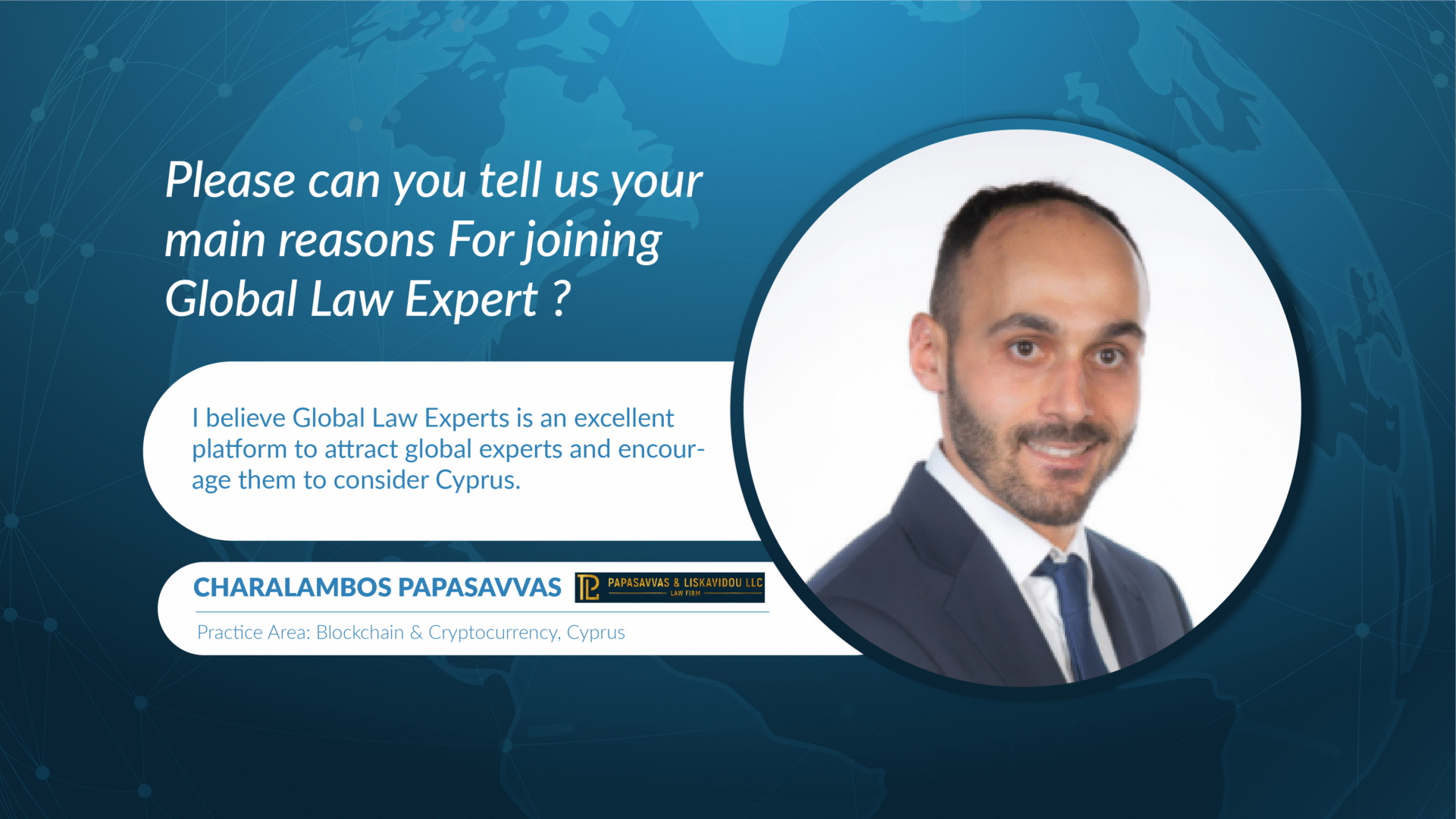
Testimonial-by-Charalambos-Papasavvas.png

Patent Litigation FAQ's

While the names sound similar, they represent opposite ends of the patent lifecycle. Patent Prosecution is the administrative process of negotiating with the patent office to get the patent granted, involving friendly (though bureaucratic) back-and-forth with an examiner. Patent Litigation is the aggressive legal battle that happens after the patent is granted, where you sue a competitor in federal court for stealing your invention. Essentially, prosecution builds the weapon, and litigation fires it; litigation is significantly more expensive, with the American Intellectual Property Law Association estimating the average cost of a patent lawsuit to be between $2 million and $4 million.


A lawyer proves infringement by conducting an “element-by-element” analysis, often using a visual chart called a “claim chart.” To win, they must show that the competitor’s product contains every single limitation listed in your patent claim. If your patent claim describes a chair with “four legs and a red cushion,” and the competitor sells a chair with three legs or a blue cushion, they generally do not infringe. This strict requirement is why lawyers fight so hard during the drafting phase to keep the claim language broad.

Yes, the most common defense in a patent lawsuit is to argue that the patent should never have been granted in the first place. A competitor will search for “prior art”—old documents or products that existed before you filed—to prove your invention wasn’t actually new or non-obvious. If they succeed, the judge invalidates your patent, meaning you not only lose the lawsuit but also lose your intellectual property rights forever. In the US, competitors often use the “Inter Partes Review” (IPR) process at the patent office to invalidate claims because it has a lower burden of proof than federal court.

The Markman Hearing is the “make or break” moment of nearly every patent lawsuit. It is a pre-trial hearing where the judge—not the jury—decides exactly what the specific words in your patent claims mean (e.g., does “processing unit” mean any computer chip or just a specific type?). Since the definition often determines whether the competitor is infringing or not, the entire case often settles immediately after this ruling. Statistics show that once the judge defines the terms, the losing side usually realizes a trial is futile and negotiates a settlement.

Yes, but it is incredibly difficult to obtain. A preliminary injunction is an emergency court order forcing the competitor to pull their product off the shelves before the trial even finishes. To get one, you must prove you will suffer “irreparable harm” that money cannot fix, such as going out of business or losing permanent market share. Since the US Supreme Court’s 2006 eBay decision, courts rarely grant these injunctions to companies that don’t actually make products (like patent trolls), reserving them mostly for direct competitors.

Damages are designed to make you whole. Lost Profits attempt to pay you exactly what you would have earned if the competitor hadn’t stolen your customers, which requires proving that people bought the fake product specifically because of your patented feature. If you can’t prove that, the law defaults to a Reasonable Royalty, which is the hypothetical license fee the competitor should have paid you to use the technology legally. In 2024, the median patent damage award in the US remained high, often driven by these royalty calculations on massive sales volumes.

Willful infringement occurs when a competitor knew about your patent and brazenly copied it anyway, without a valid reason to believe the patent was invalid. If a jury finds willfulness, the judge has the discretion to award “enhanced damages” (up to 3x the actual amount) as a punishment. This is the nuclear option in patent law; however, the Supreme Court’s Halo standard makes it clear that this is reserved for “egregious” misconduct, not just standard business disputes.

Defending against a Patent Troll—a company that buys patents just to sue people—requires a strategy of attrition and invalidation. Since trolls usually want a quick “nuisance settlement” (a payment lower than the cost of fighting), a lawyer often counters by filing an “Inter Partes Review” (IPR) to invalidate the troll’s patent at the USPTO. This is a cheaper and faster way to kill the lawsuit than going to court. Data shows that roughly 80% of IPR petitions result in at least some patent claims being cancelled, making it a highly effective shield against weak troll patents.

Patent Litigation FAQ's

While the names sound similar, they represent opposite ends of the patent lifecycle. Patent Prosecution is the administrative process of negotiating with the patent office to get the patent granted, involving friendly (though bureaucratic) back-and-forth with an examiner. Patent Litigation is the aggressive legal battle that happens after the patent is granted, where you sue a competitor in federal court for stealing your invention. Essentially, prosecution builds the weapon, and litigation fires it; litigation is significantly more expensive, with the American Intellectual Property Law Association estimating the average cost of a patent lawsuit to be between $2 million and $4 million.
A lawyer proves infringement by conducting an "element-by-element" analysis, often using a visual chart called a "claim chart." To win, they must show that the competitor's product contains every single limitation listed in your patent claim. If your patent claim describes a chair with "four legs and a red cushion," and the competitor sells a chair with three legs or a blue cushion, they generally do not infringe. This strict requirement is why lawyers fight so hard during the drafting phase to keep the claim language broad.

Yes, the most common defense in a patent lawsuit is to argue that the patent should never have been granted in the first place. A competitor will search for "prior art"—old documents or products that existed before you filed—to prove your invention wasn't actually new or non-obvious. If they succeed, the judge invalidates your patent, meaning you not only lose the lawsuit but also lose your intellectual property rights forever. In the US, competitors often use the "Inter Partes Review" (IPR) process at the patent office to invalidate claims because it has a lower burden of proof than federal court.

The Markman Hearing is the "make or break" moment of nearly every patent lawsuit. It is a pre-trial hearing where the judge—not the jury—decides exactly what the specific words in your patent claims mean (e.g., does "processing unit" mean any computer chip or just a specific type?). Since the definition often determines whether the competitor is infringing or not, the entire case often settles immediately after this ruling. Statistics show that once the judge defines the terms, the losing side usually realizes a trial is futile and negotiates a settlement.

Yes, but it is incredibly difficult to obtain. A preliminary injunction is an emergency court order forcing the competitor to pull their product off the shelves before the trial even finishes. To get one, you must prove you will suffer "irreparable harm" that money cannot fix, such as going out of business or losing permanent market share. Since the US Supreme Court's 2006 eBay decision, courts rarely grant these injunctions to companies that don't actually make products (like patent trolls), reserving them mostly for direct competitors.

Damages are designed to make you whole. Lost Profits attempt to pay you exactly what you would have earned if the competitor hadn't stolen your customers, which requires proving that people bought the fake product specifically because of your patented feature. If you can't prove that, the law defaults to a Reasonable Royalty, which is the hypothetical license fee the competitor should have paid you to use the technology legally. In 2024, the median patent damage award in the US remained high, often driven by these royalty calculations on massive sales volumes.

Willful infringement occurs when a competitor knew about your patent and brazenly copied it anyway, without a valid reason to believe the patent was invalid. If a jury finds willfulness, the judge has the discretion to award "enhanced damages" (up to 3x the actual amount) as a punishment. This is the nuclear option in patent law; however, the Supreme Court's Halo standard makes it clear that this is reserved for "egregious" misconduct, not just standard business disputes.

Defending against a Patent Troll—a company that buys patents just to sue people—requires a strategy of attrition and invalidation. Since trolls usually want a quick "nuisance settlement" (a payment lower than the cost of fighting), a lawyer often counters by filing an "Inter Partes Review" (IPR) to invalidate the troll's patent at the USPTO. This is a cheaper and faster way to kill the lawsuit than going to court. Data shows that roughly 80% of IPR petitions result in at least some patent claims being cancelled, making it a highly effective shield against weak troll patents.
Join
who are already getting the benefits
0
Sign up for the latest legal briefings and news within Global Law Experts’ community, as well as a whole host of features, editorial and conference updates direct to your email inbox. Naturally you can unsubscribe at any time.
Newsletter Sign Up
About Us

Global Law Experts is dedicated to providing exceptional legal services to clients around the world. With a vast network of highly skilled and experienced lawyers, we are committed to delivering innovative and tailored solutions to meet the diverse needs of our clients in various jurisdictions.

Global Law Experts App

Now Available on the App & Google Play Stores.

Social Posts
[wp_social_ninja id="50714" platform="instagram"]

See More:

Contact Us

Stay Informed

Join Mailing List
About Us

Global Law Experts is dedicated to providing exceptional legal services to clients around the world. With a vast network of highly skilled and experienced lawyers, we are committed to delivering innovative and tailored solutions to meet the diverse needs of our clients in various jurisdictions.

Social Posts
[wp_social_ninja id="50714" platform="instagram"]

See More:

Global Law Experts App

Now Available on the App & Google Play Stores.

Contact Us

Stay Informed

Join Mailing List

GLE

Lawyer Profile Page - Lead Capture
GLE-Logo-White
Lawyer Profile Page - Lead Capture
Photo-cofuman54.png

Arno Riße

Send welcome message

Custom Message