[codicts-css-switcher id=”346″]

Global Law Experts Logo

Investment Migration Lawyers Worldwide.

Global Law Experts

Meet Our Investment Migration Lawyers

Discover award-winning Investment Migration lawyers worldwide on Global Law Experts, a trusted legal directory connecting users with independent legal experts.

Legal
Investment Migration
Legal
Country
Investment Migration

No results available Reset filters?

Investment Migration News

Find Expert Investment Migration Lawyers Through Global Law Experts

Fortify Global Mobility with Expert Investment Migration Counsel

Investment migration law governs the legal pathways for high-net-worth individuals to acquire alternative residency or citizenship through significant financial contributions to a host country. This practice, often categorized into Residence by Investment (RBI or “Golden Visas”) and Citizenship by Investment (CBI), serves as a strategic tool for personal and financial diversification. Attorneys provide the essential framework for navigating stringent “Know Your Customer” (KYC) and Anti-Money Laundering (AML) due diligence, verifying source of funds, and selecting the most advantageous investment vehicles—ranging from real estate and government bonds to national development funds.

Global Law Experts connects you with premier investment migration specialists who possess the geopolitical insight required to manage cross-border relocation and tax residency planning. These lawyers are established experts within their own fields, offering the tactical foresight needed to handle “E-2 visa” treaty benefits, family reunification, and the implications of dual nationality. Whether you are seeking a “Plan B” for political security or optimizing your global travel freedom, they provide the strategic advocacy needed to secure your international status and protect your family’s legacy.

Professional Investment Migration Help You Can Trust

We will help match you with a qualified Investment Migration law specialist who can offer reliable advice, clarify your options, and guide you through the next steps in the legal process.
Main Lead Capture Form - Home

Every GLE member is independently vetted by practice area and jurisdiction.

Client Success Stories

Testimonial-by-Jonathan-Gilmour.png
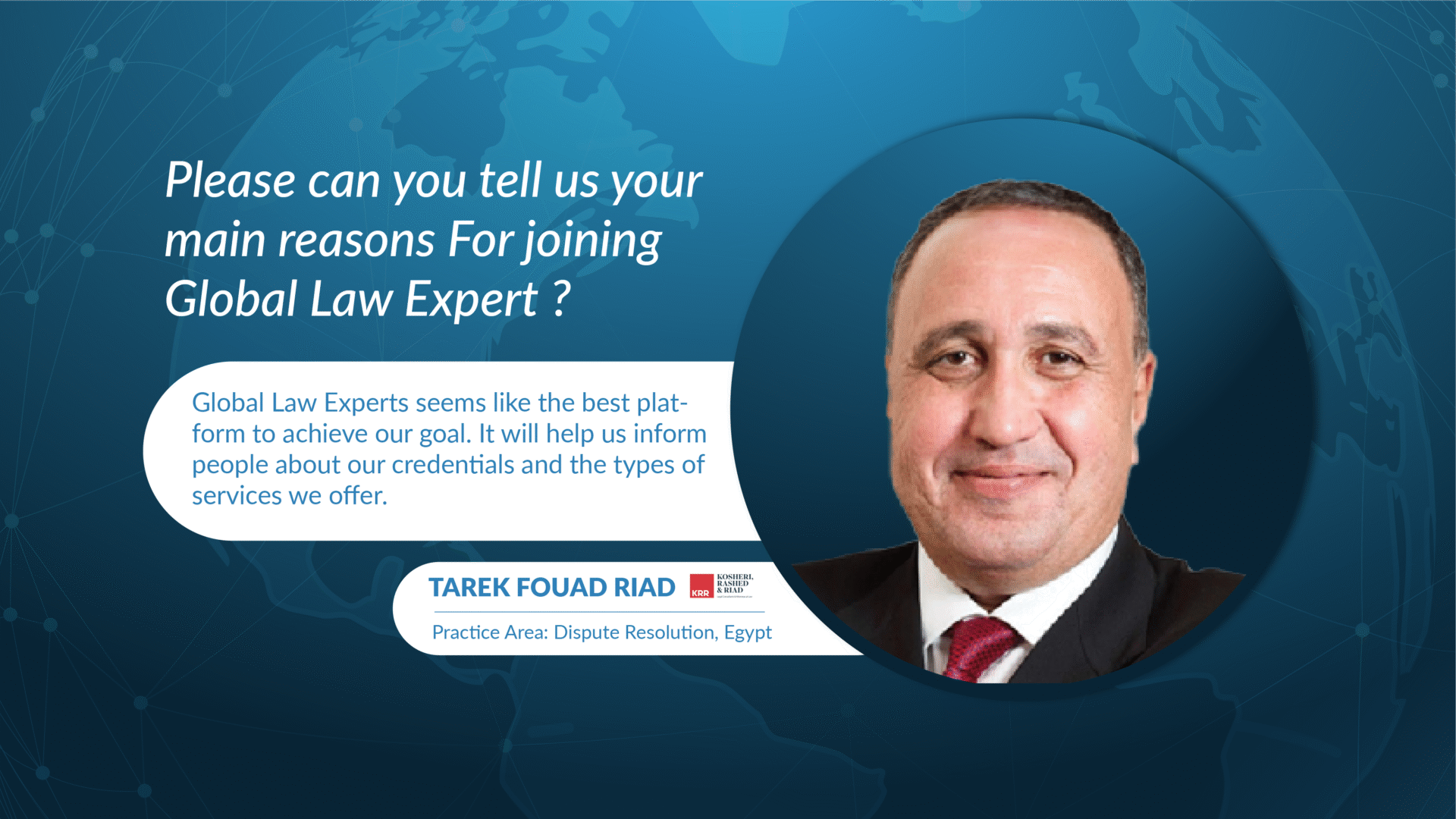
Testimonial-by-Tarek-Fouad-Riad.png
Testimonial-by-Zia-J.-Mody.png
Testimonial-by-Virginie-Tassin-Campanella.png
Testimonial-by-Marta-Dunphy-Moriel.png
Testimonial-by-Mario-Alberto-Arias-V.png
Testimonial-by-Lewis-Man.png
Testimonial-by-Kerwin-K.-Tan.png
Testimonial-by-Elena-Sadovskaya.png
Testimonial-by-Charalambos-Papasavvas.png

Investment Migration FAQ's

The distinction lies in the immediate legal status granted. Citizenship by Investment (CBI) programs, common in the Caribbean (e.g., St. Kitts) and Turkey, grant you a passport and full nationality almost immediately, often without requiring you to ever visit the country. Residency by Investment (RBI), often called a “Golden Visa” (e.g., Portugal, Greece), grants you the legal right to live in the country (residency), but not a passport. To convert an RBI into citizenship, you typically must live in the country for a set number of years (often 5–10) and pass language exams.


The timeline is heavily dependent on the specific country’s bureaucracy and the complexity of your “Source of Funds” documentation. Generally, the process takes between 3 to 12 months from the initial investment to the issuance of the visa. However, popular programs often suffer from backlogs; for instance, US EB-5 visas can take years due to annual country caps, while Caribbean CBI programs might offer “accelerated processing” options to approve files in as little as 45–60 days for an extra fee.

Yes, this is arguably the most critical role the lawyer plays. Migration authorities enforce strict Anti-Money Laundering (AML) standards and will reject any application where the money’s origin is vague. A lawyer constructs a “forensic trail” of your wealth—collecting decades of bank statements, property sale deeds, or dividend resolutions—to prove legally and conclusively that the funds used for the investment were earned through legitimate means, preventing your file from being flagged as high-risk.

Absolutely, because a visa solution should not create a tax problem. A lawyer analyzes your “pre-immigration” tax exposure to determine if becoming a resident of a new country will accidentally subject your worldwide income to tax there. They compare jurisdictions to find “territorial” tax systems (where foreign income is tax-free) or “non-dom” regimes, ensuring that your move offers lifestyle benefits without decimating your wealth through double taxation.

A rejection is serious because countries share data; a denial from one EU country often leads to automatic denials from others. A lawyer can intervene if the rejection is based on a “false positive” (e.g., mistaken identity) or a minor misunderstanding by filing an administrative appeal or a “Request for Review.” However, if the rejection is due to a genuine, serious criminal record or being on a sanctions list, legal avenues are usually limited, as immigration is a sovereign privilege, not a right.

No, simply owning a house does not automatically grant immigration rights. Most countries require the investment to meet a specific minimum value threshold (e.g., €500,000) and that the property be purchased in designated “regeneration areas” or low-density regions. Furthermore, the purchase must often be cash-only (no mortgage on the qualifying amount). A lawyer ensures the property deed explicitly mentions the investment visa purpose and meets all government criteria to qualify for the application.

Some nations, such as India, China, and Singapore, strictly forbid dual citizenship. If you acquire a second passport, you may legally lose your original one immediately. A lawyer advises on structuring your status—perhaps opting for permanent residency (RBI) instead of citizenship (CBI)—to retain your original passport. Alternatively, they can guide you through the formal renunciation process if you intend to give up your previous nationality to avoid legal penalties or “limbo” status.

Yes, most programs are designed for families, but the definition of “dependent” varies legally. While spouses and minor children are almost always included, adult children (often up to age 25 or 30) and elderly parents can usually only be included if you can prove they are financially dependent on you. A lawyer gathers affidavits and financial records to prove this dependency to the immigration authorities, preventing your adult children from being split from the family application.

Investment Migration FAQ's

The distinction lies in the immediate legal status granted. Citizenship by Investment (CBI) programs, common in the Caribbean (e.g., St. Kitts) and Turkey, grant you a passport and full nationality almost immediately, often without requiring you to ever visit the country. Residency by Investment (RBI), often called a "Golden Visa" (e.g., Portugal, Greece), grants you the legal right to live in the country (residency), but not a passport. To convert an RBI into citizenship, you typically must live in the country for a set number of years (often 5–10) and pass language exams.

The timeline is heavily dependent on the specific country's bureaucracy and the complexity of your "Source of Funds" documentation. Generally, the process takes between 3 to 12 months from the initial investment to the issuance of the visa. However, popular programs often suffer from backlogs; for instance, US EB-5 visas can take years due to annual country caps, while Caribbean CBI programs might offer "accelerated processing" options to approve files in as little as 45–60 days for an extra fee.

Yes, this is arguably the most critical role the lawyer plays. Migration authorities enforce strict Anti-Money Laundering (AML) standards and will reject any application where the money's origin is vague. A lawyer constructs a "forensic trail" of your wealth—collecting decades of bank statements, property sale deeds, or dividend resolutions—to prove legally and conclusively that the funds used for the investment were earned through legitimate means, preventing your file from being flagged as high-risk.

Absolutely, because a visa solution should not create a tax problem. A lawyer analyzes your "pre-immigration" tax exposure to determine if becoming a resident of a new country will accidentally subject your worldwide income to tax there. They compare jurisdictions to find "territorial" tax systems (where foreign income is tax-free) or "non-dom" regimes, ensuring that your move offers lifestyle benefits without decimating your wealth through double taxation.

A rejection is serious because countries share data; a denial from one EU country often leads to automatic denials from others. A lawyer can intervene if the rejection is based on a "false positive" (e.g., mistaken identity) or a minor misunderstanding by filing an administrative appeal or a "Request for Review." However, if the rejection is due to a genuine, serious criminal record or being on a sanctions list, legal avenues are usually limited, as immigration is a sovereign privilege, not a right.

No, simply owning a house does not automatically grant immigration rights. Most countries require the investment to meet a specific minimum value threshold (e.g., €500,000) and that the property be purchased in designated "regeneration areas" or low-density regions. Furthermore, the purchase must often be cash-only (no mortgage on the qualifying amount). A lawyer ensures the property deed explicitly mentions the investment visa purpose and meets all government criteria to qualify for the application.

Some nations, such as India, China, and Singapore, strictly forbid dual citizenship. If you acquire a second passport, you may legally lose your original one immediately. A lawyer advises on structuring your status—perhaps opting for permanent residency (RBI) instead of citizenship (CBI)—to retain your original passport. Alternatively, they can guide you through the formal renunciation process if you intend to give up your previous nationality to avoid legal penalties or "limbo" status.

Yes, most programs are designed for families, but the definition of "dependent" varies legally. While spouses and minor children are almost always included, adult children (often up to age 25 or 30) and elderly parents can usually only be included if you can prove they are financially dependent on you. A lawyer gathers affidavits and financial records to prove this dependency to the immigration authorities, preventing your adult children from being split from the family application.

Join
who are already getting the benefits
0
Sign up for the latest legal briefings and news within Global Law Experts’ community, as well as a whole host of features, editorial and conference updates direct to your email inbox. Naturally you can unsubscribe at any time.
Newsletter Sign Up
About Us

Global Law Experts is dedicated to providing exceptional legal services to clients around the world. With a vast network of highly skilled and experienced lawyers, we are committed to delivering innovative and tailored solutions to meet the diverse needs of our clients in various jurisdictions.

Global Law Experts App

Now Available on the App & Google Play Stores.

Social Posts
[wp_social_ninja id="50714" platform="instagram"]

See More:

Contact Us

Stay Informed

Join Mailing List
About Us

Global Law Experts is dedicated to providing exceptional legal services to clients around the world. With a vast network of highly skilled and experienced lawyers, we are committed to delivering innovative and tailored solutions to meet the diverse needs of our clients in various jurisdictions.

Social Posts
[wp_social_ninja id="50714" platform="instagram"]

See More:

Global Law Experts App

Now Available on the App & Google Play Stores.

Contact Us

Stay Informed

Join Mailing List

GLE

Lawyer Profile Page - Lead Capture
GLE-Logo-White
Lawyer Profile Page - Lead Capture

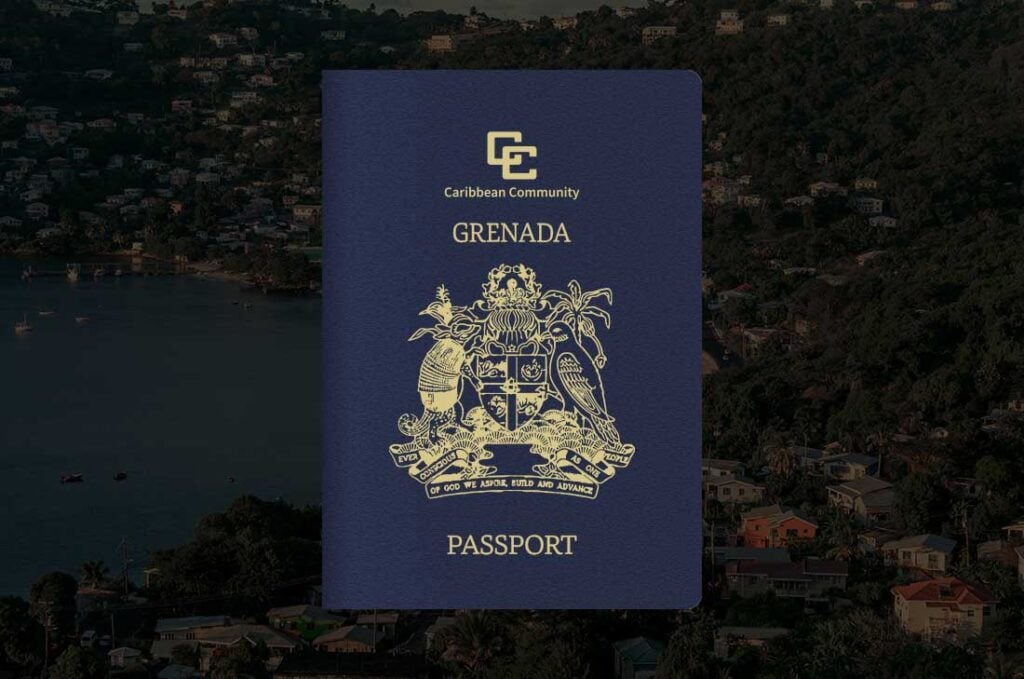
How To Get a Grenada Passport in 2026

Send welcome message

Custom Message