[codicts-css-switcher id=”346″]

Global Law Experts Logo

Contract Disputes Lawyers Worldwide.

Global Law Experts

Meet Our Contract Disputes Lawyers

Discover independent Contract Disputes lawyers recognized by Global Law Experts. Explore top legal experts for your needs.

Legal
Country
Contract Disputes
Legal
Country
Contract Disputes
2 results

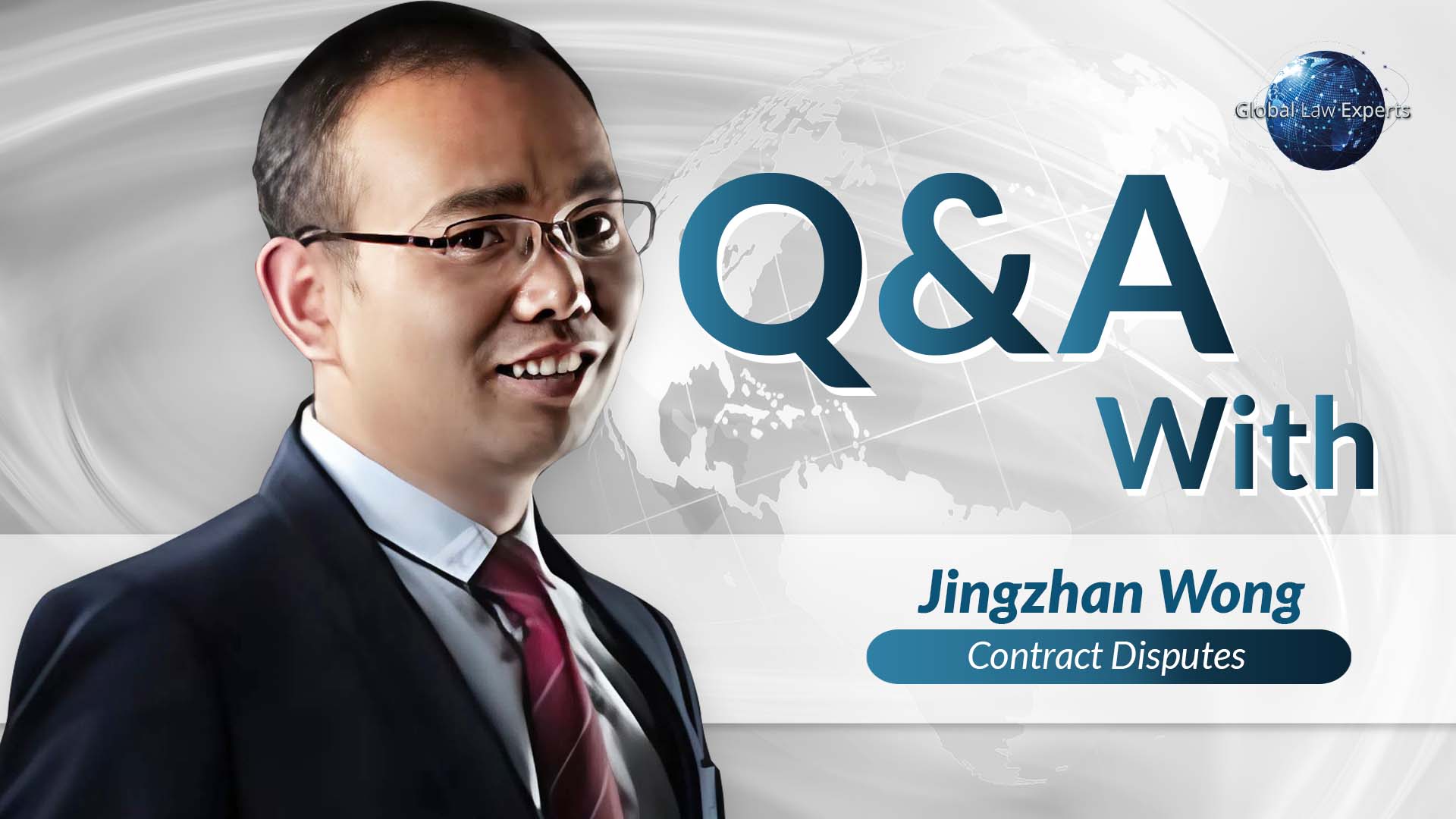
Jingzhan Wong

  • GOLD

Email:

Phone:

(86) 1*****
Attorney in a suit standing confidently against a dark background, smiling with hands positioned at waist.
Law firm logo featuring the name "Tian Jin Bo Zhuan Law Firm" in Chinese characters.
Attorney in a suit standing confidently against a dark background, smiling with hands positioned at waist.

Jingzhan Wong

  • GOLD

Jingzhan Wong

  • GOLD
Contract Disputes Law in China
  • Tianjin Bozhuan Law Firm
  • GOLD

Mayur Shetty

  • GOLD

Email:

Phone:

+91226*****

Mayur Shetty

  • GOLD
Contract Disputes Law in India
  • Kochhar & Co
  • GOLD

Contract Disputes News

Find Expert Contract Disputes Lawyers Through Global Law Experts

Resolve Contract Disputes with The Best Legal Counsel

Contract disputes can disrupt operations, delay projects, and strain business relationships. Whether you’re facing breaches of contract, interpretation issues, or enforcement challenges, having experienced legal guidance is essential to protect your rights and achieve fair outcomes.

Global Law Experts connects you with seasoned contract disputes lawyers who provide strategic, tailored counsel at every stage of the dispute process. Our vetted specialists assist with case evaluation, negotiation, mediation, arbitration, and litigation—helping you pursue effective resolutions while minimizing risk and preserving business value.

Contract Disputes Related Videos

Professional Contract Disputes Help You Can Trust

We will help match you with a qualified Contract Disputes law specialist who can offer reliable advice, clarify your options, and guide you through the next steps in the legal process.
Main Lead Capture Form - Home

Every GLE member is independently vetted by practice area and jurisdiction.

Client Success Stories

Testimonial-by-Jonathan-Gilmour.png
Testimonial-by-Tarek-Fouad-Riad.png
Testimonial-by-Zia-J.-Mody.png
Testimonial-by-Virginie-Tassin-Campanella.png
Testimonial-by-Marta-Dunphy-Moriel.png
Testimonial-by-Mario-Alberto-Arias-V.png
Testimonial-by-Lewis-Man.png
Testimonial-by-Kerwin-K.-Tan.png
Testimonial-by-Elena-Sadovskaya.png
Testimonial-by-Charalambos-Papasavvas.png

Contract Disputes FAQ's

A material breach is a failure so severe that it defeats the entire purpose of the agreement, effectively rendering the contract useless. Unlike a minor breach—like a painter using a slightly different shade of white than you asked for—a material breach strikes at the “heart of the contract,” such as the painter never showing up at all. If the breach is material, the non-breaching party is legally excused from paying and can immediately sue for damages, whereas a minor breach usually only allows you to deduct the cost of the mistake from the final bill.

The most common remedy is Compensatory Damages, which is cash designed to put you in the financial position you would have been in if the deal had been honored. In rarer cases, you might seek Rescission (canceling the contract entirely and getting your money back) or Specific Performance, where the court forces the other person to actually do what they promised. Punitive damages (money meant to punish the other side) are almost never awarded in contract cases unless there was also fraud involved.

Generally, no. Courts in both the US and UK view contracts as purely economic instruments, so you cannot recover money for stress, anxiety, or hurt feelings just because a business deal went sour. The only major exception is for contracts specifically aimed at providing enjoyment or peace of mind, such as a ruined wedding package or a botched luxury holiday; in those rare “loss of enjoyment” cases, UK courts have awarded modest sums, but for standard business disputes, emotional damages are off the table.

Lawyers use the “Expectation Measure” to calculate damages, asking exactly how much money is needed to bridge the gap between what was promised and what was delivered. They add up your Direct Damages (the immediate loss) and Consequential Damages (foreseeable ripple effects, like lost profits), but they will deduct any amount you could have saved by “mitigating” your losses. For example, if a supplier failed to deliver goods, your damages are the extra cost you paid to buy them from someone else, not the total value of the original contract.

Specific performance is a court order forcing the breaching party to follow through on their promise rather than just paying a fine. Lawyers can only successfully ask for this when money is not enough to fix the problem, which usually happens with unique assets like a rare piece of art or a specific plot of land. Courts will almost never order specific performance for service contracts—like forcing a singer to perform a concert—because forcing someone to work against their will raises serious personal liberty issues.

A force majeure clause acts as an emergency escape hatch that excuses you from performing your duties if an unforeseeable “Act of God” makes it impossible. This covers massive events like war, earthquakes, or extreme weather, but it rarely covers simple economic hardship; just because materials got more expensive doesn’t mean you can use this clause to cancel the deal. Since the COVID-19 pandemic, lawyers now draft these clauses much more carefully to explicitly include or exclude “pandemics” and “government shutdowns” to avoid ambiguity.

Yes, and it is statistically your best option. Mediation is a private negotiation led by a neutral referee, and data shows it is incredibly effective; in the UK, the Centre for Effective Dispute Resolution (CEDR) reports a 70-80% settlement rate for cases that go to mediation. In the US, similar studies show that about 80% of commercial disputes are resolved this way, saving both sides the massive expense and public embarrassment of a years-long trial.

You have a strict deadline to sue, and if you miss it by even one day, your case is dead. In the United Kingdom, the standard limit is 6 years from the date of the breach (or 12 years if the contract was signed as a deed). In the United States, it varies significantly by state; for example, you typically have 4 years in California but 6 years in New York for written contracts, while verbal contracts often have shorter windows.

Contract Disputes FAQ's

A material breach is a failure so severe that it defeats the entire purpose of the agreement, effectively rendering the contract useless. Unlike a minor breach—like a painter using a slightly different shade of white than you asked for—a material breach strikes at the "heart of the contract," such as the painter never showing up at all. If the breach is material, the non-breaching party is legally excused from paying and can immediately sue for damages, whereas a minor breach usually only allows you to deduct the cost of the mistake from the final bill.

The most common remedy is Compensatory Damages, which is cash designed to put you in the financial position you would have been in if the deal had been honored. In rarer cases, you might seek Rescission (canceling the contract entirely and getting your money back) or Specific Performance, where the court forces the other person to actually do what they promised. Punitive damages (money meant to punish the other side) are almost never awarded in contract cases unless there was also fraud involved.

Generally, no. Courts in both the US and UK view contracts as purely economic instruments, so you cannot recover money for stress, anxiety, or hurt feelings just because a business deal went sour. The only major exception is for contracts specifically aimed at providing enjoyment or peace of mind, such as a ruined wedding package or a botched luxury holiday; in those rare "loss of enjoyment" cases, UK courts have awarded modest sums, but for standard business disputes, emotional damages are off the table.

Lawyers use the "Expectation Measure" to calculate damages, asking exactly how much money is needed to bridge the gap between what was promised and what was delivered. They add up your Direct Damages (the immediate loss) and Consequential Damages (foreseeable ripple effects, like lost profits), but they will deduct any amount you could have saved by "mitigating" your losses. For example, if a supplier failed to deliver goods, your damages are the extra cost you paid to buy them from someone else, not the total value of the original contract.

Specific performance is a court order forcing the breaching party to follow through on their promise rather than just paying a fine. Lawyers can only successfully ask for this when money is not enough to fix the problem, which usually happens with unique assets like a rare piece of art or a specific plot of land. Courts will almost never order specific performance for service contracts—like forcing a singer to perform a concert—because forcing someone to work against their will raises serious personal liberty issues.

A force majeure clause acts as an emergency escape hatch that excuses you from performing your duties if an unforeseeable "Act of God" makes it impossible. This covers massive events like war, earthquakes, or extreme weather, but it rarely covers simple economic hardship; just because materials got more expensive doesn't mean you can use this clause to cancel the deal. Since the COVID-19 pandemic, lawyers now draft these clauses much more carefully to explicitly include or exclude "pandemics" and "government shutdowns" to avoid ambiguity.
Yes, and it is statistically your best option. Mediation is a private negotiation led by a neutral referee, and data shows it is incredibly effective; in the UK, the Centre for Effective Dispute Resolution (CEDR) reports a 70-80% settlement rate for cases that go to mediation. In the US, similar studies show that about 80% of commercial disputes are resolved this way, saving both sides the massive expense and public embarrassment of a years-long trial.

You have a strict deadline to sue, and if you miss it by even one day, your case is dead. In the United Kingdom, the standard limit is 6 years from the date of the breach (or 12 years if the contract was signed as a deed). In the United States, it varies significantly by state; for example, you typically have 4 years in California but 6 years in New York for written contracts, while verbal contracts often have shorter windows.

Join
who are already getting the benefits
0
Sign up for the latest legal briefings and news within Global Law Experts’ community, as well as a whole host of features, editorial and conference updates direct to your email inbox. Naturally you can unsubscribe at any time.
Newsletter Sign Up
About Us

Global Law Experts is dedicated to providing exceptional legal services to clients around the world. With a vast network of highly skilled and experienced lawyers, we are committed to delivering innovative and tailored solutions to meet the diverse needs of our clients in various jurisdictions.

Global Law Experts App

Now Available on the App & Google Play Stores.

Social Posts
[wp_social_ninja id="50714" platform="instagram"]

See More:

Contact Us

Stay Informed

Join Mailing List
About Us

Global Law Experts is dedicated to providing exceptional legal services to clients around the world. With a vast network of highly skilled and experienced lawyers, we are committed to delivering innovative and tailored solutions to meet the diverse needs of our clients in various jurisdictions.

Social Posts
[wp_social_ninja id="50714" platform="instagram"]

See More:

Global Law Experts App

Now Available on the App & Google Play Stores.

Contact Us

Stay Informed

Join Mailing List

GLE

Lawyer Profile Page - Lead Capture
GLE-Logo-White
Lawyer Profile Page - Lead Capture

Mayur Shetty

Send welcome message

Custom Message