
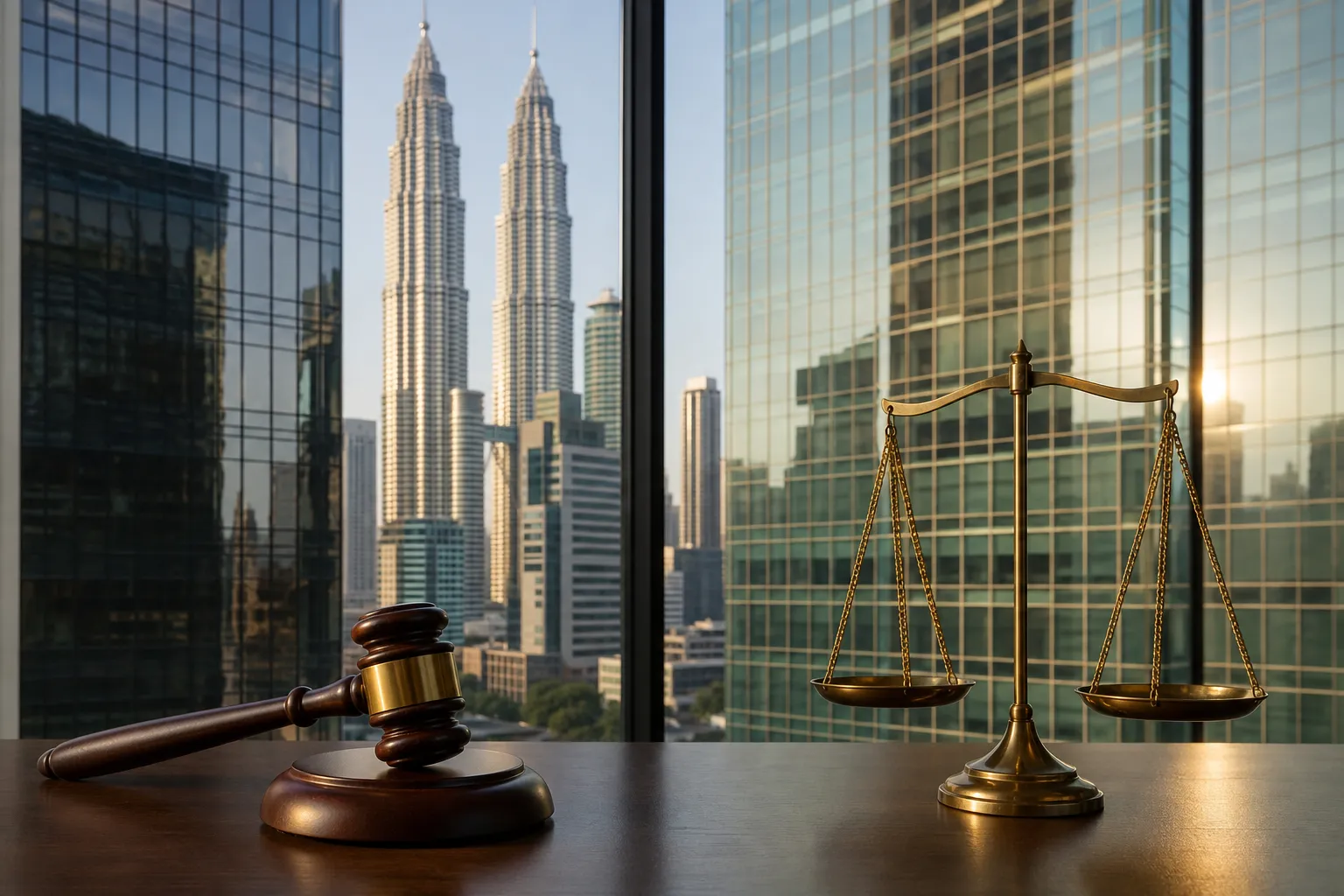
Our Expert in Malaysia
No results available
IP litigation lawyers Malaysia are now among the most carefully vetted appointments a general counsel or business owner will make in 2026, because the stakes in patent, trademark and copyright disputes have risen sharply alongside cross-border enforcement and injunction practice. A wrong hire costs more than fees; it can lose an injunction window, weaken claim construction, or expose the business to adverse costs. This guide is a neutral, practitioner-led decision brief that tells you exactly how to select counsel, comparing counsel types, benchmarking 2026 fee expectations, listing red flags, and giving you an interview and procurement checklist you can use immediately. It is grounded in Malaysian primary law and court practice, and it takes a clear position rather than hedging.
This is a decision guide, not a directory. “High-stakes” here means a dispute with material exposure: significant damages, an injunction that could shut down a product line, or cross-border implications that require parallel proceedings. When those factors are present, the choice of IP litigation lawyers Malaysia becomes a board-level risk decision, not an administrative one.
This guide is written for general counsel, in-house legal teams, and business owners who must appoint external counsel for a serious IP dispute. It assumes you understand your commercial objectives but need a structured, neutral process to convert those objectives into the right litigation team.
Intellectual property litigation in Malaysia carries procedural and evidential features that ordinary commercial litigation does not. Disputes frequently turn on technical claim construction, expert evidence, and the speed of interim relief. A commercial litigator who rarely handles technology or brand disputes may be perfectly competent in contract work yet unprepared for the demands of a patent validity attack or a survey-evidence trademark trial.
Two features stand out. First, IP disputes often begin with an urgent application for injunctive relief, where success depends on the strength of the evidence assembled in days rather than months. Second, IP claimants can choose between court proceedings and administrative remedies. The Intellectual Property Corporation of Malaysia (MyIPO) administers registration and related procedures, and enforcement against infringing imports can involve the Royal Malaysian Customs Department under statutory border-measure provisions. Malaysia also operates specialised Intellectual Property Courts within the High Court structure for IP matters. The best IP litigation lawyers Malaysia will map both the court and administrative routes before recommending a strategy.
The three principal IP rights demand different skills, and this is where specialist selection matters most:
An IP injunction in Malaysia, whether restraining infringement or preserving evidence, is available through the courts, and the ability to run an urgent ex parte or inter partes application is a core competence you should test directly when you interview candidates.
Before you shortlist a single firm, triage the matter. The right counsel type flows directly from the outcome you actually need. Most high-stakes IP disputes fall into one of four categories:
Answer three decision questions honestly: What is the single most important outcome (stop, recover, or deter)? How quickly must you act? Does the dispute stay within Malaysia or spill across borders? Your answers point directly at the counsel type recommended in the comparison below.
Assemble an evidence pack before your first meeting. Counsel can only assess merits, and quote sensibly, if they can see the material. A strong pack accelerates the injunction timeline and sharpens fee proposals. Prepare:
If the harm is ongoing and irreparable, you may need an interim injunction, and possibly an order to preserve evidence analogous to an Anton Piller order. These applications reward preparation and courtroom experience. Ask candidates how quickly they can be before a judge, and what evidence they would need from you to succeed. Counsel who cannot answer crisply are not ready for urgent IP work.
This is the centrepiece of the decision. The table below compares the four realistic options for a high-stakes IP matter across the dimensions that actually determine outcomes. Read it against your triage result.
| Dimension / Counsel type | Boutique specialist IP firm | Large full‑service firm (national) | Solo senior IP litigator / named counsel | International firm + local Malaysia counsel |
|---|---|---|---|---|
| Typical strengths | Deep IP technical expertise; specialist patent/trademark teams; strong claim construction experience | Broad litigation resources; multi-jurisdictional reach; project management; wider bench for long trials | High personal experience and courtroom gravitas; cost-efficient for short, strategic matters | Best for cross-border enforcement and complex multi-jurisdictional matters |
| Best for | Complex patent prosecution-litigation, specialist technical evidence | Multi-issue disputes, large discovery, corporate and regulatory overlap | Urgent applications, high-stakes hearings where the name matters | Cross-border injunctions, parallel suits, multi-territory strategy |
| Cost profile (2026 typical) | Mid-high; flexible alternative fee arrangements possible | High; premium hourly rates plus large team billing | High hourly for senior time, lower support costs | Very high (international rates plus local counsel fees) |
| Access to technical experts | High (on retainer or network) | Good; can fund long expert programmes | Depends on the senior’s network | Excellent, can coordinate international expert teams |
| Speed / responsiveness | High for focused teams | Good but may be slower on partner availability | Very fast for single-counsel actions | Coordination overhead may slow immediate response |
| Conflicts & availability risk | Lower if small and niche | Higher potential conflicts with corporate clients | Low (if independent) | Higher, needs careful conflict checks |
| Enforceability of judgments | Strong domestically; depends on local strategy | Strong; can coordinate enforcement | Strong domestically; may need support for enforcement | Strong across jurisdictions (with local counsel) |
| Red flags to watch | Small firms with limited trial record | Firms that over-delegate to juniors without partner oversight | Counsel lacking team or technical backup | Poor coordination between international and local teams |
| Recommended when | You need IP depth and technique | You require multi-disciplinary resources and scale | You need a named senior advocate for hearings | You need parallel multi-jurisdictional enforcement |
Our position is unambiguous: for a technically complex, single-jurisdiction patent or trademark dispute, a boutique specialist or a specialist team within a full-service firm will almost always outperform a generalist. Reserve the international model for genuinely cross-border enforcement.
Cost predictability is a legitimate procurement objective, and you should demand it. The figures below are indicative 2026 market signals drawn from published rankings and market commentary, they are not quotations, and actual rates vary by seniority, complexity and firm. Always obtain a written fee proposal. This is general information, not legal advice; consult counsel for a quotation on your matter.
As an indicative guide only for litigation costs in IP matters in Malaysia, and subject to current market rates:
Treat any published rate ranges as market signals for budgeting, not fixed prices, always confirm current rates in writing with the firm. The most important budgeting question is not the headline rate but how many hours, at which seniority, the matter will consume, and whether partner time is genuinely being applied to strategy rather than to work juniors could do.
Do not accept an open-ended hourly engagement for a high-stakes matter without exploring alternatives. Effective models include:
Procurement tip: ask every shortlisted firm for a phase-by-phase budget with assumptions stated. The quality and candour of that budget is itself a test of the firm. Vague fee answers are a red flag, addressed below.
Once you have a shortlist, run structured due diligence before you instruct. The process is straightforward: validate qualifications, confirm a genuine IP courtroom record (including patent claim construction outcomes where relevant), verify professional indemnity insurance, match technical expertise to your technology or brand, run conflicts checks against your adversaries and their group, confirm billing transparency, and secure a commitment on partner availability. Skipping any of these steps is how businesses end up with the wrong IP litigation lawyers Malaysia has to offer.
Drop or downgrade any candidate exhibiting these warning signs:
If you spot one or two of these, probe them directly and demand a written response. If you spot several, walk away, the risk of a poor outcome outweighs any perceived saving.
Do not take a pitch at face value. Verify credentials against primary sources. Search reported judgments and Malaysian case-law databases to confirm claimed wins actually exist and were as decisive as described. Cross-check professional standing and any disciplinary matters with reference to the Malaysian Bar. Ask for two or three client references for comparable IP matters and call them. Request litigation CVs listing specific patent, trademark and copyright cases, with citations you can independently confirm.
Use a structured interview for every shortlisted firm. The following grouped questions give in-house teams a repeatable script, ask the same core questions of each candidate so you can compare answers directly.
Strategy
Technical
Team
Costs
Logistics
Run a compact but disciplined process. Issue a short RFP with your evidence pack summary and required scope. Give firms five to seven working days to respond with a fee proposal and team sheet. Hold interviews within a week of receiving proposals. Complete conflicts and reference checks in parallel. Aim to instruct within two to three weeks, faster if an injunction deadline compresses the timeline. Confirm the engagement in writing before any substantive work begins.
The engagement letter is your primary control document. Insist that it defines scope, the agreed fee model, the named staffing, the escalation path, confidentiality and privilege protections, and termination and knowledge-transfer terms. Do not sign a generic retainer for a high-stakes matter. Build in performance expectations so that under-performance is visible early and correctable.
Two anonymised vignettes illustrate how counsel selection drives outcomes. In a patent injunction matter, a manufacturer faced an imported product it believed infringed a granted patent. Because the dispute turned on detailed claim construction and required a credible technical expert at short notice, a specialist team with an existing expert network was the correct choice, and the ability to move quickly on interim relief under the framework of the Patents Act 1983 was decisive. A generalist would have lost the injunction window.
In a trademark cross-border enforcement matter, a brand owner confronted parallel infringement across territories. Here the right structure was a coordinated team pairing local Malaysian counsel, anchoring the domestic action and border measures under the Trademarks Act 2019 and MyIPO/customs processes, with international counsel managing parallel foreign proceedings. The lesson in both cases is the same: match the counsel type to the dispute, and verify the trial record and expert access before instructing. This matching discipline is likely to remain a defining feature of effective IP enforcement in Malaysia through 2026 and beyond. You can validate reported outcomes yourself through published Malaysian case-law sources before relying on any claimed precedent.
Choosing IP litigation lawyers Malaysia for a high-stakes patent, trademark or copyright dispute is a structured decision, not a leap of faith. Take a clear position, follow the process, and you will consistently appoint the right team. Your immediate next steps are simple: run the four-way triage on your dispute, shortlist the two or three counsel types the decision framework points to, assemble your evidence pack, and schedule structured interviews using the checklist above. Ask each firm for a fixed-fee proposal for the initial injunction or pleadings stage, run conflicts and red-flag checks in parallel, and instruct in writing before work begins.
For broader context, see the general guide on How to choose a litigation lawyer, Malaysia (general) and the practitioner profile Prem Shobana, Leading litigation expertise in Malaysia. Related cluster guidance on enforcing IP rights in Malaysia and on IP litigation costs and funding will help you complete your procurement. This is general information, not legal advice; consult counsel on your specific matter.
This article was produced by Global Law Experts. For specialist advice on this topic, contact Prem Shobana Gana Das at K.Siladass & Partners, a member of the Global Law Experts network.

posted 7 minutes ago
posted 26 minutes ago

posted 43 minutes ago

posted 54 minutes ago
posted 60 minutes ago

posted 1 hour ago

posted 2 hours ago

posted 2 hours ago

posted 2 hours ago

posted 3 hours ago
posted 3 hours ago

posted 3 hours ago
No results available
Find the right Legal Expert for your business

Send welcome message