
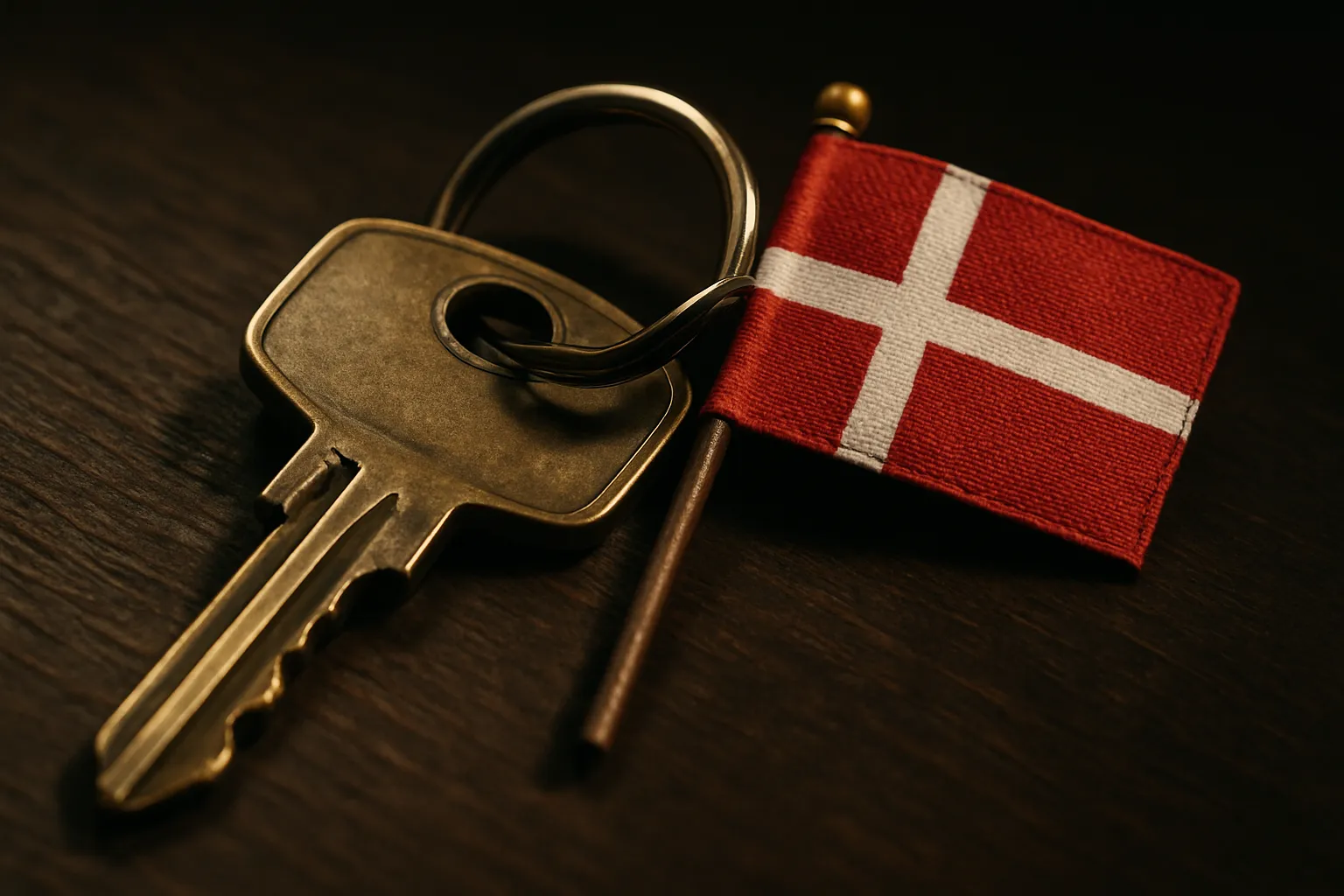

IP licensing Denmark transactions have entered a more demanding phase in 2026, shaped by the fee schedule of the Danish Patent and Trademark Office (DKPTO), sharper competition-authority scrutiny of cross-border technology transfers, and new questions about how AI models and training data should be handled in commercial agreements. This guide is written for businesses, in-house counsel, technology-transfer offices and IP managers who need to negotiate, document, record and monitor Danish licences covering patents, trademarks, designs, copyright, know-how and software. It sets out an ordered, procedural route through each stage, from pre-licence audit to enforcement, with the documents, timelines, fees and compliance checks you will actually encounter.
Every substantive legal point is tied to a Danish or EU authority so you can verify it before you sign. Treat this as a practitioner’s roadmap, not a substitute for tailored legal advice on your specific facts.
Licensing intellectual property in Denmark is primarily a matter of contract, supported by a registration system administered by the DKPTO for registered rights. There is no single “licensing statute”; instead, the rules sit across the Patents Act (Patentloven), the Trademarks Act (Varemærkeloven), the Designs Act (Designloven), the Copyright Act (Ophavsretsloven), the Trade Secrets Act (Lov om forretningshemmeligheder), competition law, and tax law. A well-run IP licensing Denmark process moves through six broad phases, and the checklist below frames the rest of this guide.
The sections that follow expand each phase with tables for documents, timelines and costs, plus a competition-compliance checklist and a 2026 changes summary.
Almost any proprietary right can be licensed, but the mechanics differ by right type. Patents, trademarks and registered designs are recorded on public registers maintained by the DKPTO; copyright and unregistered know-how are protected without registration and rely entirely on contract. The main categories are:
Only the owner of the right, or a licensee with express sublicensing authority, can grant a valid licence. Complications arise with co-owned patents, joint ventures and employee inventions. Where an invention was created by an employee, the employer’s rights and any statutory compensation should be confirmed before the IP is licensed onward; keep the employee’s assignment or waiver on file. For co-owned rights, check whether each co-owner may license independently or whether unanimity is required under the co-ownership arrangement, and reflect the answer in the recitals.
Danish rights are territorial. A DKPTO-registered right protects Denmark; EU-wide protection (EU trade marks, Registered Community Designs, and the unitary patent) is governed by separate instruments administered by the EUIPO and the European Patent Office. Draft the grant with explicit territory, field of use, and permitted channels so the licensee understands precisely what is authorised, and so any downstream restriction can be tested against competition law.
| IP type | Need to record (DKPTO) | Typical royalty base | Common licence issues |
|---|---|---|---|
| Patent | No legal requirement to record, but recording with the DKPTO is possible and recommended for public notice and priority against later dealings | Per unit, lump sum, or running percentage | Field-of-use limits, sublicensing, ownership of improvements |
| Trademark | Recording available and recommended; affects position against certain third parties | Percentage of sales or fixed fee | Quality control, territorial limits, brand-integrity obligations |
| Software / know-how | No registry; protection rests on contract | Subscription, per-user, or lump sum | Confidentiality, source-code escrow, updates and AI-model rights |
The following ordered steps form the core how-to for any IP licensing Denmark project. Each step contains actionable tasks; adapt them to the right type and transaction value.
Before you offer anything, confirm you can grant it. This is the single most common point of failure.
Decide the commercial architecture before drafting. Key parameters:
Settle the commercial core: royalty base and rate, minimum payments, up-front fees, milestones, audit rights, warranties, indemnities and liability caps. For a patent licence Denmark deal, negotiate treatment of improvements and prosecution/maintenance responsibility. For a trademark licence Denmark deal, negotiate quality-control standards and inspection rights that keep the mark valid. Sample negotiation prompts: “Who bears the cost of maintaining the registered right?” and “Do improvements flow back to the licensor, the licensee, or are they jointly held?”
Convert agreed terms into a licence agreement Denmark counterparties can execute and enforce. Ensure the grant clause matches the register entry exactly, incorporate technical annexes for know-how, and attach confidentiality schedules. Align governing law and dispute-resolution clauses with where enforcement will realistically occur.
For registered rights, you may file the licence particulars with the DKPTO to secure public notice and protect the licensee against later inconsistent dealings. Prepare the executed agreement (or an extract), proof of title, and a power of attorney if an agent files. This step is examined in detail below.
Trigger payment mechanics, transfer know-how and technical materials, set up royalty reporting, and diarise audit windows. Where personal data forms part of the transfer, confirm the data-protection basis with reference to Datatilsynet guidance.
Build in clear renewal triggers, termination rights for breach and insolvency, post-termination run-off, and rules on assignment and change of control. Specify what happens to sublicences, confidential information and escrowed source code on termination.
In practice you follow the seven steps above: confirm ownership on the DKPTO register, agree the scope and royalties, execute a written licence agreement, and, where useful, record the licence with the DKPTO for public notice. For both patents and trademarks, recording is optional but advisable. The written contract does the heavy lifting; the register entry supports the licensee’s position against later dealings.
Assemble the evidence pack early. Recording and enforcement both depend on clean documentation of title and terms. Foreign-language originals may need translation for DKPTO recording, and controlled technologies require end-use declarations.
| Document | Purpose / when required |
|---|---|
| Executed licence agreement (signed copy) | Core evidence of rights and obligations, needed for recording and enforcement |
| Assignment chain / statements of title | Proof the licensor owns the licensed IP (especially patents and trademarks) |
| Power of attorney (if filed by an agent) | Generally required by the DKPTO for third-party filings |
| Technical specification / annex (know-how) | Evidence of know-how scope and transfer requirements |
| Confidentiality agreement / NDA | Pre-contractual protection and schedule for trade secrets |
| Payment schedule / invoicing template | To implement royalty mechanics and tax reporting |
| Evidence for royalty calculations (sales reports) | For audits and transfer-pricing compliance |
| Employee invention waivers / agreements | Where employee-invented IP is being licensed |
| Translations & certified copies (if foreign originals) | For DKPTO recording where originals are not in Danish |
| Export control / end-use declarations | For controlled technology transfers (AI, biotech, dual-use) |
Plan the transaction against realistic durations. Negotiation, not drafting, is usually the long pole. DKPTO processing times vary with workload and the completeness of your filing, so submit a complete document set to avoid re-work cycles that can add several weeks. Where cross-border royalties are involved, coordinate tax filings and treaty-relief applications with the payment schedule so the first royalty is paid correctly.
| Step | Who is responsible | Typical duration |
|---|---|---|
| 1. Pre-licence IP audit & clearance | Licensor counsel + technical expert | 1–3 weeks |
| 2. Negotiation of key commercial terms | Commercial teams + in-house counsel | 2–8 weeks |
| 3. Drafting licence agreement | Licensing counsel (draft) | 1–3 weeks |
| 4. Internal approvals & sign-off | Licensor & licensee boards / executives | 1–4 weeks |
| 5. DKPTO recording (if applicable) | Filing counsel or agent | Varies with DKPTO workload and filing completeness |
| 6. Implementation (payments, tech transfer) | Finance + operations + IT | 1–8 weeks (depends on complexity) |
| 7. Monitoring & audits | Licensor audit team & counsel | Ongoing; annual audit windows |
Budget for four cost categories: official DKPTO fees, professional fees for drafting and tax structuring, translation and certification, and a contingency for enforcement. The professional-fee figures below are illustrative planning ranges only; always confirm current official fees against the DKPTO fee schedule, which the office reviews periodically.
| Cost item | Typical payer | Planning note |
|---|---|---|
| DKPTO licence recording fee | Licensor or licensee (agree in contract) | Confirm the current fee on the DKPTO fee page before filing |
| Legal drafting & negotiation | Each party | Depends on complexity and negotiation rounds |
| Translation / certification | Party supplying foreign documents | For non-Danish documents |
| Tax advisory / transfer pricing | Licensor / licensee | Cross-border royalty structuring |
| Registration of assignment (if any) | Licensor | Per current DKPTO schedule; separate from licence recording |
| Enforcement / dispute reserve | Parties (contingent) | Varies widely; consider escrow or guarantee if material |
Royalty structuring drives both the commercial value and the tax exposure of any deal, so the payment clauses deserve as much care as the grant. Start by fixing the royalty base with precision: net sales, units, subscriptions, or a lump sum, and define permitted deductions, currency, and the point at which a royalty accrues. Add minimum royalties where the licensee has exclusivity, and combine running royalties with up-front and milestone payments where development risk is shared.
Royalty income received by a Danish entity is subject to Danish corporate income tax; consult the guidance published by the Danish Tax Agency (Skattestyrelsen) for the current treatment and reporting obligations. Cross-border royalty payments may be subject to Danish withholding tax, which can be reduced or eliminated under an applicable double-tax treaty or the EU Interest and Royalties Directive regime where the conditions are met. Confirm the position for the specific counterparty jurisdiction before the first payment, because treaty relief usually depends on documentation being in place in advance.
Licence fees can carry VAT consequences depending on the parties’ status and location; check the VAT treatment as part of invoicing set-up. For payments between related parties, Danish transfer-pricing rules require arm’s-length pricing and contemporaneous documentation, keep the royalty methodology and comparables on file. Finally, build audit rights into the contract: the right to inspect sales records, a notice mechanism, a cost-shifting trigger where an audit reveals a material under-report, and a retention obligation for royalty evidence. These provisions are the practical backbone of royalty enforcement in an IP licensing Denmark arrangement.
The DKPTO maintains the public registers for patents, trademarks and designs, and it is the body through which you record licences and assignments affecting those registered rights. Recording does not create the licence, the contract does, but it produces public notice and can strengthen the licensee’s position against later inconsistent dealings by the owner.
Recording is not mandatory to make a licence valid between the parties. For both trademarks and patents, recording at the DKPTO is advisable because it creates public notice and can affect the licensee’s position against certain third parties. To record, submit the executed licence (or an extract with the key particulars), proof of the licensor’s title, and a power of attorney if an agent files on your behalf. The steps are:
Recording an assignment differs from recording a licence: an assignment transfers ownership and is recorded to update the register’s proprietor, whereas a licence records a grant of use over rights that remain with the owner. Foreign-language documents may require Danish translation for the DKPTO to process them, so factor this into your timeline.
Licensing sits squarely within competition law, and the rules apply whether the parties are Danish or cross-border. In Denmark, the Danish Competition and Consumer Authority (Konkurrence- og Forbrugerstyrelsen) enforces national competition rules, while at EU level the Technology Transfer Block Exemption Regulation (TTBER) and the European Commission’s technology-transfer guidelines provide the framework and safe harbours for licensing arrangements. Use the following compliance checklist when drafting restrictions into a technology transfer Denmark agreement:
Separately, cross-border transfers of controlled technology, particularly in AI, biotech and dual-use fields, can trigger export-control obligations under the EU Dual-Use Regulation and related rules. Include end-use and end-user declarations, and screen counterparties before releasing controlled know-how. For AI and data-driven licences, the interaction with data-protection law is critical: where personal data is transferred or used to train models, follow the GDPR and Datatilsynet guidance to establish a lawful basis and appropriate safeguards.
Three developments define the 2026 landscape for IP licensing Denmark practitioners. First, DKPTO fees are reviewed periodically, so recording and registration costs should be confirmed against the current official page rather than prior estimates. Second, competition authorities continue to focus on cross-border technology transfers, making TTBER compliance and careful drafting of territorial and grant-back clauses more important than ever. Third, AI licensing has moved to the centre of practice: parties increasingly need explicit terms on training-data rights, ownership of model outputs and improvements, liability for AI-generated results, and data-protection compliance, with the phased application of the EU AI Act adding a further compliance layer.
Industry observers expect AI-specific clauses to become standard in Danish technology licences, and the likely practical effect will be longer negotiation cycles as parties allocate novel risks.
The following clause categories should appear in most Danish licences. Treat the highlights as drafting prompts; all templates require legal review before use.
A consolidated clause pack for IP licensing Denmark deals can be prepared and reviewed by counsel before execution. Arrange a licensing health check with a specialist for a transaction-specific review.
A disciplined approach to IP licensing Denmark deals, clean title verification, precise scope, well-structured royalties, timely DKPTO recording, and rigorous competition and tax compliance, protects value and prevents the disputes that most often derail licensing revenue. The 2026 environment adds fresh pressure points: current DKPTO fees, closer scrutiny of technology transfers, and the rapid rise of AI and data licensing. Use the steps, tables and checklists in this guide as your working framework, confirm each legal point against the authorities cited below, and obtain tailored advice before signing. This article is general guidance and not a substitute for legal advice on your specific transaction.

posted 49 seconds ago

posted 14 minutes ago

posted 36 minutes ago

posted 54 minutes ago

posted 58 minutes ago

posted 1 hour ago

posted 1 hour ago

posted 1 hour ago

posted 2 hours ago

posted 2 hours ago

posted 3 hours ago

posted 4 hours ago
No results available
Find the right Legal Expert for your business

Send welcome message