
Our Expert in Israel
No results available
Last updated: 29 Aug 2026
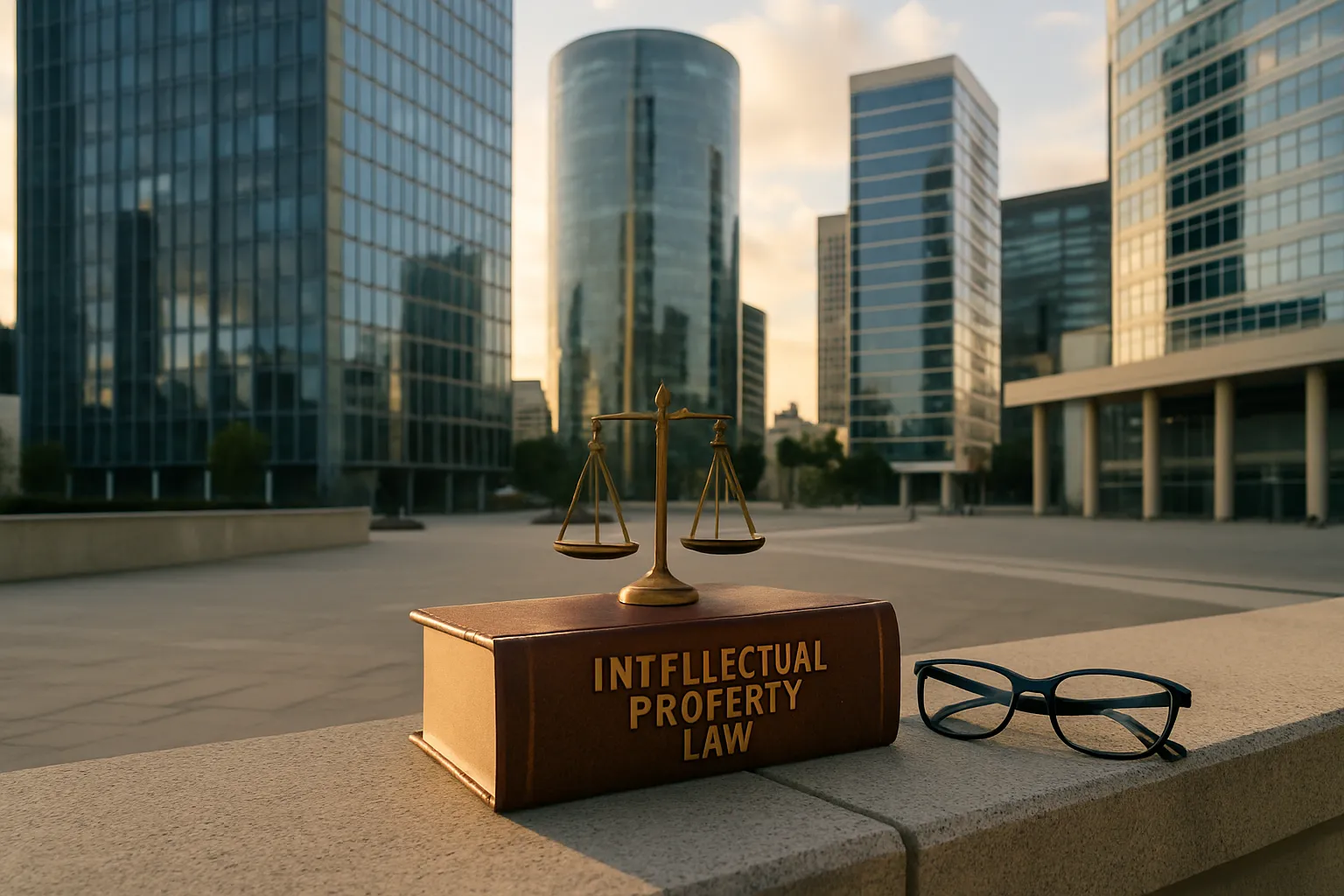
Choosing an intellectual property lawyer Israel-based startups, foreign filers and in-house teams can trust is one of the most consequential procurement decisions a technology company makes, yet it is routinely rushed. The right counsel protects the asset that often carries the highest valuation multiple in a funding round or acquisition, your patents, trademarks and trade secrets. In 2026, procedural options at the Israel Patent Office, including accelerated examination and e-filing, affect how quickly you can secure protection and at what cost. This guide sets out a neutral, step-by-step checklist tailored to founders, foreign companies entering the PCT national phase and investors running diligence, so that hiring decisions rest on evidence rather than on rankings alone.
Who this is for: founders, startup CTOs and CEOs, in-house counsel, foreign companies filing PCT national phase in Israel, and VCs conducting IP due diligence.
What you will get: a step-by-step checklist to choose and engage Israeli IP counsel in 2026, the documents you must provide, realistic timelines, typical fee approaches, and the procedural points that matter.
Israel’s technology sector generates a substantial volume of patent filings relative to its size, and the market for IP counsel reflects that intensity. But not all counsel do the same work. A registered patent attorney drafts and prosecutes patent applications and represents you before the Israel Patent Office; an attorney-at-law with IP litigation experience handles enforcement, licensing disputes and court proceedings. Many companies need both over the life of an asset, and the mistake founders most often make is assuming a single relationship covers every eventuality.
The choice also runs along a boutique-versus-full-service axis. A boutique IP law firm Israel founders favour for early-stage prosecution often delivers deep technical drafting at competitive cost, while a large full-service firm brings litigation muscle and coordinated international filing networks. The Israel Patent Office offers accelerated examination pathways and e-filing, which affect how you brief counsel on speed and budget. Getting the fit right at the outset, matching the lawyer’s technical field, fee model and procedural competence to your actual need, determines whether your IP spend builds a defensible asset or merely accumulates cost.
Before you compare fees or turnaround, confirm that the person you are engaging is actually qualified to do the specific work you need. Israel distinguishes between patent attorneys and attorneys-at-law, and the distinction has practical consequences for who can represent you and for what.
A registered patent attorney in Israel is authorised to draft, file and prosecute patent applications, and to act in trademark matters, before the Israel Patent Office. This is the person who writes your claims, responds to office actions and manages the technical prosecution file. Trademark work, clearance searches, filing per class, and managing oppositions and proof of use, may be handled by patent attorneys and by attorneys-at-law practising in the field. Many practitioners handle both patents and trademarks, but you should verify the specific competence rather than assume it. For enforcement, licensing disputes or litigation, you need an attorney-at-law with demonstrable IP litigation experience, which is a separate skill set from prosecution drafting.
The core credential for prosecution work is registration as a patent attorney with the Israel Patent Office (Patent Attorneys registry, maintained under the Ministry of Justice). Ask directly for confirmation of registration status and verify it against the official registry. For attorneys-at-law handling litigation or contentious matters, confirm membership of the Israel Bar Association, which governs admission, professional conduct and ethics for lawyers. When your intellectual property lawyer Israel engagement involves both prosecution and enforcement, you may be dealing with two differently credentialed professionals, clarify which credential covers which task before you sign.
Patent quality rises or falls on the drafter’s grasp of the underlying technology. A med-tech invention drafted by someone without life-sciences fluency, or a software claim written by a generalist, invites narrow claims and avoidable office actions. Ask for the practitioner’s technical degrees and for examples of granted patents in your field, med-tech, software, energy, cleantech or otherwise. Sector experience is not a luxury; it is often the difference between a claim set that survives prosecution and one that must be repeatedly amended.
The following numbered sequence is designed to be worked through in order. Each step builds on the last, and skipping any of them, particularly conflict checks and fee clarity, is where engagements most often go wrong.
Example, startup: A seed-stage software company should begin at Step 1 with a tightly scoped brief (one core invention, one provisional filing) and prioritise a boutique with software drafting experience and staged fees. Example, foreign filer: A US company entering the Israel PCT national phase should front-load Step 6, securing the required power of attorney well before the deadline to avoid last-minute translation and certification delays.
| Step | Who owns it | Typical duration (indicative) |
|---|---|---|
| 1. Initial consultation and needs check | Founder / in-house counsel + prospective IP lawyer | Days to schedule; 30–60 minute call |
| 2. Conflict check and credentials verification | IP lawyer / firm | A few business days |
| 3. Patent/trademark clearance search (basic) | IP attorney (search vendor optional) | Days to a couple of weeks |
| 4. Drafting patent or trademark application | Patent / trademark attorney | Weeks (longer for complex inventions) |
| 5. File (national or PCT national phase entry) | IP attorney | Days after instruction (subject to translations and POA) |
| 6. Request accelerated examination (if eligible) | IP attorney + client instructions | Days to submit; decision per IPO timeline |
| 7. Prosecution and office actions | IP attorney | First office action typically many months for patents; shorter for trademarks |
| 8. Maintenance / renewals | IP attorney | Periodic (set reminders) |
| 9. Enforcement / litigation (if needed) | IP litigator / external counsel | Varies, months to years |
Assembling the right documents before you instruct counsel shortens timelines and prevents avoidable cost. Foreign companies in particular should note any translation and certification requirements early, because certification of documents from abroad is frequently the bottleneck that delays a filing. The table below lists what most matters expect you to supply.
| Document | Provided by | Notes / translation / certification |
|---|---|---|
| Invention disclosure / technical description | Founder / inventor | Include diagrams; specifications may be filed in Hebrew or English, with translation as required |
| Assignment of inventions / employment agreements | Company / HR | Must show chain of title; certified where required for foreign parties |
| Priority documents (earlier filings, PCT application) | Client / foreign counsel | Certified copies; translations may be required |
| Power of Attorney (POA) | Client | Local POA often required; confirm any certification requirements for foreign entities |
| Company incorporation docs and directors list | Client | For signature authority and ID verification |
| ID / passport copies for signatories | Client | Certification may be required for foreign signatories |
| Prior art / public disclosures / demos | Client / inventors | Material for drafting and novelty assessment |
| Funding agreements / licence agreements (if relevant) | Client | For ownership and enforcement strategy |
| Trademark specimens / examples of use | Client | For TM filings and proof of use |
| PCT documents (WO publication, international search report) | Foreign counsel / client | Needed for national phase entry |
Realistic scheduling is essential both for budgeting and for meeting statutory deadlines. The durations below are general market guides, not guarantees, complexity, translations and Israel Patent Office workload all move the dates.
Basic clearance and patentability searches typically take from a few days to a couple of weeks depending on depth. A quick knock-out search can be delivered in days; a comprehensive prior-art analysis takes longer. Doing this before drafting can save money by identifying obstacles early.
Drafting a patent application generally takes several weeks. Simpler mechanical or software inventions sit at the lower end; complex biotech or med-tech specifications with extensive claim sets take longer. Once instructed to file, an attorney can usually complete a national filing or PCT national phase entry within days, with the variability driven largely by translation and power-of-attorney readiness.
Foreign applicants entering Israel through the PCT national phase must observe the national phase entry deadline set out in the WIPO PCT framework as implemented under Israeli law. Non-resident applicants are generally required to act through a local representative for these filings, and translation and certification requirements may apply. Confirm the exact national phase entry deadline for your application against the WIPO PCT guidance and the Israel Patent Office before you diarise it, and instruct local counsel well ahead of the date rather than at the deadline.
After filing, the first substantive office action on a patent commonly takes many months, with full prosecution to grant potentially running several years. Trademark examination is generally faster. Accelerated examination, where the applicant qualifies, can compress patent timelines materially. Israeli patent law also allows for post-acceptance opposition proceedings before grant, and there are separate cancellation mechanisms, factor these into enforcement and diligence planning.
| Stage | Patent | Trademark |
|---|---|---|
| Clearance / search | Days–2 weeks | Days–1 week |
| Drafting / preparation | Several weeks | Days–2 weeks |
| First office action | Many months | Months |
| To registration / grant | Often several years | Typically many months (unopposed) |
IP legal fees Israel practitioners quote fall into a few recognisable models. Understanding them lets you structure engagements to control spend without compromising quality. Fees vary widely by firm size, complexity, translations and the seniority of the attorney handling your file, so always obtain firm-specific written quotes. Official Israel Patent Office fees are set by regulation and are updated from time to time, confirm current official fees against the Israel Patent Office before budgeting.
| Service / fee type | How it is typically priced | Notes |
|---|---|---|
| Initial consultation / engagement call | Often free; paid technical consults possible | Confirm in advance whether the first call is chargeable |
| Patentability search | Flat fee, scaled to depth | Deep prior-art search costs more |
| Patent drafting | Flat fee, scaled to complexity | Complex biotech / med-tech at the upper end |
| Patent filing (attorney + official fees) | Attorney fee plus official IPO fees | Excludes drafting and translations |
| PCT national phase entry (Israel) | Attorney fee plus official fees | Translation and POA can add cost |
| Trademark search | Flat fee, basic vs comprehensive | Scope-dependent |
| Trademark filing (per class) | Attorney fee plus per-class official fee | Excludes oppositions |
| Prosecution (office action response) | Flat or hourly | Varies with complexity |
| Renewal / annuity management | Admin fee plus official renewal fees | Official renewal fees set by regulation |
| IP litigation | Hourly or staged; retainers common | Highly variable by matter |
To manage cost, ask every intellectual property lawyer Israel firm you shortlist for a written estimate with line items separating drafting, filing, translations and official fees. Consider a staged engagement, search, then opinion, then filing, so you can stop after any phase. Negotiate fixed fees for routine tasks and reserve hourly billing for genuinely complex prosecution. Early searches and defensive filings usually cost less than fixing a weak or late filing later.
Two operational points matter most. First, the Israel Patent Office offers accelerated examination in defined circumstances, which can allow qualifying applicants to bring examination forward and shorten the path to grant, valuable where a granted patent is needed for a financing round or enforcement. Eligibility conditions apply and change from time to time. Second, the Israel Patent Office operates electronic filing and maintains published guidance for both local and foreign applicants. Foreign filers should verify current accelerated-examination eligibility and applicable local rules against the Israel Patent Office publications before instructing counsel, and should build accelerated-examination requests into the initial brief where speed to grant is commercially important.
Because circulars and notices are updated periodically, confirm the specific procedure against the current Israel Patent Office and WIPO pages rather than relying on older summaries.
| Factor | Boutique IP firm | Full-service big firm |
|---|---|---|
| Cost | Often lower, more flexible fees | Can be higher, premium partner rates |
| Turnaround | Often faster on prosecution | Can vary with workload |
| Technical depth | Frequently very strong in niche fields | Broad, with specialists available |
| Litigation resources | Limited; may refer out | Extensive in-house litigation teams |
| International coordination | Selective networks | Established global filing networks |
For many early-stage startups and cost-sensitive foreign filers, a boutique with the right technical fit delivers strong drafting and prosecution value. Companies anticipating enforcement, complex licensing or coordinated multi-jurisdiction filings often benefit from a full-service firm’s litigation and international reach. Many companies use both, a boutique for prosecution and a larger firm when disputes arise.
Selecting an intellectual property lawyer Israel founders and foreign filers can rely on is a structured decision, not a leap of faith. Match the practitioner’s credentials and technical field to your actual need, verify registration and references, compare fee models on written line-item estimates, and confirm the documents, power of attorney and deadlines, especially for PCT national phase entry, well before you file. Factor in accelerated examination when speed to grant carries commercial weight, and confirm every procedural detail and current fee against the primary sources below. Handled this way, the choice of an intellectual property lawyer Israel companies engage becomes a durable investment in a defensible asset rather than an unplanned cost.
This article was produced by Global Law Experts. For specialist advice on this topic, contact Jeremy Ben David at JMB Davis Ben David, a member of the Global Law Experts network.
posted 10 minutes ago
posted 32 minutes ago
posted 50 minutes ago

posted 1 hour ago

posted 1 hour ago

posted 2 hours ago
posted 2 hours ago

posted 2 hours ago

posted 3 hours ago

posted 3 hours ago

posted 3 hours ago

posted 4 hours ago
No results available
Find the right Legal Expert for your business

Send welcome message