
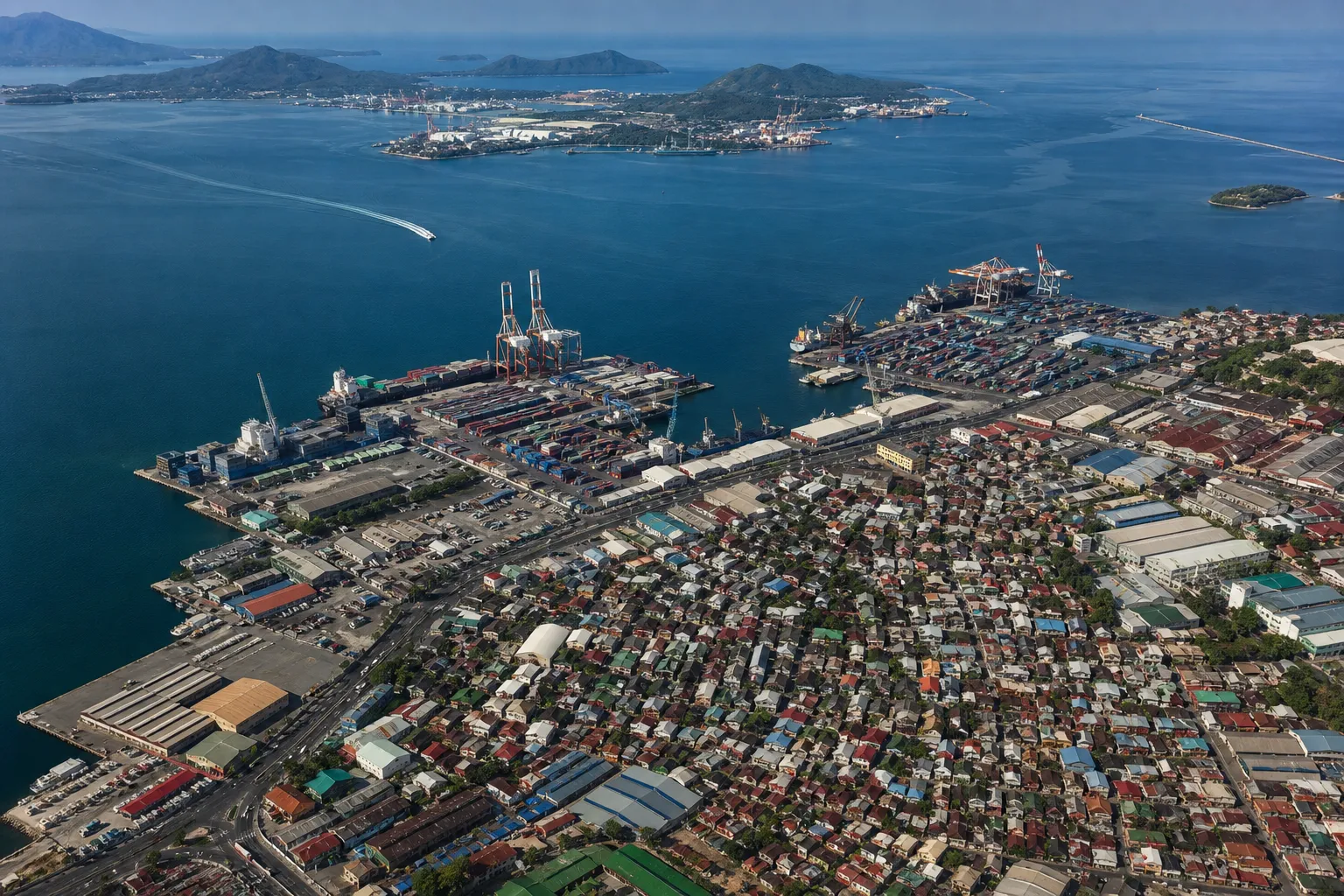
Our Expert in Philippines
Industrial design registration Philippines is one of the most cost-effective and strategically overlooked ways for product makers to protect the way their creations look, the shape, pattern, ornamentation and overall appearance that set a product apart on the shelf. As the Intellectual Property Office of the Philippines (IPOPHL) promotes National IP Month in 2026, more small businesses, startups and independent designers are discovering that a registered design right can be secured faster and cheaper than an invention patent, yet still deliver meaningful commercial protection. This guide walks through the full filing process at IPOPHL, eligibility, drawings, Locarno classification, fees, timelines, and the mistakes that most often cause delays or refusals.
It is written for SMEs, in-house counsel and designers who want a clear, practitioner-grounded roadmap rather than a dictionary definition.
In brief: Industrial design registration in the Philippines protects the ornamental appearance of a product under Republic Act No. 8293 (the Intellectual Property Code). Applicants file with IPOPHL, submit compliant drawings or photographs, pay the prescribed fees, and, once formalities and the statutory requirements are met, obtain a registration certificate. Foreign applicants may file directly or claim priority under international treaties. Engaging qualified IP counsel early reduces the risk of refusals (sources: IPOPHL; RA 8293).
Yes. The Intellectual Property Code of the Philippines, Republic Act No. 8293, provides a dedicated regime for industrial designs. Under the Code, an industrial design is any composition of lines or colors, or any three-dimensional form, whether or not associated with lines or colors, provided that the composition or form gives a special appearance to and can serve as a pattern for an industrial product or handicraft (source: Lawphil, RA 8293). In plain terms, the law protects how a product looks, not how it works.
Two thresholds govern eligibility. A design must be new (novel), it must not have been publicly disclosed or made available anywhere in the world before the filing or priority date, and it must be original, meaning it is the independent creation of the designer. Crucially, protection does not extend to features that are dictated solely by technical or functional considerations. If a shape exists only because it is the only way to make the product function, that shape is generally excluded from design protection and may instead fall to be considered under patent or utility model law.
This distinction is at the heart of industrial design registration Philippines practice. A chair’s sculptural silhouette is protectable as a design; the internal reclining mechanism that makes it function is not. Understanding where ornamental appearance ends and technical function begins is the first strategic decision every applicant must make.
Protectable subject matter is broad. It includes the shape of consumer electronics housings, the ornamentation on textiles and packaging, the contour of footwear, the surface pattern on tableware, furniture silhouettes, bottle and container shapes, and jewellery forms. If the feature contributes to the visual, aesthetic impression a product makes on an informed observer, it is a candidate for design protection. If it exists purely to make the product work, it is not.
The right to a design registration belongs, in the first instance, to the creator of the design or to that person’s heirs or assignees. Both natural persons (individual designers) and legal persons (companies, partnerships and other entities) may apply. Where a design is created by an employee in the course of employment, ownership typically follows the employment arrangement and any governing contract, which is why clear written assignments and employment clauses matter so much, a point we return to below.
IPOPHL also permits multiple-design applications, allowing an applicant to file several industrial designs in a single application provided they belong to the same class of the international classification or to the same set or composition of articles. This can offer cost efficiency: a furniture maker launching a coordinated collection, or an electronics brand releasing a family of related accessories, can often consolidate filings rather than lodge a separate application for each variant. Done well, a multiple-design strategy can reduce per-design cost and administrative overhead; done carelessly, it risks mixing incompatible classes and triggering formality objections.
Where an applicant has already filed for the same design in another country, a priority claim may be available, allowing the applicant to rely on the earlier foreign filing date for novelty purposes, a vital tool for preserving novelty across borders. Ownership evidence, including deeds of assignment where the applicant is not the creator, should be prepared in advance to avoid later gaps.
The Philippines is integrated into the international design system. A foreign applicant can file directly with IPOPHL or claim Paris Convention priority based on an earlier qualifying application in a member country, provided the Philippine application is filed within the applicable priority window and the priority document is furnished. Internationally, WIPO administers the Hague System for the International Registration of Industrial Designs, and the Philippines is a party to the Hague Agreement, which allows applicants to seek protection in multiple territories through a single international application (source: WIPO, Industrial Designs Portal).
Designers and counsel evaluating multi-market launches should weigh the Hague route against a series of direct national filings, taking into account designated territories, cost and the need for local representation. For most Philippine-focused SMEs, a direct IPOPHL filing remains the straightforward path.
You can file without counsel, but certain triggers strongly favour professional help:
The industrial design registration Philippines process follows a logical sequence. Getting each stage right the first time is the single biggest determinant of a smooth, delay-free registration.
Poor representations are among the most common causes of formality objections in design filings. IPOPHL expects clear, consistent depictions that fully disclose the design. Treat the following as a working checklist:
Whether you submit line drawings or photographs, choose one approach and apply it throughout. Mixing styles, or including dimensions and annotations that belong on an engineering drawing rather than a design representation, frequently triggers an office action.
IPOPHL uses the Locarno Classification, the international system administered by WIPO for classifying industrial designs (source: WIPO, Locarno Classification). Correct classification determines how your design is indexed, searched and examined, and it governs whether multiple designs can be combined in one application. The practical process is simple: identify the article to which your design is applied, then locate the matching class and subclass using the WIPO Locarno resources. A few illustrative categories make the point:
Choosing the wrong class is a correctable but avoidable error that delays prosecution. Where a product could plausibly fall into more than one class, resolve the ambiguity before filing rather than after.
Cost and speed are the two questions SMEs ask first. Official fees are published by IPOPHL and should always be confirmed against the current fee schedule before budgeting, because they are periodically updated (source: IPOPHL). In structural terms, an applicant should plan for several fee categories across the life of the right.
| Fee stage | What it covers | Where to confirm |
|---|---|---|
| Filing fee | Lodging the application; may vary by applicant type (e.g. small entity vs big entity) and number of designs | IPOPHL fee schedule |
| Publication fee | Official publication of the registered design | IPOPHL fee schedule |
| Issuance of certificate | Grant and issuance of the registration certificate | IPOPHL fee schedule |
| Renewal fee | Extending the term beyond the initial period | IPOPHL fee schedule |
In timeline terms, the sequence runs from filing and acknowledgement, through a formalities check, to examination as to registrability, and then to registration and publication. The duration depends heavily on the quality of the application: a clean filing with compliant drawings and the correct Locarno class moves through the process far more quickly than one that attracts office actions. Each office action adds a response cycle and can extend the process by months. This is precisely why front-loading effort into the representations and classification pays for itself, the cheapest way to shorten the timeline is to avoid refusals in the first place.
Several levers can compress the path to registration. Filing a complete, defect-free application is the most powerful. Where foreign filings exist, a correctly documented priority claim preserves your earliest date and reduces novelty risk. For multi-market strategies, consider whether the Hague System is more efficient than parallel direct filings. And respond to any office action promptly and comprehensively, partial responses that leave objections unresolved simply generate another cycle.
Most refusals in industrial design registration Philippines filings fall into a handful of recurring categories. Knowing them in advance is the best defence.
Experienced practitioners stress that the strongest design files are built long before the application is lodged. Keep dated design notebooks and version histories that document how a design evolved, so you can demonstrate independent creation if originality is ever challenged. Preserve packaging and labelling samples, which can corroborate the design’s commercial embodiment. Coordinate with marketing so that no premature public disclosure, a teaser post, a pre-launch exhibition, a press image, destroys novelty before the filing date is secured. And where a product line involves several variants, decide early whether to protect each variant separately or through a multiple-design application, because retrofitting that decision after launch is far harder and more expensive.
An industrial design registration confers an exclusive right for an initial term, with provision for renewal to extend protection up to the maximum period permitted by law, as set out in the Intellectual Property Code and IPOPHL’s implementing rules (sources: Lawphil, RA 8293; IPOPHL). Renewals must be filed and paid within the prescribed windows; a lapsed renewal can mean permanent loss of the right, so renewal deadlines belong on a monitored docket from the day of registration.
Enforcement options range from administrative action before IPOPHL to civil proceedings in the courts, and may include remedies such as injunctions and damages against infringers; border measures can also play a role in intercepting infringing imports. For precedent and the shape of available remedies, the Supreme Court E-Library is a useful research resource for Philippine IP case law (source: Supreme Court E-Library).
Product appearance can sometimes be protected under more than one regime, and the right choice depends on what you are protecting and for how long.
| Right | Protects | Best for | Key feature |
|---|---|---|---|
| Registered design | Ornamental appearance of a product | Shape, pattern and look of consumer products | Registration-based; fixed term with renewals |
| Copyright | Original artistic and creative works | Surface art, graphics and standalone artistic works | Arises on creation; no registration required to subsist |
| Patent / utility model | Technical function and inventions | How a product works, not how it looks | Protects functional innovation, not ornamentation |
| Trademark | Signs indicating commercial origin | Distinctive shapes or get-up acting as a brand identifier | Potentially indefinite if used and renewed |
In practice these rights are complementary. A flagship product might carry a registered design for its silhouette, a trademark for its distinctive branding, and copyright in standalone artwork, a layered strategy that is stronger than relying on any single right.
Design rights are commercial assets that can be assigned and licensed. When documenting these deals, address at minimum: a clear identification of the registered design and its registration number; the scope of rights granted (exclusive or non-exclusive); territory and duration; royalty or consideration terms; quality control and enforcement responsibilities; and recordal of the assignment or licence with IPOPHL where applicable.
One of the most damaging mistakes in industrial design registration Philippines practice is launching before filing. Public disclosure can destroy novelty, so sequencing matters. Before your product reaches the market, work through this pre-launch checklist:
Where a startup is launching several related variants, the budgeting question is whether to file each variant separately or to consolidate them in a single multiple-design application within the same Locarno class. The consolidated route can lower per-design cost and simplify docketing, but it requires the designs to be properly related. Separate filings give maximum flexibility and clean, independent rights at higher aggregate cost. Model both scenarios against the current IPOPHL fee schedule before deciding, and factor in future renewal costs across the full portfolio rather than just the filing stage.
When copying occurs, the Philippine system offers graduated remedies. Administrative enforcement before IPOPHL is often the first port of call and can be faster and more specialised than general litigation. Civil court proceedings allow claimants to seek injunctions, including preliminary injunctions to halt ongoing infringement, alongside damages. Border measures can be deployed to intercept infringing goods at importation, an important tool where copycats are manufactured abroad. Selecting the right forum and remedy depends on the facts, the urgency, and the strength of the underlying registration, which is why the quality of your original filing has downstream consequences for enforcement.
For precedent research and understanding how Philippine tribunals have treated design and broader IP disputes, the Supreme Court E-Library is a key source (source: Supreme Court E-Library).
The right counsel materially improves outcomes. When selecting an IP lawyer for an industrial design matter, weigh these criteria: demonstrated experience with design filings specifically (not just general IP); a balance of transactional and litigation capability if you anticipate enforcement; familiarity with IPOPHL procedure and office-action practice; transparent fee models; and good standing within the profession. The Integrated Bar of the Philippines is the authoritative reference for verifying that counsel is a member in good standing of the Philippine bar (source: Integrated Bar of the Philippines). To engage specialist help, see our Intellectual Property practice, Philippines or Find an IP lawyer, Philippines.
Industrial design registration Philippines is an accessible, high-value way for SMEs, startups and designers to protect what makes their products distinctive. The formula for success is consistent: confirm novelty, classify correctly under Locarno, prepare flawless drawings, file with IPOPHL before any public disclosure, respond to office actions comprehensively, and docket your renewals from day one. Each of these steps reduces the two risks that matter most, refusal and delay. The legal foundation sits in Republic Act No. 8293, and the procedural detail lives on the IPOPHL website, which should always be checked for current fees and e-filing requirements before you file (sources: Lawphil, RA 8293; IPOPHL).
For anything involving priority claims, ambiguous ownership, prior disclosure or enforcement, engaging experienced IP counsel early is the surest way to turn a good design into a defensible, commercially useful right.
This article was produced by Global Law Experts. For specialist advice on this topic, contact Editha R. Hechanova at HECHANOVA GROUP (Hechanova & Co., Inc./ Hechanova Bugay Vilchez and Andaya-Racadio), a member of the Global Law Experts network.
posted 8 minutes ago

posted 26 minutes ago

posted 1 hour ago

posted 2 hours ago

posted 2 hours ago

posted 2 hours ago

posted 2 hours ago

posted 3 hours ago

posted 4 hours ago

posted 4 hours ago

posted 4 hours ago

posted 5 hours ago
No results available
Find the right Legal Expert for your business

Send welcome message