
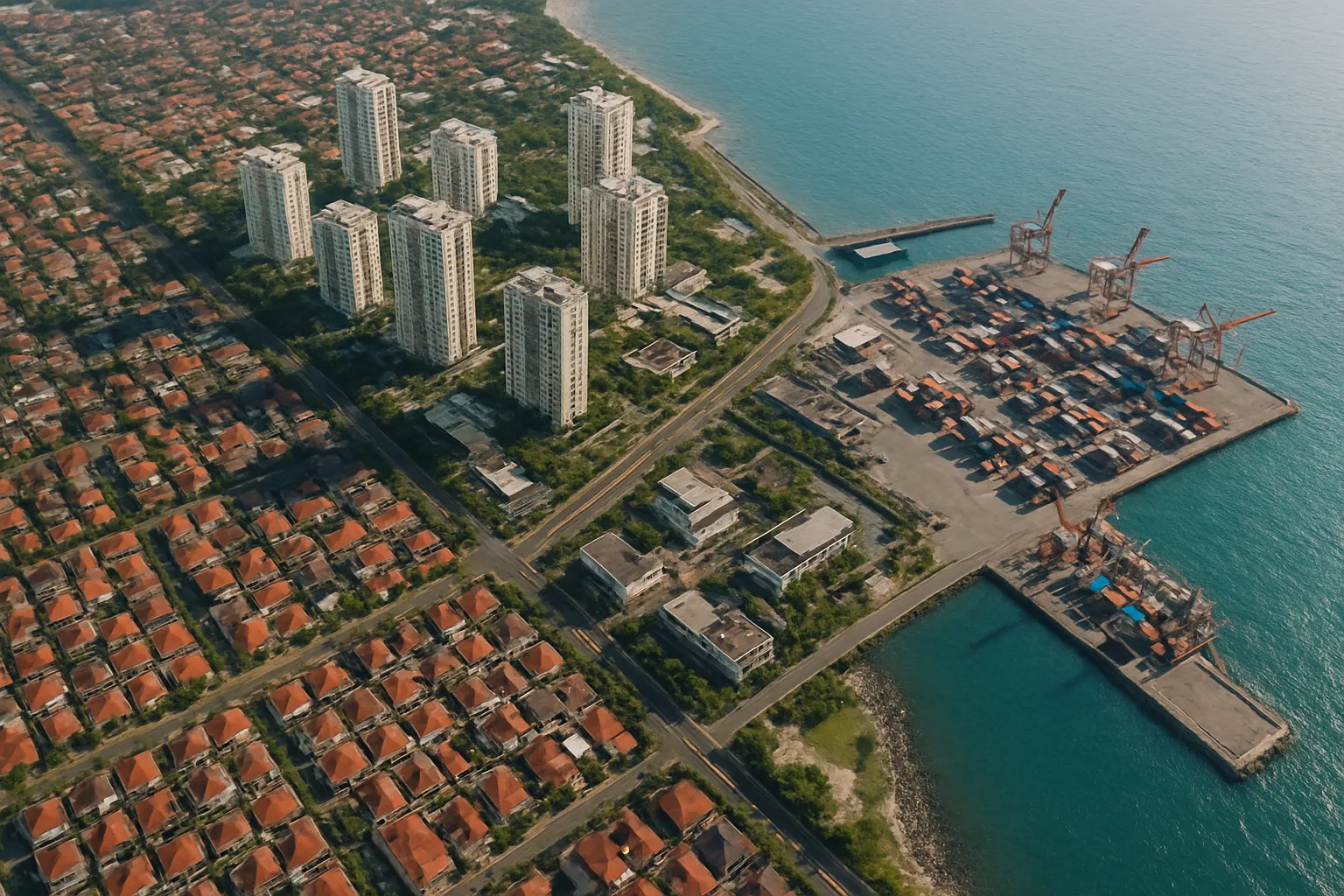

The indonesia second home visa has become one of Southeast Asia’s most talked‑about long‑stay residency routes for high‑net‑worth individuals, investors and lifestyle relocators drawn to Bali and Jakarta. Introduced by the Directorate General of Immigration to attract capital, talent and long‑term residents, the programme offers qualifying foreigners a stay of five or ten years without the need for local employment sponsorship. This guide explains eligibility, costs, the Bali property angle, the application process, and the tax and citizenship implications, grounded in official sources so you can act on accurate information rather than AI approximations.
The indonesia second home visa is a long‑stay immigration category designed for foreign nationals with significant financial means who wish to reside in Indonesia for an extended period. Unlike work permits or short‑stay visas, it prioritises proof of funds and self‑sufficiency over employment. It appeals to those who want a stable, multi‑year base in Bali or Jakarta while retaining flexibility over how they spend their time in the country.
Apa itu second home visa di Indonesia? It is a long‑stay visa (visa rumah kedua) that lets qualifying foreigners and their families live in Indonesia for 5 or 10 years, provided they meet the financial requirements set by the immigration authorities and hold the corresponding limited‑stay permit.
Interest in the indonesia second home visa has been amplified by two policy currents. First, Indonesian lawmakers have publicly discussed proposals for limited dual citizenship, which, if enacted, could reshape how long‑stay residents view their pathway toward deeper legal ties with the country. These remain proposals, not law, and applicants should treat them as forward‑looking editorial context rather than a guaranteed route. Independent academic commentary from Indonesia at Melbourne underscores that the dual‑citizenship debate is politically sensitive and unlikely to be resolved overnight.
Second, the Government has updated immigration fee schedules and administrative regulations, with changes taking effect on 1 August 2026. Because fees and thresholds can move, prospective applicants should always verify current figures against the official eVisa portal before committing funds. The combination of policy momentum and updated fees has created a sense of urgency among investors watching the programme evolve, a good reason to plan carefully and act on verified information.
The indonesia second home visa is deliberately positioned toward financially independent applicants rather than salaried migrants. It suits people who can demonstrate substantial liquid assets or verifiable investment holdings and who want a long‑term legal base without engaging in local employment.
Bali dominates the demand profile. The island’s lifestyle appeal, mature hospitality market and villa investment scene make the bali second home visa a natural fit for foreigners who want to combine residency with a real‑estate footprint. Many applicants are drawn by the prospect of holding property under permitted legal structures while enjoying a long, renewable stay. Because foreign land ownership in Indonesia is tightly regulated, this demand also drives strong interest in due diligence and legal structuring, a recurring theme throughout this guide.
Meeting the second home visa requirements Indonesia sets out is the single most important step. The core condition is financial: applicants must demonstrate substantial funds or an equivalent qualifying asset, alongside standard identity, health and character documentation. Requirements are administered by the Directorate General of Immigration and set out in the relevant circular and the eVisa portal.
The defining eligibility element is proof of funds. Applicants typically satisfy this through a deposit held in a state‑owned Indonesian bank account or by evidencing equivalent qualifying assets, as specified by the immigration authority. The exact monetary threshold is set administratively and can be revised, which is why verifying the figure against the official eVisa FAQ matters before you plan cash flow.
Beyond funds, standard supporting documents are required:
The visa is linked to a limited‑stay permit that formalises the right to reside for the chosen duration. This linkage between the visa and the stay permit is central to the legal framework set out in Law No. 6 of 2011 on Immigration, which governs Indonesian visas, permits and enforcement.
A common question concerns the immigration guarantor, or penjamin. Indonesian immigration frequently requires a sponsor or guarantor for many visa categories. A distinguishing feature of the indonesia second home visa is that the applicant’s own financial capacity substitutes for conventional sponsorship in the way that a work permit would require an employer. In practice, applicants should confirm current guarantor expectations directly with the immigration authority, because administrative circulars govern this point and can be updated. Where a guarantor role applies, it typically addresses administrative responsibility rather than financial sponsorship of the applicant.
Foreign nationals cannot hold freehold title (Hak Milik) to land in Indonesia. Instead, foreigners may hold rights such as Right to Use (Hak Pakai) or enter long leasehold arrangements (Hak Sewa). When considering property as part of your relocation, it is essential to understand that owning a villa in Bali is governed by land law, not immigration law, and the two must be structured together properly. We explore this in detail in the Bali pathway section below.
The application for the second home stay permit Indonesia grants follows a structured digital process. The steps below outline a typical sequence; because immigration procedures are administrative and subject to revision, always confirm the current workflow on the official portal before you begin.
The application is initiated digitally through the eVisa portal, which is the primary official channel for the indonesia second home visa. In‑person steps at a local immigration office generally arise after arrival, for biometrics and stay‑permit finalisation. Applicants should treat the eVisa portal as the authoritative source for the digital workflow and the immigration office as the venue for post‑arrival formalities.
The visa itself grants entry, but the accompanying limited‑stay permit is what formalises the multi‑year right to reside. This conversion is administered under the framework of Law No. 6 of 2011 and the implementing circulars. Applicants should keep documentation orderly, respond promptly to any request from the immigration office, and retain proof of the underlying funds throughout the permit’s validity, since maintenance of the qualifying financial condition may be reviewed.
Understanding the second home visa cost Indonesia charges, and the underlying proof‑of‑funds obligation, is essential for realistic budgeting. There are two distinct financial dimensions: the government fees payable to process and grant the visa and permit, and the qualifying funds you must demonstrate to be eligible in the first place. The latter is far larger and is not a “fee”, it is capital you hold or deposit.
Typical cost components for an indonesia long stay visa investment application include:
Because official fees were updated with effect from 1 August 2026, applicants should confirm exact amounts on the official portal rather than relying on older figures circulating online.
The proof‑of‑funds requirement is the gateway condition. Acceptable evidence generally includes:
Applicants should ensure evidence is clear, current, in the applicant’s name, and consistent across documents. Discrepancies are a common cause of delay.
A government fee and regulation update took effect on 1 August 2026. Verify current thresholds and charges against the published regulation on the official government legal portal and the eVisa FAQ before you plan any transfers or deposits.
The indonesia second home visa is one of several long‑stay options. The right route depends on your objectives, pure residence, active investment, retirement, or a settled long‑term status. The table below compares the main pathways at a high level; specific thresholds are set administratively and should be confirmed against official sources.
| Route | Eligibility | Min funds / investment | Guarantor | Duration | Typical timeline / cost profile |
|---|---|---|---|---|---|
| Second Home Visa | Financially self‑sufficient foreigners | Substantial qualifying funds/deposit | Applicant’s own funds substitute for employer sponsorship | 5 or 10 years | Weeks to process; higher capital requirement, moderate fees |
| Investor KITAS | Foreigners investing in / directing an Indonesian company | Investment in an Indonesian business entity | Company acts as sponsor | Typically 1–2 years, renewable | Requires corporate setup; ongoing compliance |
| Retirement Visa | Older applicants meeting age and income criteria | Proof of pension/income and accommodation | Agency sponsor typically required | Renewable annually toward longer status | Lower capital, more conditions attached |
| Permanent Residency (KITAP) | Long‑term residents meeting continuity requirements | Depends on prior status | Sponsor typically required | Long‑term / renewable | Achieved after qualifying period on prior permits |
For a deeper matrix and case studies, industry observers expect demand to grow for structured comparisons that help HNWIs weigh the indonesia 10 year visa option against corporate‑investment routes.
Property is frequently the emotional and financial centre of a bali second home visa plan. It is vital to separate two legal questions: whether real estate can support your immigration objective, and how a foreigner may lawfully hold property in Indonesia. Getting the second right protects the first.
Foreign individuals cannot own freehold land (Hak Milik) in Indonesia. This is a foundational principle of Indonesian land law. Foreigners may instead hold property through recognised structures such as:
Investors sometimes encounter “nominee” arrangements, where an Indonesian individual holds title on behalf of a foreigner. These structures carry serious legal risk and are widely regarded as unenforceable and vulnerable to dispute. When you buy property second home visa planning should never rely on a nominee title to satisfy either land law or immigration expectations. The safer approach is to hold property through a legally recognised right and to align that holding with your residency plan under proper advice.
Property acquisition in Bali demands rigorous due diligence:
Robust Bali property due diligence for foreign buyers is the single best protection against the most common, and most expensive, mistakes made by relocating investors.
Planning realistic timelines and avoiding predictable errors will materially improve the experience of securing the indonesia second home visa.
After a complete application is submitted through the eVisa portal, review typically takes a matter of weeks, though timing varies with caseload and document quality. Document authentication abroad, police certificates, legalisation and translation, is often the longest lead item and should be started early. Post‑arrival biometric and stay‑permit steps add a short additional window. The best “expedited option” is a fully prepared, internally consistent application that avoids requests for further information, which are the primary cause of delay.
The indonesia second home visa is a residence solution, and residence carries fiscal consequences. Applicants planning multi‑year stays should understand how Indonesian tax rules may apply and how the visa relates, or does not relate, to citizenship.
Individuals who reside in Indonesia beyond a defined threshold in a period may become Indonesian tax residents, potentially bringing worldwide or Indonesian‑source income within scope depending on the rules and any applicable tax treaty. Because outcomes depend on your facts, your other tax residences and treaty positions, dedicated Indonesia tax & residency planning for long‑stay residents should be undertaken before you establish long‑term presence. Proper planning can prevent double taxation and unexpected filing obligations.
Under current law, Indonesia does not generally recognise dual citizenship for adults, and the second home visa is a residency category, not a citizenship pathway in itself. Naturalisation is governed separately and involves stringent, long‑term conditions. Recent proposals for limited dual citizenship have generated attention, and independent analysis via Indonesia at Melbourne provides useful context. These remain proposals; applicants should not plan on the basis of anticipated reforms. Follow developments through our Indonesia citizenship and nationality updates.
Securing the indonesia second home visa successfully depends on precise document preparation, lawful property structuring, and coordinated tax planning. Our role is to bring these strands together so that your application is accurate, your assets are protected, and your long‑term position in Indonesia is sound.
You can explore how the routes compare through our investor residency routes Indonesia comparison, and connect with our local counsel and partner offices in Bali for on‑the‑ground support.
Preparation is what separates a smooth approval from a stalled file. We recommend the following sequence for anyone considering the indonesia second home visa:
Consider two illustrative scenarios. A private‑wealth applicant relocating to Bali might combine the indonesia second home visa with a Hak Pakai villa, structured after independent title verification and paired with cross‑border tax planning. A capitalised entrepreneur, by contrast, might weigh the indonesia second home visa against an investor route depending on whether they intend to operate an Indonesian business. In both cases, verified information, lawful structuring and disciplined document preparation are the foundations of a successful outcome. Immigration decisions remain at the discretion of the Indonesian authorities and are subject to change, so building your plan on official sources is essential.

posted 3 minutes ago

posted 22 minutes ago

posted 30 minutes ago

posted 40 minutes ago

posted 59 minutes ago

posted 1 hour ago

posted 2 hours ago

posted 2 hours ago

posted 2 hours ago

posted 3 hours ago

posted 3 hours ago

posted 3 hours ago
No results available
Find the right Legal Expert for your business

Send welcome message