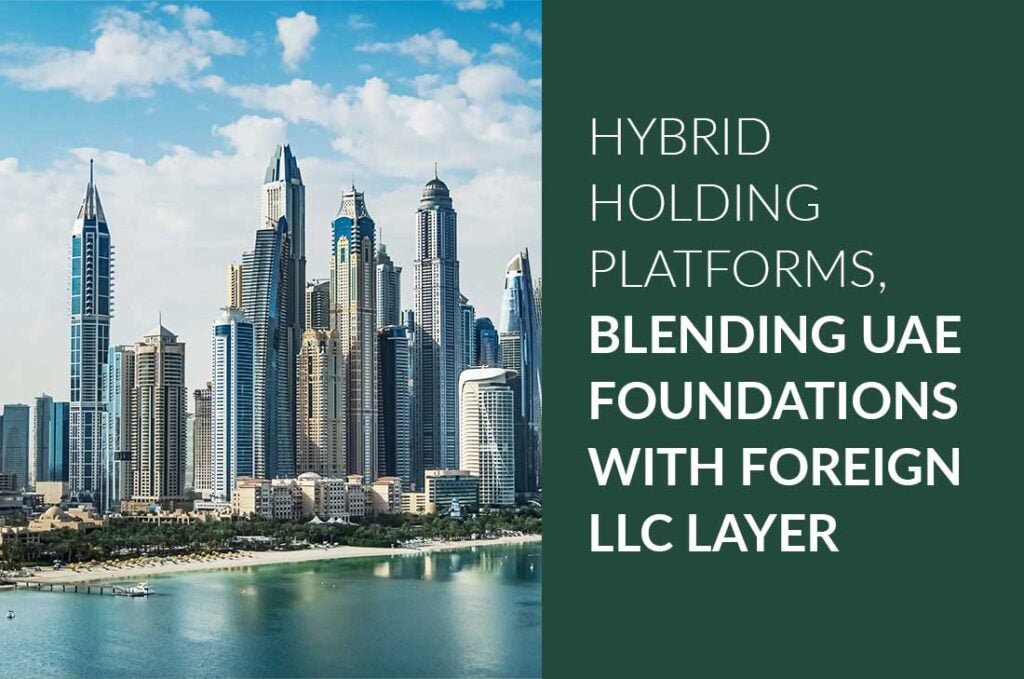
Property ownership in the UAE has changed over the last decade. Local law has opened the door to foreign ownership in many areas, while international families now hold UAE real estate alongside assets in Europe, Asia and the Americas. As holdings grow, questions start to come up around control, succession, privacy and long term planning. This article looks at how DIFC Foundations are used to hold local and international property and why they’re often chosen in practice.
Understanding the DIFC Foundation
A DIFC Foundation is a legal entity with its own legal personality, so it can own assets, enter contracts and appear in court in its own name. Unlike a company, it’s got no shareholders. Unlike a trust, it’s registered and governed by statute. Control usually sits with a council, which acts a bit like a board, and the founder sets out the rules in a foundation charter and by laws.
In simple terms, a foundation sits between personal ownership and a full trust structure. It gives the founder a way to separate assets from personal name ownership while keeping a clear governance framework. That clarity is one reason foundations work well for property.
Holding UAE property through a foundation
One common use of a DIFC Foundation is to hold UAE real estate. This includes residential units, commercial buildings and land in designated freehold areas. In practice, the foundation’s recorded on the title deed as the owner. The individual or family then controls the foundation through the council and the terms set at establishment.
This approach solves several issues at once. Title’s no longer linked to a person who may pass away, relocate or face claims. Succession becomes smoother because the property doesn’t fall into an estate that needs to be probated. Instead, the foundation continues to own the asset and the next generation benefits under the rules already written.
We often see this used by families who live in the UAE but have heirs abroad. Without a structure, local succession rules can apply by default. A foundation helps bring predictability because the internal rules govern who benefits and when.
Using foundations for rental and income property
Foundations are also used for income producing property. Rent can be collected in the foundation’s bank account and expenses paid directly. The council then decides how income’s distributed or reinvested. That separation makes accounting cleaner and helps when there are multiple beneficiaries.
For example, a family may own several apartments rented out across Dubai. Rather than splitting income informally, the foundation receives all rent and distributes amounts according to a defined formula. That way there’s less room for disagreement later, especially when siblings or extended family are involved.
International property ownership
A DIFC Foundation can also hold property outside the UAE. This includes homes in Europe, commercial property in the UK or apartments in other regions where foreign ownership’s permitted. The foundation becomes the single owner, even though the assets sit in different countries.
This can simplify cross border planning. Instead of dealing with multiple wills, local probate processes and fragmented ownership, the family deals with one structure. The key is making sure the foundation’s recognised in the relevant jurisdiction and that local advice is taken on registration and tax treatment.
In practice, we coordinate with overseas lawyers to ensure the title can be held by a foundation or by a subsidiary owned by the foundation if required. That way the structure stays coherent while respecting local law.
Succession planning and continuity
One of the strongest reasons to use a foundation for property is continuity. Property’s long term by nature. Buildings don’t divide easily and forced sales after a death can destroy value. A foundation avoids that break.
When the founder passes away, nothing changes at the title level. The council continues to manage the property and beneficiaries step into their roles as planned. That stability’s often the deciding factor for clients with significant real estate exposure.
We often explain it this way. The foundation outlives the individual. That simple point changes how families think about planning.
Asset protection and ring fencing
Foundations can also help with ring fencing property from personal risk. Once assets are transferred, they’re no longer owned personally. That can be helpful where the individual runs a business or operates in higher risk environments.
This doesn’t mean assets are hidden or immune from all claims. Transfers must be properly structured and not designed to defeat existing creditors. But for long term planning, a foundation can separate passive property from operating risk in a clean and transparent way.
Privacy and public records
In many jurisdictions, property ownership appears on public registers. Using a foundation can reduce the personal profile associated with high value real estate. The foundation name appears on the title rather than an individual.
For families who value discretion, especially those with international exposure, this is often attractive. It also helps where family members prefer not to have their holdings easily traceable across countries.
Governance and family control
A key feature of foundations is governance. The founder sets the rules at the start. These cover who sits on the council, how decisions are made, when property can be sold and how beneficiaries benefit.
This is especially useful for property because emotional decisions are common. A clear framework reduces disputes. For instance, the by laws can state that a family home can’t be sold without unanimous council approval or that commercial property can be sold only after a valuation process.
We regularly help families design these rules so they reflect how the family actually operates, not an abstract legal model.
Interaction with tax and reporting
Tax treatment depends on where the property’s located and where the beneficiaries are resident. The DIFC itself doesn’t impose tax on foundations, but foreign jurisdictions may tax rental income, capital gains or distributions.
That’s why foundations must be set up alongside proper tax planning. Reporting obligations also vary. Some banks and authorities require disclosure of controllers and beneficiaries under international transparency rules.
Handled properly, a foundation fits within these frameworks. The key is coordination rather than treating the structure in isolation.
Common mistakes to avoid
Problems arise when foundations are set up without a clear purpose. Simply transferring property without thinking through control, banking and succession can lead to confusion. Another issue is using standard documents that don’t reflect the family’s reality.
We often review existing foundations where the rules are too vague or where decision making’s unclear. Property then becomes stuck because no one has authority to act. Early planning avoids that.
How The Knightsbridge Group can help
With over ten years advising international businesses and families, The Knightsbridge Group supports clients across the UAE and worldwide.
We work with DIFC Foundations as part of a broader legal, tax and immigration approach. That includes structuring foundations to hold UAE and international property, coordinating with trustees, banks, land departments and overseas legal partners and ensuring the structure works in practice.
We stay involved after setup, helping with governance, amendments and cross border issues as families and portfolios change. To review your current arrangements or plan new strategies, contact info@kbgroup.ae.