
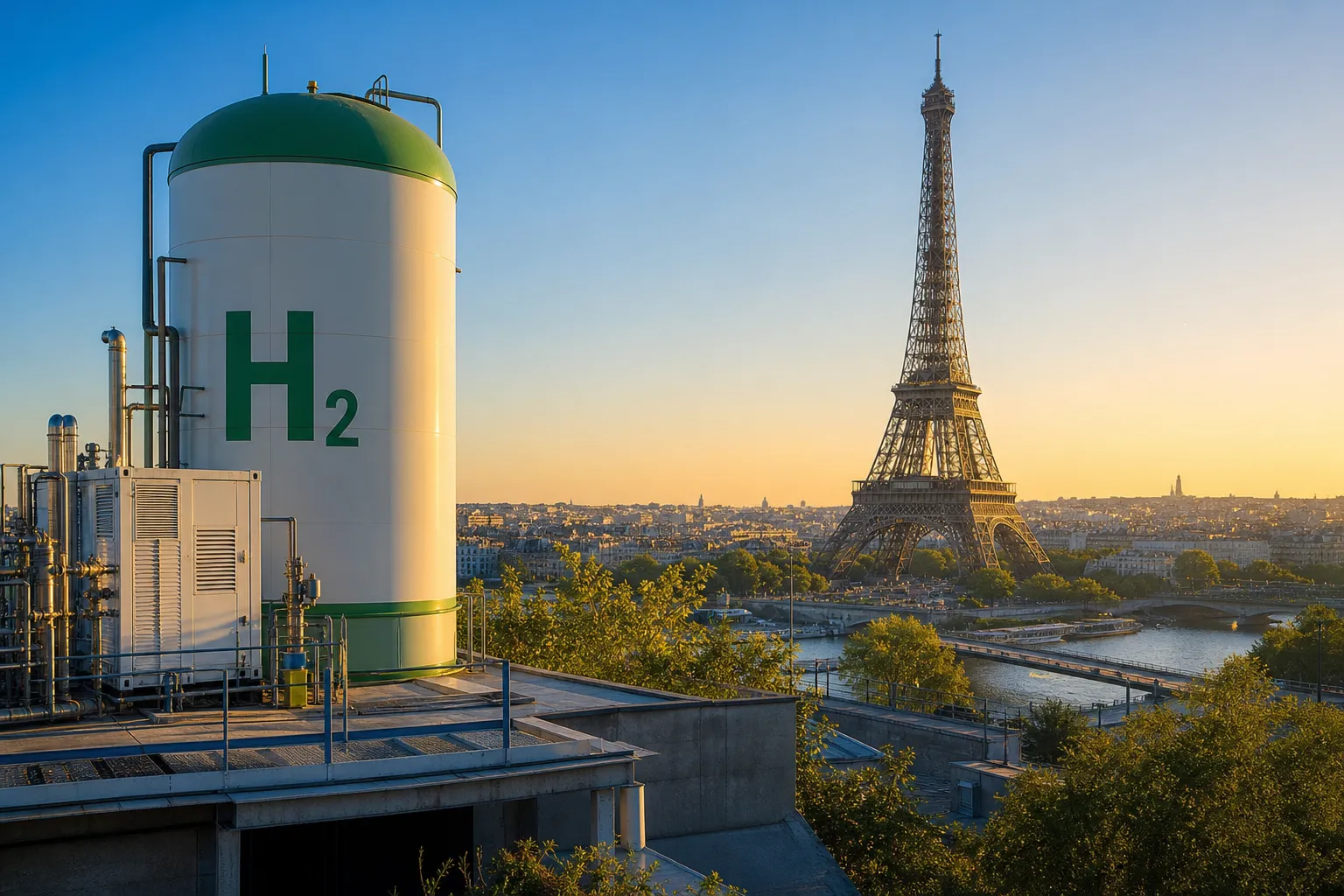
Green hydrogen projects france are entering a decisive implementation phase in 2026, as national support schemes and European Union funding instruments move from policy design into award and construction. Developers, investors, in‑house counsel and lenders now need jurisdiction‑specific, actionable guidance rather than high‑level policy summaries. This guide maps the permitting pathways for electrolysers, explains how to secure state aid and IPCEI funding, and sets out the rules governing grid connection and gas‑network integration in France. It also provides realistic timelines, common delays and mitigation strategies drawn from practical compliance experience.
Who this is for: project developers, investors, in‑house counsel and lenders evaluating French green hydrogen projects in 2026. What it covers: permitting, state aid and IPCEI, grid and gas‑network integration, timelines, common delays and mitigation steps, plus a practical checklist and template clause guidance.
The French market for green hydrogen is shaped by a combination of national ambition and EU‑level funding architecture. For 2026, the most consequential developments for practitioners cluster around four themes:
The practical implication for developers is that bankability now depends as much on permitting discipline and state‑aid compliance as on technology selection. The sections below walk through each stage in sequence.
Understanding the policy context is essential before committing capital to green hydrogen projects france. France has positioned hydrogen as a strategic lever for industrial decarbonisation and energy sovereignty, and the domestic framework sits within a broader EU architecture that governs both funding and state‑aid compatibility.
The national hydrogen strategy is coordinated by the relevant ministries, with technical and programmatic support from ADEME, the French Agency for Ecological Transition. ADEME publishes studies, roadmaps and technical guidance on electrolyser deployment, feasibility and environmental impacts, and administers a number of funding programmes relevant to hydrogen projects. Developers should monitor Ministry and ADEME publications for national calls, eligibility windows and evolving technical criteria, because these documents define the practical terms on which domestic support is granted.
For jurisdictional clarity, it is important to distinguish French domestic instruments from EU‑level mechanisms. Domestic calls administered by the ministries, ADEME and the regions operate under French procedural rules and state‑aid authorisations, while EU instruments operate under European Commission frameworks. Both layers can apply to a single project, which makes coordinated funding structuring a core part of early‑stage planning for green hydrogen projects france.
At the EU level, two instruments dominate. The IPCEI mechanism allows Member States to provide support for integrated projects of strategic European significance under the state‑aid framework described by the European Commission’s competition policy pages. The European Hydrogen Bank, explained on the Commission’s hydrogen pages, is designed to support the production and uptake of renewable hydrogen through competitive mechanisms. For French developers, participation in these instruments typically runs through a national dossier and national authorities, which then interface with the Commission. The International Energy Agency provides useful international context on technology readiness and the role of electrolytic hydrogen in decarbonisation pathways, which can support the risk and benefit analysis underpinning an application.
This is the core compliance section. Building an electrolyser in France engages several parallel consenting streams, and the sequence in which they are managed materially affects timelines. The responsible authorities, statutory references and documentation requirements are grounded in the Code de l’énergie, the Code de l’environnement and the Code de l’urbanisme, all accessible through Legifrance. The checklist below reflects the typical consenting path; the precise regime depends on project size, site characteristics and the hazardous substances involved.
The first analytical step is to establish whether the installation falls within the installations classées pour la protection de l’environnement (ICPE) regime. ICPE is the French framework for classified installations that present environmental or safety risks, administered under the Code de l’environnement and published via Legifrance. Depending on the volumes of hydrogen produced, stored and handled, an electrolyser facility may fall under declaration, registration or authorisation requirements. The classification determines the depth of environmental review, the public consultation obligations and the operating conditions imposed. Establishing the correct ICPE heading early is the single most important determinant of the permitting timeline, because an authorisation regime triggers a significantly longer and more procedurally demanding process than a simple declaration.
Where the project triggers environmental assessment thresholds under the Code de l’environnement, an étude d’impact (environmental impact assessment) is required. This document analyses the effects of the installation on air, water, soil, biodiversity, noise and landscape, and proposes avoidance, reduction and compensation measures. Projects subject to authorisation under ICPE generally also require a public inquiry (enquête publique) or public participation procedure, during which the file is made available for comment. The outcome of public participation can shape the final conditions attached to the authorisation and, in contested cases, can be a source of litigation before the administrative courts, including ultimately the Conseil d’État.
Allowing adequate time for the environmental assessment and participation phase is critical, as it is one of the most frequent sources of delay for green hydrogen projects france.
Hydrogen is a flammable substance, and where quantities handled or stored exceed the relevant thresholds the installation may fall within the scope of the Seveso regime, which implements the EU directive on the control of major‑accident hazards. Seveso classification imposes additional obligations relating to major‑accident prevention policy, safety management systems and, at the upper tier, a safety report. Seveso status also influences land‑use planning around the site through risk‑prevention plans. For developers, the key practical point is that electrolyser sizing, on‑site storage capacity and co‑location decisions should be assessed against Seveso thresholds at the design stage, because crossing a threshold can substantially increase both the compliance burden and the permitting timeline.
Beyond the environmental and classified‑installation regimes, the project will require planning and construction authorisations under the Code de l’urbanisme. A permis de construire (building permit) is typically needed for the physical structures, and the project must be consistent with the applicable local urbanism documents, including the plan local d’urbanisme. Site selection should therefore be screened early against zoning constraints, protected areas and any sectoral restrictions. Where the project touches public land or requires use of the public domain, additional concessions or occupation authorisations may be necessary.
Electrolysis consumes water, and projects that abstract, use or discharge water in significant quantities may require authorisations under the water provisions of the Code de l’environnement. The assessment covers the source of water, treatment, discharge quality and impacts on local water resources. Where the process generates waste streams, waste‑handling and disposal obligations also apply. These authorisations are frequently underestimated in early planning, yet in water‑stressed regions they can become a gating factor for green hydrogen projects france.
Connecting an electrolyser to the electricity network, and any injection into the gas network, involves physical works that carry their own permitting and easement requirements. Works on or adjacent to transmission and distribution infrastructure may require wayleaves, easements and civil‑works authorisations, and must be coordinated with the relevant network operators. Because network works can involve reinforcement with long lead times, early engagement with operators is essential to avoid the connection schedule becoming the critical path.
A consolidated permitting checklist covering environmental, Seveso and grid‑works approvals is available as a supporting resource, see the Permitting checklist for electrolysers, detailed guide for the full sequential list, responsible authorities and documentation requirements.
Electrolysers raise compliance questions that go beyond generic industrial permitting. An electrolyser is the device that splits water into hydrogen and oxygen using electricity; when powered by renewable or low‑carbon electricity, the resulting hydrogen is described as renewable or green. The technical and safety characteristics of hydrogen drive many of the applicable rules.
Hydrogen’s low ignition energy and wide flammability range mean that storage, handling and ventilation are tightly regulated. On‑site storage volumes feed directly into ICPE classification and potential Seveso status, so storage design is both an engineering and a regulatory decision. Occupational health and safety obligations apply to the workforce, and the facility must meet applicable technical standards for pressure equipment, leak detection, ventilation and emergency response. Technical and economic analyses from French research institutes such as the IFP Energies nouvelles can support design choices on electrolyser sizing and efficiency, and help substantiate the technical case in permit files and funding applications.
Many developers seek to co‑locate electrolysers with solar or wind generation to secure low‑cost renewable electricity and to strengthen the renewable‑origin case for the hydrogen produced. Co‑location changes the permitting picture: the combined site may need to address the cumulative environmental effects of generation and electrolysis, and the grid‑works permitting for both the generation connection and the electrolyser power connection must be coordinated. Aggregating related consents where possible can streamline the process, but it also requires careful management of the overall environmental assessment so that the combined footprint is properly characterised. For green hydrogen projects france pursuing a co‑located model, early integration of the generation and electrolysis permitting workstreams is strongly advisable.
Network integration is where many hydrogen projects encounter their most significant timing and bankability risks. There are two distinct network dimensions: connecting the electrolyser to the electricity system to draw power, and, where the business model involves delivering hydrogen through pipelines, injecting into or using a gas network. Each engages different operators, contracts and technical requirements.
On the electricity side, the electrolyser must be connected to the grid. For large installations this involves the transmission operator, while smaller connections are handled at distribution level. The connection process typically moves through a study phase, a connection offer, a connection agreement and then the physical works. Where network reinforcement is required to accommodate the new load, lead times can extend considerably. The CRE’s guidance on network access and tariffs is the authoritative reference for the regulatory parameters that govern connection and use‑of‑system charges. Because reinforcement timelines are frequently the longest single element of a project schedule, developers should initiate connection studies as early as possible.
On the hydrogen side, developers face a strategic choice between three broad routes: injecting hydrogen into the existing natural gas network (blending), using or building dedicated hydrogen pipelines, or delivering hydrogen physically by other means. Blending into the existing gas grid is subject to technical limits and operator rules, and the permissible proportions and quality requirements are governed by operator and regulatory frameworks. Dedicated hydrogen infrastructure avoids blending constraints but carries its own permitting and capital requirements. The choice between these routes has profound consequences for permitting complexity, cost and bankability, and should be settled early in project development.
Injection into a gas network engages a set of technical and contractual obligations: hydrogen quality specifications, metering, odourisation where applicable, and balancing arrangements that reconcile injected volumes with the network’s operational requirements. Guarantees of origin, which certify the renewable character of the hydrogen, are increasingly relevant to offtake value and to state‑aid and funding eligibility; CRE guidance addresses the regulatory treatment of such instruments. Developers must ensure that the output specification of the electrolyser matches the injection requirements of the chosen network, as mismatches can require additional conditioning equipment.
Network integration is documented through a suite of agreements: connection agreements with the relevant operator, network‑use agreements governing ongoing access and charges, and grid‑works arrangements covering the physical build. Inter‑operator coordination is often necessary where power and gas systems both feature in the project. For bankability, lenders will scrutinise how curtailment risk, grid outages and reinforcement delays are allocated between the project and the operators, because these allocations determine the revenue certainty of green hydrogen projects france.
| Dimension | Electrolyser power connection | Blended injection into gas grid | Dedicated H2 pipeline |
|---|---|---|---|
| Permitting complexity | Moderate, connection studies and civil works | Moderate to high, operator rules and quality compliance | High, pipeline routing, land rights and environmental assessment |
| Typical timeline driver | Network reinforcement lead times | Operator technical approval and metering | Route consenting and construction |
| Primary counterparty | Electricity network operator | Gas network operator | Pipeline operator / developer |
| Cost profile | Connection and reinforcement charges | Conditioning and injection equipment | High capital, dedicated infrastructure |
| Key risk | Reinforcement delay on critical path | Blending limits and quality constraints | Route consenting disputes and cost overruns |
| Bankability implication | Revenue depends on connection certainty | Offtake value depends on guarantees of origin | Capital intensity requires firm offtake |
Funding is frequently the decisive factor in whether a project reaches financial close. For green hydrogen projects france, the funding landscape combines national calls, EU instruments and the overarching EU state‑aid framework. Structuring the funding stack correctly is essential both to maximise support and to avoid state‑aid pitfalls that could trigger recovery.
IPCEI allows Member States to provide aid for projects that make a significant contribution to EU strategic objectives, under the dedicated state‑aid framework described by the European Commission. In practice, French participation runs through a national selection process coordinated by the relevant ministries, which assembles a national dossier and interfaces with the Commission. Eligibility turns on the project’s strategic significance, its contribution to the common European interest, and compliance with the framework’s conditions on aid intensity and anti‑crowding‑out safeguards. Because IPCEI processes are calendar‑driven and highly competitive, early preparation of the technical and financial dossier is critical.
Public support for hydrogen projects typically comes with conditions that have direct consequences for project finance. These commonly include reporting obligations, milestone requirements, and clawback or recovery provisions where conditions are not met. State aid must also be compatible with market rules, and support that distorts competition beyond permitted limits risks challenge. Lenders will want clarity on how aid is treated in the financial model, how clawback risk is mitigated, and how the aid interacts with other revenue streams. Combining national grants with EU instruments requires careful attention to cumulation rules so that the aggregate support does not exceed permitted intensities.
A detailed walk‑through of the application process and compliance conditions is provided in the supporting resource State‑aid & IPCEI for hydrogen projects, how to secure funding.
The commercial contracts underpinning a project determine its bankability as much as its permits. A hydrogen power purchase or offtake agreement (H2 PPA) allocates the key commercial and technical risks between producer and buyer, and lenders will examine these allocations closely.
The drafting of an H2 PPA for a French project should address the full range of hydrogen‑specific commercial terms. Critical clauses include:
Projects can be structured on a fully contracted basis, where a long‑term offtake underpins the revenue, on a merchant basis exposed to market prices, or on a hybrid merchant‑plus‑hedge basis. Contracted structures generally offer the strongest bankability, because they provide the revenue certainty lenders require, while merchant exposure increases risk and typically raises the cost of capital. The chosen structure should reflect the project’s risk appetite and the depth of the available offtake market. Guidance on negotiating these arrangements is set out in the supporting resource How to negotiate a hydrogen offtake (H2 PPA) in France.
Realistic scheduling is essential for green hydrogen projects france. While every project differs, the main consenting and connection workstreams run in parallel and overlap. Planning and environmental studies commonly span many months to well over a year for complex sites, ICPE authorisation adds a substantial further period where the authorisation regime applies, and grid connection can extend considerably where network reinforcement is required. IPCEI and funding applications are calendar‑driven and must be aligned with these workstreams.
The most frequent sources of delay are the public inquiry phase, Seveso classification where storage volumes are high, and network reinforcement lead times on the connection side. Effective mitigation includes:
Securing permits and funding is only the beginning; operational compliance is a continuing obligation that carries enforcement risk if neglected.
Projects that receive public support typically assume reporting obligations covering progress, milestones and the use of funds, and failure to comply can trigger clawback. Environmental permits impose their own monitoring and reporting duties, which may include operational parameters and incident reporting. Building a compliance function that tracks both funding and permit obligations from the outset reduces the risk of inadvertent breach.
Classified installations are subject to inspection by the competent authorities, and non‑compliance can lead to administrative measures, operating restrictions or sanctions. Decisions on permits and their conditions can also be the subject of administrative litigation, with the Conseil d’État sitting at the apex of the administrative court system. Maintaining complete records and a proactive compliance posture is the most effective protection against enforcement exposure.
To translate this guidance into execution, developers should assemble a project‑specific toolkit: a sequential permitting checklist mapping each authorisation to its responsible authority, documentation and expected timeline; a one‑page permitting timeline showing the parallel workstreams and their dependencies; and a sample clause list for the H2 PPA covering the critical terms identified above. The supporting cluster resources, including the permitting checklist and the state‑aid and IPCEI guide, provide detailed building blocks. For project‑specific structuring, bespoke regulatory and permitting advice is strongly recommended, and the Energy lawyers, France directory provides access to specialists in this field.
Green hydrogen projects france stand at a pivotal moment in 2026, as funding instruments move into award and implementation and developers translate strategy into construction. Success depends on disciplined management of three interlocking workstreams: securing the correct permits under the ICPE, environmental and construction regimes; structuring state aid and IPCEI funding in compliance with EU rules; and resolving grid and gas‑network integration early enough to protect the project schedule and bankability. The regulatory environment rewards early, coordinated planning and penalises projects that treat permitting, funding and network connection as sequential afterthoughts. Developers, investors and in‑house counsel evaluating green hydrogen projects france should seek bespoke, jurisdiction‑specific advice to navigate these requirements and to secure the strongest possible position for financial close.
For tailored guidance, consult the Energy lawyers, France directory.
This article provides general information and does not constitute legal advice. For advice on a specific project, please seek bespoke professional guidance.
This article was produced by Global Law Experts. For specialist advice on this topic, contact Cendrine Delivré at Franklin, a member of the Global Law Experts network.

posted 9 minutes ago

posted 27 minutes ago
posted 1 hour ago

posted 2 hours ago

posted 2 hours ago

posted 2 hours ago

posted 2 hours ago

posted 3 hours ago

posted 4 hours ago
posted 4 hours ago

posted 4 hours ago

posted 5 hours ago
No results available
Find the right Legal Expert for your business

Send welcome message