
Member
No results available
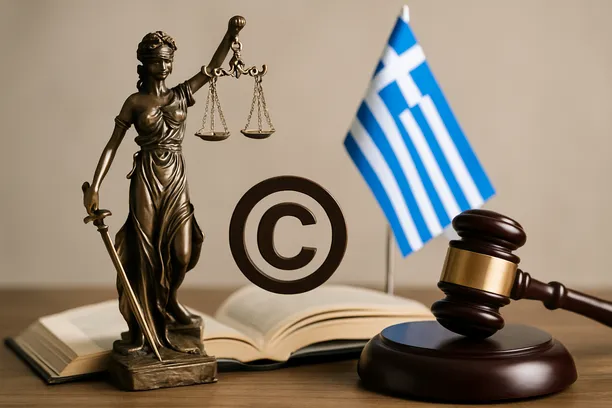
Greece copyright law changes 2026 represent the most significant overhaul of the country’s intellectual-property enforcement and cultural-heritage protection regime in over a decade. Beginning with Law 5179/2025, which introduced tiered administrative fines for online piracy and expanded liability to end users, the reform wave continued with Law 5271/2026, a dedicated framework for safeguarding artworks and cultural heritage through new criminal offences and authorisation requirements. The Ministry of Culture then unveiled its AI Strategy for Culture, Heritage and Copyright Protection in April 2026, setting out licensing expectations for organisations that use digitised collections to train artificial-intelligence models. Together, these measures create urgent compliance obligations for businesses, digital platforms, creators, collective management organisations (CMOs) and cultural institutions operating in or with Greece.
What you need to know now:
Who should read this guide: in-house counsel and general counsel, compliance officers, museum and archive directors, digital-platform policy teams, content owners, publishers, CMOs, and any business that uses, hosts or licenses copyrighted works in Greece.
Every organisation that creates, distributes, hosts or reuses copyrighted content in Greece must now take three immediate steps to align with the 2025–26 Greek copyright reforms:
Greece’s copyright framework rests on Law 2121/1993, which has been progressively amended to transpose EU directives, including the DSM Directive (2019/790), into national law. The 2025–26 reform cycle adds three distinct streams of legislative and policy action that collectively reshape enforcement, heritage protection and digital-age permissions.
Published in the Government Gazette on 20 February 2025 (A’ 26/20.02.2025), Law 5179/2025 amended Article 65A of Law 2121/1993, significantly expanding the system of administrative sanctions. For the first time, end users who unlawfully access pirated content are subject to direct fines, and the penalties for operators, intermediaries and repeat offenders have been materially increased. Industry observers expect this compliance-first model to accelerate enforcement activity throughout 2026.
On 30 January 2026, Law 5271/2026 was published, establishing a dedicated legal framework to strengthen the protection of artworks. The law creates specific criminal offences related to the misuse and unauthorised exploitation of cultural-heritage works, enhances deterrence through stricter penalties, and introduces new authorisation requirements for entities collecting copyright and related rights. Only entities authorised by the Ministry of Culture may now collect such rights, a change that directly affects museums, archives, galleries and intermediary licensing bodies.
On 7 April 2026, the Ministry of Culture unveiled its AI strategy to support heritage management, digital innovation and copyright protection. The strategy sets expectations for cultural organisations regarding the licensing of digitised collections, the use of AI tools in heritage management, and the contractual safeguards required when partnering with technology platforms.
| Date | Law / Measure | Practical Effect (Who Must Act) |
|---|---|---|
| 20 Feb 2025 | Law 5179/2025 published (Gov Gaz A’ 26/20.02.2025) | Expanded administrative sanctions for online piracy; fines for end users and operators, platforms and businesses must update policies |
| Aug 2025 (enforcement ramp) | Administrative enforcement phase begins | ISPs and platforms face compliance notices; businesses should implement takedown processes |
| 30 Jan 2026 | Law 5271/2026 published (cultural heritage framework) | Museums, archives and CMOs: new authorisations and heritage-protection rules, permissions and contracts must be reviewed |
| 7 Apr 2026 | Ministry of Culture AI Strategy published | Cultural organisations must consider dataset licensing and permissions for AI training |
| 2026 (calendar year) | Public-domain entries across the EU (EUIPO) | Cultural institutions may reuse certain works, check national moral-rights constraints |
Law 5179/2025 marks Greece’s shift to a compliance-first enforcement model for copyright infringement in the digital environment. By amending Article 65A of Law 2121/1993, it closes a gap that previously left end users outside the scope of administrative sanctions.
The amended provisions extend liability across the full chain of digital piracy:
| Category | First Offence | Repeat Offence |
|---|---|---|
| Private individual accessing pirated content | €750 | €1,500 |
| Operators / platform providers | Higher tiered fines (amounts set by ministerial decision) | Substantially increased; may include platform blocking |
| Intermediaries / ISPs (failure to comply) | Administrative sanctions per notice | Cumulative fines; potential service restrictions |
The administrative enforcement procedure under the amended Article 65A operates independently of civil and criminal proceedings. Enforcement is initiated by the competent authority (the Hellenic Copyright Organisation, OPI, or designated body), which issues a notice of infringement. The respondent may file an objection within the prescribed timeframe, and appeals follow the standard administrative-law process. Early indications suggest that the authorities have adopted a rapid-enforcement posture, prioritising systematic, compliance-driven action over one-off litigation.
Consider a streaming aggregator operating from Greece that hosts user-uploaded content without a robust notice-and-takedown system. Under the pre-2025 regime, administrative fines primarily targeted large-scale commercial pirates. Under Law 5179/2025, the platform itself faces direct administrative sanctions if it fails to act on infringement notices, and individual users who knowingly access the pirated streams are independently liable for the €750 fine. Platforms that implement proactive content-identification measures and maintain auditable takedown logs will be best positioned to demonstrate compliance and defend against escalated penalties.
A broad spectrum of artworks and creative works transitioned into the public domain within the European Union on 1 January 2026, as the standard copyright term of 70 years post mortem auctoris expired for creators who died in 1955.
The EUIPO has published a dedicated guide listing iconic artworks and notable figures whose works entered the public domain in 2026 across EU Member States. For Greek cultural institutions and publishers, the practical implication is that reproductions, adaptations and digital editions of these works may be produced without a copyright licence, but only if the organisation confirms that no separate rights (such as a new photographic copyright in a high-resolution scan, or sui generis database rights in a curated collection) apply. A safe-reuse checklist should include the following steps:
Recent legislative developments have expanded the authority and legal standing of CMOs operating in Greece, creating new presumptions in their favour that affect both licensing negotiations and dispute resolution.
Any entity that uses copyrighted works, whether for broadcasting, public performance, reproduction or digital distribution, should verify the CMO landscape before entering into or renewing licences. The OPI maintains a register of authorised CMOs, and the Ministry of Culture publishes the list of entities permitted to collect rights. Before negotiating a direct licence with an individual author, check whether the author has assigned or mandated the relevant rights to a CMO, as the new presumptions may render a direct licence unenforceable or create dual-payment exposure.
Direct licensing remains viable in specific contexts, particularly for bespoke commissions, exclusive digital-distribution arrangements and works not covered by any CMO mandate. However, the burden of proving that a direct licence is valid and exclusive has increased. Industry observers expect disputes between authors, CMOs and licensees to intensify as the presumption framework beds in, making pre-contract due diligence and clear contractual carve-outs more important than ever.
The Ministry of Culture’s AI strategy, unveiled on 7 April 2026, represents Greece’s first comprehensive policy framework linking artificial intelligence, cultural heritage and copyright protection. It signals a clear expectation that cultural organisations will adopt structured licensing and governance practices before allowing AI systems to be trained on their collections.
Public-domain works may generally be included in training datasets without a copyright licence, but organisations must still consider moral rights (particularly the right of integrity if the AI model transforms or distorts the work), database rights over curated collections, and any contractual restrictions attached to digitisation partnerships. For in-copyright works, the text-and-data-mining exceptions transposed from the DSM Directive apply, but rights holders may opt out of automated mining under Article 4 of that directive, and Greek law requires compliance with such opt-out declarations.
When licensing digitised collections for AI training, cultural organisations should consider including the following contractual provisions:
Copyright compliance for businesses Greece requires a tailored approach. Below are actionable checklists for four entity types, followed by a sample takedown notice template and a recordkeeping table.
The following is a simplified template for internal use. Legal advice should be obtained before issuing formal notices.
NOTICE OF COPYRIGHT INFRINGEMENT
To: [Platform/ISP name and contact]
From: [Rights-holder name and contact]
Date: [Date]
Re: Infringing content at [URL]
I, [Name], am the owner (or authorised representative of the owner) of the copyright in [description of the work]. The content accessible at the URL identified above infringes my exclusive rights under Law 2121/1993, as amended. I request that the content be removed or access to it disabled without delay, in accordance with the administrative-enforcement procedures under Law 5179/2025. I declare, under penalty of perjury, that the information in this notice is accurate and that I am authorised to act on behalf of the rights holder.
[Signature / electronic signature]
| Work Title / ID | Rights Status | Licence / CMO | Expiry Date | AI Training Permitted? | Moral Rights Notes | Last Reviewed |
|---|---|---|---|---|---|---|
| [Enter title] | In-copyright / Public domain / Orphan | [CMO name or direct licence ref] | [Date] | Yes / No / Conditional | [Attribution required / Integrity restriction] | [Date] |
| Date | Measure / Law | Practical Effect, Who Must Act |
|---|---|---|
| 20 Feb 2025 | Law 5179/2025 (Gov Gaz A’ 26/20.02.2025) | All digital businesses, platforms and ISPs: update content policies, implement takedown workflows, train staff on new fines |
| Aug 2025 | Administrative enforcement ramp-up | Platforms and ISPs: expect compliance notices; demonstrate readiness through documented processes |
| 30 Jan 2026 | Law 5271/2026 (cultural heritage framework) | Museums, archives, CMOs: obtain Ministry of Culture authorisation; review heritage-protection contracts |
| 7 Apr 2026 | Ministry of Culture AI Strategy | Cultural organisations: inventory rights, adopt dataset-licence templates, establish AI governance |
| 1 Jan 2026 | Public-domain entries (70 years p.m.a.) | Publishers, cultural institutions: update catalogues, apply moral-rights safeguards to newly available works |
Who to contact for guidance:
The Greece copyright law changes 2026, spanning Law 5179/2025, Law 5271/2026 and the Ministry of Culture’s AI strategy, impose concrete, time-sensitive compliance obligations on a wide range of organisations. The practical effect is that every entity creating, distributing, hosting or reusing copyrighted content in Greece must act now: audit current uses and licences, upgrade notice-and-takedown processes, verify CMO mandates and implement AI-training permissions before enforcement accelerates further.
Compliance is not a one-time exercise. The legislative landscape is expected to continue evolving as secondary legislation and ministerial decisions flesh out the framework established by these primary laws. Organisations should establish annual review cycles, monitor OPI and Ministry of Culture publications, and engage qualified Greek IP counsel for bespoke audits, contract drafting and dispute resolution. Early, proactive compliance will be the most effective defence against the tiered administrative sanctions and criminal penalties now in force.
This article was produced by Global Law Experts. For specialist advice on this topic, contact Miranda Theodoridou at Dr. Helen G. Papaconstantinou and Partners Law Firm, a member of the Global Law Experts network.
posted 5 minutes ago
posted 13 minutes ago
posted 27 minutes ago

posted 36 minutes ago

posted 53 minutes ago

posted 1 hour ago

posted 1 hour ago

posted 2 hours ago

posted 2 hours ago

posted 2 hours ago
posted 2 hours ago

posted 3 hours ago
No results available
Find the right Legal Expert for your business
Sign up for the latest legal briefings and news within Global Law Experts’ community, as well as a whole host of features, editorial and conference updates direct to your email inbox.
Naturally you can unsubscribe at any time.
Global Law Experts is dedicated to providing exceptional legal services to clients around the world. With a vast network of highly skilled and experienced lawyers, we are committed to delivering innovative and tailored solutions to meet the diverse needs of our clients in various jurisdictions.
Global Law Experts is dedicated to providing exceptional legal services to clients around the world. With a vast network of highly skilled and experienced lawyers, we are committed to delivering innovative and tailored solutions to meet the diverse needs of our clients in various jurisdictions.

Send welcome message