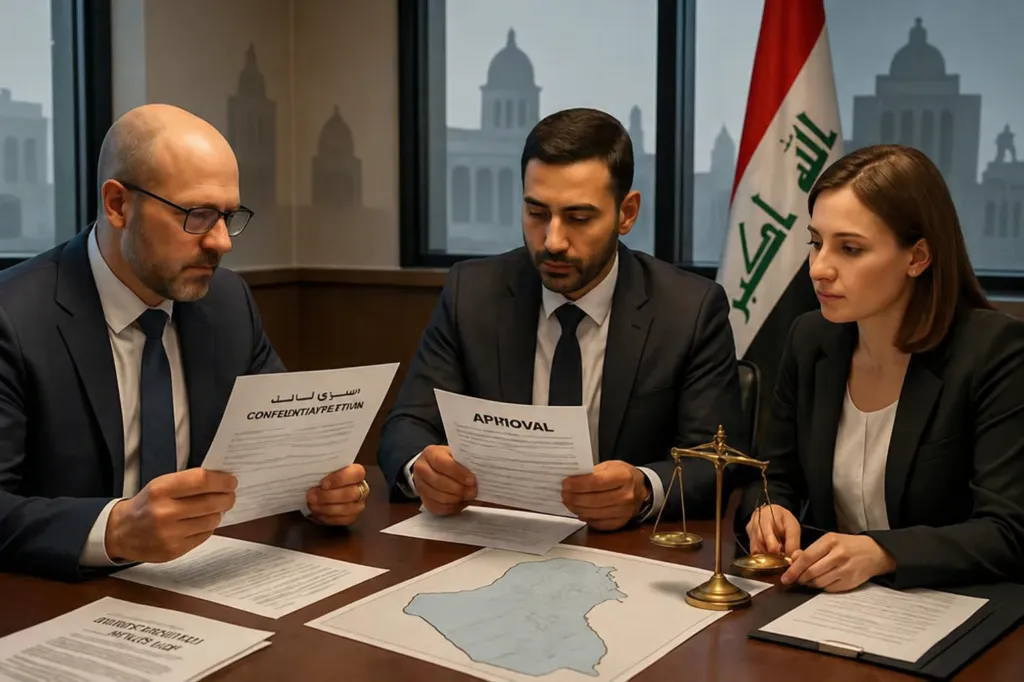
Iraq continues to present meaningful opportunities for foreign investors across sectors such as energy, construction, infrastructure, logistics, and professional services. However, in practice, successful market entry is not driven by speed, but by proper legal structuring and early planning. Businesses looking to establish operations in Iraq should ensure they follow a structured legal approach, as outlined by Al-Nesoor Law Firm.
From experience advising foreign businesses entering Iraq, the main challenges rarely stem from the law itself, but from how the process is approached. The choice of legal entity, the identification of the correct authority, and the quality of documentation can significantly impact how quickly a business becomes operational.
Why a Structured Approach Is Essential
One of the most common misconceptions is that market entry procedures are uniform across Iraq. In reality, there are important distinctions between federal Iraq and the Kurdistan Region, each with its own authorities and processes.
Before taking any formal steps, investors should clearly determine where the business will operate, whether the activity is project-based or long-term, and which authority has jurisdiction. These early decisions shape the entire registration and licensing process.
In our experience, projects that begin with clear regulatory mapping tend to move forward efficiently, while those that do not often face avoidable delays.
Choosing the Right Legal Structure
Foreign investors typically consider three main entry vehicles: a representative office, a branch, or a limited liability company (LLC). Each serves a different purpose.
A representative office is suitable for market research and liaison activities but cannot conduct full commercial operations. A branch may be appropriate when executing a specific contract, as it operates as an extension of the foreign parent. An LLC, on the other hand, is generally the preferred structure for investors planning ongoing business operations in Iraq. For a detailed breakdown, investors can refer to our guide on company registration in Iraq.
There is no universally “best” option. The right structure depends on the investor’s objectives, risk tolerance, and long-term plans. Choosing the wrong structure at the outset is one of the most common—and costly—mistakes.
Entity Setup: Where Details Matter
In practice, delays in company formation are rarely caused by regulatory complexity alone. More often, they arise from issues with documentation.
We frequently see delays due to inconsistencies in corporate documents, incomplete legalization, or poor-quality translations. Even minor discrepancies can lead to rejections or requests for resubmission.
For this reason, careful document preparation is critical. Investing time upfront in accuracy and compliance will significantly reduce delays later in the process. Working with experienced legal advisors can help ensure documentation meets all regulatory requirements.
Approvals and Licenses: Beyond Registration
A key point that is often overlooked is that company registration alone does not authorize a business to operate.
Depending on the sector, additional approvals may be required, including sector-specific licenses, municipal permissions, or regulatory clearances. In industries such as energy, construction, telecommunications, healthcare, or import-related trade, these requirements can be substantial.
Operational readiness also depends on factors such as the business location, lease arrangements, and compliance with local regulations, including zoning and safety requirements.
In our practice, ensuring that licensing requirements are mapped early is just as important as the incorporation process itself.
Common Pitfalls and Compliance Risks
Many of these risks can be avoided by working with experienced corporate lawyers in Iraq who understand local regulatory practices.
Common issues include treating registration, licensing, and operational approvals as a single step, or proceeding without a clear understanding of regulatory responsibilities. These mistakes often lead to delays, additional costs, or compliance exposure.
It is also important to note that compliance does not end after incorporation. Ongoing obligations—such as tax filings, employment compliance, and license renewals—require continuous attention.
Banking processes can present additional challenges, particularly where enhanced due diligence or regulatory checks apply.
A Practical Market Entry Approach
A structured market entry approach typically begins with regulatory due diligence and jurisdictional analysis. This is followed by selecting the appropriate legal structure, preparing and legalizing documents, and completing the registration process.
Once the entity is established, investors should proceed with obtaining sector-specific approvals and aligning tax, banking, and employment registrations to ensure the business can operate effectively.
From experience, a well-planned and staged approach is far more effective than attempting to accelerate all steps simultaneously.
Conclusion
Entering the Iraqi market is both achievable and commercially viable, but it requires a disciplined and well-planned approach. Early legal structuring, accurate documentation, and a clear understanding of regulatory requirements are essential for a successful launch.
In practice, investors who prioritize planning and compliance from the outset are significantly better positioned to operate efficiently and avoid unnecessary delays.
For more information on entering the Iraqi market or to receive tailored legal advice, visit Al-Nesoor Law Firm.
Author
Furat Kuba is a Partner and Co-Founder of Al-Nesoor Law Firm, with over 20 years of experience advising local and international clients on corporate law, foreign investment, and complex commercial matters in Iraq.