
Who this guide is for: EHS managers, plant managers, waste operators and in-house counsel in Norway who need practical, step-by-step instructions to obtain, renew and comply with environmental permits for industrial and waste facilities. It includes checklists, realistic timelines and the common enforcement pitfalls to avoid (2026 update).
An environmental permit norway operators rely on is the legal foundation for lawful pollution, discharge and waste activity, and in 2026 the scrutiny attached to these permits has intensified as ESG expectations feed increasingly into licensing conditions. This guide translates the technical framework administered by the Norwegian Environment Agency into concrete steps: which authority decides, what documentation you must file, how long approval realistically takes, when a renewal is triggered, and what happens when conditions are breached. It is written for practitioners who need to act, not just understand. Every legal statement is anchored to primary sources, the Pollution Control Act, the Pollution Regulations and regulator guidance, so you can verify each point.
Read it as a working procedural manual for the full permit lifecycle.
If you read nothing else, absorb these six points. They capture the practical reality of securing and holding an environmental permit norway regulators will accept and enforce.
Norwegian environmental licensing rests on a layered structure of primary legislation, detailed regulations and evolving policy. Understanding where each rule lives helps you cite the right authority in an application or an appeal.
The central statute is the Pollution Control Act (Forurensningsloven), in force since 1981. It establishes the general prohibition on pollution without permission, empowers authorities to issue permits with conditions, and sets out the enforcement and penalty regime. When you assert a legal obligation to a regulator, this Act is usually your primary reference.
Technical detail sits in the Pollution Regulations (Forurensningsforskriften). These regulations carry the sectoral thresholds, emission rules and procedural requirements that determine whether an activity needs an individual permit, falls under general rules, or is exempt. Waste, wastewater, and specific industrial processes each have dedicated chapters. Reading the relevant chapter before you apply is the single most efficient way to scope your obligations.
Beyond these two instruments, Norwegian environmental law is shaped by Norway’s membership of the European Economic Area. Under the EEA Agreement, a substantial body of EU environmental legislation is incorporated into Norwegian law, including rules on industrial emissions, waste and reporting. The practical effect is that many permit conditions mirror EU standards, and cross-border operators will recognise familiar concepts such as BAT and emission limit values. Procedural rules for administrative decisions, including appeals, are governed generally by the Public Administration Act (Forvaltningsloven).
Policy direction is set by the Ministry of Climate and Environment (Klima- og miljødepartementet), whose priorities are published on the Government of Norway climate and environment pages. Through 2026, the emphasis on ESG and demonstrable environmental management has raised the bar for what a credible application looks like. Regulators increasingly probe monitoring commitments, decarbonisation measures and circular-economy considerations during both applications and renewals. Academic analysis from the University of Oslo Sustainability Law research group provides useful context on where enforcement and disclosure expectations are heading. For operators, the takeaway is simple: an environmental permit norway authorities grant today is expected to sit within a robust, evidenced management system, not a paper compliance file.
One of the most common early mistakes is filing with the wrong authority. Jurisdiction depends on the type of activity, its scale and its potential environmental impact.
The Norwegian Environment Agency (Miljødirektoratet) is the national regulator. It processes permits for larger industrial installations, activities with significant or cross-cutting pollution potential, hazardous waste treatment at scale, and matters requiring national consistency. The Agency also publishes application resources, monitoring templates and reporting guidance, making it a definitive practical reference when you prepare a submission. If your facility carries meaningful emissions, complex waste streams or a national footprint, assume the Agency is your competent authority until confirmed otherwise.
Many local and lower-impact matters are decided at county or municipal level. County governors (statsforvalteren) frequently handle regional pollution and discharge permits, while municipalities deal with certain local waste and wastewater matters. The dividing line generally tracks the scale of environmental impact: the greater and more technically complex the activity, the more likely it escalates to national handling. Confirm allocation of responsibility with the relevant authority, as it can vary by activity type.
Certain sectors have bespoke arrangements. Offshore petroleum activities, aquaculture and some transport-related emissions are governed by sector-specific rules and, in some cases, additional or alternative authorities. Where a permit decision is appealed, the appeal is directed to the superior administrative body, for decisions taken by the Agency, typically the Ministry of Climate and Environment; for decisions taken by a county governor or municipality, the appeal route follows the Public Administration Act. Knowing the appeal route in advance shapes how you document your application, because a well-evidenced file is also your best foundation for any later challenge.
| Authority | Typical permit type | Threshold / trigger |
|---|---|---|
| Miljødirektoratet (national) | Major industrial emissions; large-scale and hazardous waste; cross-cutting permits | Significant pollution potential; national or complex activity |
| County governor (statsforvalteren) | Regional pollution and discharge permits | Moderate impact activities within a region |
| Municipality | Certain local waste, minor discharge and wastewater matters | Local, lower-impact activities |
| Sector authorities | Offshore, aquaculture, transport-specific permissions | Sector-specific legislation applies |
Norwegian permitting is not a single instrument but a family of authorisations. Identifying the correct type early prevents wasted effort and rejected filings.
The core industrial licence is the pollution permit, issued under the Pollution Control Act and detailed by the Pollution Regulations. Some activities require an individual permit tailored to a specific installation; others may operate under standardised regulatory requirements provided defined conditions are met. An individual permit sets facility-specific emission limit values, monitoring requirements and operational conditions. A pollution permit norway operators receive for a significant installation will usually incorporate BAT expectations, reflecting the EEA-derived industrial emissions framework.
A waste management permit norway authorities issue governs the storage, treatment, recovery and disposal of waste. Hazardous waste attracts the strictest conditions, with detailed requirements on handling, containment, record-keeping and traceability. Thresholds in the Pollution Regulations determine whether an activity needs an individual permit or can operate under general rules. Operators handling mixed or hazardous streams should expect intensive scrutiny of storage capacity, spill prevention and end-destination documentation.
Discharges to water, process effluent, cooling water, or wastewater, require their own authorisation, again grounded in the Pollution Regulations. Conditions typically specify discharge points, concentration and load limits, sampling regimes and reporting frequency. For many industrial sites, the water discharge permit sits alongside the emissions permit as part of an integrated compliance obligation.
| Permit type | Typical triggers | Common conditions | Indicative decision time |
|---|---|---|---|
| Industrial emissions / pollution | Emissions to air, noise, significant process activity | Emission limit values, BAT, self-monitoring, reporting | Months to over a year for complex sites |
| Waste management | Storage, treatment, hazardous waste handling | Capacity limits, containment, traceability, records | Several months; longer for hazardous streams |
| Water / wastewater discharge | Effluent or wastewater to receiving waters | Discharge limits, sampling, monitoring, reporting | Several months depending on impact |
A well-prepared application is the difference between a smooth approval and months of back-and-forth. The process below reflects current Norwegian practice for industrial and waste operators.
Begin with scoping. A pre-application meeting with the competent authority clarifies jurisdiction, likely conditions, and whether an EIA is required. Early engagement materially reduces the risk of a rejected or incomplete filing. Use this stage to confirm which regulator decides, what technical standards apply, and which consultation obligations you must satisfy. Consultation with affected parties and the public is a formal part of the process for many permits, so factor in the time it takes.
Some projects trigger an environmental impact assessment. Screening determines whether the activity is likely to have significant environmental effects; if it does, a full EIA must accompany the permit application. Because an EIA adds substantial time and cost, resolve the screening question as early as possible. Where an EIA is required, the assessment feeds directly into the permit conditions, so treat it as an integral part of the application rather than a separate exercise.
The following documents form the backbone of a credible submission. Missing or weak versions of these are the most frequent cause of delay in securing an environmental permit norway regulators will grant without repeated clarification requests.
Assemble these as a coherent package rather than a loose bundle. Regulators assess whether the pieces are internally consistent, for example, whether the monitoring plan actually captures the risks identified in the risk assessment. Cross-referencing your documents before submission signals a mature environmental management approach and shortens review time.
An application document checklist can accompany this guide, allowing your team to track each required attachment, confirm internal consistency and record sign-off before filing. Use it as a gate: do not submit until every item is marked complete and reviewed by the responsible manager.
Applicants consistently underestimate how long approval takes. Setting realistic internal expectations protects project schedules and commercial commitments.
Simple local matters decided by a municipality or county governor may conclude within a few months where documentation is complete and no significant objections arise. National permits handled by the Norwegian Environment Agency for complex industrial or waste installations routinely take longer, and where an EIA is required the process can extend well beyond a year. Consultation periods, statutory review windows and any requests for supplementary information all add to the elapsed time. Build these into your project plan from the outset.
A realistic sample timeline runs from pre-application scoping, through preparation and consultation, into the formal decision period and any appeal window. Mapping these phases onto a calendar, and sharing it with operations and commercial teams, prevents the surprise that so often accompanies permitting.
Securing the permit is only the start. The conditions attached to it govern day-to-day operation, and breaching them is where most enforcement arises.
Industrial and waste permits typically specify emission limit values, discharge limits, monitoring parameters and frequencies, record-keeping duties and reporting obligations. Operator self-monitoring is central to the Norwegian system: you are expected to measure your own emissions and discharges, keep auditable records, and report to the regulator, often through online systems maintained by the Norwegian Environment Agency. The regulator verifies through inspection and data review. Reliable, well-documented self-monitoring is therefore both a legal duty and your best defence in any dispute.
The most resilient operators fold their permit conditions directly into an environmental management system, whether certified to ISO 14001 or run to equivalent standards. This ensures that every limit, sampling requirement and reporting deadline is owned, scheduled and reviewed. As ESG scrutiny grows through 2026, embedding permit conditions in a documented management system is increasingly what regulators expect to see, and it converts compliance from a reactive scramble into a routine process.
A short day-to-day compliance checklist should confirm: monitoring performed on schedule, results within limits, exceedances logged and reported, records retained, staff trained, and reporting deadlines met. Reviewed regularly, this simple discipline prevents most breaches.
A permit is not a permanent, unchanging entitlement. Several events require action, and missing them exposes the operator to unlicensed-operation risk.
Renewal or review is relevant where a permit carries an expiry date or where the regulator reviews conditions periodically. A variation is required where you change the activity, a capacity increase, a new process, a different waste stream or an altered discharge point. Do not assume an existing permit covers expanded operations; unauthorised expansion may be treated as operating without a permit for the additional activity. Notify the authority and secure an amended permit before the change takes effect.
When a facility changes hands, the permit does not automatically follow without process. Any transfer should be notified to the competent authority, and the new operator must be able to demonstrate it can meet the conditions. In transactional due diligence, confirm the permit status, any outstanding compliance issues, and the transfer requirements early, permit problems can materially affect deal value and timing.
Treat a renewal or condition review as an opportunity, not a formality. Regulators reviewing a permit in 2026 will look for updated monitoring, evidence of continuous improvement and alignment with current best available techniques. The likely practical effect is that reviews proceed more smoothly for operators who arrive with a demonstrable environmental management record and a credible improvement plan. Start preparation well before expiry to allow for consultation and any conditions negotiation.
Norway’s enforcement regime has genuine teeth, and the consequences of non-compliance scale with the seriousness of the breach.
Under the Pollution Control Act, authorities may impose administrative sanctions including coercive fines (tvangsmulkt), order corrective measures, and require an operation to cease where pollution occurs without permission or in breach of conditions. Serious or wilful breaches can attract criminal liability, including fines and, in the most serious cases, imprisonment. Operating without a required permit is among the clearest violations and exposes the operator to the full range of these consequences. The financial and reputational cost of a stop order typically dwarfs the cost of proper permitting.
If your permit is refused, or a condition is unreasonable, you can appeal the decision to the superior administrative body, for Agency decisions, usually the Ministry of Climate and Environment. Appeals must be lodged within the statutory time limit stated in the decision (generally three weeks under the Public Administration Act, unless a different period is stated), so act promptly and preserve your evidence. A thorough, well-documented original application is the foundation of a strong appeal, which is another reason to invest in the file from the outset.
Common breaches include exceeding emission limits, inadequate self-monitoring, improper hazardous waste storage, and failure to report. Most are preventable with disciplined compliance systems.
To operationalise this guide, three scannable tools can accompany it and be adapted to your facility:
Used together, these tools turn the permit lifecycle into a managed, auditable process rather than a series of deadlines discovered too late.
| Feature | General regulatory route | Individual permit | Industrial emissions permit | Waste management permit |
|---|---|---|---|---|
| Scope | Standardised activities meeting set conditions | Facility-specific authorisation | Emissions from a defined installation | Storage, treatment and disposal of waste |
| Documentation | Lighter, condition-driven | Full application package | Risk assessment, BAT, monitoring plan | Capacity, containment, traceability records |
| Typical decision time | Shorter where conditions met | Months to over a year | Longer for complex sites; EIA extends | Several months; longer for hazardous waste |
| Common conditions | Standard limits and reporting | Tailored limits and monitoring | Emission limit values, self-monitoring | Handling, storage limits, end-destination |
| Renewal / review complexity | Lower | Higher; conditions reviewed | Higher; BAT and ESG review | Higher for hazardous streams |
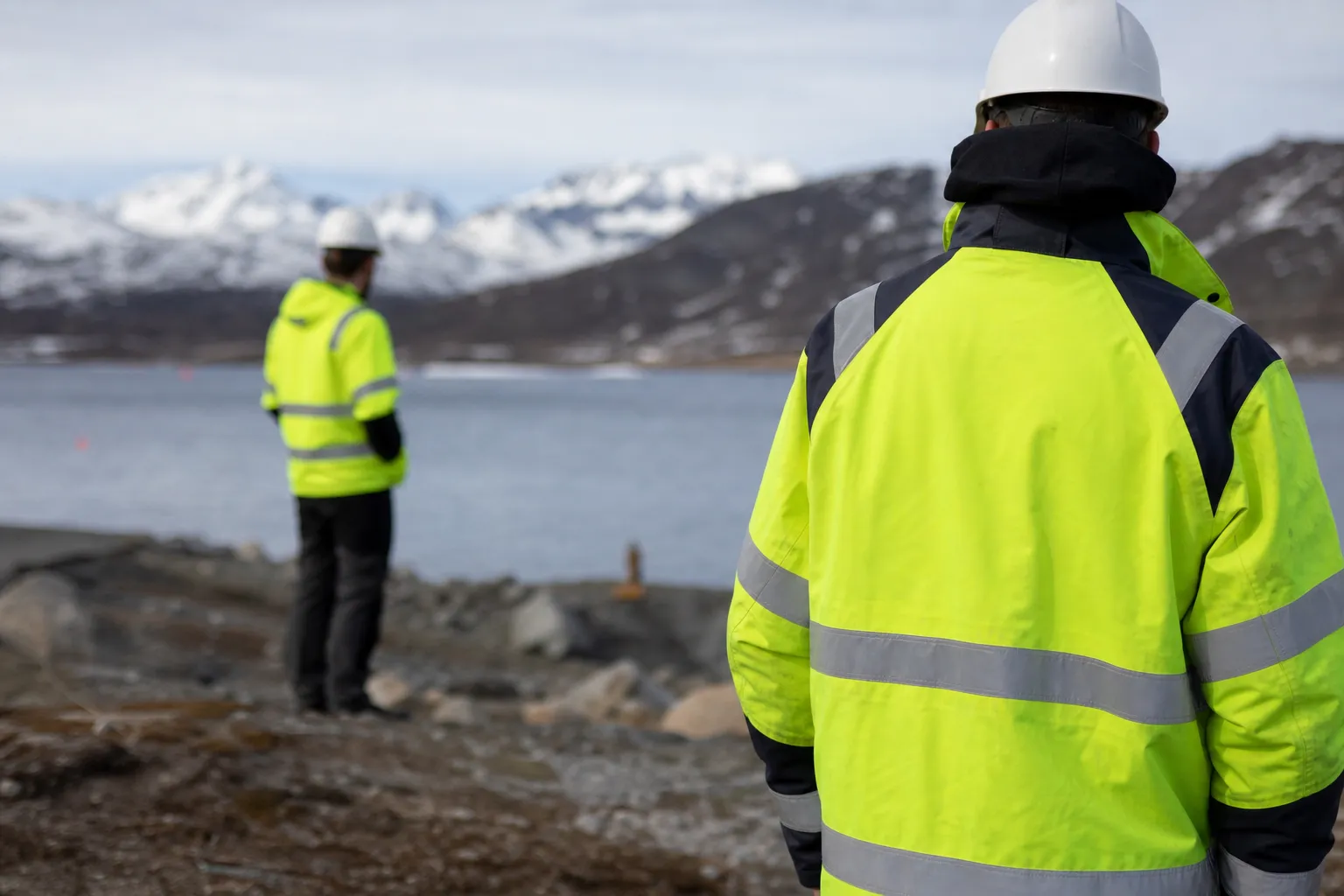
Image alt text: Industrial site in Norway with environmental monitoring equipment supporting an environmental permit norway compliance programme.
The environmental permit norway framework rewards preparation: correct authority, complete documentation, realistic timelines and disciplined compliance. Whether you are applying for a new pollution permit, renewing or reviewing an existing licence, or responding to an enforcement notice, specialist advice reduces risk and speeds approval. For a curated shortlist of practitioners, see the Environmental Lawyer Norway, shortlist & checklist, and to discuss your facility’s specific position, view the Cathrine Hambro, profile & contact page. This guide is general information and not legal advice; obtain bespoke advice for your circumstances.
This article was produced by Global Law Experts. For specialist advice on this topic, contact Cathrine Hambro at BULL, a member of the Global Law Experts network.

posted 13 minutes ago

posted 17 minutes ago

posted 31 minutes ago

posted 1 hour ago

posted 1 hour ago
posted 2 hours ago

posted 2 hours ago

posted 3 hours ago

posted 3 hours ago

posted 3 hours ago

posted 4 hours ago

posted 4 hours ago
No results available
Find the right Legal Expert for your business

Send welcome message