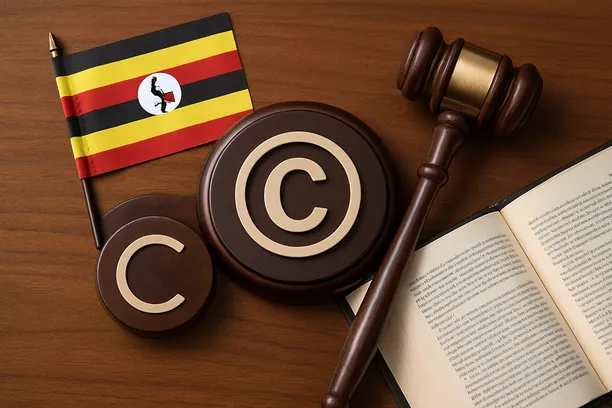
Enforcing copyright in Uganda for 2026 has entered a new era. Uganda’s Parliament passed the Copyright and Neighbouring Rights (Amendment) Bill on 17–18 March 2026, and President Museveni subsequently signed it into law, completing a legislative process that introduces stiffer penalties for piracy, broadens neighbouring‑rights protections for performers and broadcasters, and creates fresh digital and border enforcement tools. For rights‑holders, sports federations, broadcasters and collective management organisations (CMOs), the practical question is no longer whether Ugandan law covers their interests but how to translate those rights into injunctions, seizure orders and damages awards. This guide delivers the litigation playbook, step‑by‑step procedures, checklists and tactical advice, needed to act decisively under the Copyright and Neighbouring Rights Act 2026.
Top 5 Actions to Take Now
- Audit your rights chain. Map every licence, sublicence and assignment for each work or broadcast signal you rely on. Gaps in documentation are the single most common reason enforcement actions stall.
- Register with a licensed CMO. The 2026 amendments strengthen CMO enforcement powers. Registration creates a clear evidentiary trail and unlocks collective action mechanisms.
- Implement an evidence‑preservation protocol. Start capturing time‑stamped stream copies, server logs and metadata today, before infringement escalates. See the 10‑point checklist below.
- Prepare template takedown notices. Draft platform‑specific and ISP‑specific notices in advance so they can be dispatched within hours of detecting piracy.
- Identify your court and counsel. Determine whether your claim belongs in the High Court Civil Division or the Commercial Division, and instruct IP litigation counsel with experience in urgent relief applications.
What’s New in the Copyright and Neighbouring Rights Act 2026: Statutory Changes That Matter to Litigators
The Copyright and Neighbouring Rights (Amendment) Act 2026 amends the principal Copyright and Neighbouring Rights Act (Cap 222, Laws of Uganda). The amendments were driven by the need to align Ugandan law with technological realities, streaming, satellite retransmission and digital distribution, and to close enforcement gaps that allowed piracy to flourish with minimal consequence. Understanding these changes is essential to enforcing copyright in Uganda effectively.
Expanded Neighbouring Rights Defined
The 2026 amendments reinforce the economic rights of performers, sound‑recording producers and broadcasting organisations. Under the principal Act, neighbouring rights were recognised but lightly defined. The amended law now explicitly protects:
- Performers’ fixation and communication rights. Performers hold the right to authorise or prohibit the broadcasting, fixation and reproduction of their unfixed (live) performances, and to control communication of fixed performances to the public.
- Broadcasters’ signal rights. Broadcasting organisations gain enhanced rights over their broadcast signals, including the right to prohibit unauthorised retransmission, fixation and reproduction of broadcasts, a provision of direct relevance to sports broadcasting rights in Uganda.
- Producers’ reproduction and distribution rights. Sound‑recording and audiovisual producers hold strengthened reproduction, distribution and making‑available rights in their recordings.
Industry observers expect these expanded neighbouring rights to have the most immediate practical impact on live sports, where unauthorised streaming of premium broadcast signals has been rampant.
Penalties and Sentencing Changes
The new law provides stiffer penalties for copyright infringement. The amendments introduce significantly higher fines for persons who publish, broadcast, distribute or reproduce work without authorisation. Criminal sanctions now include custodial sentences and fines calibrated to deter commercial‑scale piracy. These enhanced copyright infringement penalties in Uganda 2026 mean that the criminal route has become a genuinely viable enforcement tool, not merely a theoretical one.
New Enforcement Tools: Border Measures, Seizure and Digital Notices
The 2026 Act introduces or strengthens several mechanisms that practitioners should integrate into their enforcement strategies:
- Border measures. Rights‑holders can apply for customs seizure of infringing goods at the point of entry, preventing physical pirated copies from reaching the domestic market.
- Seizure and delivery‑up powers. Courts are empowered to order the seizure and delivery‑up of infringing copies and of the equipment used to make or distribute them.
- Digital enforcement mechanisms. The Act contemplates notice‑based and court‑ordered processes for addressing online piracy, including obligations on intermediaries to cooperate with rights‑holders and law enforcement.
Who Can Enforce: Rights‑Holders, CMOs, Broadcasters and Sports Bodies, Standing and Pre‑Action Steps
Who Has Standing
Standing to bring an enforcement action under the Act is available to:
- Authors of literary, dramatic, musical and artistic works, and of audiovisual works and computer programs.
- Performers whose live or recorded performances are used without consent.
- Producers of sound recordings and audiovisual works.
- Broadcasting organisations whose signals are retransmitted, fixed or reproduced without authorisation.
- CMOs that hold mandates from rights‑holders to license, collect royalties and enforce rights on their behalf. The 2026 amendments strengthen CMO standing, enabling collective claims.
- Exclusive licensees who hold written, exclusive licences may enforce in their own name against infringers, subject to joining the rights‑holder where required by procedural rules.
Pre‑Action Checklist
Before filing any claim, rights‑holders should complete the following steps:
- Confirm ownership or exclusive licence, assemble the complete chain of title (assignment deeds, licence agreements, sublicence terms).
- Register the work with the relevant CMO if not already registered, and obtain a certificate or confirmation of registration.
- Collect and preserve evidence of infringement, screenshots, stream captures, metadata, subscriber data (see the 10‑point checklist below).
- Issue a cease‑and‑desist letter or preservation notice to the infringer, ISP or hosting provider, this may resolve the matter without litigation and creates a contemporaneous evidence trail.
- Assess whether interim relief (an ex parte injunction) is needed and prepare the supporting affidavit.
- Decide on the enforcement route: civil claim, criminal complaint, administrative action (border measures), or parallel proceedings.
Courts, Procedures and Remedies for Enforcing Copyright in Uganda
Court Jurisdiction and Procedure
Copyright infringement claims are heard in the High Court of Uganda. Where the dispute is commercial in nature, as most broadcast piracy, licensing and royalty claims will be, the Commercial Division of the High Court in Kampala has concurrent jurisdiction and offers specialised case management. Proceedings are commenced by plaint (civil) or by lodging a complaint with the Directorate of Public Prosecutions or Uganda Police (criminal).
Civil Remedies
The Act and the general law provide a robust suite of civil remedies:
- Injunctions (interim and permanent). The court may grant an interim injunction, including on an ex parte basis, to restrain ongoing or imminent infringement. For live sports piracy, where a single broadcast event may last only hours, ex parte relief is the critical tool. Applicants must demonstrate a prima facie case, a risk of irreparable harm and a balance of convenience favouring restraint.
- Damages or account of profits. A successful claimant may elect between compensatory damages (including lost licence fees and consequential losses) and an account of the infringer’s profits.
- Delivery‑up and destruction. Courts can order the delivery‑up of infringing copies, plates, moulds and equipment, and their subsequent destruction.
- Anton Piller‑style orders. In appropriate cases, the court may grant a search‑and‑seizure order (modelled on the Anton Piller jurisdiction) permitting the applicant to enter the respondent’s premises, inspect and seize infringing materials. These orders are granted in exceptional circumstances, typically where there is a real risk of destruction of evidence.
Criminal Enforcement
The 2026 amendments make the criminal route more practical. Key features include:
- Offences. It is an offence to publish, broadcast, distribute or reproduce a work without the authorisation of the rights‑holder. The Act creates specific offences for circumventing technological protection measures and for dealing in devices designed to facilitate circumvention.
- Penalties. The amended law introduces fines and imprisonment terms that are significantly higher than those under the pre‑amendment Act. Industry observers note that fines may now reach up to UGX 50 million or more for serious commercial piracy, with custodial sentences of several years for repeat or large‑scale offenders.
- Prosecutorial route. A complaint is filed with the Uganda Police Force, which investigates and refers the matter to the Directorate of Public Prosecutions. Rights‑holders can support prosecution by providing evidence packages prepared to criminal‑standard requirements.
Border Measures and Customs Seizure
Rights‑holders may apply to Uganda Revenue Authority (Customs) for the detention and seizure of goods suspected of infringing copyright at the border. The application should include evidence of the rights held, a description of the suspected infringing goods and, where possible, details of the consignment. Goods detained at the border may be held pending a court determination. This mechanism is particularly relevant for physical piracy, counterfeit DVDs, pre‑loaded media devices and unlicensed merchandise.
Enforcement Timeline and Appeals
| Stage |
Typical timeline |
Notes |
| Ex parte injunction application |
24–72 hours |
Filed on notice of motion with supporting affidavit; heard urgently |
| Inter partes injunction hearing |
2–6 weeks |
Respondent served and given time to file a reply |
| Full trial (civil) |
6–18 months |
Dependent on court diary and complexity; Commercial Division typically faster |
| Criminal prosecution |
3–12 months |
From complaint to trial; complex cases may take longer |
| Appeal (Court of Appeal) |
12–24 months |
Standard appellate timeline |
Practical Litigation Playbook for Broadcasters and Sports Bodies
For broadcasters and sports bodies, the enforcement of sports broadcasting rights in Uganda requires a sector‑specific approach. Live sports events are time‑sensitive: an unauthorised stream during a Premier League or Africa Cup of Nations match causes irreversible commercial harm within minutes. The litigation playbook below is calibrated for that reality.
Case Intake Checklist for Live Sports and Broadcasting
- Rights matrix. Document the chain from rights‑owner (e.g. FIFA, CAF, national federation) through master licensee to sublicensee. Confirm territorial scope, exclusivity and duration.
- Licence chain verification. Obtain certified copies of all licence and sublicence agreements, including any geo‑blocking or platform‑restriction obligations.
- Stream logs and geo‑blocking data. Preserve server‑side logs showing the authorised distribution footprint and any detected access from unauthorised territories or platforms.
- Subscriber and viewership data. Collect data showing the commercial value of the rights, subscriber numbers, advertising revenue, per‑event fees, to support a damages or account‑of‑profits claim.
Immediate Measures: Takedowns and Ex Parte Injunctions
Speed is everything when enforcing copyright in Uganda for 2026 against live‑stream piracy. The sequence is:
- Platform takedown notices. Send DMCA‑style takedown requests to YouTube, Facebook, Twitter/X and any other hosting platform carrying the infringing stream. Most major platforms accept copyright takedown notices submitted through their online portals within minutes.
- ISP preservation and takedown notices. Notify the Ugandan ISP carrying the infringing stream (or hosting the infringing website) with a written notice identifying the content, the rights held and the demand for immediate removal and data preservation.
- Ex parte injunction. File an urgent application in the High Court, supported by an affidavit exhibiting the evidence of infringement, the chain of title and the irreparable harm being suffered. Courts have the power to hear such applications within 24–72 hours.
Drafting Evidence Affidavits, Sample Exhibits
A well‑prepared affidavit is the foundation of any enforcement action. The following exhibits should be assembled:
- Exhibit A: Certified copies of licence and sublicence agreements establishing the applicant’s rights.
- Exhibit B: Time‑stamped screenshots and screen recordings of the infringing stream, showing the URL, the date and time, and the content being transmitted.
- Exhibit C: Server logs, WHOIS data and IP address records identifying the source and host of the infringing stream.
- Exhibit D: Metadata extracted from the infringing content (file properties, encoding data, watermark analysis).
- Exhibit E: Copies of cease‑and‑desist or takedown notices already sent to the infringer, ISP or platform, together with any responses received.
- Exhibit F: Financial evidence, subscriber data, advertising revenue figures, licence‑fee benchmarks, to quantify the harm.
Managing Parallel Remedies: Criminal Complaint Plus Civil Claim
There is nothing preventing a rights‑holder from pursuing civil and criminal remedies simultaneously. In practice, filing a criminal complaint with Uganda Police can accelerate cooperation from ISPs and platforms, the prospect of a criminal investigation often prompts faster compliance with preservation and takedown requests. Coordinate with the CMO where the infringed work is registered: the CMO can provide supporting evidence and may join the action as an interested party.
Who to Serve or Contact, Enforcement Contact Table
| Entity |
What to send |
Expected response time |
| ISP (e.g. MTN Uganda, Airtel Uganda) |
Written takedown and preservation notice with evidence exhibits |
24–48 hours |
| Hosting provider (local or international) |
Takedown notice under provider’s abuse policy or DMCA process |
24–72 hours |
| Platform (YouTube, Facebook/Meta, Twitter/X) |
Copyright takedown via platform’s online form |
Minutes to 24 hours |
| Uganda Revenue Authority (Customs) |
Border‑measures application with rights evidence and goods description |
48 hours to several days |
| Uganda Police Force (CID / Cyber Unit) |
Written complaint with evidence package (criminal route) |
Variable, follow up within 48 hours |
| Directorate of Public Prosecutions |
Supporting brief and evidence (via Police referral) |
Referred after Police investigation |
Sublicensing and Territorial Enforcement
Where piracy originates outside Uganda, a common scenario for streaming, rights‑holders should consider parallel enforcement in the jurisdiction where the stream is hosted. Within Uganda, courts have jurisdiction over infringement that occurs within the territory, including the making available of infringing content to Ugandan users. Cross‑border coordination with international counsel and with platforms’ legal teams is essential to shut down mirror sites and VPN‑accessible streams.
Online Piracy and Digital Enforcement in Uganda: Takedowns, ISPs, Platform Notices and Blocking
Procedural Route for Online Takedowns in Uganda
Online piracy enforcement in Uganda follows a layered approach:
- Direct platform takedown. Submit a copyright infringement notice through the platform’s designated process (e.g. YouTube’s Copyright Match Tool or Meta’s IP Reporting form). Include: the URL of the infringing content, proof of rights ownership, a statement of good faith and contact details.
- ISP notice. Where the infringing content is hosted on a website rather than a major platform, send a written notice to the website’s ISP. The notice should identify the infringing material, the rights infringed and the legal basis for removal under the Copyright and Neighbouring Rights Act 2026.
- Court‑ordered takedown or blocking. If the ISP or platform fails to act, apply to the High Court for an order directing the ISP to block access to the infringing URL or to remove the content. The court may also order the ISP to preserve server logs and subscriber data.
ISP Blocking and Court‑Ordered URL Blocking
Court‑ordered blocking is the most powerful tool for persistent infringers. The applicant must demonstrate that the targeted website or URL is primarily or substantially dedicated to infringement, that other remedies (direct takedowns, cease‑and‑desist) have been exhausted or would be futile, and that the blocking order is proportionate. Early indications suggest that courts will be receptive to such applications under the strengthened enforcement framework of the 2026 Act.
Platform Cooperation and Evidence Preservation
Major platforms retain infringing content data for limited periods. Issue preservation notices immediately upon detection. Where platforms are uncooperative, a court order compelling disclosure, directed at the platform’s local agent or, where necessary, served under mutual legal assistance mechanisms, may be required.
Criminal Cyber‑Investigation Coordination
For large‑scale or repeat online piracy, coordinate with Uganda Police Force’s Cyber Crime Unit. Provide a detailed evidence package including stream captures, metadata, IP address logs and financial evidence of commercial‑scale infringement. Criminal investigation can unlock compulsory data‑production powers that are unavailable in civil proceedings.
Costs, Timelines and Evidence Preservation Checklist for Enforcing Copyright in Uganda
Typical Litigation Costs
Costs vary depending on the complexity and urgency of the case. Rights‑holders should budget for:
- Lawyer fees: Instruction fees and hearing fees for counsel; urgent ex parte applications attract premium rates.
- Court filing fees: Prescribed fees for filing suits, motions and applications in the High Court.
- Expert and forensic fees: Digital forensics experts for stream capture, metadata extraction and chain‑of‑custody certification.
- Enforcement costs: Bailiff fees for execution of seizure and delivery‑up orders.
Expected Timelines
Refer to the enforcement timeline table above. Ex parte injunctions can be obtained within 24–72 hours. Full trials in the Commercial Division of the High Court typically take 6–18 months. Criminal prosecutions range from 3 to 12 months depending on complexity and investigative cooperation.
10‑Point Evidence Preservation Checklist
- Capture a full, time‑stamped screen recording of the infringing stream or content as it appears to a Ugandan user.
- Take date‑stamped screenshots of the infringing URL, including the browser address bar, page source code and any identifying information.
- Preserve the metadata of the infringing content (file properties, encoding details, resolution, watermark or fingerprint data).
- Record the WHOIS and DNS data for the infringing domain or hosting server.
- Extract and preserve IP address logs showing the geographic source of the infringing stream.
- Issue a written preservation notice to the ISP and hosting provider, requiring retention of all server logs and subscriber data related to the infringing content.
- Obtain sworn witness affidavits from personnel who observed the infringement in real time.
- Secure chain‑of‑custody documentation for all digital evidence, record who captured it, when, using what tool, and where it has been stored.
- Compile financial evidence of the commercial value of the rights infringed (licence fees, subscriber revenue, advertising income).
- Organise all evidence into indexed exhibit bundles ready for attachment to an affidavit in support of an injunction or plaint.
Timeline of Key Legislative Events
| Date |
Event |
Practical relevance for rights‑holders |
| 17–18 March 2026 |
Parliament passed the Copyright and Neighbouring Rights (Amendment) Bill |
Amendments become law, start planning compliance and enforcement strategy immediately |
| 24 March 2026 |
URSB published notice confirming Parliament’s action |
Official government communication, cite for statutory text and summary |
| 29 April 2026 |
Reports of Presidential assent |
Final enactment, enforcement provisions activated; criminal enforcement eligibility confirmed |
Compliance Actions by Entity Type
| Entity type |
Immediate compliance action |
Enforcement role under 2026 Act |
| Broadcasters / rights‑holders |
Audit licences, update sublicensing controls, preserve logs |
Seek civil remedies; trigger criminal complaints for piracy |
| Sports bodies |
Record ownership chain for event broadcasts; secure exclusive media rights paperwork |
Enforce neighbouring rights for broadcasts and obtain injunctions |
| CMOs |
Update member registrations; operationalise royalties tracking |
Collect and enforce royalties; act as collective claimants |
| ISPs / platforms |
Implement notice‑and‑takedown process; preserve data on request |
Court‑ordered blocking and preservation obligations under the Act |
Conclusion
The Copyright and Neighbouring Rights (Amendment) Act 2026 gives rights‑holders, broadcasters and sports bodies the strongest enforcement toolkit Uganda has ever provided. The law is now in force; the task is execution. Whether through urgent injunctions, criminal complaints, border seizures or digital takedowns, enforcing copyright in Uganda for 2026 demands speed, preparation and a clear litigation strategy. Consult the Uganda lawyer directory to connect with experienced IP litigation counsel and begin building your enforcement programme today.
Sources
- Uganda Registration Services Bureau (URSB), Parliament of Uganda Passes Copyright and Neighbouring Rights (Amendment) Bill 2025
- Parliament of Uganda, Smiles for Creatives as MPs Pass Copyright Law
- ULII, Copyright and Neighbouring Rights Act, 2006 (consolidated text)
- Uganda Broadcasting Corporation, Museveni Signs Copyright Law in Latest Batch of Acts
- Daily Monitor, Museveni Signs Copyright Law, Seven Others
- Chambers Practice Guides, Sports Law 2026: Uganda
- The Observer, A Review of Copyright and Neighbouring Rights (Amendment) Bill, 2025
- The Independent, Copyright Law: What It Means for Creators and Consumers
- NilePost, Museveni Signs Landmark Copyright Law to Boost Earnings for Creators and Curb Piracy