
To enforce intellectual property belgium rights effectively in 2026, founders and rights-holders need a clear map of four routes, civil seizure (saisie), customs border measures, criminal enforcement, and litigation before the Unified Patent Court (UPC), and the judgement to sequence them correctly. Belgium offers one of Europe’s most potent evidence-preservation tools in the ex parte saisie, sits inside the EU customs enforcement network under Regulation (EU) No 608/2013, and gives patent owners access to the UPC for cross-border relief across participating states. The choice between these routes is not academic: pick the wrong one and you lose evidence, momentum, and leverage.
This playbook takes a position on which route to run, when, and in what combination, with indicative costs, timelines, and the exact evidence you must assemble before you act.
Who this is for: tech founders, in-house counsel, IP managers and SMEs weighing enforcement paths. Your decision goal: pick the right route, civil seizure, UPC, customs, or criminal, and prepare evidence and counsel fast.
Expert context: this guide draws on the practice of a European Patent Attorney and court-registered saisie expert. See the Stephanie Sarlet, GLE profile.
Do not deliberate for weeks. In most infringement scenarios the correct answer is knowable within a short review of the facts. Here is our position, stated plainly.
| Route | Speed | Cross-border reach | Cost | Headline remedy |
|---|---|---|---|---|
| Civil saisie / interim | Fast for urgent applications | Belgium only | Low–moderate to start | Evidence preservation (+ possible injunction) |
| Customs measures | Fast (short holds) | EU-wide at borders | Moderate | Detention + destruction |
| Criminal | Slow (weeks–months) | Belgium unless cooperation | Low direct fees early | Confiscation, fines, imprisonment |
| UPC | Moderate–fast for interim | UPC contracting states | High | Multi-state injunction + damages |
Belgium gives rights-holders four interlocking mechanisms. Understanding how they combine is the single most valuable skill when you set out to enforce intellectual property belgium claims, because the routes are not mutually exclusive, the strongest campaigns often run several at once.
The Belgian civil courts offer the saisie-contrefaçon (seizure in matters of counterfeiting, or beslag inzake namaak), an evidence-gathering order, frequently granted ex parte, allowing a court-appointed expert and, where relevant, a judicial officer to enter premises, inspect, describe, and (where authorised) seize infringing goods and evidence. This descriptive-and-seizure measure is regulated in the Belgian Judicial Code and is a leading reason many rights-holders choose to litigate here. Alongside it, civil courts can grant interim measures to stop ongoing infringement pending a full trial, including via summary (kort geding / référé) proceedings.
Where infringement is intentional and commercial in scale, the public prosecutor can pursue criminal charges. Police can seize goods, and convictions can carry fines and, in serious cases, imprisonment. Criminal enforcement is slower and you cede control of timing, but its deterrent effect on repeat counterfeiters can be significant.
Belgian Customs, operating under Regulation (EU) No 608/2013, can detain suspected infringing goods at the border on the strength of an application for action filed by the rights-holder. This is a front line against imported counterfeits and integrates Belgium into the EU-wide enforcement network, with the EU Intellectual Property Office (EUIPO) operating the central Enforcement Database (IP Enforcement Portal) that supports applications for action.
For patents, the Unified Patent Court, which opened on 1 June 2023, offers injunctions and damages across UPC contracting states in a single action. Belgium is a UPC contracting state, so Belgian-situated patentees can litigate centrally, but must weigh central revocation risk and cost against the geographically limited Belgian national route. Note that the UPC’s territorial reach extends only to the contracting Member States that have ratified the UPC Agreement, not to the whole of the EU.
Parallel-path picture (textual flow): Infringement detected → preserve evidence → (a) urgent saisie in Belgium to secure goods and proof → (b) customs application to hold cross-border shipments → (c) criminal report where intent is clear → (d) UPC or Belgian civil suit for injunction and damages. These can run concurrently, not necessarily in strict sequence.
The saisie is a key reason sophisticated rights-holders litigate in Belgium. It can convert a suspicion of infringement into court-grade evidence before the infringer can react. If you intend to enforce intellectual property belgium rights against a party operating on Belgian soil, this is often an early move.
Use a saisie (a descriptive/seizure order, frequently granted without notice to the other side) when your priority is evidence: you need to capture proof of infringement, quantify the scale, and identify the supply chain. Belgian courts grant a descriptive saisie where there is a valid IP right and indications of infringement; the more intrusive seizure measures require a stronger showing, and courts assess proportionality and the risk to evidence.
Use an interim injunction (via summary proceedings) when the infringement is already documented and your priority is to stop it pending trial. In practice the two are often combined: a saisie secures the evidence, and interim relief halts the conduct. The saisie’s surprise nature makes it a sharp tool for evidence at risk.
Evidence checklist for a saisie:
Sample documents to request from counsel: the petition, supporting statements/evidence, expert appointment terms, the seizure inventory template, and the chain-of-custody form.
Indicative figures only, to be confirmed with counsel: a saisie can vary widely in cost depending on complexity, expert fees, and the number of sites. Urgent descriptive orders can be obtained relatively quickly, while execution and reporting take longer. Follow-on litigation on the merits adds materially to the budget, see the risk matrix below. Court fees, expert fees and recoverable procedural indemnities are set by the applicable Belgian rules and should be confirmed with counsel.
If counterfeits are crossing borders, customs is often the most cost-effective weapon. A single application can stop shipments before they reach the market and engages the EU-wide network rather than a single national court.
Border enforcement runs on Regulation (EU) No 608/2013, administered in Belgium by the General Administration of Customs and Excise within FPS Finance. The regulation lets rights-holders file an application for action so customs can detain suspected infringing goods at import or export.
Your application should equip customs officers to identify infringing goods on sight. Prepare:
Once goods are detained, customs notifies the rights-holder and the declarant/holder of the goods. You then have a limited window (generally 10 working days from notification, or 3 working days for perishable goods, with a possible extension of the standard period on request) to confirm infringement and initiate proceedings or agree destruction. Where the holder and declarant agree (or do not object within the deadline), a simplified destruction procedure under the regulation can dispose of the goods without full court proceedings. A small-consignments procedure is also available in defined circumstances.
Filing the application for action itself is generally free of charge, though the rights-holder bears certain costs (for example, storage, destruction, and handling) and may face liability if detention proves unjustified. Outcomes range from destruction (often the preferred result) to release where infringement cannot be established or proceedings are not initiated within the deadline.
Criminal IP enforcement is the route to choose for deterrence, not speed. When infringement is deliberate, commercial, and repeated, criminal proceedings can carry consequences that civil orders cannot match.
Belgian law provides for criminal sanctions against certain intentional infringements of IP rights, in particular counterfeiting and piracy carried out with fraudulent or malicious intent, with enhanced treatment where conduct is commercial in scale. Available measures, administered through the courts and the Federal Public Service Justice, can include fines and, in serious cases, imprisonment, alongside confiscation of infringing goods and equipment. The threshold for criminal treatment centres on intent and commercial exploitation rather than isolated or good-faith conduct.
Enforcement typically begins with a complaint to the police or public prosecutor. Where suspicion is established, investigators can conduct searches, seize goods, and preserve evidence. As the complainant, you should provide a structured evidence package, the same core materials as for a saisie, to support the investigation. Because the prosecutor controls the case, you have less influence over timing than in civil proceedings.
Weigh deterrence against speed. Criminal proceedings are slower and less predictable, but a conviction can damage the infringer commercially and reputationally. Many rights-holders file a criminal complaint and pursue civil relief in parallel, using the civil track for immediate measures while the criminal case builds.
For patent owners, a key strategic question is whether to enforce intellectual property belgium patent rights nationally or centrally through the UPC. The answer turns on reach, risk appetite, and budget.
Choose the UPC when you want a single injunction spanning multiple contracting states, when the infringement is genuinely multi-jurisdictional, and when your patent is robust enough to withstand a central validity challenge. Choose the Belgian courts when the dispute is national, when you want to limit exposure to central revocation, or when the patent has been opted out of UPC jurisdiction (available for European patents that are not unitary patents during the transitional period). The decisive trade-off: the UPC’s multi-state reach comes bundled with the risk that a single revocation decision affects protection across all designated contracting states. National litigation isolates that risk to one territory.
The UPC’s procedural landscape has developed rapidly since it opened, and its growing body of case law has begun to shape the rules on jurisdiction, evidence orders, and interim relief. The Rules of Procedure include provisions on orders to produce evidence and to preserve evidence (including inspection and seizure measures analogous to a saisie), which affect how quickly and how forcefully a claimant can compel disclosure. Divisions continue to calibrate the availability of provisional and protective measures and the treatment of validity within preliminary proceedings, with the practical effect that early evidentiary strategy, and the choice of division, can strongly influence outcomes. Rights-holders should track official UPC updates and published decisions rather than relying on secondary summaries.
This is the single-page comparison to keep on your desk. It sets out how each route to enforce intellectual property belgium claims performs across the dimensions that actually drive decisions.
| Dimension | Civil seizure / interim (Belgian courts) | Customs / border measures (EU Reg 608/2013) | Criminal enforcement (Belgian authorities) | UPC (multi-state patent litigation) |
|---|---|---|---|---|
| Typical remedies | Description/seizure of goods, preservation orders, preliminary injunctions, disclosure | Cross-border suspension, detention, destruction; info from declarant | Criminal seizure, confiscation, fines, imprisonment; investigative measures | Injunctions, damages, delivery up, cross-border orders within contracting states |
| Speed (typ.) | Fast for urgent saisie; follow-on litigation months | Fast, detention generally up to 10 working days; enforcement depends on national customs | Slower, weeks to months; dependent on prosecutor | Can be fast for provisional measures; full proceedings target ~12 months to first-instance decision |
| Cross-border reach | Limited to Belgium; coordinate for seizures elsewhere | EU-wide border holds via customs networks | Belgium only unless international cooperation | Across UPC contracting states |
| Evidence standard | Indications of infringement for descriptive measures; stronger showing for seizure | Administrative standard; prima facie right + suspicion of infringement | Reasonable suspicion to investigate; higher standard to convict | Varies; provisional measures on prima facie basis; full trial assesses validity |
| Costs (indicative) | Moderate to obtain; full litigation significantly higher | Application free to file; rights-holder bears storage/destruction costs | Lower direct fees early; higher if prolonged | High: court fees per schedule plus substantial counsel/expert costs |
| Need for security/bond | May be required (to cover wrongful-seizure damages) | Liability undertakings apply; costs borne by holder | Not typical for reporting | Often required for provisional measures |
| Enforceability | High within Belgium | High at ports/entry points via customs | Strong deterrent if prosecuted | Enforceable in designated contracting states |
| Best for | Immediate preservation of evidence, fast local relief | Stopping imports/exports of counterfeits at EU borders | Deterrence, repeat offenders, organised counterfeiting | Multi-state patent enforcement, systemic relief |
| Main risk/limit | Belgium only; must convert measure into a suit in time | Needs strong evidence/technical description; temporary holds only | Slow, unpredictable; less control over timing | Cost, central revocation risk, procedural development |
Our recommended default for a serious infringement with cross-border elements: file a customs application to intercept shipments, execute an urgent saisie to lock down evidence and identify the supply chain, and prepare either a Belgian civil claim or a UPC filing for the substantive injunction and damages. Add a criminal complaint where the evidence shows intentional, commercial-scale counterfeiting. Throughout, protect the chain of custody and be ready to post security. Sequencing matters, but the value of a coordinated strike is what often defeats sophisticated infringers.
Minimum evidence package for any action:
Templates to request from counsel:
See also the planned cluster resources: How to Obtain and Execute a Saisie in Belgium, checklist; Belgian Customs and Border Measures for Counterfeits, practical guide; and Preparing IP Evidence for Injunctions and Interim Relief (Belgium & UPC).
Budget bands are indicative and should be confirmed with counsel, as fees and recoverable costs depend on the applicable Belgian and UPC rules:
Key risk triggers and mitigation: failing to convert a saisie into proceedings within the legal deadline (mitigate by drafting the merits claim before execution); wrongful-seizure exposure (mitigate by posting adequate security and building a strong case); central revocation at the UPC (mitigate by pre-action validity review and a considered opt-out strategy); and weak customs applications (mitigate with precise technical descriptions and sample markings).
Match the professional to the task. For patent strategy, validity, and UPC representation, engage a European Patent Attorney with litigation authorisation or a qualified litigator; for saisie and Belgian civil relief, engage a litigator experienced with court-registered seizure procedures. For an example of the combined patent-attorney and saisie-expert profile you should look for, see the Stephanie Sarlet, GLE profile. You can also browse the Belgium, Intellectual Property practice page and the GLE lawyer directory.
This article was produced by Global Law Experts. For specialist advice on this topic, contact Stephanie Sarlet at Pitch.law, a member of the Global Law Experts network.
To enforce intellectual property belgium rights on solid legal footing, work from primary sources and confirm every step with qualified counsel. The official resources below cover UPC procedure, EU customs enforcement, patent law, and Belgian customs and judicial process. For counsel engagement, see the Stephanie Sarlet, GLE profile.
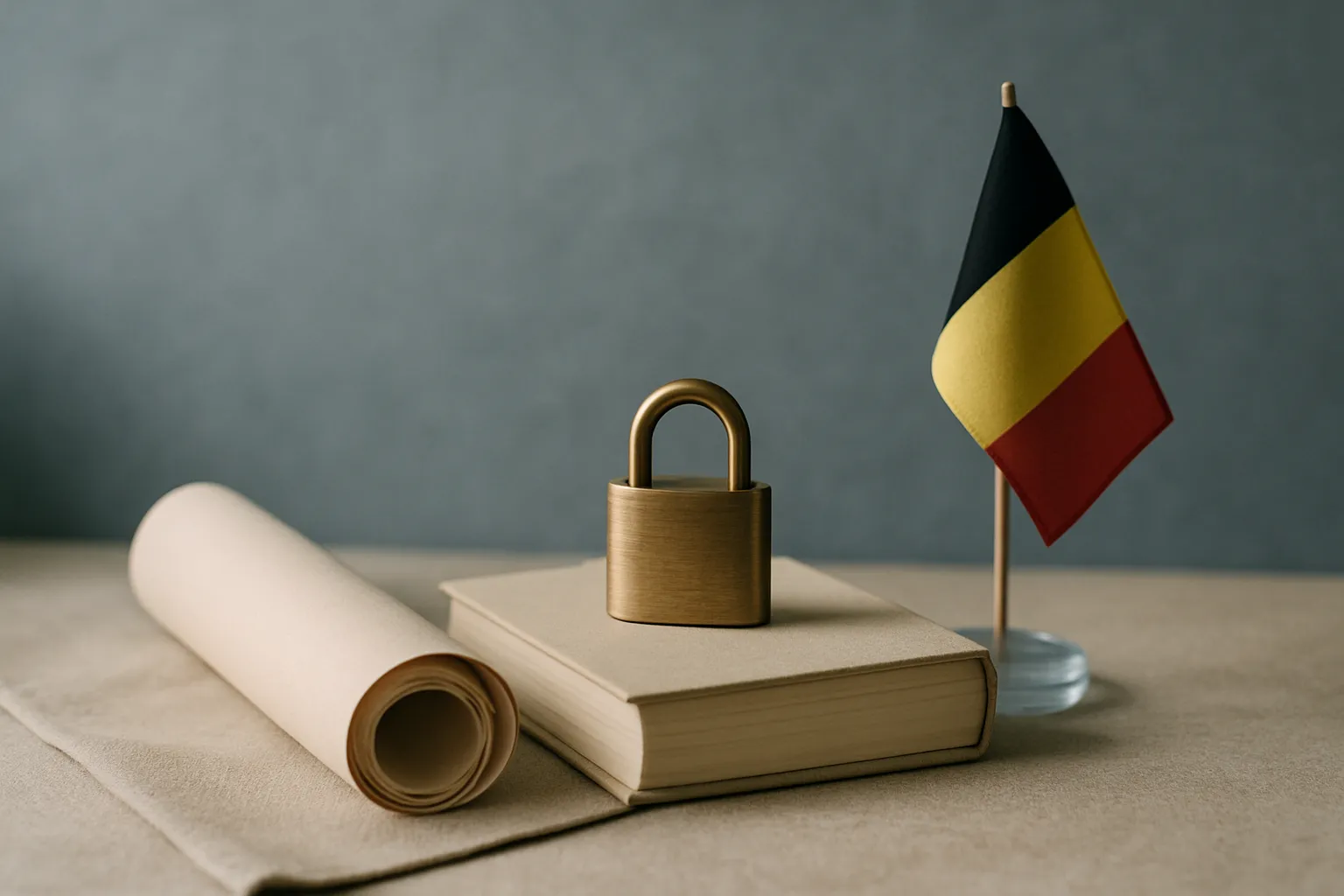
Image alt: Tech founder reviewing IP enforcement options in Belgium (saisie, customs, UPC), a visual summary of how to enforce intellectual property belgium claims across four routes.
posted 1 minute ago
posted 31 minutes ago
posted 48 minutes ago

posted 56 minutes ago
posted 56 minutes ago
posted 1 hour ago

posted 2 hours ago

posted 2 hours ago

posted 2 hours ago

posted 2 hours ago

posted 2 hours ago

posted 3 hours ago
No results available
Find the right Legal Expert for your business

Send welcome message