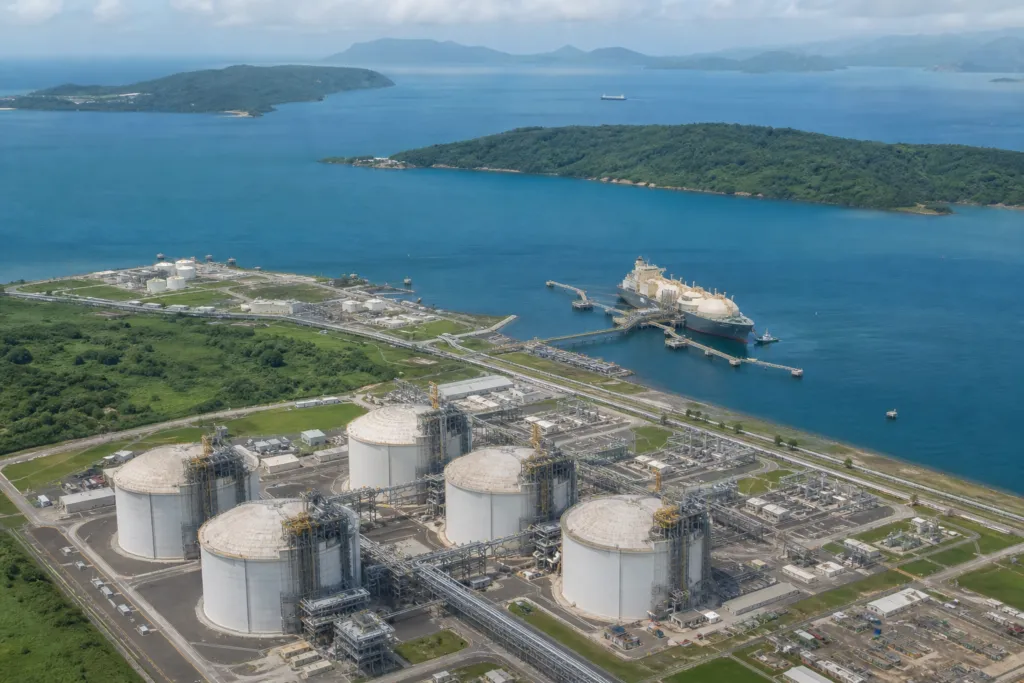
Securing energy permits Trinidad and Tobago requires a coordinated pathway through several regulators, and recent regulatory developments have influenced the sequence, conditions and timing that project teams must plan for. This guide sets out an operational, step‑by‑step route through environmental approval, planning permission and electricity licensing for developers, independent power producer (IPP) sponsors, in‑house counsel and environmental consultants. It maps which approvals each project type triggers, provides indicative timelines with named responsible parties, lists the documents each stage demands, and flags practical planning points. Where a statutory timeline or fee schedule is quoted, confirm it directly with the regulator before you rely on it. The objective is a defensible, sequenced permitting programme rather than a reactive scramble at commercial close.
Any developer building or expanding generation, transmission or distribution infrastructure in Trinidad and Tobago will interact with several regulators: the Environmental Management Authority (EMA) for environmental clearance, the Town and Country Planning Division (TCPD) for planning permission, and the Ministry of Energy and Energy Industries (MEEI) together with the Trinidad and Tobago Electricity Commission (T&TEC) for licensing and grid access. Each has its own trigger points, documentary standards and decision processes. Note that under the Electricity (Inspection) Act and related arrangements, the framework for electricity supply centres on T&TEC as the transmission and distribution utility, and IPPs typically contract with T&TEC under power purchase arrangements; confirm the applicable licensing route with the MEEI and T&TEC for your specific project.
Use this guide at the earliest feasible stage, ideally before land is committed and well before any engineering, procurement and construction (EPC) contract is signed. The most common cause of delay in energy permits Trinidad and Tobago is not regulator slowness but incomplete or poorly sequenced applications. Early pre‑application engagement with the EMA and TCPD allows you to confirm whether a full Environmental Impact Assessment (EIA) is required, what the applicable fee category is, and whether your grid connection will require network upgrades that dictate the entire programme.
The guide is structured as a numbered process with a timeline table, a phased document checklist and a costs schedule. It also isolates practical planning points so that sponsors can align their PPA and EPC timelines and environmental covenants accordingly. For broader context, see the Energy law in Trinidad & Tobago, overview and, if you need named advisers, the Energy lawyers, Trinidad & Tobago directory. This is a compliance guide, not legal advice on any specific project; confirm all thresholds and conditions with local counsel and the relevant regulators.
Not every energy project triggers the same permit set. The scale, technology, fuel type, location and grid impact of a project determine which regulators you must engage and in what depth. Establishing this early prevents both over‑preparation for minor projects and dangerous under‑preparation for major ones.
The main project categories and their typical permitting weight are:
Environmental permitting under the Environmental Management Act is triggered by the nature and scale of a project’s potential environmental impact. Certain categories of development are designated under the Certificate of Environmental Clearance (Designated Activities) Order as activities requiring a Certificate of Environmental Clearance (CEC) from the EMA. Where significant impacts are anticipated, the EMA may require a full EIA supported by baseline studies, impact modelling and a mitigation plan. Generation projects involving combustion, emissions, marine works, or significant land clearance commonly require a CEC and may require an EIA.
Because the designation and thresholds are set by regulation and applied by the EMA on a project‑by‑project basis, the only reliable way to fix your obligations is a pre‑application consultation with the EMA. This consultation helps determine whether the project needs a full EIA, a simplified assessment, or none, and it informs the Terms of Reference (ToR) that will govern any required studies. Confirm the current criteria against the Environmental Management Act and the CEC (Designated Activities) Order as published in the Revised Laws and against current EMA guidance.
Planning permission from the TCPD is required wherever a project involves a change of land use, new building or development on a site. For most energy projects, generation plant, substations, access roads, laydown areas, planning permission is a distinct approval that runs alongside the environmental process. Some planning decisions will depend on the outcome of the environmental assessment, so the two processes must be coordinated rather than run in complete isolation.
The following steps present the standard route to environmental, planning and electricity approvals. For each step, identify the responsible party and build the estimated duration into your programme. Several steps can be run in parallel, which is where experienced project teams recover the most time. The indicative timeline table below summarises the sequence, ownership and duration for the full set of energy permits Trinidad and Tobago requires. Durations are estimates only; confirm statutory periods with the relevant regulators.
Begin with a scoping exercise that fixes the site, technology, capacity, fuel and grid connection point. In parallel, complete land and title checks: obtain certified copies of titles or leases, confirm site control, and identify easements, rights of way and any encumbrances that could later block planning permission or an environmental clearance. A defective land position is one of the most common grounds for refusal and is entirely avoidable.
Prepare a stakeholder map at this stage, adjacent landowners, community groups, fisherfolk associations for coastal sites, and the regulators themselves. Request pre‑application meetings with the EMA and TCPD to confirm which approvals apply and to flag any early concerns. This step is owned by the sponsor with legal counsel and a land surveyor, and typically runs two to six weeks.
Where the EMA determines an EIA is required as part of the CEC process, it issues or approves Terms of Reference that define the scope of the studies. Your environmental consultant drafts a proposed ToR based on the project description and the pre‑application discussion. The ToR sets out the baseline surveys, the impact categories to be studied, air, noise, water, ecology, traffic, social, and the methodologies to be used. Build a comment window into your schedule where consultation on scope is required. ToR finalisation typically takes several weeks.
With an approved ToR, the environmental consultant conducts the baseline studies and impact modelling, then prepares the EIA report. This is the single longest technical phase and the one most exposed to seasonal survey constraints and specialist availability. The EIA must include a robust Environmental Management Plan (EMP) setting out mitigation measures, monitoring metrics and responsible parties.
Public consultation is integral, not cosmetic. You must give proper notice, hold accessible meetings, record attendance and minutes, and maintain an objection log with reasoned responses. A thin or poorly documented consultation is a frequent trigger for delay and challenge. This phase can run several months for medium projects, and materially longer for complex offshore or large generation projects.
The completed application, EIA and EMP (where required), consultation record and supporting annexes are submitted to the EMA for decision on the Certificate of Environmental Clearance. The EMA reviews completeness, the adequacy of mitigation, and whether residual impacts are acceptable. Expect requests for clarification or additional studies; respond quickly and fully to avoid restarting the clock. The Certificate will carry conditions, monitoring obligations, reporting frequencies and, often, rehabilitation or decommissioning requirements, that flow directly into your operational compliance programme. Confirm current decision periods with the EMA.
Submit the planning application to the TCPD with the site plan, project description and any environmental information the Division requires. Planning permission addresses land use, siting, access, drainage and development control. Where the planning decision depends on the environmental outcome, coordinate the timing so that the clearance is available when the TCPD needs it. Confirm current forms, fees and criteria directly with the TCPD before filing.
Generation and supply of electricity in Trinidad and Tobago are closely tied to T&TEC’s statutory role as the utility. IPPs typically contract with T&TEC under a power purchase arrangement, and generation projects require the appropriate electricity‑sector approvals coordinated through the MEEI and T&TEC, together with a grid connection study and agreement. Because this track interlocks with the grid connection study, start it early. Submit the technical project description, the connection study request to T&TEC, and any required approvals through the MEEI. Parallel processing with the environmental and planning tracks is both possible and advisable. Link this to your commercial documents, the connection study output directly affects your PPA and EPC assumptions.
Confirm the applicable licensing or approval route with the MEEI and T&TEC for your project.
Approval is the start of an ongoing obligation, not the end of the process. The Certificate of Environmental Clearance and planning permission carry conditions, periodic monitoring reports, emissions and noise compliance, and adherence to the EMP. Any material change to the project after approval, capacity increase, technology change, new emissions source, may require a variation. Build a compliance calendar and assign clear internal ownership so that reporting deadlines and any bond obligations are never missed.
| Step (number & short name) | Responsible (who) | Typical duration (estimate, confirm with regulator) |
|---|---|---|
| 1. Pre‑application scoping & land/title checks | Project sponsor / developer; legal counsel; land surveyor | 2–6 weeks |
| 2. Engage EMA pre‑consultation / agree EIA ToR (if required) | Environmental consultant; sponsor | Several weeks (ToR finalisation) |
| 3. EIA studies & public consultation | Environmental consultant; sponsor; EMA | Several months (complex projects longer) |
| 4. EMA CEC / environmental decision | EMA | Depends on completeness & objections, confirm current period |
| 5. Town & Country Planning permission | TCPD / local planning authority | Confirm current period with TCPD |
| 6. Electricity‑sector approvals | MEEI / T&TEC | Parallel processes possible; confirm with MEEI/T&TEC |
| 7. Grid‑connection agreement & commercial close | Sponsor; T&TEC; offtaker | Dependent on technical works |
| 8. Post‑permit monitoring & compliance reporting | Sponsor; EMA / TCPD | Ongoing (per permit conditions) |
Documentation for energy project permits is best organised in phases: pre‑application, EIA stage, licence stage and construction. Preparing documents phase‑by‑phase avoids the common failure of assembling everything at once and discovering gaps at submission. Two formatting disciplines prevent most deficiencies: provide certified copies where originals are required, and ensure that the technical description used across the environmental, planning and electricity applications is consistent, regulators cross‑check them.
Common deficiencies include unreconciled capacity figures between documents, missing easement disclosures, consultation records that lack an objection log, and EMPs that name no responsible party for each monitoring metric. The phased checklist below is the core documentary map for energy permits Trinidad and Tobago.
| Document name | Purpose / when required | Who prepares | Notes |
|---|---|---|---|
| Site plan & land title documents | Establish site control / land use, pre‑app | Sponsor / land surveyor; legal counsel | Certified copies of titles, leases; show easements |
| Project description (non‑technical & technical) | For CEC / EIA & electricity applications | Sponsor / technical consultant | Include capacity, fuel type, technologies |
| Terms of Reference (ToR) for EIA | To scope EIA studies (where required) | Environmental consultant | Consultation on scope may be required |
| Environmental Impact Assessment (EIA) report | Primary environmental study (where required) | Environmental consultant | Baseline studies, mitigation, monitoring plan |
| Public consultation record | Evidence of stakeholder engagement | Sponsor / consultant | Meeting minutes, notices, objection log |
| Environmental Management Plan (EMP) | Mitigation & monitoring plan | Environmental consultant | Monitoring metrics, responsible parties |
| Traffic, noise, air emissions studies | Technical annexes to EIA | Specialist consultants | Use local modelling standards |
| Social Impact Assessment (if required) | For projects with community impacts | Social consultant | Include resettlement plan if applicable |
| Construction & decommissioning plan | Condition of permit & planning | Sponsor / EPC contractor | Rehabilitation bond or guarantee details |
| Power Purchase Agreement / connection studies | Electricity approvals and grid access | Sponsor / legal & technical advisers | Connection study from T&TEC |
| Proof of payment of fees / bonds | Permit & approval conditions | Sponsor / finance team | Provide bank guarantees as required |
The largest single lever on your overall schedule is parallel processing. The environmental and planning tracks can be coordinated so that studies feed both, and the electricity approvals and grid connection study can run alongside the environmental process rather than after it. Where teams treat the process as strictly sequential, they add months without regulatory benefit.
Public consultation windows and any comment periods are fixed points you cannot compress, so schedule them early and treat them as immovable milestones. Where a permit is refused or conditioned unfavourably, be aware that appeal and judicial review windows apply and can be short; build legal review of the decision into your programme so you do not lose the right to challenge through inaction. Note that decisions of the EMA on a CEC may be subject to appeal to the Environmental Commission under the Environmental Management Act, confirm the applicable route and time limits with local counsel.
As a realistic planning benchmark, allow several months for a medium project from ToR agreement to the key approvals, and considerably longer for large or complex generation, offshore or multi‑agency projects. Always confirm statutory decision periods and consultation deadlines with the EMA and TCPD at your pre‑application meetings, because programme assumptions built on generic figures are a frequent source of slippage.
Budget across several distinct categories. Regulator application fees are generally modest relative to the dominant cost, which is EIA consultancy, this scales sharply with project complexity, especially where offshore or major generation studies are involved. Monitoring bonds and rehabilitation guarantees can be substantial and are sometimes negotiable in structure. Fees and bond levels change; the figures below are broad indications only. Always confirm current fee schedules and bond requirements directly with the EMA, TCPD, MEEI and T&TEC before finalising your budget.
| Item | Indicative cost (TT$), confirm current figures | Notes |
|---|---|---|
| EMA CEC / permit fees | Modest; per current EMA fee schedule | Varies by scale and category |
| EIA consultancy (small projects) | Lower end of consultancy range | Simple assessments cost less |
| EIA consultancy (large projects) | Substantially higher | Offshore / major generation highest |
| Public consultation & notification | Variable | Advertising, meetings |
| Town & Country planning fees | Per current TCPD schedule | Depends on application type |
| Monitoring bonds / rehabilitation guarantees | Variable, can be significant | Often set as % of decommissioning / remediation cost |
| Legal & transaction advisory fees | Variable by complexity | Licences & PPA negotiation |
| Grid connection works (T&TEC upgrade) | Variable | Depends on network upgrades required |
Project teams should plan around a tight interlock between environmental clearance, electricity approvals and grid access, with detailed conditions increasingly attached to permits and approvals. The following operational points reflect established good practice and should be verified against current MEEI and EMA guidance:
The actionable recommendations for sponsors are to build PPA and EPC timelines that reflect this interlock, to draft permit‑friendly commercial clauses, and to budget for monitoring and any bonding. Confirm current requirements against MEEI releases, EMA guidance and the applicable statutory provisions before committing to a programme.
| Approval / regulator | Typical trigger | What they approve | When to engage |
|---|---|---|---|
| EMA (environmental) | Designated activities / projects with environmental impacts per EMA criteria | Certificate of Environmental Clearance & EMP (EIA where required) | At project scoping / before major construction |
| Town & Country Planning Division (TCPD) | Land use change, new builds | Planning permission / development control | Before construction / pre‑construction |
| MEEI | Electricity‑sector policy and approvals | Relevant electricity‑sector approvals | During project development / before commercial operation |
| T&TEC (utility / grid) | Any grid connection, network upgrade or power purchase | Connection study, connection agreement, power purchase arrangement, technical requirements | Concurrent with electricity approvals; early engagement advised |

Obtaining energy permits Trinidad and Tobago in 2026 is a manageable but demanding exercise that rewards early planning, disciplined documentation and parallel processing across the EMA, TCPD, MEEI and T&TEC. The practical difference between a smooth and a stalled project turns on how well the environmental, planning and electricity tracks are sequenced and how faithfully commercial documents reflect permit conditions. Treat pre‑application engagement, robust public consultation and early grid studies as the foundations of your programme, and confirm every threshold, timeline and fee directly with the regulators before you rely on it.
To move from planning to execution on energy permits Trinidad and Tobago, arrange a pre‑application meeting with a local energy team and use the referenced document checklist to structure your submission. Review this guidance regularly and whenever the regulatory framework changes.
This article was produced by Global Law Experts. For specialist advice on this topic, contact Jon Paul Mouttet at Fitzwilliam Stone Furness-Smith & Morgan, a member of the Global Law Experts network.