
Our Expert in Italy
No results available
Electronic evidence litigation Italy sits at the intersection of three forces reshaping dispute strategy in 2026: the continuing implementation of the Cartabia civil justice reform reworking procedural timetables and case management, intensifying GDPR enforcement by the Italian data protection authority, and mounting friction over cross‑border data held by foreign providers. For in‑house counsel, litigators and compliance officers, the practical questions are urgent and specific, when does the duty to preserve arise, how do you produce personal data without triggering a data‑protection breach, and which route delivers admissible evidence when the material sits on a server abroad.
This guide answers those questions with stepwise workflows, a centrepiece comparison table, sanctions analysis and a clear decision framework grounded in the Italian Code of Civil Procedure, the GDPR and the Hague Evidence Convention. It is written lawyer‑to‑lawyer: no marketing gloss, just the decisions you must make and the order in which to make them.
If you take nothing else from this guide, take these five actions the moment litigation is reasonably anticipated:
Who this guide is for: in‑house counsel, litigators, compliance officers and foreign counsel who need practical steps to preserve, request and produce electronic evidence in Italian civil courts.
Italian civil procedure has never had an American‑style discovery phase. Instead, the Codice di Procedura Civile gives the judge power to order the production of specific documents from parties and, in defined circumstances, from third parties (see, in particular, Articles 210 and following), and to draw consequences from a refusal. Electronic evidence litigation Italy therefore operates within a document‑production model that is targeted rather than sweeping: you must generally identify the material you seek, not fish for it. That distinction shapes every preservation and production decision that follows.
The Italian concept of the documento informatico, an electronic document, as defined and regulated by the Codice dell’Amministrazione Digitale (Legislative Decree No. 82/2005) and, at EU level, by the eIDAS Regulation, encompasses a broad range of digitally stored information. In practice, electronic evidence litigation Italy will involve some or all of the following categories:
Metadata, creation and modification timestamps, authorship, hash values, is frequently decisive because it supports or undermines the authenticity of the underlying document. Preserve it as carefully as the content itself.
The civil justice reform introduced by Legislative Decree No. 149/2022 (the “Cartabia reform”), promoted by the Ministero della Giustizia, continues the modernisation of civil procedure with tighter case‑management timetables and expanded use of the electronic docket (Processo Civile Telematico). The likely practical effect for electronic evidence litigation Italy is that windows for raising evidentiary requests and objections are more front‑loaded, with pleadings and requests to be defined at an earlier stage of proceedings. In practical terms, counsel who arrive at the first case‑management hearing without a preservation and production plan may find it harder to correct course later. Treat the early procedural stages as the moment to fix your e‑evidence strategy, not as a formality.
Preservation is where most cases are won or lost before a single document is produced. The core principle: once litigation is reasonably anticipated, take reasonable and documented steps to prevent the loss or alteration of relevant electronic material. Doing this well protects both your evidentiary position and your client against the adverse consequences of destroying or altering evidence.
Italian law does not codify a US‑style “litigation hold” obligation, but preserving relevant material early is a matter of prudent practice, because courts may draw unfavourable inferences from a party’s conduct in relation to evidence under the general evidentiary powers of the Codice di Procedura Civile (in particular Article 116, which allows the judge to draw inferences from the parties’ behaviour in the proceedings). Practically, the moment to act is when litigation becomes reasonably foreseeable, typical triggering events include receipt of a letter before action, a formal complaint, a regulatory inquiry that may lead to litigation, or an internal decision to sue.
Err on the side of preserving early; the cost of over‑preservation is far lower than the cost of destroyed evidence.
Each data location demands a different preservation technique. In electronic evidence litigation Italy, the following approach works across most matters:
A defensible deletion policy is your best protection against an allegation that evidence was improperly destroyed. The routine, good‑faith operation of a documented retention schedule, applied consistently and suspended the moment a hold is triggered, helps demonstrate that any earlier deletion was ordinary business practice, not an attempt to destroy evidence. Coordinate closely with IT: the legal hold must be technically enforced, not merely announced. A hold that custodians ignore because auto‑purge keeps running offers no protection. Retention schedules must themselves be GDPR‑compliant, respecting storage‑limitation obligations.
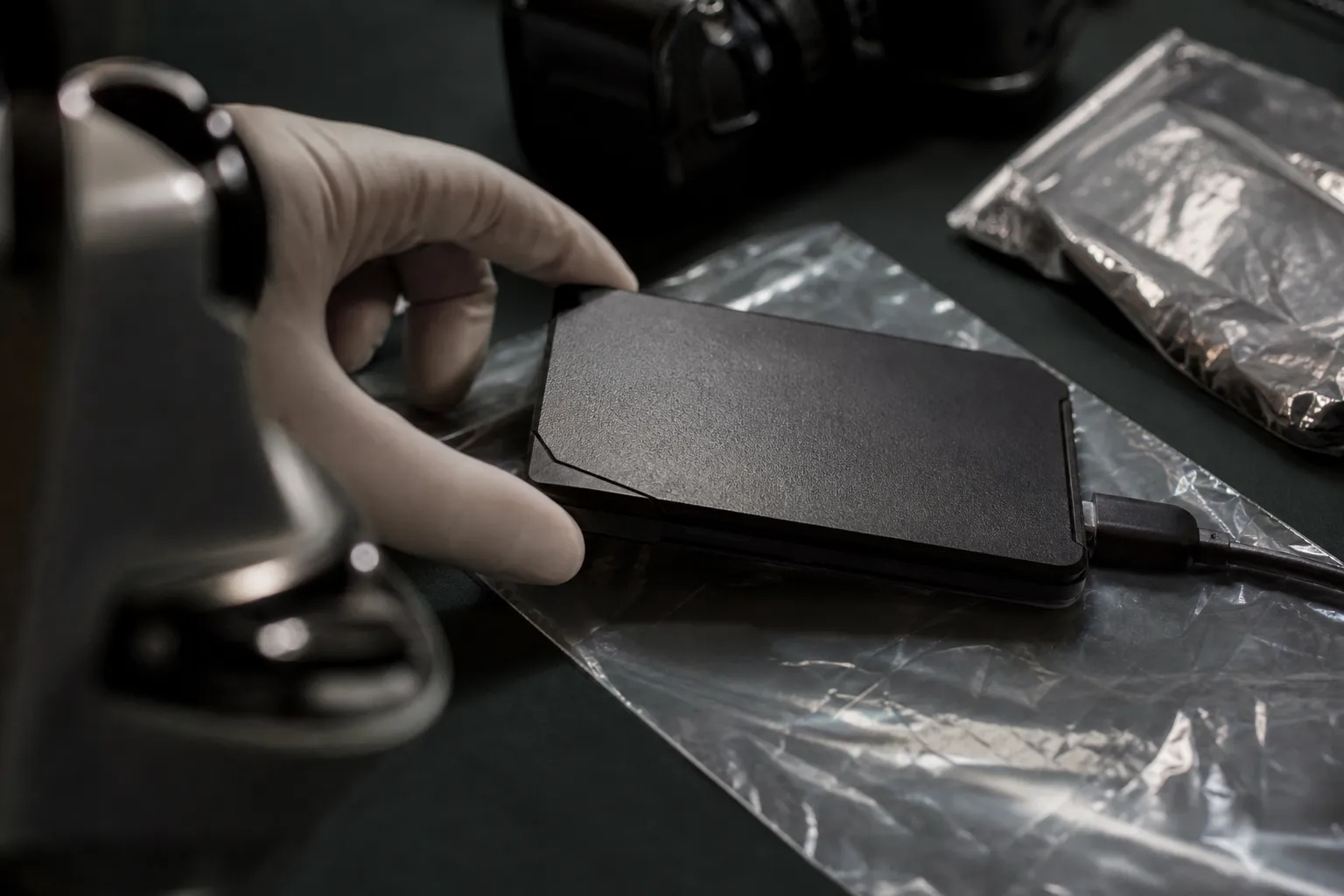
To make preserved material admissible, build and document the chain of custody. Record hash values at the point of collection so you can later prove the data has not changed. Preserve the logs that show when and how collection occurred, and obtain a short written attestation from the IT staff or forensic vendor who performed the work. In any authenticity dispute over a documento informatico, this contemporaneous record is what persuades the court that the evidence is what you say it is.
Preservation action checklist:
| Timeframe | Actions |
|---|---|
| Immediate (day 0) | Issue written litigation hold to custodians and IT; suspend deletion and auto‑purge; identify key custodians. |
| 24–72 hours | Map data locations; freeze relevant backups; send preservation requests to cloud/SaaS providers; begin forensic imaging of priority devices. |
| 1–2 weeks | Complete collection with hashes and logs; obtain IT attestations; assess GDPR/personal‑data exposure; document the full chain of custody. |
Once evidence is preserved, the question becomes how it enters the proceedings. Production in Italy is court‑mediated: the judge, on a party’s application, may order the disclosure of identified documents held by the opponent or a third party under the Codice di Procedura Civile (Articles 210 and 211).
A party seeking documents from an opponent files a reasoned application identifying the material and explaining its relevance. The court, exercising its discretion, may order production, and it may extend that order to third parties who hold relevant documents. Because the model is targeted, the more precisely you can describe the electronic material, the mailbox, the date range, the transaction, the more likely the court is to grant your request. Vague, discovery‑style demands tend to fail.
Italian courts are not powerless when a party stonewalls. The consequences of failing to comply with a production order, producing late, or destroying evidence include:
These remedies make timely, good‑faith preservation and production not merely best practice but a tactical necessity in electronic evidence litigation Italy.
Present electronic evidence in a form the court can trust and navigate. A well‑constructed bundle includes: the documents in a stable format (typically PDF/A for exhibits, with native files available where authenticity may be contested); a metadata index showing source, custodian and hash; and a covering statement or attestation of authenticity describing how the material was collected and preserved. This packaging converts raw data into evidence the court can accept with confidence.
The most common blocker in electronic evidence litigation Italy is the fear that producing documents containing personal data will breach the GDPR. That fear is often overstated, but it must be managed with a structured approach rather than reflexive refusal or reckless disclosure.
No. The GDPR (Regulation (EU) 2016/679) does not create a blanket prohibition on disclosing personal data in litigation. It requires a lawful basis for processing and adherence to principles such as data minimisation and purpose limitation. The establishment, exercise or defence of legal claims is a recognised context in which processing can be justified, and compliance with a legal obligation or court order provides a strong footing for the processing involved. The practical test is not “does this contain personal data?” but “can I justify this specific disclosure and have I minimised it?”
Minimisation is the workhorse of GDPR‑compliant production. Before producing, apply a redaction protocol that removes personal data not relevant to the issues in dispute, third‑party names, contact details, unrelated content. Where sensitive material must be produced, ask the court for measures limiting who may access it and for what purpose. A documented redaction methodology and appropriate confidentiality measures together help demonstrate that any processing was necessary and proportionate.
When to escalate: consider input from the Garante per la protezione dei dati personali or seek the court’s guidance where a disclosure risks significant data‑protection rights, large volumes of sensitive personal data, special‑category data, or transfers that lack a clear safeguard. Documenting your data‑protection analysis is a risk‑management tool: it is far better to have recorded a considered position or obtained the court’s authorisation than to defend an enforcement action after the fact. The professional conduct rules overseen by the Consiglio Nazionale Forense also reinforce counsel’s duty to handle client and third‑party data responsibly throughout disclosure.
Where produced data will move outside the EEA, to foreign counsel, a foreign court or an overseas provider, the transfer rules in Chapter V of the GDPR apply on top of the disclosure question. Confirm that an appropriate transfer mechanism is in place before the data leaves the EEA, and factor this into your timeline. Cross‑border transfer clearance frequently adds days or weeks that counsel forget to build into the litigation schedule.
When relevant material sits abroad, electronic evidence litigation Italy becomes a question of which cross‑border channel to use. The right choice depends on where the data is, whether the holder will cooperate voluntarily, and how much time you have.
Italy is a contracting party to the Hague Convention on the Taking of Evidence Abroad in Civil or Commercial Matters (1970), which provides a formal mechanism to obtain evidence located in another contracting state for use in civil proceedings. A request travels through central authorities and is executed under the law of the requested state. Within the EU, cooperation between Member States in the taking of evidence is instead governed by Regulation (EU) 2020/1783. The Hague route is the most robust option where a foreign holder in a non‑EU contracting state will not cooperate voluntarily, but it is also slow, expect months, not weeks, and build translation and formal‑execution time into your plan.
Many cloud and SaaS providers will voluntarily preserve data on receipt of a properly framed request, and some will produce content to the account holder or under defined cooperation procedures. Voluntary preservation is fast and should almost always be pursued in parallel with any formal route: it freezes the data while the slower mechanism runs. Production, however, is more constrained, providers routinely resist disclosing third‑party content without a valid legal basis or order.
Where the Hague route is unavailable or the holder is beyond voluntary cooperation, letters rogatory, a formal judicial request for assistance, remain an option. As with the Hague Convention, execution depends on the foreign authority and timelines are long. Reserve this route for evidence you genuinely cannot obtain any other way, and begin the process as early as possible.
Cross‑border requests carry distinctive risks in electronic evidence litigation Italy: foreign law may prohibit or restrict the disclosure the Italian court expects; providers may resist on data‑protection or jurisdictional grounds; and the timeframes can outrun the case‑management deadlines applicable under the current procedural rules. The mitigation is sequencing, start early, preserve voluntarily while the formal channel runs, and keep the Italian court informed of the steps taken so that delay is attributed to the process, not to your client.
The choice between the three principal routes is the central strategic decision. The table below compares domestic court‑ordered production, production under GDPR constraints, and a formal cross‑border request across the dimensions that matter most. Read it as a decision aid: identify where your data sits and how sensitive it is, then follow the row that fits.
| Dimension | Domestic court‑ordered production | GDPR‑limited production (redaction/protective order) | Cross‑border formal request (Hague / letters rogatory) |
|---|---|---|---|
| Typical timeline | Weeks to months (court schedules) | Weeks (plus data‑protection/counsel clearance) | Months (Hague/letters rogatory often slow) |
| Enforceability in Italy | High, court can draw inferences and allocate costs against non‑compliance | Conditional, court may order but production must respect GDPR; confidentiality measures help | Variable, depends on foreign execution and compliance |
| GDPR / data‑protection risk | Lower if data minimised; court orders help justify processing | Medium, must apply lawful basis and minimisation; redaction reduces risk | Higher complexity, may require transfer mechanism and data‑protection analysis |
| Cost (relative) | Low–medium (court fees + counsel time) | Medium (privacy counsel, redaction tools) | High (formal process, translation, foreign counsel) |
| Liability if refused | Risk of adverse inference and cost consequences | Risk of data‑protection challenge if data improperly disclosed | Risk of refusal by foreign authority; data‑protection conflicts |
| Best when | Data held in Italy / provider will comply | Sensitive personal data where minimisation protects privacy | Data located abroad or provider under foreign jurisdiction |
Understanding what a court can do to a party who mishandles evidence sharpens both your defensive discipline and your offensive strategy. In electronic evidence litigation Italy, the principal consequences flow from the court’s power to evaluate the parties’ conduct and to allocate costs.
To turn an opponent’s destruction of electronic evidence to your advantage, you must build a record. Document the point at which the preservation expectation arose, show that the opponent knew or should have known the material was relevant, and demonstrate that it was nonetheless lost or altered. Where you establish that pattern, the court can draw an adverse inference under Article 116, treating the missing evidence as unfavourable to the party responsible, and can reflect the misconduct in its cost decisions. The evidentiary logs and hashes you preserved for your own material are equally powerful in exposing gaps in your opponent’s.
Cost allocation is a live tactical lever. Under the “loser pays” principle in Italian civil procedure, and the court’s power to shift costs for conduct, a party that forces the other side into unnecessary applications by refusing reasonable production risks bearing the additional costs. Conversely, a party that over‑demands or fishes may find the court unsympathetic. The disciplined litigator produces promptly what is plainly relevant, resists only what is genuinely objectionable, and documents every step, so that when costs are decided, the record shows reasonableness.
Operational tools shorten the gap between anticipating litigation and being ready for it. The summaries below outline the assets every team handling electronic evidence litigation Italy should have on hand.
A litigation‑hold letter to custodians and IT should open plainly: “You are instructed to preserve, and to refrain from deleting, altering or overwriting, all documents and electronically stored information relating to [matter], with immediate effect and until further notice.” The eight clauses to include are:
Italian courts expect produced electronic material to be accompanied by a statement explaining what it is and how it was obtained. An attestation of authenticity should identify the source and custodian, describe the collection method, state the hash values, confirm that the material has not been altered since collection, and attach the metadata index. This is what transforms a stack of files into evidence the court can rely on.
Consider an anonymised commercial dispute in which the decisive communications were held by a non‑EU SaaS provider and contained substantial personal data about employees unconnected to the claim. Facing the reform’s compressed timetable, counsel acted on two tracks simultaneously. First, they sent an immediate voluntary preservation request to the provider, freezing the relevant account data while the formal process was prepared. Second, they applied to the Italian court for a targeted production order accompanied by confidentiality measures limiting access, and prepared a redaction protocol stripping out the irrelevant personal data of third parties.
Because the voluntary preservation held the material in place, the slower cross‑border formalities did not risk data loss, and the confidentiality measures and redaction addressed the GDPR‑minimisation concerns. The relevant communications entered the record with their authenticity documented by hash values and an attestation, and the opponent’s late, incomplete disclosure of its own copies drew an adverse inference. The lesson: parallel tracks and early minimisation planning defeat the twin risks of delay and data‑protection exposure.
Use this framework to reach a defensible decision quickly:
The recommendation: default to domestic court‑ordered production for reachable data, layer GDPR minimisation over any production touching personal data, and reserve the cross‑border formal route for genuinely foreign‑held evidence, but always fire a voluntary preservation request the moment you know foreign data matters.
Electronic evidence litigation Italy in 2026 rewards preparation and punishes drift. The Cartabia reform compresses the time you have to act, the GDPR demands that every production be justified and minimised, and cross‑border data conflicts can stall a case for months if you start the formal channels too late. The disciplined approach is consistent throughout: preserve early and document the chain of custody; produce narrowly and defensibly, using redaction and confidentiality measures where personal data is involved; and choose your route deliberately, domestic production where data is reachable, GDPR‑limited production where personal data must be handled with care, and formal cross‑border requests only where the evidence genuinely sits beyond your reach, with voluntary preservation running in parallel.
Follow the decision framework, keep the court informed of the steps you take, and you convert the pressures of electronic evidence litigation Italy into a controlled, winnable process.
This article was produced by Global Law Experts. For specialist advice on this topic, contact Alberto Lama at Alture Legal, a member of the Global Law Experts network.

posted 7 minutes ago

posted 26 minutes ago
posted 43 minutes ago

posted 54 minutes ago

posted 60 minutes ago

posted 1 hour ago

posted 2 hours ago

posted 2 hours ago

posted 2 hours ago

posted 3 hours ago

posted 3 hours ago

posted 3 hours ago
No results available
Find the right Legal Expert for your business

Send welcome message