
Our Expert in Denmark
No results available
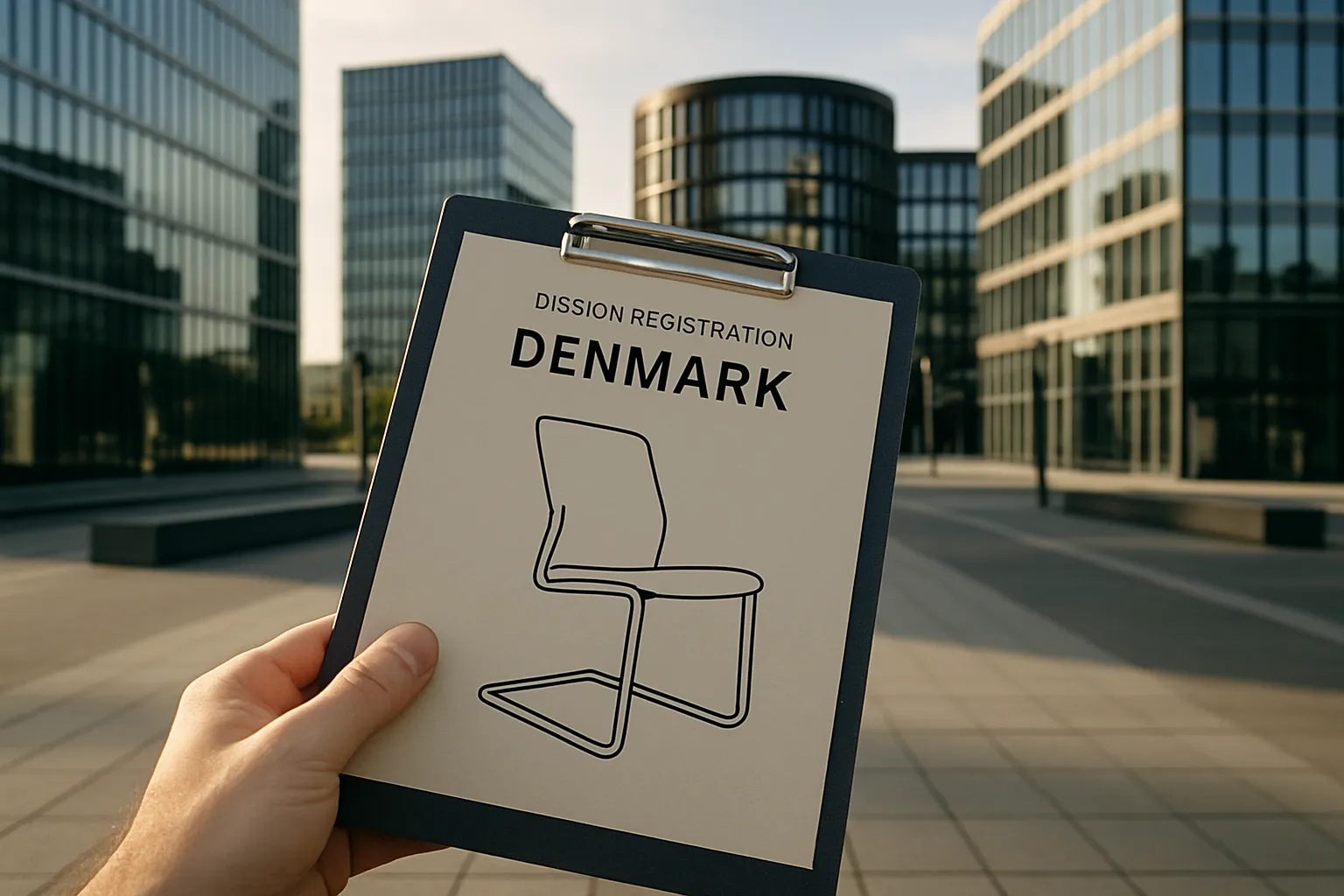
Design registration Denmark decisions have become sharper in 2026, because fee adjustments at the Danish Patent and Trademark Office (DKPTO) took effect on 1 January 2026 and may change the economics of national filing and renewal. This guide is written for in-house counsel, general counsel, founders and product teams who need to secure protection for a product’s appearance and budget accurately for the year ahead. It walks through the whole process, pre-filing checks, drawings and representations, filing channels, priority claims, fees, timelines, renewals and the practical choice between a Danish national registration, a Registered Community Design and the international Hague route. Every procedural and statutory point is anchored to primary sources so you can plan with confidence.
This guide is general information and not legal advice; contact counsel for case-specific advice.
Yes. There are three principal routes to design protection covering Denmark:
Danish national protection can run up to a maximum of 25 years from filing, renewed in five-year periods. The right choice depends on the geographic scope you need, your budget and your launch timing, all of which we cover below.
Registering a Danish national design is an administrative process handled by the DKPTO. Unlike a patent, a Danish design application is not subjected to a full substantive novelty examination before registration, which means the route from filing to registration can be relatively fast. That does not remove the need for careful preparation: the strength and enforceability of your right depends heavily on the quality of the representations you file and on ensuring the design is genuinely new and has individual character. The following step-by-step sequence sets out how to register a design in Denmark from pre-filing checks through to publication.
Before you commit to a Danish design application, confirm that the design is new and has individual character, meaning it produces a different overall impression on the informed user compared with designs already made available to the public. Run design searches against the DKPTO register and the EUIPO database to identify prior designs that could undermine novelty or provide grounds for a later invalidity action. Confirm who owns the rights (designer, employer or commissioning entity) and check whether any earlier disclosure has occurred. A grace period may protect certain disclosures by the designer, but relying on it is a strategic decision best taken with counsel.
Assemble applicant details, a clear indication of the products to which the design will be applied, and the representations (drawings or photographs) that define the scope of protection. The representations are the single most important element of a Danish design application, because they define precisely what is protected. We deal with representation specifications in detail below.
File electronically through the DKPTO online filing service. Online filing is the recommended method: it is faster, reduces transcription errors and provides an immediate filing receipt establishing your filing date. You may file yourself or through a professional representative.
Pay the filing fee and any per-design or publication fees at the point of filing. The 2026 DKPTO fee schedule is discussed in the dedicated fee section below.
Once the DKPTO has confirmed the formal requirements are met and carried out its checks, the design is registered and published in the design register. Publication makes the design available to the public and starts the clock for third parties who may wish to challenge validity.
A Danish design application requires a limited set of core documents, but each must be correct. The essential elements are:
Any natural or legal person may apply. Applicants without a domicile in the European Economic Area may be required to act through a representative. Using an authorised representative, for example a lawyer whose conduct is governed by the standards of the Danish Bar and Law Society, or another qualified IP representative, is common practice for foreign applicants and for complex portfolios, and helps avoid formal defects that delay registration.
The quality of your drawings and representations is decisive. Because the DKPTO does not carry out a full substantive novelty examination, the representations you file effectively become the definition of your monopoly. Poorly prepared images narrow, blur or accidentally broaden your protection, and errors cannot always be fixed after filing.
Follow these principles when preparing design drawings and representations for Denmark:
A good rule of thumb: prepare your representations as though the examiner and any future court will look at nothing else. For a design registration Denmark filing intended to support enforcement, invest in professional-quality drawings from the outset rather than correcting problems later.
The DKPTO operates an online filing service that is the primary and recommended channel for a Danish design application. Electronic filing captures your filing date instantly, guides you through the mandatory fields and reduces the risk of formal deficiencies. When completing the application, pay attention to the details: give a clear title, indicate the relevant product class or classification, and ensure the applicant details exactly match your records. Applicants may file directly or instruct a representative to file on their behalf; foreign applicants in particular often file through a Danish representative. Refer to the DKPTO for the current online filing address and technical filing requirements.
If you have already filed a corresponding design application in another Paris Convention country, you can claim priority in Denmark. A valid priority claim means your Danish filing is treated, for novelty and individual-character purposes, as though it were filed on the date of that earlier application. The key rules are:
A priority claim can be commercially valuable, for example, it lets a company test a market with an initial home filing and then extend protection to Denmark within six months without losing the earlier date. Because the documentation and deadlines are strict, a design priority claim in Denmark should be diarised carefully and supported by the correct certified copies.
The DKPTO fee schedule was adjusted with effect from 1 January 2026. These changes affect national filing and renewal economics and therefore feed directly into the decision between a Danish national route and an EU-wide Registered Community Design. Because the DKPTO periodically updates its published fees, always confirm the current DKPTO design fees against the official DKPTO fee notice before budgeting or filing.
The DKPTO fee structure for a Danish design application is typically built from several distinct components:
The practical impact of the 2026 adjustments depends on your filing pattern. For a single Danish design, the change to the base filing and publication fees is the main variable. For a portfolio filed as a multiple-design application, the per-design fees compound, so the total cost is sensitive to how many designs you group together. For long-lived designs, the escalating renewal fees over a potential 25-year life are often the largest lifetime cost, which makes renewal strategy, deciding which designs to maintain, as important as the initial filing decision. Confirm the exact current amounts on the DKPTO fee notice before you file.
One of the most consequential decisions in any design registration Denmark project is whether to file nationally, seek EU-wide protection through a Registered Community Design, or use the Hague System for international coverage. The right answer turns on where you sell, how much you want to spend and how quickly you need protection. The table below compares the three routes across the features that matter most.
| Feature | Danish national design (DKPTO) | Registered Community Design (EU) | Hague (international) |
|---|---|---|---|
| Territory covered | Denmark only | All EU member states, including Denmark | Each designated contracting party you select |
| Cost (1-design vs 5-design) | Lowest for Denmark-only needs; per-design fees apply for multiples (confirm 2026 DKPTO fees) | Single filing covering the whole EU; economical per country when broad coverage is needed | Single international fee plus fees per designated jurisdiction |
| Term of protection | Up to 25 years from filing, in 5-year renewal periods | Up to 25 years from filing under Regulation (EC) No 6/2002, in 5-year periods | Depends on designated jurisdictions; aligned to national/regional maximum terms |
| Filing language | Danish (and as accepted by the DKPTO) | Any official EU language, with a second language selected | English, French or Spanish under the Hague System |
| Renewal process | Renewed at the DKPTO every 5 years | Renewed centrally at EUIPO every 5 years | Renewed centrally through WIPO every 5 years |
| Time to registration | Generally fast, no full substantive novelty examination | Typically fast where no deficiencies arise | Varies; central processing with national/regional effect |
| Enforcement jurisdiction | Danish courts | EU-wide, through designated Community design courts | National courts of each designated jurisdiction |
| Best for | Products sold only in Denmark; budget-conscious single-market launches | Products launched across the EU in one step | Global launches spanning several countries or regions |
If your commercial footprint is Denmark alone, a Danish national design is usually the most cost-effective and direct route. If you are launching across the EU, the Registered Community Design gives you unitary protection in a single filing and avoids the cost and administration of multiple national registrations. If your market is genuinely global, the Hague route lets you centralise international filing while still obtaining protection in each designated territory. Many companies combine routes, for example, an RCD for the EU plus Hague designations for key export markets, and a design registration Denmark filing may still be worthwhile where you want a national right optimised for Danish enforcement.
Because the Danish system registers designs without a full substantive examination for novelty, the path from filing to registration is comparatively quick. The DKPTO checks that formal requirements are met, correct applicant details, adequate representations and payment of fees, and then proceeds to registration and publication. The absence of a full pre-grant novelty examination means the burden of ensuring the design is new and has individual character sits largely with the applicant, and any weakness may surface later in an invalidity challenge rather than during prosecution.
Publication is a significant milestone. It makes the design available for public inspection and is the point at which third parties can assess whether they wish to contest validity. Practically, this means enforceability and exposure to challenge both flow from the same event. If you have commercially sensitive timing, discuss with counsel how publication interacts with your launch plans. For exact current processing times, refer to the DKPTO, which reflects live administrative timescales more reliably than any static estimate.
A Danish design registration is not a one-off transaction; it is a right that must be maintained. Protection is granted for an initial period and can be renewed in successive five-year periods up to a maximum of 25 years from the filing date. Each renewal requires payment of the applicable DKPTO renewal fee, which typically increases over the life of the registration.
Key maintenance considerations include:
Design renewal Denmark strategy should be actively managed rather than left to chance. Over a 25-year life the cumulative renewal cost can be substantial, so a periodic portfolio review, keeping commercially important designs alive and allowing obsolete ones to lapse, is a sensible discipline. Confirm current renewal and restoration fees on the DKPTO site, particularly in light of the 2026 fee adjustments.
Most problems in a Danish design application are avoidable with careful preparation. The most frequent issues include:
The common thread is preparation. A short pre-filing checklist, search, confirm ownership, verify representations, confirm classification and diarise priority deadlines, prevents the majority of objections and protects the value of your design registration Denmark filing.
The following mini case studies illustrate how scope, cost and timing drive the route decision.
A Danish homeware brand is launching a new product line sold only in Denmark. Its priority is a low-cost, enforceable right in its home market. A Danish national design filed with the DKPTO is the natural choice: the territory matches the commercial footprint, the cost is contained, and enforcement runs through the Danish courts. This is the classic register-a-design-in-Denmark scenario.
A consumer-electronics company is rolling out a product across multiple EU markets simultaneously. Filing national designs in each country would be slow and expensive. A Registered Community Design under Regulation (EC) No 6/2002 provides unitary EU-wide protection, including Denmark, in a single filing, with central renewal at EUIPO and EU-wide enforcement.
An exporter is launching in the EU plus several markets outside Europe. Here a combined strategy works best: a Hague international registration through WIPO to designate the relevant non-EU territories, potentially alongside an RCD for the EU and, where Danish-specific enforcement is a priority, a Danish national design. The decision logic is straightforward, start with the geographic scope you need, weigh the per-jurisdiction cost, and factor in how quickly you need protection in each market.
As a simple decision flow: if you sell only in Denmark, file nationally; if you sell across the EU, file an RCD; if you sell globally, use Hague, and add national or EU rights where enforcement strategy demands it.
A well-executed design registration Denmark strategy combines legal precision with commercial judgement. Global Law Experts can support you at every stage: conducting pre-filing prior-design searches, drafting and reviewing representations to maximise scope, managing Paris Convention priority claims and certified documentation, advising on the national versus EU versus Hague decision, and monitoring renewal and restoration deadlines so your portfolio never lapses by accident. To discuss a filing or portfolio, contact your Global Law Experts IP contact. For related guidance, see our resources on Intellectual Property, Denmark practice and the Denmark IP lawyer directory.
This article was produced by Global Law Experts. For specialist advice on this topic, contact Kim Larsen, a member of the Global Law Experts network.
A successful design registration Denmark strategy in 2026 rests on three things: filing complete, high-quality representations; choosing the right route between national, EU and Hague protection; and managing renewals actively over the life of the right. The DKPTO fee adjustments effective 1 January 2026 make the national-versus-EU calculation worth revisiting, particularly for portfolios with several designs or long expected lifespans. Verify fees, timelines and statutory terms against the primary sources below before you file, and take advice on interpretive and strategic questions. Handled well, a Danish design registration is a fast, cost-effective and enforceable way to protect the appearance of your products in Denmark and beyond.
This guide is general information and not legal advice; contact counsel for case-specific advice.

posted 2 minutes ago

posted 31 minutes ago
posted 2 hours ago

posted 2 hours ago

posted 3 hours ago

posted 3 hours ago

posted 3 hours ago

posted 4 hours ago

posted 4 hours ago

posted 4 hours ago

posted 5 hours ago

posted 6 hours ago
No results available
Find the right Legal Expert for your business

Send welcome message