
posted 2 months ago
In the UAE’s rapidly evolving construction sector, where landmark projects shape entire skylines, time is not merely a contractual obligation but a critical economic driver. When schedules slip, the legal and financial repercussions can be substantial.
Against this backdrop, construction delay has become a sophisticated area at the intersection of project management, contract law, and judicial scrutiny. This article outlines the key legal concepts governing delays in the UAE, including their classification, causes, entitlement to extensions of time, treatment of concurrent delays, liquidated damages, claims procedures, and avenues for dispute resolution.
What Legally Constitutes a Delay?
Time is a fundamental contractual element in construction projects, and adherence to agreed completion dates is essential to achieving the project’s objectives. Under UAE law, a delay is simply the failure to complete the works within the agreed timeframe, but the consequences depend on the type of non-performance. If the contractor completes the works late, liquidated damages typically apply as a pre-agreed penalty for each period of delay. However, if the contractor abandons the project or is terminated before completion, the legal position changes dramatically.
Understanding Why Delays Occur
Delays in UAE construction projects are usually assessed through UAE Civil Code principles good faith, cooperation, and risk allocation and the FIDIC contract framework. FIDIC distinguishes between delays that are excusable, compensable, or non-excusable, depending on which party is responsible and whether notice and causation are properly demonstrated. UAE tribunals rely heavily on critical path analysis to determine entitlement.
Employer-Caused Delays
These delays arise when the employer fails to meet obligations under UAE law or FIDIC, entitling the contractor to additional time and, often, money. Common examples include late drawings or approvals, variations issued late in the project, delayed site access, late payments, and employer-related permit issues, UAE courts have held that regulatory delays are typically foreseeable. Poor coordination of employer-nominated subcontractors or multiple contractors can also disrupt the critical path.
Contractor-Caused Delays
Delays caused by the contractor’s own performance expose the contractor to delay damages. Typical issues include non-coordination, weak planning, insufficient manpower or resources, slow mobilization, late procurement of long-lead items, technical errors requiring rework, and inadequate site supervision.
Neutral or Non-Fault Delays
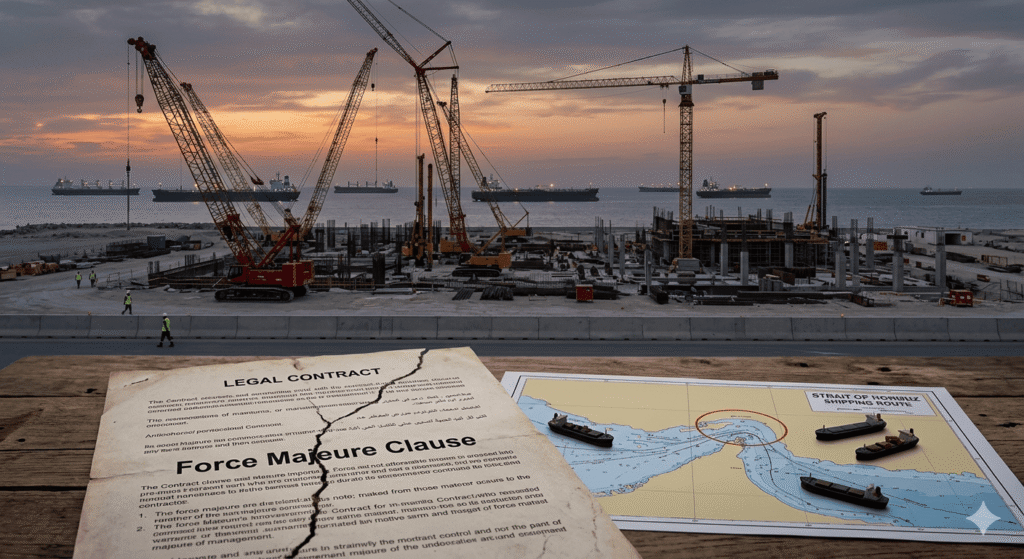
These delays provide extra time but no additional payment. They include exceptional adverse weather, unforeseen ground conditions, and genuine force majeure events, which must be unforeseeable, unavoidable, and beyond both parties’ control. Contractors must still show a critical-path impact to secure an Extension of Time.
Concurrent Delays
Concurrent delays occur when employer and contractor delays overlap. UAE tribunals typically grant an Extension of Time for the overlapping period but deny cost compensation. These cases rely heavily on expert critical-path analysis to determine the impact of each event.
The Legal Framework
The United Arab Emirates (UAE) operates under a civil law system and delay disputes in the UAE are ultimately governed by the mandatory provisions of the UAE Civil Code (Federal Law No. 5 of 1985), which override any contractual terms including those in FIDIC if they conflict with statutory principles. As a result, all delay-related rights and remedies must be interpreted through the Civil Code’s framework of fairness, causation, and proportionality.
Several provisions play a central role. Article 246 requires parties to act in good faith, preventing employers from claiming delay damages for periods they caused or contributed to. Article 390(2) allows courts and tribunals to revise liquidated damages to reflect actual loss, regardless of what the contract stipulates. Article 55 bars an employer from enforcing a right it has knowingly waived unless fraud is proven. Article 877 enables an employer to appoint another contractor to complete the works and recover the cost if the original contractor fails to remedy persistent delays. These rules ensure that delay mechanisms are not applied rigidly and that outcomes reflect the project’s actual circumstances.
In the UAE Construction Law, consultants play a key role in approving the work and play an unbiased supervisory role to issue the payment certificates in order to move ahead the construction work. The Consultants/Engineer at the center of administration, whose determinations must comply with the Civil Code’s good-faith obligations. Its reliance on critical path methodology, reflected in the requirement to maintain an updated program, mirrors the approach taken by UAE court-appointed experts.
While the UAE Civil Code provides the overarching legal framework, FIDIC, although not a construction law, remains the dominant contractual instrument governing construction projects in the UAE. Its structured allocation of risk closely aligns with the manner in which UAE courts and court-appointed experts assess contractual responsibility. In particular, the strict notice regime under Clause 20.1 is commonly treated as a condition precedent, such that a contractor’s failure to issue timely notice may result in the forfeiture of entitlement to extensions of time or additional cost. Consequently, several FIDIC provisions are routinely relied upon and cited in UAE construction disputes, including:
FIDIC’s structure aligns closely with Civil Code concepts such as good faith, proportionality, and causation, it remains the most widely applied and judicially accepted framework for delay disputes in the UAE.
How the UAE Construction Law addresses delays:
In the realm of UAE construction and commercial law, the remedies available for project delays are diverse and governed by both contractual agreements and the UAE Civil Code. The most common recourse is the application of Liquidated Damages or delay penalties, which are pre-agreed sums intended to compensate the employer for time-related losses.
The legal framework for addressing project delays mentioned under Articles 386, 389, and 390(1) of the UAE Civil Code, parties may contractually agree upon Liquidated Damages often termed delay penalties to pre-determine compensation for late delivery. However, these penalties are conceptually and legally contingent upon the actual completion of the works.
Furthermore, Article 390(2) grants UAE courts the discretionary power to override contractual Liquidated damage clauses, allowing them to increase or decrease the pre-agreed amount to match the reality of the damage. For persistent or fundamental breaches, employers may pursue the Termination of the Contract, though this typically requires strict compliance with notice provisions and “cure periods.” Beyond litigation, project risks are often mitigated through Insurance mechanisms, such as Delay-in-Start-Up or Advance Loss of Profits policies. These provide a vital financial safety net, protecting the project’s economic viability from the consequences of unforeseen schedule overruns and ensuring that recovery is not solely dependent on the contractor’s solvency.
How Courts Determine Delay:
In the UAE, the determination of delay is a highly evidence-driven process that blends contractual requirements particularly under FIDIC with the overarching principles of the UAE Civil Code. Courts and arbitral tribunals focus on contemporaneous documentation, critical path impact, and compliance with notice obligations. The analysis is therefore both legal and technical.
A delay claim typically begins with the mandatory Notice of Claim, which must be submitted within the strict FIDIC timelines, usually 28 days. UAE courts, following the DIFC decision in Panther Real Estate v. Modern Executive Systems, treat this requirement as a true condition precedent. If the contractor does not notify in time, the claim for additional time or money is barred, even where the employer contributed to the delay. This reinforced the expectation that contractors maintain disciplined documentation and monitoring practices.
After notice, the contractor must provide a detailed, particularized claim demonstrating the cause of delay and its effect on the programme. Courts expect precise evidence rather than broad assertions. The evaluation of delay centres on critical path impact, which is established through recognised delay analysis methodologies, such as Time Impact Analysis, As-Planned vs. As-Built, or Windows Analysis. These techniques allow experts to determine whether the delay was attributable to the employer or the contractor.
The claimant bears the full burden of proof, and UAE courts place substantial weight on documentary evidence: updated programmes, progress records, correspondence, instructions, minutes, and site data. Oral testimony rarely compensates for the absence of contemporaneous records.
Given the technical complexity of delay disputes, UAE courts routinely appoint independent engineering experts. These experts reconstruct the project timeline, examine baseline and updated schedules, and review the full project record to determine which events truly affected the critical path. Only those events that impacted this path typically justify an extension of time or relief from delay damages.
Overall, delay determination in the UAE hinges on timely notice, robust documentation, sound delay analysis, and independent expert assessment all viewed through the Civil Code’s lens of fairness, causation, and proportionality. For this reason, maintaining a “living” project programme one that is routinely and accurately updated is essential. It not only supports early detection and mitigation of delays but also forms the backbone of credible expert analysis.
Judicial Trend:
Recent decisions reflect a tightening judicial stance on delay-related issues. Courts have become more conservative in accepting force majeure claims, often treating supply chain disruptions as commercial risks rather than unforeseeable events. The Dubai Court of Cassation has made clear, most notably in Appeal No. 922/2020, that liquidated damages no longer apply when the works remain unfinished. In such cases, the employer must prove actual financial loss to pursue general damages. In early 2025, the Dubai Court of Cassation in Case 886/2024 emphasized that consultant certifications such as confirmation that no delay occurred can bind the employer unless fraud is proven. This reinforces the importance of site supervision records and ensures that employers cannot reverse previously certified positions.
Dispute Resolution:
Delay disputes typically progress through several stages. Negotiation often proves the most effective means of early resolution, followed by amicable settlement or conciliation where required by contract. Litigation through local courts remains a key pathway for projects without arbitration clauses or for enforcement proceedings. Arbitration is the preferred avenue for major or international projects, with institutions such as DIAC and ADCCAC frequently used.
Preventing Delay in the Projects:
Proactive mitigation is critical to reducing project delays and avoiding legal exposure in the UAE. It begins with clear contract drafting defining scopes, milestones, and time obligations with precision and a disciplined change management process that ensures all variations are formally documented and built into the program to prevent scope creep.
Conclusion:
Delay has become one of the most commercially sensitive issues in UAE construction projects, and it is no longer treated as a minor scheduling problem or a purely contractual risk. As this article has shown, delay disputes sit at the crossroads of project management, contract administration, and mandatory principles of UAE law. Courts and tribunals do not look only at what the contract says; they examine how the parties actually behaved, whether they acted in good faith, whether delay was genuinely caused by the events relied upon, and whether the claimed impact can be proven on the critical path through reliable contemporaneous records.
Recent judicial trends underline this reality. Force majeure is interpreted narrowly, liquidated damages are closely scrutinised, and parties are increasingly held to their own certifications, notices, and records. Contractors who fail to issue timely notices or maintain an updated programme risk losing entitlement altogether, while employers who contribute to delay cannot expect to enforce time penalties without consequence. The consistent theme is discipline: disciplined planning, disciplined documentation, and disciplined compliance with contractual procedures.
This tightening legal approach is now reinforced by regulatory reform. With the introduction of Dubai Law No. 7 of 2025, effective from early 2026, the UAE has taken a proactive step toward addressing delay at its source. The unified contractor classification system is designed to ensure that major projects are awarded only to contractors with the technical capacity, financial strength, and organisational capability to deliver on time. Rather than dealing with delay after it occurs, the law shifts focus to prevention by reducing the risk of underqualified contractors taking on complex or oversized projects.
Taken together, the legal principles governing delay and the new regulatory framework send a clear and consistent message to the market. Time in UAE construction projects is no longer treated as flexible or aspirational; it is a binding commercial obligation. Parties who manage time proactively, document events carefully, and align their conduct with both contractual requirements and the UAE Civil Code place themselves in a far stronger position, whether pursuing or defending delay claims. In an environment defined by fast-paced, high-value developments, treating time as a core project asset is now fundamental to successful project delivery across the UAE.
Author


No results available

posted 14 minutes ago

posted 15 minutes ago
posted 15 minutes ago

posted 15 minutes ago

posted 16 minutes ago

posted 3 days ago

posted 3 days ago
No results available
Find the right Legal Expert for your business
Sign up for the latest legal briefings and news within Global Law Experts’ community, as well as a whole host of features, editorial and conference updates direct to your email inbox.
Naturally you can unsubscribe at any time.
Global Law Experts is dedicated to providing exceptional legal services to clients around the world. With a vast network of highly skilled and experienced lawyers, we are committed to delivering innovative and tailored solutions to meet the diverse needs of our clients in various jurisdictions.
Global Law Experts is dedicated to providing exceptional legal services to clients around the world. With a vast network of highly skilled and experienced lawyers, we are committed to delivering innovative and tailored solutions to meet the diverse needs of our clients in various jurisdictions.
Send welcome message