
Our Expert in Romania
No results available
Customs patent infringement romania enforcement gives rights-holders a fast, border-level route to stop infringing imports before they reach the market, and in 2026 it has become an essential first move in any serious enforcement strategy. This guide walks in-house counsel and IP managers through the full procedure: how to file a customs application, what security or bond is required, how detention timelines run, and how to coordinate border measures with litigation in the Romanian courts and the Unified Patent Court (UPC). The core legal engine is Regulation (EU) No 608/2013 on customs enforcement of intellectual property rights, applied in Romania by the Romanian Customs Authority, which operates under the National Agency for Fiscal Administration (ANAF).
Everything below is procedural, practical and grounded in the primary EU and Romanian sources listed at the end.
Who this is for: In-house counsel, IP managers and patent owners.
Goal: A step-by-step, actionable guide to stopping patent-infringing imports at Romanian customs and coordinating follow-up litigation.
Read time: approximately 8–10 minutes.
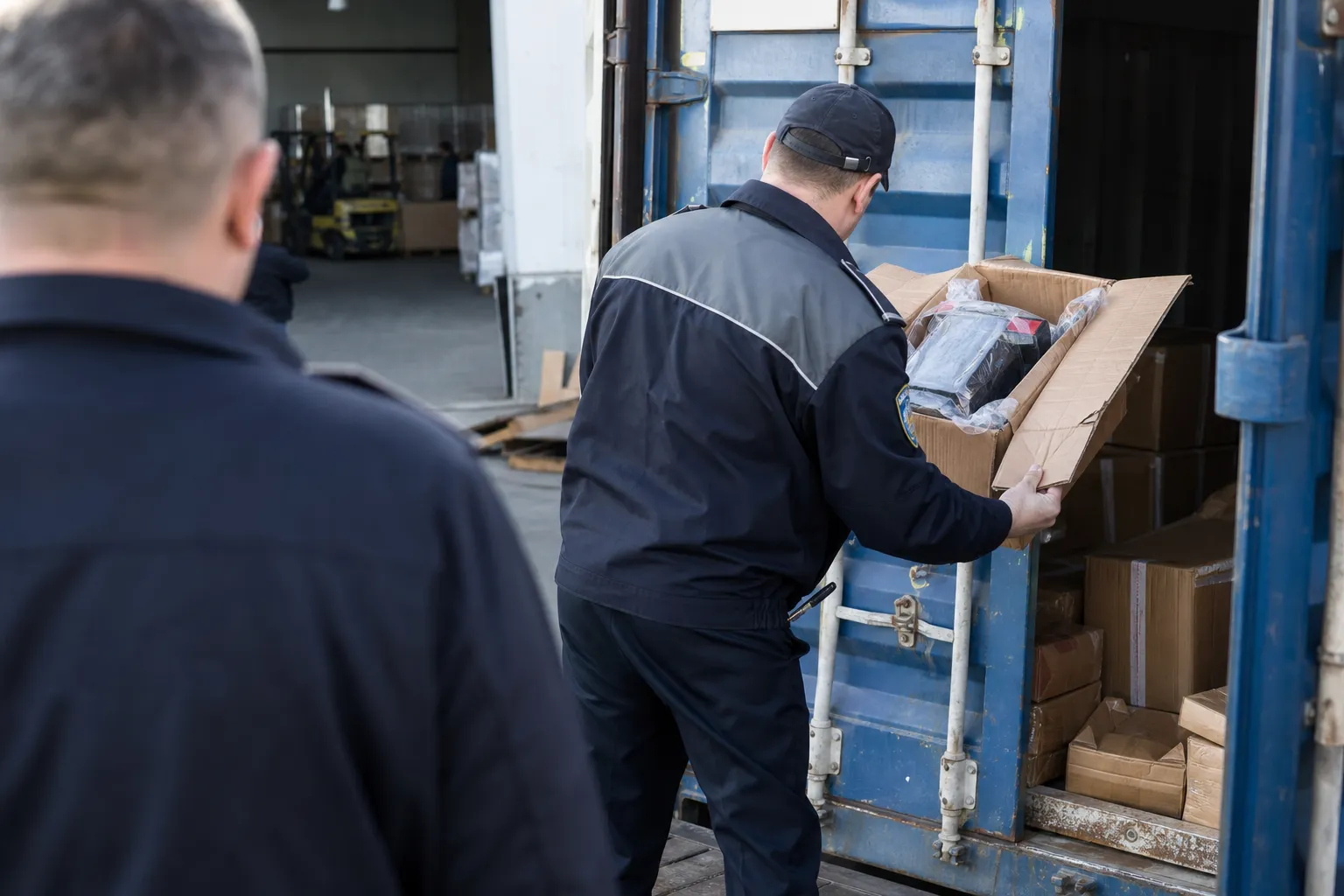
Border measures and court proceedings serve different purposes, and the best strategies use both. A customs application is the fastest way to intercept physical consignments: once your rights are recorded and a suspect shipment is identified, customs can detain goods within a short period. It is relatively low-cost, administrative, and preserves the infringing goods as evidence. But its scope is limited to goods crossing the border or held in customs control.
Litigation, whether a preliminary injunction before a Romanian court or provisional measures at the UPC, offers broader relief: it can restrain conduct, reach goods already in the market, and deliver cross-border effect. The trade-off is a higher evidentiary threshold and greater cost. For most rights-holders the optimal play in a customs patent infringement romania scenario is to detain first through customs, then use the detained goods and seizure records to support a stronger case in court.
The backbone of customs IP enforcement across the EU is Regulation (EU) No 608/2013, which sets out how rights-holders apply for customs action, how customs authorities detain suspected infringing goods, and how those goods are verified, released or destroyed. This Regulation applies directly in Romania and governs almost every step of a customs patent infringement romania procedure.
Alongside it, the Union Customs Code (Regulation (EU) No 952/2013) provides the general framework for customs procedures, import controls and the powers of customs authorities to inspect, sample and hold goods. In Romania, these EU instruments are administered by the Romanian Customs Authority (Autoritatea Vamală Română), which operates the ports, airports and inland offices where applications are lodged and detentions executed. The European Commission’s Taxation and Customs Union provides practical EU-level guidance on how authorities cooperate on IP enforcement.
For patents specifically, proof of your right comes from the patent register. National Romanian patents and the patent status of European patents validated in Romania can be evidenced through OSIM, the State Office for Inventions and Trademarks, with patent documentation also available through the European Patent Office.
The gateway to any customs patent infringement romania action is a granted application for customs action. This is the formal request that tells customs which rights to protect and authorises them to detain suspected infringing goods. Without a valid application on file, customs cannot systematically act on your patent, although Regulation (EU) No 608/2013 also allows customs to detain goods on an ex officio basis in limited circumstances, after which the rights-holder is invited to file an application.
There are two types of application under Regulation (EU) No 608/2013: a national application, covering action within Romania, and a Union application, covering action in Romania plus one or more other Member States. For a rights-holder whose exposure spans multiple EU entry points, the Union application is the efficient route; for a purely Romanian import problem, the national application suffices.
Work through the following checklist when preparing to file:
The patent owner is the natural applicant, but Regulation (EU) No 608/2013 also allows authorised persons to apply on the holder’s behalf. In practice, a Romanian IP attorney or legal representative lodges the application. Where a representative acts, attach a signed power of attorney or equivalent written authorisation so customs can confirm standing. Exclusive licensees and others entitled to use the right may also qualify depending on the right concerned, confirm your status before filing.
Customs will not act without clear proof that you hold an enforceable right. For a customs patent infringement romania application, assemble:
Because patent infringement is technical, the stronger and clearer your claim-mapping, the more confidently customs will detain. A vague description invites a cautious officer to let goods pass. Note that, in practice, customs authorities are generally more cautious about detaining goods on patent grounds than on trade mark or copyright grounds, because patent infringement requires a technical assessment that border officers are not always equipped to perform.
Applications are submitted to the competent customs authority rather than to an individual officer at a quayside. Once granted, the application circulates to the operational customs units, the ports, airports and inland offices, where goods are actually inspected. When you have advance intelligence that a specific shipment is arriving, flag it to the relevant operational unit so officers watch for it. Confirm the current filing channel, whether physical or electronic, directly with the Romanian Customs Authority before you lodge, as administrative channels evolve.
For cross-border preparation, the EUIPO provides practical guidance and the EU-wide enforcement database (IP Enforcement Portal) used throughout the EU, which complements the Romanian-specific steps.
Security is central to customs patent infringement romania practice. Regulation (EU) No 608/2013 requires an applicant to provide an undertaking accepting liability towards the holder of the goods where a detention procedure is discontinued or the goods turn out not to infringe. This protects importers from unjustified interference with legitimate trade.
The security covers potential costs and damages that the declarant or goods-holder might suffer because of detention, for example, storage charges, demurrage, or losses from delayed legitimate shipments. There is no single fixed figure: the practical amount reflects the value and volume of the goods, the duration of likely detention, and the commercial risk if detention proves unfounded. Confirm the current calculation method with the Romanian Customs Authority before filing, as this is administrative and may change.
Consider a simple scenario. Suppose a consignment of suspected infringing devices has a declared value of a given sum and would sit in bonded storage for several weeks during verification and court steps. Your security should realistically cover storage over that period plus a buffer for potential damages if the goods are released as non-infringing. The point is to size the undertaking to the foreseeable downside, not to a token amount.
If the required security is not provided, customs is entitled to decline or discontinue action, so treat the undertaking as a precondition, not an afterthought.
Speed is the main attraction of a customs patent infringement romania action, and the timeline is governed by Regulation (EU) No 608/2013. When customs identifies a suspect consignment, it suspends release and detains the goods, then notifies both the rights-holder and the declarant or goods-holder. From that notification, the rights-holder has a defined period to confirm infringement and either consent to a simplified destruction procedure or initiate proceedings establishing infringement.
The verification window is short by design, which is why preparation matters. Before goods are even detained, you should have your technical comparison ready, your lawyers briefed, and your decision-making chain able to act within days. Extensions exist in specific circumstances, and commencing court proceedings is the mechanism that extends control of the goods beyond the administrative window. Because the exact day-counts and extension rules are time-sensitive, verify them against the current text of Regulation (EU) No 608/2013 before you rely on any specific figure.
During the detention period, the importer and declarant retain procedural rights, including the right to be heard and to challenge the detention. A court can intervene at this stage, and once proceedings on the merits are filed, judicial control supersedes the short administrative clock.
Detention is also an evidence-collection opportunity. Under the EU regime, rights-holders can usually inspect detained goods and obtain samples for examination. This is invaluable: the goods you intercept become the exhibits in your later court or UPC case. To make that evidence usable:
Clean evidence handling during a customs patent infringement romania detention directly strengthens the litigation that follows.
Once goods are detained, three outcomes are possible. First, the goods may be released if infringement is not established or the detention is discontinued, at which point your security becomes relevant to any claim by the goods-holder. Second, the goods may be destroyed where the rights-holder confirms infringement and the conditions for destruction are met. Third, the goods may be returned or re-exported in certain circumstances.
Regulation (EU) No 608/2013 provides a simplified procedure allowing destruction without a full court judgment on the merits where the holder of the goods consents or does not oppose destruction within the applicable period. Where destruction is contested, the matter moves into proceedings and courts supervise the outcome. Romanian court practice on contested patent matters is handled by the civil courts with jurisdiction over intellectual property, with the High Court of Cassation and Justice (Înalta Curte de Casaţie şi Justiţie) at the apex of the national court system.
Under the simplified destruction route, after notification the rights-holder confirms in writing that the goods infringe and that it agrees to destruction, and the goods-holder either consents or is deemed to consent by not objecting within the set period. Destruction then proceeds under customs supervision. Where the goods-holder objects, the rights-holder must initiate proceedings to establish infringement, and destruction awaits the court’s determination. Always check the current operational requirements with the Romanian Customs Authority, as practical steps for authorising destruction are administered nationally.
Storage and destruction are not free, and in a customs patent infringement romania procedure the rights-holder generally bears these costs in the first instance, subject to recovery. Keep records of every charge, bonded storage, handling, destruction fees, so you can seek recovery from the infringer in subsequent proceedings. Factor these outlays into your security sizing and your overall enforcement budget, because they accumulate the longer goods remain under control.
In 2026, the most effective enforcement combines border measures with court proceedings. A customs patent infringement romania detention buys time and secures evidence; litigation delivers lasting relief. The strategic question is how to sequence the two.
A typical plan runs like this: lodge the customs application in advance so rights are recorded; when a shipment is detained, inspect and sample the goods; then, within the verification window, file for a preliminary injunction in the Romanian courts or for provisional measures before the UPC to extend control and broaden relief. Because the UPC offers cross-border effect across participating Member States, it can be particularly attractive where the infringing supply chain reaches beyond Romania.
Note, however, that Romania is in the process of ratifying the UPC Agreement and that the application of the UPC to European patents validated in Romania depends on the completion of that ratification and on whether the patent has been opted out; UPC transitional arrangements and jurisdiction should therefore be checked against the current position before finalising strategy.
Customs action and a preliminary injunction are complementary, not mutually exclusive. Choose a preliminary injunction when you need to restrain conduct, not just physical goods, for instance, where the infringer is already distributing product within Romania and a border detention alone will not stop the harm. Use customs action when the priority is intercepting incoming consignments cheaply and fast. In high-stakes cases, run both: detain at the border and seek an injunction to cover the wider commercial activity, with the detained goods supporting the injunction application.
Evidence captured during detention is some of the most persuasive you will obtain. Physical samples, customs inspection records and the seizure documentation give a court concrete, authenticated proof of the infringing product. Preserve this material meticulously and present it coherently: a well-documented customs patent infringement romania seizure can support the balance-of-convenience analysis in an injunction hearing and the risk-of-harm assessment in UPC provisional measures.
To accelerate a customs patent infringement romania filing, maintain a small library of ready-to-adapt documents: a sample application checklist covering rights proof, goods description and trade data; sample security-undertaking wording pre-cleared with your bank; and a sample notice to the importer for use once goods are detained. Keeping these as editable templates means your team can act within the tight verification window rather than drafting under pressure.
| Feature | Customs action (Romania) | Preliminary injunction (Romanian court) | UPC provisional measures |
|---|---|---|---|
| Speed | Fast (detention within a short period of identification) | Fast (days to weeks) | Depends on UPC docket; cross-border potential |
| Scope | Physical goods at border / in storage | Broad (goods, conduct) | Cross-border relief across participating states |
| Evidence threshold | Proof of IPR and prima facie infringement | Balance of convenience + prima facie case | Sufficiently certain rights + risk of imminent/irreparable harm |
| Security/bond | Usually required | Often required | Frequently required; depends on order |
| Use with litigation | Complementary, preserves goods pending suit | Can be exclusive or complementary | Best for cross-border enforcement across UPC states |
Once customs has detained goods, move quickly and methodically. The following steps keep your customs patent infringement romania case on track:
A well-run customs patent infringement romania strategy starts at the border and ends in court. By recording your rights through a customs application, sizing your security undertaking realistically, acting within the short verification window, and preserving detained goods as evidence, you convert a fast administrative detention into a durable enforcement outcome. In 2026, the decisive advantage comes from coordination, pairing border measures with Romanian injunctions and, where the supply chain is cross-border and the UPC is available, with UPC provisional measures. Verify every time-sensitive figure against the primary sources below before you act. This article is for informational purposes only and is not legal advice; consult qualified counsel for case-specific guidance.
This article was produced by Global Law Experts. For specialist advice on this topic, contact Raluca Vasilescu at Cabinet M. Oproiu, a member of the Global Law Experts network.

posted 16 minutes ago
posted 33 minutes ago

posted 1 hour ago

posted 2 hours ago

posted 2 hours ago

posted 3 hours ago

posted 3 hours ago

posted 3 hours ago

posted 3 hours ago

posted 4 hours ago

posted 4 hours ago

posted 4 hours ago
No results available
Find the right Legal Expert for your business

Send welcome message