
posted 2 weeks ago
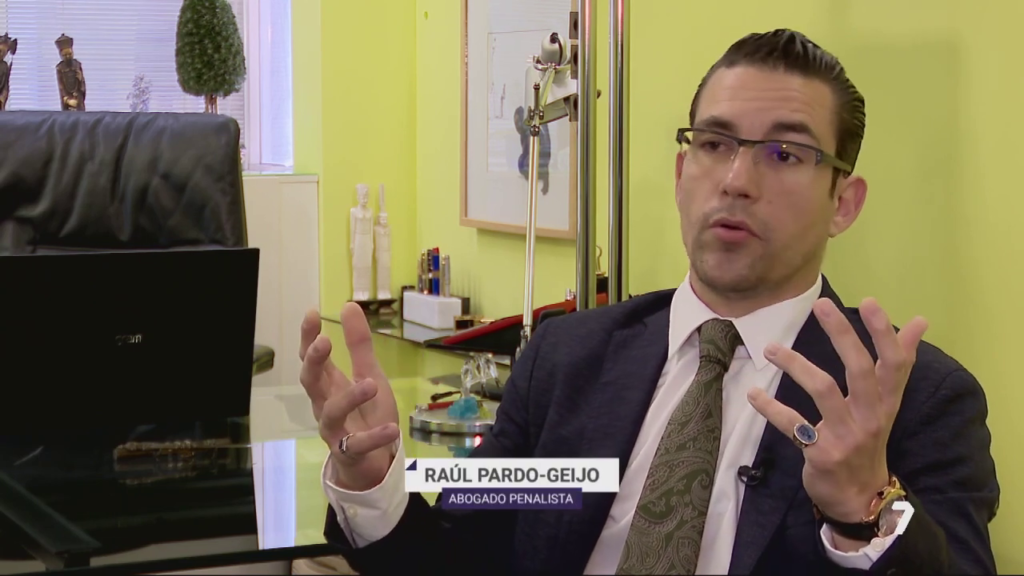
Mejor abogado penalista de España en delitos del medio ambiente. Artículo publicado en el año 2012. | ¿Quién es el mejor abogado penalista de España? Raúl Pardo-Geijo Ruiz – Leaders in Law. | Pardo Geijo: el abogado de los casos imposibles|DELITOS CONTRA EL MEDIO AMBIENTE. AÑO 2012
Before the Industrial Revolution and the rapid growth of the world’s population, it was understandable that the environment was not considered a fundamental legal interest. Ecological reserves were abundant and the harmful capacity of human actions, given the limited technological development of the time, was relatively insignificant.
However, after the Industrial Revolution, the enormous technological development achieved, the constant increase in the global population, and the parallel consumption of ecological resources have turned the environment into one of the most important legal interests (Schünemann).
In this regard, as Muñoz Conde points out, concern for the environment and the balance of ecological conditions has been and continues to be a typical phenomenon of our time, since ecological imbalance is one of the worst consequences of industrial civilization. River waters are polluted by wastewater discharges from large cities and factories located along their banks; automobile traffic produces gases that contaminate the air; power plants and nuclear stations disturb biological balance; beaches are invaded by “oil spills” resulting from petroleum leaks and tanker shipwrecks; and the sea becomes a gigantic atomic waste dump, among other problems.
All of this leads to discomfort, reduced quality of life, disappearance of animal species, diseases and sometimes death. For this reason, the continuous deterioration of the natural environment has prompted different countries to react by resorting to criminal law in order to set limits to this deterioration, thereby obtaining stronger protection than that provided by administrative law alone.
In the same vein, judges and prosecutors participating in the Environmental Forum held in Granada on 23–24 April 2009 recalled that although Administrative Law had traditionally been responsible for regulating environmental protection—through measures such as protecting natural areas with ecological value, protecting endangered species, regulating activities that might affect the environment, and establishing sanction regimes—it became evident that such regulation was clearly insufficient. Consequently, Criminal Law was invoked to punish conduct that seriously harms the environment.
In Spain, this awareness is reflected in the Spanish Constitution, whose Article 45(1) states that:
“Everyone has the right to enjoy an environment suitable for personal development, as well as the duty to preserve it.”
Paragraph 3 of the same article also provides for the possibility of criminal sanctions against those who violate the rational use of natural resources.
As a consequence, Article 347 bis was incorporated into the Criminal Code in 1983, and later the current Criminal Code introduced a significant number of criminal offences, expanding both their scope and penalties.
Nevertheless, the dependence of Criminal Law on Administrative Law in environmental matters is evident. This is why the doctrine speaks of the “blank criminal law” (ley penal en blanco), meaning that the criminal rule does not fully define the prohibited conduct but instead refers to administrative regulations.
Examples include, among others, Articles 319, 325, 333, and 334 of the Criminal Code, which refer to laws or provisions from the administrative sphere.
The construction of criminal offences as blank criminal laws, together with the enormous amount of environmental regulations and the absence of an Environmental Code that systematizes these provisions, makes it difficult for both citizens and criminal judges to effectively know which behaviors are prohibited.
The Spanish Criminal Code regulates environmental protection expressly in Title XVI, entitled:
“Crimes relating to land planning and urban development, and the protection of historical heritage and the environment.”
(This title was modified by Organic Law 5/2010 of 22 June, which entered into force on 23 December 2010.)
This regulation is structured into five chapters:
1. Crimes against land-use planning
2. Crimes against historical heritage
3. Crimes against natural resources and the environment
4. Protection of flora, fauna, and domestic animals
5. Common provisions
All these chapters protect interests that legal doctrine classifies as collective or supra-individual legal interests, which are closely related to the environment in a broad sense and therefore to the very existence of human beings.
Environmental law—including environmental criminal law—has been defined by case law as:
the set of legal rules aimed at protecting, conserving, and improving those elements that represent natural wealth worthy of protection due to their ecological value, contributing to the improvement of quality of life and personal development through their enjoyment.
Natural elements lacking such values are excluded from its scope in order to ensure sustainable development.
Since Article 45 of the Constitution places environmental protection in the context of human development and quality of life, it is coherent that criminal legislation establishes penalties for conduct that endangers human health as a consequence of environmental damage.
This position has been supported by case law such as:
Judgment of the Provincial Court of Jaén (20 March 2006)
Judgment of the Provincial Court of Jaén (24 October 2007)
Judgment of the Spanish Supreme Court (27 April 2007)
Similarly, constitutional jurisprudence has emphasized that environmental law must protect natural elements in order to improve the environment and quality of life, which includes human health.
Article 325 of the Criminal Code establishes that:
Anyone who, in violation of laws or general provisions protecting the environment, directly or indirectly causes or carries out emissions, discharges, radiation, extraction, excavation, landfill operations, noise, vibrations, injections or deposits into the atmosphere, soil, subsoil, or inland, underground or maritime waters—including the high seas—and which may seriously damage the balance of natural systems, shall be punished with imprisonment from two to five years, a fine of eight to twenty-four months, and special disqualification from profession or occupation for one to three years.
If the risk of serious damage affects human health, the prison sentence shall be imposed in its upper half.
The offence includes the following elements:
The conduct must consist of causing or carrying out, directly or indirectly, activities such as:
emissions
discharges
extractions or excavations
landfill operations
residues
vibrations
injections
deposits
These must affect elements of the physical environment such as:
the atmosphere
soil
subsoil
inland waters
marine waters
groundwater
There must be a violation of an extra-criminal rule, meaning a breach of administrative regulations or environmental laws governing such activities.
The conduct must create a serious risk to the protected legal interest, namely the environment or natural systems.
The offence requires intent (dolus), meaning that the perpetrator:
either intended the conduct, or
recognized the risk and continued the activity anyway.
The typical conduct consists of “causing or carrying out emissions or discharges.”
Although the wording appears to require an active behavior, the offence also includes commission by omission. This occurs when a person:
allows a discharge to occur,
tolerates it,
or fails to take measures to prevent it.
The Supreme Court Judgment 105/1999 (27 January) confirmed that the offence includes such omissions.
The verbs “to provoke” and “to carry out” are not synonymous:
To provoke means to originate, facilitate, or promote.
To carry out means to execute the action.
Thus, “provoking” may also include maintaining or allowing ongoing pollution.
The concept of environmental discharge was clarified by the Court of Justice of the European Communities, which defined it as:
any act attributable to a person by which hazardous substances are directly or indirectly introduced into water.
The Spanish Supreme Court has also distinguished between:
Article 325 (polluting discharges), and
Article 328 (illegal deposits or landfills).
For example, Supreme Court Judgment 215/2003 (11 February) ruled that the discharge of pig slurry from a farm with 5,000 pigs into permeable pits, causing groundwater contamination, constitutes the offence under Article 325, not Article 328.
DELITOS CONTRA EL MEDIO AMBIENTE. AÑO 2012
INTROITO
Antes de la revolución industrial y de la superpoblación de la tierra era comprensible que el medio ambiente no fuese considerado un bien jurídico trascendental porque las reservas ecológicas eran muy abundantes y la capacidad lesiva de las acciones del hombre, en función del desarrollo tecnológico, resultaba insignificante. Sin embargo, tras la revolución industrial, el enorme desarrollo tecnológico alcanzado, el incesante aumento de población en el planeta y el paralelo consumo de los recursos ecológicos han convertido al medio ambiente en uno de los bienes jurídicos más importantes (Schünemann). En este sentido, como apunta Muñoz Conde, la preocupación por el medio ambiente y por el equilibrio de las condiciones ecológicas ha sido y es un fenómeno típico de nuestro tiempo, pues el desequilibrio ecológico es una de las peores consecuencias de la “civilización industrial”. Las aguas de los ríos se contaminan con los vertidos de las aguas residuales de las grandes urbes y de las fábricas e industrias que en sus márgenes se asientan; el tráfico automovilístico produce gases que contaminan el aire; las centrales eléctricas y nucleares perturban el equilibrio biológico; las playas se ven invadidas por “mareas negras” producto de las pérdidas de petróleo y de los naufragios de los petroleros; el mar se convierte en un gigantesco basurero atómico, etc. Todo ello produce incomodidad, mala calidad de vida, desaparición de especies animales, enfermedades y al final, a veces, la muerte. Por ello es que el continuo deterioro que ha venido sufriendo el entorno natural del hombre ha hecho reaccionar a los distintos países, que han optado por acudir a la vía penal para tratar de poner límites a ese deterioro, obteniendo una protección más severa que la que brindaba el mero Derecho Administrativo. En esta misma línea, se pronunciaron los Magistrados y Fiscales del Foro Medioambiental, en su Encuentro celebrado en Granada, los días 23 y 24 de abril de 2009, cuando recordaban que a pesar de que siempre ha sido el Derecho Administrativo el que se ha encargado de regular esta defensa (a través de la protección de determinadas zonas naturales, por el valor ecológico que representan, o de determinadas especies en peligro de extinción, ordenando aquellas actividades que podían atacarlo, estableciendo un concreto régimen de sanciones), se comprobó que esa regulación era claramente insuficiente y de ahí que se acudiera al Derecho Penal para sancionar aquellas conductas que atentaren de forma más grave contra el medio ambiente. En España esta concienciación se pone de manifiesto en la Constitución Española que en su artículo 45.1 establece que “todos tienen derecho a disfrutar de un medio ambiente adecuado para el desarrollo de la persona, así como el deber de conservarlo” recogiéndose, en el apartado tercero del referido artículo, la posibilidad de establecer sanciones penales para quienes violen la utilización racional de los recursos naturales. Consecuencia de ello fue la inclusión en el Código Penal del artículo 347 bis, en el año 1983, y la posterior tipificación, en el actual Código, de un número significativo de tipos penales, que ampliaba su alcance y las penas. Ahora bien, pese a ello, la dependencia del Derecho Penal respecto del Administrativo en esta materia es evidente, de ahí el empleo de lo que la doctrina denomina “ley penal en blanco” que opta por no definir íntegramente el hecho constitutivo de la infracción sino que se remite a normas de índole administrativa. Claro ejemplo de ello son, entre otros, los artículos 319, 325, 333, 334, etc., todos ellos del Código Penal, que se remiten a leyes u otras disposiciones del referido ámbito. La construcción de los tipos penales como ley penal en blanco, la ingente normativa existente y la ausencia de un Código ambiental que sistematice las numerosas disposiciones existentes sobre la materia dificulta el conocimiento efectivo de las conductas prohibidas, no solo a los ciudadanos sino también a los jueces penales.
REGULACIÓN LEGAL (…) Para seguir leyendo: https://noticias.juridicas.com/conocimiento/articulos-doctrinales/4730-delitos-contra-el-medio-ambiente/
Author


No results available

posted 21 hours ago

posted 23 hours ago

posted 23 hours ago

posted 23 hours ago

posted 23 hours ago
posted 23 hours ago

No results available
Find the right Legal Expert for your business
Sign up for the latest legal briefings and news within Global Law Experts’ community, as well as a whole host of features, editorial and conference updates direct to your email inbox.
Naturally you can unsubscribe at any time.
Global Law Experts is dedicated to providing exceptional legal services to clients around the world. With a vast network of highly skilled and experienced lawyers, we are committed to delivering innovative and tailored solutions to meet the diverse needs of our clients in various jurisdictions.

Thinking of buying property in Brazil? Start with a full legal safety net.
✔️ Check title and ownership history
✔️ Verify no debts or disputes
✔️ Confirm zoning and permits.
#BrazilProperty #RealEstateInvesting #LegalDueDiligence #ForeignInvestment #PropertyLaw #GlobalRealEstate #InvestmentRisk #BrazilLaw

When your international business faces financial distress, quick action is key! 🔑 Negotiating with creditors, restructuring debt, and understanding insolvency laws can help regain stability. Global Law Experts is here to guide you through your options.
🌍Explore the details on our website.
🔗Link in bio
#GlobalLawExperts #CommercialLaw #BusinessLaw #LegalAdvice #BusinessGrowth #LegalTips #BusinessStrategy #LegalCompliance #Law #LegalKnowledge #LegalAwareness #Law101 #LegalEducation #IntellectualProperty

Thinking of buying property in Brazil? Don’t stop at the contract or key handover. Make sure the title is officially registered before calling it yours.
#BrazilRealEstate #PropertyLaw #GlobalInvestment #ForeignInvestors #LegalTips #DueDiligence #RealEstateRegistration #SecureInvestment

Getting a termination notice right now? Know your rights. Valid reason, fair process, proper notice they matter. Don’t let a bad dismissal walk away without accountability.
#EmploymentLaw #WorkerRights #Termination #LaborLaw #FairDismissal #WorkplaceJustice #LegalAwareness #GlobalWorkforce

Running a business is hard enough — lawsuits shouldn’t make it harder. 🚫 Protect your business with the right legal strategies and expert tools from Global Law Experts. Let’s secure your future together! 💼
🌍Explore the details on our website.
➡️www.globallawexperts.com
#GlobalLawExperts #CommercialLaw #BusinessLaw #LegalAdvice #BusinessGrowth #LegalTips #BusinessStrategy #LegalCompliance #Law #LegalKnowledge #LegalAwareness #Law101 #LegalEducation #IntellectualProperty #Infringed #Ecommerce #LegalBranding
Global Law Experts is dedicated to providing exceptional legal services to clients around the world. With a vast network of highly skilled and experienced lawyers, we are committed to delivering innovative and tailored solutions to meet the diverse needs of our clients in various jurisdictions.
Thinking of buying property in Brazil? Start with a full legal safety net.
✔️ Check title and ownership history
✔️ Verify no debts or disputes
✔️ Confirm zoning and permits.
#BrazilProperty #RealEstateInvesting #LegalDueDiligence #ForeignInvestment #PropertyLaw #GlobalRealEstate #InvestmentRisk #BrazilLaw
When your international business faces financial distress, quick action is key! 🔑 Negotiating with creditors, restructuring debt, and understanding insolvency laws can help regain stability. Global Law Experts is here to guide you through your options.
🌍Explore the details on our website.
🔗Link in bio
#GlobalLawExperts #CommercialLaw #BusinessLaw #LegalAdvice #BusinessGrowth #LegalTips #BusinessStrategy #LegalCompliance #Law #LegalKnowledge #LegalAwareness #Law101 #LegalEducation #IntellectualProperty
Thinking of buying property in Brazil? Don’t stop at the contract or key handover. Make sure the title is officially registered before calling it yours.
#BrazilRealEstate #PropertyLaw #GlobalInvestment #ForeignInvestors #LegalTips #DueDiligence #RealEstateRegistration #SecureInvestment
Getting a termination notice right now? Know your rights. Valid reason, fair process, proper notice they matter. Don’t let a bad dismissal walk away without accountability.
#EmploymentLaw #WorkerRights #Termination #LaborLaw #FairDismissal #WorkplaceJustice #LegalAwareness #GlobalWorkforce
Running a business is hard enough — lawsuits shouldn’t make it harder. 🚫 Protect your business with the right legal strategies and expert tools from Global Law Experts. Let’s secure your future together! 💼
🌍Explore the details on our website.
➡️www.globallawexperts.com
#GlobalLawExperts #CommercialLaw #BusinessLaw #LegalAdvice #BusinessGrowth #LegalTips #BusinessStrategy #LegalCompliance #Law #LegalKnowledge #LegalAwareness #Law101 #LegalEducation #IntellectualProperty #Infringed #Ecommerce #LegalBranding
Send welcome message