
Author
No results available
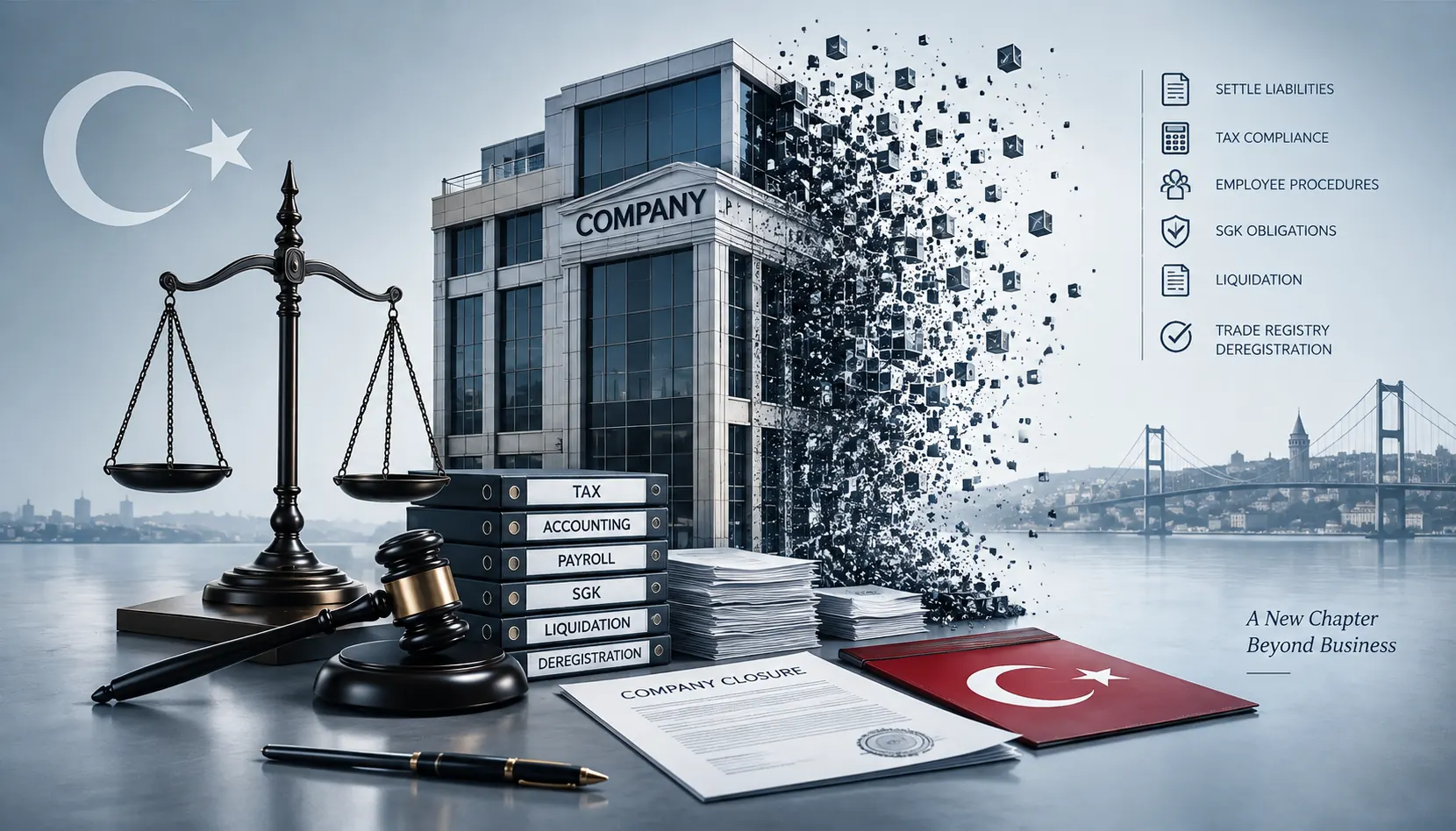
Closing a company in Turkey is not simply a matter of stopping business activities. A Turkish company must generally complete a formal liquidation process, settle its debts and receivables, complete tax and social security obligations, and ultimately be removed from the Turkish Trade Registry.
For foreign shareholders and international businesses, the process can involve additional considerations relating to tax compliance, accounting records, payroll, employee obligations, company assets, and the transfer or repatriation of remaining funds.
This guide explains the main stages of company liquidation in Turkey and the key issues foreign investors should consider before closing a Turkish company.
Company liquidation, commonly referred to as tasfiye in Turkey, is the legal process through which a company winds up its business activities and settles its financial and legal obligations.
During liquidation, the company does not immediately disappear. Instead, it enters a liquidation period in which its assets and liabilities are identified, debts are settled, receivables are collected, and remaining assets are distributed according to the applicable rules.
The company continues to exist as a legal entity during this period, but its activities are generally limited to those necessary for completing the liquidation.
Foreign shareholders should also ensure that the company’s tax, accounting, payroll and social security obligations are properly addressed before the final deregistration.
For a detailed explanation of the legal procedure and practical stages, see this comprehensive guide to Company Winding Up in Turkey.
For businesses that are considering restructuring rather than closing, company formation and business setup services in Turkey may also be relevant when establishing a new Turkish business structure.
A Turkish company may be liquidated for a variety of commercial or corporate reasons, including:
For foreign-owned companies, liquidation can also form part of a broader exit strategy from Turkey.
Before initiating liquidation, shareholders should review the company’s outstanding tax liabilities, debts, receivables, employees, contracts, bank accounts and assets.
The liquidation process generally involves several stages.
The shareholders first adopt a resolution concerning liquidation and appoint a liquidator. The relevant corporate decision is then registered and announced through the Turkish Trade Registry.
The liquidator takes responsibility for completing the company’s outstanding affairs. This may include collecting receivables, paying creditors, selling or transferring assets, terminating contracts and completing outstanding administrative obligations.
At the same time, the company must continue meeting its applicable tax and accounting obligations throughout the liquidation period.
Professional accounting and bookkeeping services in Turkey can be particularly important during this stage because the company’s financial records need to remain accurate until the liquidation is completed.
Tax compliance is one of the most important parts of closing a Turkish company.
Depending on the company’s activities and tax position, the liquidation process may involve:
The company should therefore complete a final tax and compliance review before requesting its final deregistration.
Foreign-owned businesses can also review Tax Compliance Services in Turkey for Foreign Companies to understand the broader compliance obligations that may need to be addressed before closing the company.
If the company has employees, liquidation does not automatically terminate its employment and social security obligations.
The company must properly manage:
Companies should coordinate these procedures with their payroll and HR advisors.
A&M Consulting provides HR and Payroll Services in Turkey for Foreign Companies for businesses that need support with payroll and employee-related compliance.
Companies can also review Social Security Registration in Turkey and the Turkish Social Security System for additional information about SGK obligations.
Company assets must be identified and dealt with as part of the liquidation process.
These may include:
Assets may need to be sold, transferred or otherwise disposed of before the liquidation can be finalized.
The treatment of assets can also create tax and accounting consequences, so the liquidator should coordinate the process with the company’s accountant and tax advisor.
After outstanding liabilities have been settled, any remaining assets may be distributed to the shareholders according to the applicable legal and corporate rules.
For a detailed explanation of how assets, liabilities and the winding-up process are handled, foreign investors can refer to the A&M Consulting guide on Company Winding Up in Turkey.
Before a company can complete its liquidation, its outstanding tax and compliance matters should be reviewed carefully.
This may include checking:
A final review helps identify unresolved obligations before the company proceeds to final deregistration.
For foreign companies, this stage is particularly important because unresolved tax or accounting matters can complicate the company’s exit from Turkey.
The final stage is the company’s deregistration from the Turkish Trade Registry.
Once the liquidation process has been completed and the necessary conditions are satisfied, the relevant documents are submitted to the Trade Registry for final registration.
After the final deregistration, the company ceases to exist as a registered legal entity.
This is an important distinction: stopping business activity is not the same as legally closing a company in Turkey.
The complete process from the liquidation decision through final deregistration is explained in A&M Consulting’s Company Winding Up in Turkey guide.
Company accounting, tax and corporate records should not simply be discarded after liquidation.
Documents relating to the company’s financial transactions, tax filings, accounting records, employee records and corporate activities may need to be retained for the legally applicable periods.
Foreign shareholders should therefore arrange appropriate document storage before the liquidation is finalized.
Maintaining proper records is also important if the company is subsequently subject to a tax review or if shareholders need to establish the company’s historical financial position.
In certain circumstances, shareholders may decide to abandon the liquidation process before the company is finally deregistered.
This is commonly referred to as withdrawal from liquidation or tasfiyeden vazgeçme.
Whether this is possible depends on the company’s circumstances and the stage reached in the liquidation process. The relevant corporate and Trade Registry procedures must be completed correctly.
Therefore, shareholders considering withdrawal from liquidation should review the company’s current legal, financial and registration status before taking further action.
The duration of liquidation depends on factors such as:
A simple inactive company with no employees, debts or significant assets may be considerably easier to liquidate than an operating company with employees, contracts and substantial assets.
The exact timetable can therefore vary from company to company.
Foreign shareholders may face additional practical considerations when closing a Turkish company.
These can include:
Because several different authorities and compliance areas can be involved, coordination between the liquidator, accountant, tax advisor and company shareholders is important.
Company liquidation in Turkey requires more than simply closing a bank account or stopping commercial activities. Foreign investors should ensure that corporate, tax, accounting, payroll, SGK and Trade Registry obligations are properly completed before the company is finally deregistered.
Proper planning can help shareholders identify unresolved liabilities and administrative requirements before completing their exit from the Turkish market.
For foreign investors considering closing their Turkish company, professional assistance with liquidation, tax compliance, accounting, payroll and corporate procedures can help coordinate the process from the initial liquidation resolution through final deregistration.
For a more detailed step-by-step explanation of the process, see A&M Consulting Co.‘s main guide to Company Winding Up in Turkey.

posted 15 minutes ago

posted 33 minutes ago

posted 50 minutes ago

posted 1 hour ago
posted 2 hours ago

posted 2 hours ago

posted 2 hours ago

posted 3 hours ago

posted 3 hours ago

posted 4 hours ago

posted 4 hours ago

posted 4 hours ago
No results available
Find the right Legal Expert for your business

Send welcome message