


For multinationals weighing where to anchor a regional headquarters, company formation Singapore and company formation in Hong Kong remain the two dominant options across Asia. This 2026 guide gives CFOs, general counsel, heads of region and fund managers an outcome-first comparison of incorporation mechanics, tax, banking, substance and market access. In broad terms, finance and fund managers, family offices, and groups prioritising treaty access, dispute-resolution certainty and regulatory clarity increasingly lean toward Singapore; businesses seeking direct proximity to Mainland China, Greater Bay Area connectivity and Hong Kong-listing pathways lean toward Hong Kong. Both jurisdictions incorporate fast and operate sophisticated banking systems, but the decisive factors are tax treaty reach, substance expectations, and the legal infrastructure supporting cross-border disputes.
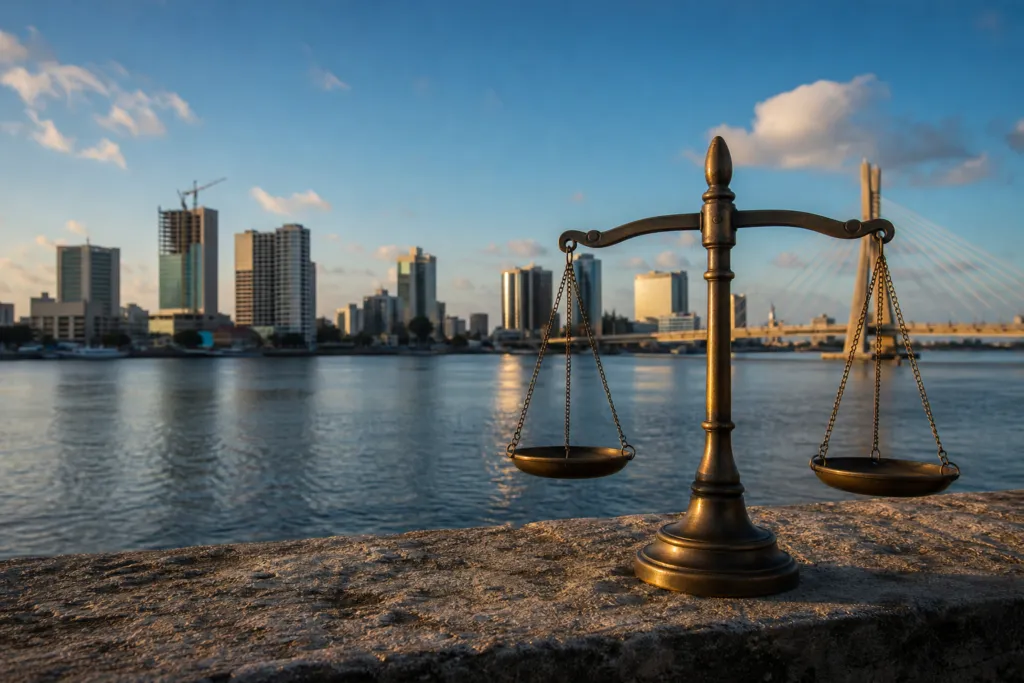
Singapore’s 2026 enhancements to its commercial court and dispute-resolution ecosystem, overseen by the Supreme Court of Singapore and the Singapore Judiciary, have reinforced its position as a neutral venue for complex commercial matters. Combined with a treaty network spanning more than 80 jurisdictions, these developments strengthen the case for choosing Singapore as a long-term HQ platform. Hong Kong, meanwhile, retains unmatched access to the Chinese market and a deep capital-markets pipeline. The sections below move from a quick decision matrix to a detailed, government-sourced playbook so you can model the right structure for your business profile.
No single answer fits every group. The right HQ depends on where your value is created, where your customers and capital sit, and how much weight you place on treaty access versus Mainland China proximity. The matrix below reflects common HQ profiles and the jurisdiction they typically favour; it should be read alongside the full comparison and substance analysis later in this guide.
| HQ profile | Tends to prefer |
|---|---|
| Regional sales & operations hub (ASEAN focus) | Singapore, treaty depth, talent, ASEAN centrality |
| Fund managers / private capital | Singapore, MAS licensing clarity and HQ incentive schemes |
| Family offices | Singapore, dedicated regimes, stability, succession planning |
| Trading, treasury & China-facing distribution | Hong Kong, Mainland access, GBA connectivity, territorial tax |
| Groups targeting a public listing in Asia | Hong Kong, established IPO pipeline; Singapore for ASEAN capital |
Choosing and establishing an Asia HQ is a sequenced exercise: define the function first, then model tax and substance, then execute incorporation and banking. The numbered steps below apply to company formation Singapore and, with adjustments, to Hong Kong company formation. Each step includes an indicative timeline, a cost band and the primary documents you will need. Treat these as a practitioner checklist to incorporate an Asia headquarters efficiently.
Running these steps in parallel where possible can compress the overall timeline. In practice, a well-prepared group can achieve incorporation and initial banking in Singapore within four to eight weeks, with licensing extending that window where regulated activity is involved.
The table below sets out the practical differences across legal form, cost, tax, substance, banking and dispute resolution. Figures are indicative and should be verified against the primary sources cited elsewhere in this guide, as fees and incentive schemes are periodically revised.
| Feature | Singapore | Hong Kong |
|---|---|---|
| Legal form commonly used for HQ | Private limited company (Pte Ltd), Companies Act | Private company limited by shares, Companies Ordinance |
| Time to incorporate (typical) | 1–3 business days with local agent and documents ready | 1–5 business days |
| Incorporation cost (government fees + typical local agent) | S$315–S$1,500 depending on services | HK$1,000–HK$3,000 depending on services |
| Corporate tax (headline) | 17% statutory; partial and tiered exemptions available | 16.5% on assessable profits |
| Typical effective tax for HQ with planning | 0–9% with qualifying incentives/exemptions (scheme-dependent) | ~8.25% (two-tiered on first HK$2M) up to 16.5% |
| Tax treaty network | Extensive, over 80 jurisdictions; verify current list | Growing but narrower than Singapore; verify IRD list |
| Substance expectations | Increasingly strict: local decision-making, staff, office, board meetings; aligned with OECD/BEPS and IRAS guidance | Local management, meetings and economic activity; enforcement growing |
| Director residency | At least one locally resident director required | No local director required; resident director sometimes preferred by banks |
| Banking & capital access | Large international banking presence; global private banking hub | Strong banking and capital markets; gateway to Mainland China; IPO pathways |
| Dispute resolution & arbitration | Singapore International Commercial Court + arbitration-friendly framework | Robust Judiciary and arbitration centre; no dedicated commercial court equivalent |
| Licensing complexity for funds/FS | MAS licensing, strict but clear; HQ and fund-manager incentive schemes | SFC and related regimes; advantages for GBA connectivity |
| Ongoing compliance burden | Annual returns, ACRA filings, corporate tax filings, audits (thresholds apply) | Annual returns, Companies Ordinance compliance, audits |
Several assumptions underpin these figures. Effective tax rates depend heavily on whether a group qualifies for incentive schemes and on the character of its income; they are not automatic. The 0–9% effective range for Singapore reflects qualifying HQ functions under incentive programmes administered by IRAS, not a default outcome. Hong Kong’s two-tiered profits regime applies a reduced 8.25% rate to the first HK$2 million of assessable profits for a qualifying entity, with the balance taxed at 16.5%, per the Hong Kong IRD.
On the legal-infrastructure line, Singapore’s 2026 commercial-court and dispute-resolution enhancements are directly relevant to HQ risk allocation. Groups that expect cross-border contract disputes often value a specialist commercial forum with international judges and streamlined procedure, information on which is published by the Supreme Court of Singapore. Hong Kong counters with a mature common-law judiciary and a world-class arbitration centre, detailed by the Hong Kong Judiciary. For groups with significant Mainland exposure, Hong Kong’s arrangements for reciprocal enforcement with the Mainland remain a meaningful advantage.
Cost and timeline differences are modest at the incorporation stage; the real divergence appears in banking and licensing. Both registries process straightforward incorporations within days, but obtaining a corporate bank account, and, where relevant, a financial-services licence, is where months can be added. A detailed walkthrough is available in our Singapore company incorporation checklist cluster resource, and a side-by-side tax deep dive is covered in our Singapore vs Hong Kong tax comparison page.
Tax is frequently the headline consideration in an Asia HQ decision, but headline rates rarely tell the whole story. The practical comparison turns on effective rates after incentives, withholding exposures on cross-border flows, and the reach of each jurisdiction’s treaty network.
Singapore applies a 17% statutory corporate tax rate, reduced in practice by startup and partial exemptions and, for qualifying activities, by targeted incentive regimes. These programmes, including headquarters and global-trader style incentives, are administered subject to conditions, and groups should model eligibility carefully using the official guidance from IRAS. Hong Kong operates on a territorial basis: broadly, only profits arising in or derived from Hong Kong are assessable, with a 16.5% rate and a two-tiered structure that reduces the rate to 8.25% on the first HK$2 million of qualifying profits, per the Hong Kong IRD.
Withholding exposure differs materially by income type. Both jurisdictions take favourable positions on dividends and capital gains in many cases, Hong Kong generally does not tax capital gains, and Singapore does not tax most capital gains either, but royalties and interest can attract withholding depending on the recipient and any applicable treaty. Modelling the net cost of intra-group payments is essential; the deciding factor is often whether a treaty reduces the withholding rate and whether the recipient entity can satisfy beneficial-ownership and substance tests.
Singapore’s treaty network is one of its strongest advantages, spanning more than 80 jurisdictions, which can reduce withholding on cross-border flows and support treaty-based structuring. Hong Kong’s network has grown but remains narrower. Importantly, there is historically no comprehensive double tax agreement directly between Singapore and Hong Kong, so groups should not assume treaty relief on direct flows between the two, always verify the current position against the official treaty lists maintained by the respective authorities.
Transfer pricing and the global minimum tax now shape HQ planning for larger groups. Under OECD BEPS 2.0 and the Pillar Two framework, in-scope multinational groups may face a top-up to a minimum effective rate, which can erode the value of low effective rates achieved through incentives. Groups should model their effective tax under the OECD Pillar Two rules and ensure transfer-pricing documentation supports the economic substance of the HQ. The practical takeaway: tax-driven location choices must be paired with genuine presence, because thin structures without substance are increasingly vulnerable to challenge.
Both Singapore and Hong Kong host deep, internationally connected banking systems, but the realities of account opening have tightened. In 2026, banks in both jurisdictions apply rigorous KYC and typically request evidence of genuine local presence before onboarding an HQ entity. The debate over Singapore banking vs Hong Kong banking is therefore less about capability than about fit with your ownership profile and activity.
For a structured walkthrough of account opening and fundraising in both centres, see our Banking & capital markets: Singapore and Hong Kong cluster guide.
Substance has become the decisive compliance issue for any Asia HQ. Both jurisdictions expect genuine economic activity, and both tax authorities scrutinise thin structures. Below is a jurisdiction-by-jurisdiction overview, followed by a practical checklist that applies across any HQ profile.
To support a Singapore tax position and any MAS licence, a group should demonstrate local decision-making, an appropriate payroll headcount, a permanent office address, and regular, minuted board meetings held in Singapore. The appointment of at least one locally resident director is a statutory requirement for a Singapore private company, and additional local presence is often expected by banks and regulators. Guidance on tax residency and substance is published by IRAS, and licensing expectations by MAS. Record-keeping, contemporaneous minutes, resolutions and accounting records, is central to defending the position on review.
Hong Kong similarly expects local management and control, a physical presence, and evidence of genuine economic activity where tax residency or treaty benefits are claimed. The Hong Kong IRD sets out evidence standards for residency and treaty-benefit applications. As enforcement sharpens globally, Hong Kong HQs relying on treaty relief must be prepared to show real decision-making occurring in Hong Kong.
For a fuller treatment, our Substance and economic presence in Singapore resource expands on thresholds and evidence standards, and our Sector playbook: funds HQ in Singapore addresses substance in the regulated-fund context.
Singapore’s 2026 reforms to its commercial court and dispute-resolution infrastructure, reflected in materials from the Singapore Judiciary, reinforce its appeal as a neutral venue for complex cross-border matters and improve predictability in HQ risk management. For groups that value a specialist commercial forum, this is a tangible differentiator. Hong Kong’s strengths lie elsewhere: proximity to Mainland China, Greater Bay Area integration, and a long-established litigation and arbitration ecosystem with reciprocal enforcement arrangements with the Mainland. The choice often reduces to whether your disputes are more likely to involve ASEAN and global counterparties (favouring Singapore) or Mainland Chinese counterparties (favouring Hong Kong).
Common missteps undermine otherwise sound HQ decisions. The most frequent are under-documenting board decisions, relying on nominee directors without real substance, underestimating banking onboarding timelines, and assuming treaty relief that does not exist between Singapore and Hong Kong. Each can convert an efficient structure into a compliance liability. A realistic phased timeline helps:
The choice between company formation Singapore and Hong Kong rarely turns on incorporation speed, which is comparable, but on treaty access, substance, banking fit, tax outcomes after incentives, and dispute-resolution certainty. Finance, funds and family offices prioritising treaty depth and neutral commercial-court infrastructure typically favour Singapore; China-facing trading, treasury and listing candidates often favour Hong Kong. Whichever path you take, the decisive operational milestones are the same: build a tax and substance model, engage local counsel, and schedule your first board meeting to establish genuine local control. For deeper reading, explore our supporting resources on Singapore company incorporation, the Singapore versus Hong Kong tax comparison, banking and capital markets, substance requirements, and sector-specific HQ playbooks.

posted 4 minutes ago

posted 5 minutes ago

posted 39 minutes ago

posted 41 minutes ago
posted 59 minutes ago

posted 1 hour ago

posted 1 hour ago
posted 2 hours ago
posted 3 hours ago

posted 4 hours ago

posted 4 hours ago

posted 5 hours ago
No results available
Find the right Legal Expert for your business

Send welcome message