
Author
No results available
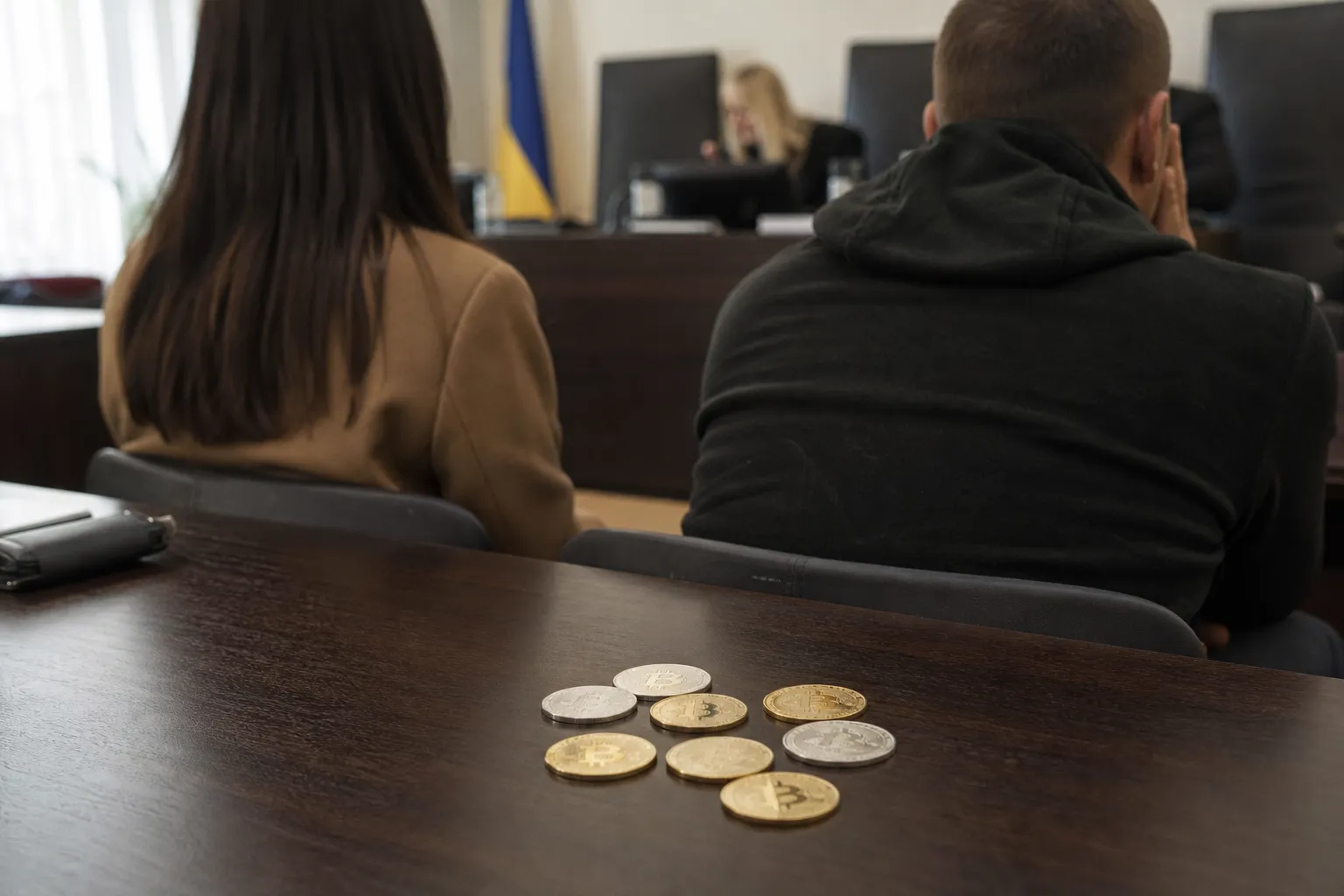
Claiming cryptocurrency foreign situs assets family disputes has become one of the most technically demanding challenges in Ukrainian matrimonial practice, and in 2026 it is no longer a fringe concern reserved for a handful of high-net-worth divorces. Digital wallets, offshore company structures and foreign bank accounts now surface routinely in ordinary family proceedings, forcing lawyers and clients to confront questions of ownership, valuation, preservation and cross-border enforcement that the Family Code was never drafted to answer directly.
This guide sets out a practical roadmap: how to identify and trace crypto and foreign-situs assets, how to secure them before they disappear, how to prove ownership to a Ukrainian court, and how to decide whether to settle or litigate when enforcement may ultimately depend on the cooperation of courts and institutions abroad. It is written for practitioners and individuals who need actionable steps rather than abstract theory.
This article is for general information only and does not constitute legal advice. Ukrainian family law and the treatment of virtual assets are evolving; readers should consult a Ukraine-licensed lawyer for guidance on specific facts.
Traditional divorce disputes in Ukraine turned on identifiable assets, an apartment, a car, a registered business interest, that could be located, valued and divided within the jurisdiction. Cryptocurrency and foreign-situs assets break that model in three ways. First, they are mobile: a balance can move across borders or between wallets in seconds, long before a court can intervene. Second, they are often pseudonymous or deliberately obscured through nominee structures, foreign trusts and layered corporate ownership. Third, enforcement frequently depends on authorities and institutions outside Ukraine, over which Ukrainian courts have no direct power.
It is also worth noting that Ukraine has adopted a framework law on virtual assets, but its full operation has been tied to the entry into force of accompanying tax and implementing legislation. Because this regime remains in flux, practitioners should verify the current status of virtual-asset legislation before relying on any specific statutory treatment of crypto. The practical consequence is that claiming cryptocurrency foreign situs assets family claims demands an integrated strategy combining forensic tracing, rapid preservation measures and a realistic assessment of where and how any eventual order can be enforced.
The sections that follow address each stage in turn, and close with a decision framework for the central tactical question every client faces: should you settle or litigate?
The threshold question in any family case is characterisation: is the asset jointly owned marital property subject to division, or the separate property of one spouse? The answer shapes everything that follows, because preservation and enforcement effort is only justified where the asset is genuinely divisible.
Under the Family Code of Ukraine, property acquired by spouses during the marriage is, as a general rule, their joint matrimonial property, regardless of which spouse the asset is formally registered to or who earned the funds used to acquire it. Separate property typically includes assets owned before the marriage, property received during the marriage by gift or inheritance, and items of individual personal use. These core principles apply equally to novel asset classes: nothing in the legislation excludes a digital token or a foreign-held asset from the joint-property regime simply because it is intangible or situated abroad.
In practical terms, this means cryptocurrency purchased with marital funds during the marriage will ordinarily be treated as joint property available for division, even if held in a wallet controlled by only one spouse. The decisive issues are rarely legal characterisation in the abstract, they are evidential: proving the asset exists, proving when and how it was acquired, and proving it has not been dissipated. The full statutory text of the relevant provisions is published on the Verkhovna Rada legislation portal, which should be consulted for the precise article numbering applicable to a given case.
Three recurring complications arise when the marital estate includes digital or offshore holdings. The first is identification: unlike real estate, there is no central register a Ukrainian court can search to confirm that a spouse holds crypto. The asset must be discovered through disclosure, forensic tracing or third-party records. The second is commingling. Crypto is frequently moved between personal and business wallets, converted through multiple tokens, or routed through exchanges, blurring the line between marital and separate funds and complicating any attempt to trace value back to a marital source. The third is beneficial ownership.
Where assets sit in a foreign company or trust, the formal legal owner may not be the spouse at all, requiring evidence that the spouse is the true economic beneficiary.
Ukrainian courts can and do look beyond formal title to beneficial ownership, but doing so requires a properly built evidential case. This is where claiming cryptocurrency foreign situs assets family work shifts from legal argument to forensic investigation, and why early engagement of tracing specialists so often determines the outcome.
Because crypto and foreign assets can be moved almost instantly, preservation is the single most time-critical phase. The window to act is often measured in hours, not weeks. A well-executed preservation strategy both protects the estate and, equally importantly, generates leverage for any later negotiation.
Ukrainian civil procedure provides for interim (provisional) measures that a party may seek to secure a future claim, including the division of property. In the family context, an applicant can ask the court to impose a freeze or seizure on identified assets where there is a credible risk that failure to act will make enforcement of the eventual judgment difficult or impossible. The court assesses the application against the strength of the underlying claim and the proportionality of the measure sought.
Several practical points govern these applications. The evidential threshold for interim relief is lower than for final judgment, but it is not negligible: the applicant must show a plausible claim and a genuine preservation risk, not mere suspicion. Applications can be made urgently, and courts can act quickly where the risk of dissipation is demonstrated. The measures must identify the asset with sufficient precision, a generic request to freeze “all cryptocurrency” is far weaker than one directed at a named exchange account or identified wallet address.
For the current procedural requirements and any applicable timelines, practitioners should rely on the Civil Procedure Code of Ukraine as published on the Verkhovna Rada portal and on procedural guidance issued by the Ministry of Justice of Ukraine.
Legal remedies work best alongside immediate practical steps. A wallet is software or hardware that stores the private keys controlling crypto; a cold wallet is one kept offline for security; a custodial exchange is a platform that holds crypto on a user’s behalf and controls the keys. Where lawful access exists, the following immediate measures can help preserve the estate:
Throughout, it is essential that preservation steps remain lawful. Unauthorised access to a spouse’s accounts can taint evidence and expose a client to liability, undermining the very case the client is trying to build.
Custodial exchanges are frequently the key to claiming cryptocurrency foreign situs assets family claims, because they hold the KYC data that links a pseudonymous wallet to a named individual. Ukrainian anti-money-laundering legislation imposes KYC and AML obligations on providers of services linked to virtual assets, which underpin the records such providers are required to keep; the precise scope of these obligations should be checked against the current legislation and the position of the relevant Ukrainian regulators.
A structured approach to engaging these third parties typically involves a preservation-of-evidence letter requesting that account data and transaction histories be retained; a request, where the exchange will cooperate or where compelled, for KYC records identifying the account holder; and, for foreign exchanges, escalation through the platform’s legal and compliance channels or formal mutual legal assistance. Where an exchange will not cooperate voluntarily, a court order, domestic or, for offshore providers, obtained through the enforcement routes described below, is usually required.
Preservation buys time; proof wins the case. Even where a spouse’s holdings are frozen, the court must be satisfied that the assets exist, belong to the marital estate, and are properly valued. This is a forensic exercise as much as a legal one.
Evidence in crypto cases falls into two broad categories. On-chain evidence is the data recorded on the blockchain itself, the public, immutable ledger of transactions. Blockchain analytics can trace the flow of funds between addresses, establish transaction histories and demonstrate when and how value moved. Off-chain evidence is everything outside the ledger: exchange KYC records, wallet export files, account statements, correspondence and device data. The two are complementary. On-chain analysis can show that a particular address received substantial funds during the marriage; off-chain KYC data from an exchange can link that address to the spouse by name. Together they build the chain of title that connects a pseudonymous address to a real person and to marital funds.
For foreign-situs assets more generally, the evidential toolkit extends to corporate registries, bank disclosure, trust documents and evidence of beneficial control, correspondence, instructions to administrators, and patterns of benefit that reveal who truly controls an asset held through an intermediary.
Instructing the right forensic specialist is a decision that repays careful attention. When selecting a provider for claiming cryptocurrency foreign situs assets family matters, counsel should assess the following:
Technical findings are only useful if the court will accept them. Forensic evidence is typically introduced through an expert report, supported where necessary by the expert’s testimony. The authenticity and integrity of the underlying data must be established, and documents originating abroad or in a technical format will usually require certified translation into Ukrainian. The Unified State Register of Court Decisions can be searched for precedent on how courts have treated expert and forensic evidence in property disputes, which helps calibrate how a report should be framed. The practical lesson is that technical rigour and procedural correctness matter equally: a brilliant blockchain analysis presented without proper authentication or translation risks being disregarded.
A division order is worth only as much as it can be enforced. Where assets sit abroad or in opaque structures, enforcement becomes the central strategic problem, and it must be addressed from the outset rather than treated as an afterthought once judgment is obtained.
A Ukrainian court can generally adjudicate the division of matrimonial property as between the spouses, including a direction that one spouse pay or transfer value to the other. This is an in personam remedy, an order directed at the person. The difficulty arises at the enforcement stage when the target assets are physically or legally located abroad. A Ukrainian order to divide a foreign bank account or an offshore company interest does not automatically bind the foreign bank or registry; giving effect to it usually requires action in the jurisdiction where the asset sits. Understanding this distinction early allows counsel to frame claims and settlements in ways that maximise the prospects of ultimate recovery.
Where evidence or preservation is needed abroad, cross-border cooperation mechanisms come into play. Recognition and enforcement of a Ukrainian judgment abroad generally depends on applicable bilateral treaties, multilateral conventions to which Ukraine is a party, or the domestic rules of the foreign jurisdiction; specialist local counsel in the relevant state will be needed to navigate these. Within the EU, the relevant EU instruments on recognition and enforcement, accessible through EUR-Lex, govern how orders and requests may be given effect between member states, though their application to a Ukrainian (non-EU) judgment turns on the particular instrument and the member state concerned.
More broadly, international guidance on asset recovery and cross-border cooperation published by the UNODC sets out best practice for tracing and recovering concealed assets across borders. These mechanisms are powerful but not instant: they take time, require precise identification of assets, and can be frustrated where a counterparty deliberately uses opaque structures or moves crypto beyond the reach of any cooperating authority.
In practice, enforcement against offshore or crypto assets draws on a combination of tools: obtaining banking and corporate disclosure to pin down where assets are held; seeking freezing relief in the foreign jurisdiction itself, often through local injunctions obtained with the help of foreign counsel; and pursuing recognition of the Ukrainian order where the foreign jurisdiction’s rules permit. Claiming cryptocurrency foreign situs assets family recovery is therefore rarely a single-forum exercise. It typically requires coordinated action in Ukraine and abroad, with Ukrainian proceedings establishing the entitlement and foreign proceedings securing and realising the asset.
The Ministry of Justice of Ukraine acts as the central authority for a number of cross-border procedural steps, and its guidance should be consulted on the correct channels.
With the preservation, proof and enforcement landscape mapped, the central tactical choice comes into focus. Settlement and litigation each have a place; the right answer depends on the specific profile of the assets and the behaviour of the counterparty.
Before choosing a path, counsel and client should weigh:
| Factor | Settle (negotiated resolution) | Litigate (court claim) |
|---|---|---|
| Speed | Often faster where parties cooperate | Generally slower, months to years, especially cross-border |
| Certainty of result | Depends on clause drafting; enforceability issues if assets are foreign-situs | Binding judgment, but enforcement depends on foreign cooperation |
| Enforceability against offshore/crypto assets | Can build in bespoke enforcement triggers and escrow, but may still be hard to enforce without cooperation | Judgment may be recognised abroad, but requires enforcement action and can be resisted |
| Cost | Lower direct litigation costs; may still require forensic spend | Higher court, forensic and legal fees; potential follow-on enforcement costs |
| Privacy | Private and confidential | Public court record |
| Leverage | Increased by provisional measures and forensic evidence | Arises from the judgment and statutory enforcement powers |
| Recommended when | Assets are traceable and parties prefer certainty and privacy | Assets are hidden, the counterparty is uncooperative, or rights need to be vindicated |
The settle-versus-litigate choice is rarely binary. The most effective approach to claiming cryptocurrency foreign situs assets family claims often combines both. Securing provisional measures and completing a forensic trace first establishes the facts and freezes the assets; this dramatically strengthens the client’s negotiating position and frequently brings a previously evasive counterparty to the table. In this hybrid model, litigation steps are deployed not to obtain a final judgment but to create the leverage that makes a favourable, enforceable settlement achievable. A typical sequence runs: urgent preservation, forensic tracing, disclosure pressure, and then structured negotiation against the backdrop of secured assets.
A settlement is only as good as its enforceability. Where crypto and foreign-situs assets are involved, generic clauses invite later disputes. Agreements should be engineered to survive cross-border tests, and the following elements deserve particular attention:
Spouses in Ukraine may also regulate their property relations by contract, for example through a marriage contract or a property-division agreement, and such instruments can be a useful vehicle for the arrangements above, subject to the formal requirements of Ukrainian law. Any clause language should be drafted and reviewed by qualified counsel against the specific jurisdictions in play. The Ukrainian National Bar Association sets the professional and ethical standards applicable to lawyers handling such matters, and practitioners should observe the obligations that attach to this work.
Claiming cryptocurrency foreign situs assets family claims rewards speed, forensic rigour and strategic clarity. The assets are mobile and often concealed, the law is still catching up, and enforcement frequently depends on cooperation beyond Ukraine’s borders, but a disciplined, staged approach materially improves outcomes. The practical sequence is straightforward: act immediately to preserve identified assets through lawful steps and provisional measures; instruct a credible forensic specialist to trace holdings and build admissible proof of ownership; map the enforcement landscape before committing to a path; and then choose, on the facts, whether to settle with carefully engineered clauses or to litigate toward a binding judgment.
Above all, treat preservation and proof as the foundations on which every later option, negotiated or contested, ultimately rests, and take advice from a Ukraine-licensed family lawyer on the specifics of your case.
This article was produced by Global Law Experts. For specialist advice on this topic, contact Victoria Sanduleeva at Consult Law Bureau, a member of the Global Law Experts network.

posted 27 seconds ago

posted 21 minutes ago

posted 40 minutes ago

posted 1 hour ago

posted 1 hour ago

posted 2 hours ago

posted 2 hours ago

posted 2 hours ago

posted 3 hours ago

posted 3 hours ago

posted 3 hours ago

posted 3 hours ago
No results available
Find the right Legal Expert for your business

Send welcome message